Table of Contents >> Show >> Hide
- Why Paint Disposal in the UK Needs a Little Strategy
- 9 Simple Steps to Dispose of Paint in the UK
- Step 1: Check the label before you do anything else
- Step 2: Use up what you can
- Step 3: Donate or pass on usable paint
- Step 4: Never pour paint down the drain, toilet, or outside
- Step 5: Dry out small amounts of water-based paint
- Step 6: Put dried paint and approved containers in the right waste stream
- Step 7: Take larger quantities to a household waste recycling centre
- Step 8: Treat solvent-based paint, white spirit, thinners, and wood treatments more carefully
- Step 9: Check your council website for the final answer
- Common Mistakes to Avoid
- Final Thoughts
- Real-World Experiences and Practical Lessons from Leftover Paint
- SEO Tags
If you have half-used paint tins lurking in the shed like colorful little landmines, you are not alone. Most people finish a decorating job, admire the wall, and then quietly pretend the leftover paint will “come in handy someday.” Fast-forward two years and you are staring at a sticky can of mystery beige, wondering whether it belongs in the bin, at the recycling centre, or in a witness protection program.
The good news is that disposing of paint in the UK is not impossibly complicated. The less-good news is that it is not as simple as tossing every old tin in the trash and walking away whistling. Different types of paint require different handling, local councils often have their own rules, and some products can become a real problem if they are poured down drains or dumped while still liquid.
This guide breaks the process into nine simple steps. You will learn how to tell what type of paint you have, when you can reuse or donate it, how to dry out leftover water-based paint, and when you need to contact your council or use a household waste recycling centre. If your goal is to get rid of paint safely, legally, and without turning your garage into an accidental chemistry lab, you are in the right place.
Why Paint Disposal in the UK Needs a Little Strategy
Paint disposal in the UK is less about drama and more about classification. In plain English, the main question is this: what kind of paint are you dealing with? Water-based paints such as emulsion and many acrylics are usually easier to manage. Solvent-based paints, varnishes, thinners, and white spirit are more likely to require special handling.
Another key issue is whether the paint is still liquid. In many UK areas, liquid paint is not accepted in regular household waste, while fully dried paint may be allowed in the general trash or at a recycling centre. That means one of the smartest things you can do is slow down, identify the product, and check your local council rules before making any heroic disposal decisions.
Now let’s turn that pile of paint cans into a manageable to-do list.
9 Simple Steps to Dispose of Paint in the UK
Step 1: Check the label before you do anything else
Start with the paint can itself. Yes, the answer may actually be on the thing you were planning to ignore. Look for words such as water-based, emulsion, acrylic, latex, solvent-based, oil-based, gloss, varnish, or wood treatment.
This matters because disposal advice changes depending on the formula. Water-based wall paint is often the easiest to handle once dried. Solvent-based paint and related products are in a different league, thanks to the chemicals they contain. If the label is unreadable, think about where the paint was used. Interior wall and ceiling paint is often water-based, while older gloss, metal paint, trim paint, and many specialist finishes may be solvent-based.
When in doubt, treat the paint more cautiously, not less. Paint is one of those things where guessing wrong can create more hassle than just checking properly in the first place.
Step 2: Use up what you can
The easiest paint to dispose of is paint you never need to dispose of at all. Before you start planning a waste run, ask whether the leftover paint can still be used. Many people keep a small amount for touch-ups on walls, skirting boards, doors, or garden furniture. A leftover tin that saves you from repainting an entire wall after one mysterious scuff mark is basically a household superhero.
If the paint is still in good condition, stir it and test a small amount. If it spreads well, smells normal, and has not turned into a lumpy swamp, it may still be perfectly useful. Just make sure the lid seals tightly and label the tin with the room, surface, and date. Future you will be thrilled.
Step 3: Donate or pass on usable paint
If you do not want the paint but it is still usable, reuse is often the best option. This is especially true in the UK, where paint reuse schemes and community organizations can sometimes take leftover tins in decent condition.
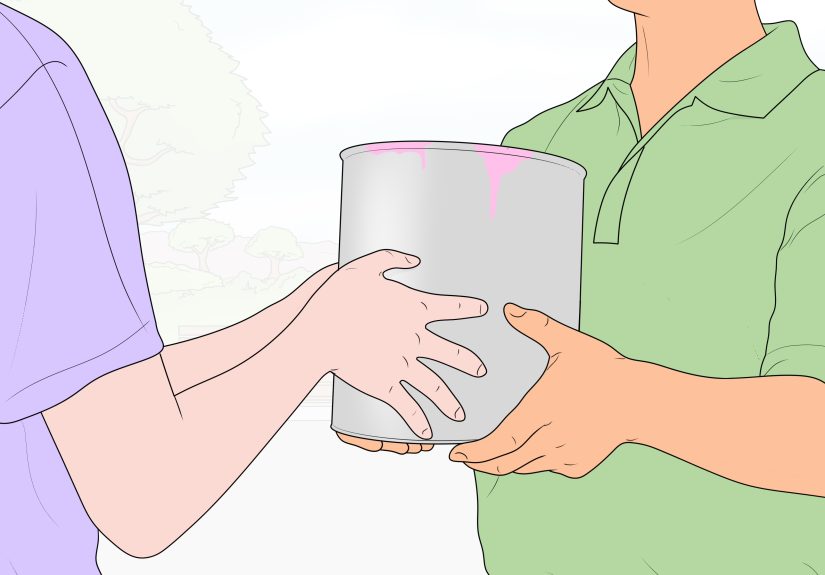
You may also be able to pass paint along to neighbors, local DIY groups, charities, schools, theater groups, or community projects. Some people use local sharing platforms to offer unopened or lightly used tins to others nearby. The key is making sure the paint is still in its original container, clearly labeled, and not contaminated by other products.
Think of this step as the “one person’s leftover magnolia is another person’s budget makeover” phase.
Step 4: Never pour paint down the drain, toilet, or outside
This is the non-negotiable rule. Do not pour paint into the sink, toilet, storm drain, gutter, or onto soil. It might seem like a quick solution for a small amount, but it can create plumbing problems, environmental contamination, and disposal issues that are much more annoying than dealing with the tin properly.
Even water-based paint should not be washed away in bulk. A paintbrush rinsed carefully after use is one thing. Dumping half a tin into the drain because you are tired of looking at it is another. Resist the urge. Your pipes, your local water system, and your future self would all prefer a more civilized plan.
Step 5: Dry out small amounts of water-based paint
If you have a small amount of water-based paint left and your local council allows dried paint in general waste, the next step is to solidify it fully. This is one of the most practical methods for disposing of leftover emulsion or acrylic paint in the UK.
To dry it out, leave the lid off in a safe, well-ventilated place away from children, pets, and weather. For faster drying, mix in absorbent material such as sand, soil, sawdust, shredded paper, or cat litter. If there is only a small quantity, you can sometimes spread it onto cardboard or newspaper and let it dry completely before binning the hardened material, depending on council guidance.
The important phrase here is completely dry. Not tacky. Not “mostly dry.” Not “dry-ish if I squint.” Fully solid.
Step 6: Put dried paint and approved containers in the right waste stream
Once water-based paint is fully hardened, some councils allow it in the general household waste bin, often in small amounts and sometimes double-bagged. Empty or dry metal paint cans may be accepted at a household waste recycling centre for recycling. Plastic paint containers are trickier and are not accepted everywhere, so local rules matter.
This is where people often get tripped up: the container and the leftover paint are not always handled the same way. An empty metal tin may be recyclable, while a half-full plastic tub of liquid paint may not be accepted at all until the contents are solidified or taken to the correct facility.
Translation: do not assume all paint cans magically belong in your curbside recycling bin just because they are vaguely can-shaped.
Step 7: Take larger quantities to a household waste recycling centre
If you have several tins, a bigger decorating clear-out, or paint your home bin cannot reasonably handle, your local household waste recycling centre is usually the best next move. Many UK councils direct residents there for paint-related waste, though the exact rules vary by site.
Before you go, check whether you need to book a slot, whether the site accepts paint in liquid or dried form, and whether there are limits on quantity. Some centres can take certain paint products free of charge from residents, while others have very specific restrictions. Showing up with a trunk full of mystery cans and pure optimism is not a strategy.
Step 8: Treat solvent-based paint, white spirit, thinners, and wood treatments more carefully
Solvent-based paints and related products are where the disposal process gets more serious. These products can be classed as hazardous or require special handling, which means they should not go into your general household waste just because the can annoys you.
If the label mentions solvent-based ingredients, white spirit, paint thinner, wood preservative, varnish, stain, or similar chemicals, check your council’s hazardous household waste guidance. In some places, these items are accepted at specific recycling centres or through dedicated hazardous-waste services. In others, residents need to arrange collection or follow a separate process.
This is also true for oily rags and cleanup materials if they are heavily contaminated. Do not bundle everything into one random bag and hope the universe sorts it out.
Step 9: Check your council website for the final answer
It may not be glamorous, but this is the smartest final step. UK paint disposal guidance often varies by postcode, council, and recycling centre. One area may accept dried emulsion in household waste; another may prefer recycling-centre drop-off only. Some councils offer hazardous-waste collections, while others direct residents elsewhere.
So if you remember just one takeaway from this article, let it be this: local council guidance beats generic internet confidence every time. Search your council’s waste page, look up hazardous household waste if needed, and confirm the current instructions before you dispose of anything questionable.
Common Mistakes to Avoid
Even well-meaning homeowners make a few classic mistakes when disposing of old paint. Here are the ones to dodge:
- Putting liquid paint in the bin: this is one of the biggest no-nos in many UK areas.
- Pouring paint down the drain: bad for plumbing and worse for the environment.
- Assuming all paint is the same: emulsion and solvent-based gloss are not disposal twins.
- Recycling cans without checking: empty metal tins may be accepted, but not everywhere and not always through household recycling.
- Ignoring the label: the can often tells you exactly what kind of product you are handling.
- Forgetting about reuse: good paint does not always need disposal at all.
Final Thoughts
Disposing of paint in the UK is not difficult once you break it into practical steps. Identify the paint type, use or donate what you can, dry out small amounts of water-based paint where permitted, and route solvent-based products through the proper council or hazardous-waste channel. That is the whole game.
The goal is not just to get old paint out of your house. It is to do it safely, legally, and with minimal waste. A little patience now can save you from a messy bin, a rejected recycling-centre trip, or a very awkward conversation with yourself later when you realize you should have just checked the council website first.
So yes, the old tins in the garage can finally go. No drama. No guilt. No suspicious midnight trip to the bin area. Just nine sensible steps and a cleaner, less cluttered home.
Real-World Experiences and Practical Lessons from Leftover Paint
One of the most common experiences people have with leftover paint is discovering that the “tiny amount” they planned to keep somehow multiplied into a shelf full of tins. It often starts innocently enough. You paint the living room, save a little for touch-ups, and feel very responsible. Then you repaint the hallway, freshen up the bathroom, stain the garden fence, and suddenly your shed looks like a small branch of a decorating store that lost its manager.
A lot of homeowners only think about proper paint disposal when moving house. That is usually when the panic begins. You open the cupboard under the stairs and find six tins of white paint that are all technically different shades of white, one half-used gloss from an era when trim was shinier than a game-show smile, and a mystery can with no label at all. At that point, people often realize the hardest part is not carrying the tins. It is figuring out what each one actually is and whether it can go in the bin, the car, or nowhere at all.
Another common experience is underestimating how long paint takes to dry when you are trying to dispose of it properly. Many people assume leaving the lid off overnight will do the trick. Then they come back the next day and discover the top looks dry while the inside still has the consistency of a sad milkshake. That is why absorbent material is so helpful. Sand, sawdust, shredded paper, or cat litter can turn a long waiting game into a much more manageable process.
There is also a lesson many people learn the hard way: local rules really do matter. Someone will say, “Just chuck it in the bin, that’s what I did,” and then you find your council has different instructions. Or you show up at a recycling centre only to learn you needed a booking, proof of address, or dried paint instead of liquid tins. It is not thrilling advice, but checking first can save an entire wasted trip and a lot of muttering in the parking lot.
On the brighter side, people are often surprised by how useful paint reuse can be. A leftover tin that feels like clutter to one household can be exactly what a neighbor, a local community group, or a small project needs. Passing on usable paint is one of those rare chores that feels efficient, responsible, and slightly heroic all at once. It also frees up space without the guilt of throwing away something that still had life left in it.
The biggest practical takeaway from real experience is simple: paint disposal gets easier when you do a little sorting early. Group similar products together, label what you want to keep, separate hazardous items from water-based ones, and make one plan instead of five random guesses. It is not glamorous, but it works. And when the garage shelf is finally clear, the satisfaction is wildly disproportionate to the task, which is honestly one of adulthood’s strangest rewards.