Table of Contents >> Show >> Hide
- What COVID Fatigue Really Means
- Why Social Connectedness Matters More Than We Admit
- Volunteerism: The Most Underrated Mental Health Habit
- How Volunteerism Rebuilds Community After Collective Stress
- Who Benefits Most? Honestly, Almost Everyone
- Practical Ways to Use Connection as a Remedy for COVID Fatigue
- The Cultural Shift We Still Need
- Conclusion: Healing Happens in Community
- Experiences Related to Social Connectedness, Volunteerism, and COVID Fatigue
- SEO Tags
There was a time during the pandemic when many people had two emotional settings: “doing my best” and “staring into the fridge like it owed me answers.” That drained, foggy, emotionally overcooked feeling came to be known as COVID fatigue. It was not just boredom. It was the wear-and-tear of uncertainty, disrupted routines, social isolation, grief, stress, and the exhausting effort of adapting over and over again.
Even though the acute emergency phase has passed, the aftershocks have lingered. Many people still feel disconnected, emotionally flat, or oddly rusty at being around other humans. Some are technically “back to normal,” yet still feel like their batteries only charge to 42%. The good news is that one of the most practical remedies is also one of the most human: social connectedness. And one of the best ways to rebuild it is through volunteerism.
That may sound almost too wholesome, like advice stitched onto a decorative throw pillow. But the evidence is strong. Healthy social ties are linked to better mental and physical health, while loneliness and social isolation are associated with worse outcomes. Volunteering adds another powerful ingredient: meaning. When people help others, they often help themselves too, by building purpose, routine, belonging, and real-world relationships. In other words, the antidote to COVID fatigue is not pretending nothing happened. It is reconnecting on purpose.
What COVID Fatigue Really Means
COVID fatigue is part emotional exhaustion, part mental overload, and part social depletion. During the pandemic, people had to process risk, changing public guidance, economic strain, caregiving pressure, school disruptions, grief, and endless decision-making. Should you go? Should you cancel? Should you test? Should you worry? Should you stop worrying? For many households, ordinary life turned into a full-time logistics department.
Over time, that strain changed behavior. Some people became withdrawn. Others became irritable or numb. Many lost the rhythm of everyday social life: chats with coworkers, casual church conversations, volunteer projects, neighborhood events, team sports, book clubs, classroom energy, and the reassuring normalcy of being around people without treating every interaction like a strategic operation.
The result was not just stress. It was a thinning of community life. That matters because social connection is not a luxury add-on, like whipped cream on a latte. It is a basic part of human health. When connection weakens, people often feel it in their mood, motivation, sleep, resilience, and sense of purpose.
Why Social Connectedness Matters More Than We Admit
Social connectedness is the feeling that you belong, that people care about you, and that your relationships have quality, support, and meaning. It is not about collecting acquaintances like trading cards. A person can have a crowded contact list and still feel lonely. What matters is whether your relationships make you feel seen, valued, and supported.
This is one reason public-health leaders have paid so much attention to loneliness and isolation in recent years. The CDC has emphasized that social connection supports healthier lives and can help reduce the risk of conditions such as heart disease, stroke, dementia, depression, and anxiety. The broader message is simple: connection affects health in the same way many other serious risk factors do. When people feel cut off, the consequences are not merely emotional. They can be physical too.
Social connectedness also strengthens communities. When neighbors know one another, when local organizations are active, and when people have places to gather, communities tend to be more resilient. They share information faster, support vulnerable people better, and recover more effectively from hardship. A connected community is not perfect, but it is less brittle.
Connection works through small moments, not only dramatic ones
When people hear “rebuild social connection,” they sometimes imagine a major life overhaul involving ten new friends, a community garden, and a weekly soup exchange. In reality, connection often grows through smaller acts. A check-in text. A phone call to a grandparent. Joining a local cleanup day. Talking to the same barista enough times to graduate from “hi” to “how was your weekend?” Those small moments create familiarity, trust, and belonging.
That matters for people recovering from COVID fatigue, because exhaustion often makes huge self-improvement plans feel impossible. Modest, repeatable actions are more realistic. The goal is not to become a social butterfly overnight. The goal is to stop living like an emotionally fortified bunker.
Volunteerism: The Most Underrated Mental Health Habit
Volunteerism is one of the clearest ways to turn connection into action. It gives people a role, a schedule, and a reason to show up. It also creates a form of social interaction that feels easier than “just go make friends,” which is advice people love to give and almost nobody finds useful.
Volunteering works because it shifts the focus outward. Instead of asking, “Why do I feel so tired, lonely, or unmotivated?” you begin asking, “Who needs help, and what can I do today?” That does not erase your stress, but it changes your relationship to it. Service can interrupt rumination, reduce feelings of helplessness, and restore a sense of agency.
Research and health organizations have long noted that volunteering is associated with benefits such as lower stress, improved mood, a stronger sense of purpose, and, especially for older adults, better overall well-being. People who volunteer often report that they feel useful, appreciated, and more connected to others. That is powerful medicine for a population still carrying the emotional residue of the pandemic.
Why helping other people helps the helper
Volunteerism supports recovery from COVID fatigue in several ways:
It creates purpose. Fatigue often comes with a sense of drift. Volunteering counters that by giving the day structure and meaning.
It builds routine. A weekly volunteer shift can restore rhythm, which is especially helpful after years of disrupted schedules.
It reduces loneliness. Service introduces repeated contact with other people, and repeated contact is how relationships begin.
It improves perspective. Helping others can lessen the feeling that you are stuck inside your own stress loop.
It boosts confidence. Many people came out of the pandemic feeling socially awkward or emotionally dulled. Volunteering lets them contribute before they feel fully “back,” which can rebuild confidence faster than waiting to feel ready.
How Volunteerism Rebuilds Community After Collective Stress
The pandemic did not just strain individuals. It strained the social fabric. Schools, workplaces, faith communities, nonprofits, and neighborhood groups all had to adapt, pause, or rethink how they functioned. Volunteerism helps repair that fabric because it reconnects people across age groups, backgrounds, and skill levels.
Think about the range of volunteer roles that became especially meaningful during and after the pandemic: delivering groceries to older adults, staffing food pantries, tutoring students, helping at vaccination clinics, making wellness check calls, supporting mutual aid groups, serving at shelters, coaching youth programs, and assisting community health outreach. These efforts did more than meet practical needs. They reminded people that they were not facing hardship alone.
That reminder matters. COVID fatigue feeds on isolation and powerlessness. Volunteerism pushes back by proving that even small efforts count. You may not be able to solve national burnout before lunch, but you can make sure a neighbor gets a meal, a student gets homework help, or a community center has enough hands for Saturday’s event. Sometimes healing starts with one folding chair, one canned food box, and one awkward but sincere “Glad you’re here.”
Who Benefits Most? Honestly, Almost Everyone
Young adults, older adults, caregivers, remote workers, and people who relocated during or after the pandemic may all benefit from stronger social connection. The needs differ, but the underlying challenge is similar: too many people are functioning with weak community ties.
Young adults may be especially affected when key milestones were disrupted. Missed campus life, hybrid learning, postponed celebrations, and unstable early career experiences made it harder to form social roots. Volunteering can create belonging outside school or work.
Older adults may face grief, mobility limits, retirement transitions, or shrinking social networks. Community engagement and volunteering can support mood, purpose, and cognitive well-being.
Caregivers often carry stress quietly and have less time for social life. Volunteerism may sound unrealistic for them, but even low-intensity, occasional service can reconnect them to a broader sense of identity.
Remote and hybrid workers may be professionally functional yet socially undernourished. When most interactions are transactional and screen-based, volunteering can provide warmer, more meaningful contact.
People recovering from grief or burnout may find that helping others creates a gentle bridge back into the world. Not a grand comeback. Just a bridge.
Practical Ways to Use Connection as a Remedy for COVID Fatigue
You do not need a dramatic reinvention. You need a realistic plan. Here are practical ways to make social connectedness and volunteerism part of everyday life again.
1. Start with one recurring commitment
Choose one activity that happens weekly or twice a month. It could be volunteering at a food bank, mentoring a student, helping at an animal shelter, or supporting a local nonprofit event. Repetition matters more than intensity.
2. Pick service that matches your energy
If you are already exhausted, choose low-drama, manageable roles. Not every volunteer position has to feel like you are auditioning for sainthood. Some of the best opportunities are simple, steady, and local.
3. Build connection into routines you already have
Walk with a neighbor. Join a community class. Attend a faith-based group. Participate in school or workplace service days. The best social habit is often the one that requires the fewest extra decisions.
4. Reconnect before expanding
For some people, the fastest path to connection is not meeting new people but repairing existing relationships. Reach out to a cousin, old friend, former coworker, or neighbor. Social recovery is allowed to be boring and effective at the same time.
5. Mix digital tools with real-world interaction
Technology can help people find volunteer opportunities, coordinate community efforts, and stay in touch. But digital connection works best when it supports real relationships, not when it replaces them entirely.
6. Ask for help if fatigue has become something heavier
Sometimes what looks like COVID fatigue is persistent anxiety, depression, grief, trauma, or burnout. Social connection helps, but it is not a substitute for medical or mental health care when symptoms are intense or ongoing. Getting support is not weakness. It is maintenance.
The Cultural Shift We Still Need
One lasting lesson from the pandemic is that resilience is not just an individual skill. It is a community capacity. We often talk about health as though it is built only through personal discipline: get enough sleep, eat vegetables, drink water, stretch, and stop checking your phone at 1:14 a.m. All good advice. But health is also built through relationships, neighborhoods, organizations, and shared responsibility.
That means the remedy for COVID fatigue cannot rest only on individuals trying to “cope better.” Communities, schools, employers, faith groups, and civic organizations all have a role in creating spaces where people can belong and contribute. We need more opportunities for connection that are welcoming, affordable, local, and easy to access. We need stronger norms around checking in on one another. And we need to treat volunteerism not as extra credit for unusually energetic people, but as a practical tool for public well-being.
In a culture that prizes efficiency, service can look inefficient. It takes time. It is messy. It involves people, which is rarely the shortest route to anything. But it is also how communities become livable. And after years of stress and fragmentation, livable sounds pretty good.
Conclusion: Healing Happens in Community
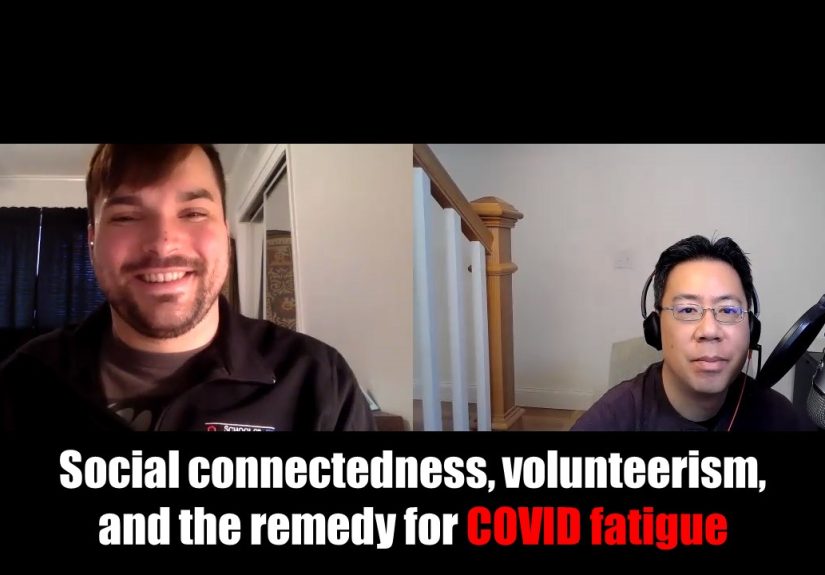
Social connectedness, volunteerism, and the remedy for COVID fatigue are deeply linked because they address the same human need: to matter to someone and to belong somewhere. The pandemic exposed how fragile our routines could be, but it also showed how much people need one another. Recovery is not only about moving on. It is about rebuilding the habits, relationships, and shared commitments that make life feel meaningful again.
That is why volunteerism stands out. It gives people a concrete way to reconnect while doing something useful. It transforms abstract loneliness into shared effort. It creates purpose when motivation is low, and companionship when isolation has become a habit. In a time when many people still feel drained, service offers a surprising kind of energy: the kind that comes from being needed.
The cure for COVID fatigue is not a perfect mindset, a productivity hack, or one more promise to “get it together next week.” More often, it looks like a phone call, a ride to the pantry, a tutoring session, a church kitchen, a cleanup crew, a support group, or a volunteer badge clipped to a slightly wrinkled shirt. It looks like people showing up for one another. That is not a small thing. That is the repair.
Experiences Related to Social Connectedness, Volunteerism, and COVID Fatigue
Across the United States, the lived experience of COVID fatigue has often sounded less dramatic than the headlines and more personal than the statistics. People described feeling tired in ways that sleep did not fix. A college student who spent crucial semesters in remote classes might say the hardest part was not just missing campus events, but forgetting how to casually belong somewhere. Without hallway conversations, study groups, and spontaneous plans, life became narrower. When that student later started volunteering as a reading buddy for elementary school kids, the shift was subtle but real. The weekly commitment created structure, and the small relationships built through that role made the world feel less distant.
Older adults often had a different version of the same problem. Some were cautious for longer periods because of health risk, and the result was a sharp drop in face-to-face connection. One common experience was the strange shrinkage of daily life: fewer errands, fewer visits, fewer small social rituals. For a retired person who once had a busy schedule, that reduction could feel like emotional hibernation. Volunteering through church outreach, hospital support programs, or community meal services often became a route back into purpose. It was not only about helping others. It was about hearing one’s own voice in a shared room again, having a place to be, and being reminded that usefulness does not retire.
Caregivers and parents frequently carried another layer of fatigue. During the pandemic, many were workers, teachers, emotional support staff, logistics managers, and amateur disinfecting specialists all at once. Even after the crisis eased, the habit of operating in survival mode lingered. For some, volunteering seemed impossible at first because their plate already looked like a badly balanced buffet. But lower-intensity forms of service, such as packing school supplies once a month, helping with a weekend food drive, or joining a neighborhood mutual-aid chat, created a surprisingly strong effect. These small acts gave people a sense of control and connection without demanding heroic levels of energy.
Health care workers, nonprofit staff, and teachers often experienced COVID fatigue as moral exhaustion. They were not just tired; they were tired of carrying urgency. Many found relief in peer support and community-based service that felt different from their formal job roles. A nurse helping with a local youth sports program or a teacher volunteering at a library literacy event could reconnect with people in ways that were not filtered through crisis. That mattered. Sometimes the best antidote to burnout is a setting where people are still human beings first and roles second.
There were also many people who discovered that connection did not have to be dramatic to be healing. A man who had worked remotely for years after the pandemic might begin volunteering at an animal shelter simply to get out of the house. A woman who lost family members during the pandemic might join a grief support group and later volunteer to welcome newcomers. A teenager who felt socially off-balance might help at a local community garden and slowly regain comfort around others. These experiences share a pattern: connection becomes easier when it grows around shared purpose.
That is the thread running through so many post-pandemic stories. People did not necessarily feel better because life became easy again. They felt better because they became linked to something outside themselves. They were expected somewhere. They were useful somewhere. They were known somewhere. In the end, that may be the deepest remedy for COVID fatigue. Not just rest, but reconnection.