Table of Contents >> Show >> Hide
- What Your Core Actually Includes
- Why Core Training Matters
- The Smart Rules of Core Training
- The Best Beginner Core Exercises
- The Best Intermediate Core Exercises
- The Best Advanced Core Exercises
- At-Home Core Workout for All Levels
- Gym Core Workout for Strength and Performance
- Common Core Training Mistakes
- How Often Should You Train Your Core?
- Experience and Practical Lessons from Real-World Core Training
- Conclusion
- SEO Tags
If you hear the words core workout and immediately picture someone doing 800 crunches while glaring at the ceiling, good news: the fitness world has moved on. Your core is not just your abs, and training it well is less about chasing a six-pack and more about building a body that moves better, feels stronger, and complains less when you pick up groceries, climb stairs, or twist to grab your phone from the car seat.
A strong core supports posture, balance, stability, and efficient movement. It helps your upper and lower body work together, which matters whether you are a beginner exercising in your living room, a seasoned lifter in the gym, or someone who simply wants their back to stop acting like it pays rent. The best part? Great core training does not have to be fancy. Some of the most effective core exercises use only your body weight, a mat, and a willingness to hold still while your muscles file a formal complaint.
In this guide, we will cover the best core exercises for all fitness levels, explain how to progress from beginner to advanced, and show you how to build a smart routine at home or at the gym. We will also clear up a few myths, because “more sit-ups” is not the answer to every fitness question.
What Your Core Actually Includes
When people say “core,” they usually mean the abdominal muscles. That is only part of the story. Your core includes the muscles around your trunk and pelvis, including your abdominals, lower back, hips, glutes, and deeper stabilizing muscles that help control spinal position and transfer force. In plain English, your core is the body’s built-in support system.
That is why the best core exercises do more than burn your abs. They teach your body to resist twisting, stabilize the spine, maintain alignment, and create force without wobbling like a folding table at a family reunion. When you train the core as a team instead of bullying one muscle group, you get better function and usually better results.
Why Core Training Matters
Core training earns its keep in real life. A stronger core can help improve balance and stability, support better posture, and make everyday tasks such as bending, lifting, carrying, reaching, and climbing feel easier. It also plays a big role in sports and exercise performance, because nearly every movement relies on the trunk staying organized while the limbs do their thing.
Another big benefit is movement quality. When your core is stronger and better coordinated, squats feel steadier, push-ups feel cleaner, and even walking can feel more efficient. For many people, well-designed exercise that includes core work can also be part of a broader plan to support the spine and reduce recurring aches, especially when combined with good technique, consistency, and overall strength training.
The Smart Rules of Core Training
1. Start with stability before chasing difficulty
Before you add unstable surfaces, heavy resistance, or dramatic Instagram flourishes, master the basics on the floor. Controlled planks, bridges, dead bugs, and bird dogs teach you how to brace, breathe, and move without losing position.
2. Brace, but keep breathing
One of the best coaching cues is to gently tighten your midsection as if you were preparing for a friendly poke to the stomach. Your ribs should stay down, your spine should feel neutral, and you should still be able to breathe. If you hold your breath every rep, your core is not the only thing working overtime.
3. Train more than the front of your abs
Effective core workouts target the front, sides, back, hips, and glutes. A core routine made of endless crunches is like trying to build a house by only painting the front door.
4. Progress gradually
If an exercise feels too hard, shorten the hold, reduce the reps, or use an easier variation. If it feels too easy and your form is solid, add reps, add time, add resistance, or try a more advanced version. That is how progress works when it is not powered by ego.
5. Pain is not the goal
Muscle fatigue is normal. Sharp, pinchy, or worsening pain is not. If a movement bothers your back, hips, neck, or pelvic floor, regress the exercise or get professional guidance.
The Best Beginner Core Exercises
If you are new to core training, start with exercises that build control. These beginner-friendly moves work beautifully at home and also make excellent warm-up exercises before a gym session.
Dead Bug
The dead bug is a gold-standard beginner core exercise because it teaches you to brace your trunk while your arms and legs move. Lie on your back with your knees bent to tabletop and your arms up. Keep your lower back gently connected to the floor as you extend the opposite arm and leg, then return and switch sides.
Why it works: It trains anti-extension strength, coordination, and trunk control without excessive spinal stress.
Beginner dose: 2 to 3 sets of 6 to 10 slow reps per side.
Bird Dog
Start on all fours, hands under shoulders and knees under hips. Extend one arm forward and the opposite leg back without twisting your torso. Pause, then switch sides. Move slowly and resist the urge to turn it into a balance circus.
Why it works: It challenges core stability, spinal control, and hip strength all at once.
Beginner dose: 2 to 3 sets of 5 to 8 reps per side with a pause.
Glute Bridge
Lie on your back with knees bent and feet flat. Brace your core, squeeze your glutes, and lift your hips until your body forms a straight line from shoulders to knees. Lower with control.
Why it works: Bridges train the glutes and posterior chain while reinforcing pelvic control and trunk stability.
Beginner dose: 2 to 3 sets of 8 to 12 reps or 20-second holds.
Modified Side Plank
Lie on your side with knees bent and support yourself on your forearm. Lift your hips so your shoulders, hips, and knees form a line. Hold, then switch sides.
Why it works: It targets the side core, including the obliques, which are essential for stability and resisting lateral collapse.
Beginner dose: 2 sets of 15 to 25 seconds per side.
Heel Taps
On your back with knees lifted to 90 degrees, slowly lower one heel to tap the floor and return. Alternate sides while keeping your midsection braced and your lower back steady.
Why it works: It is an approachable way to train lower-ab control and pelvic stability.
The Best Intermediate Core Exercises
Once beginner movements feel controlled and you can maintain good form without shaking like a leaf in a wind tunnel, it is time to level up.
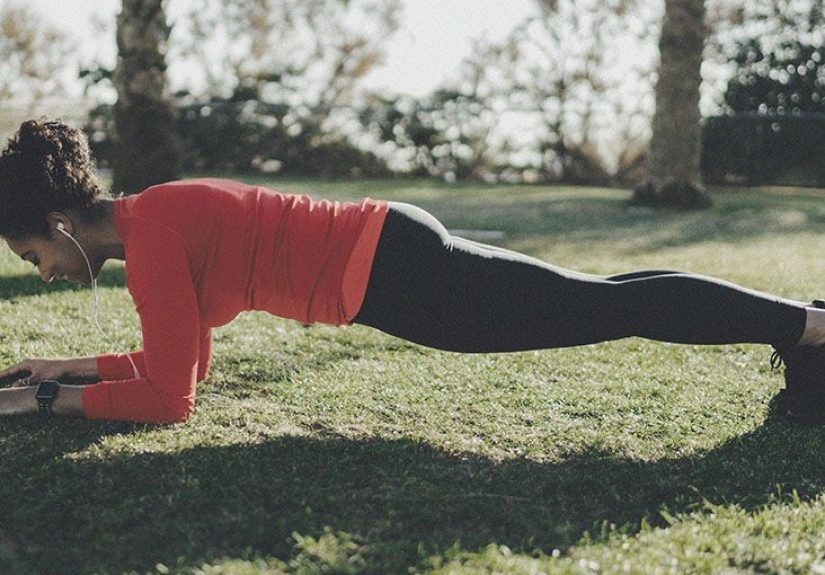
Standard Plank
Set up on your forearms or hands with your body in a straight line. Squeeze glutes, brace the abs, and avoid letting your hips sag or pike up. Think “long spine,” not “survive at all costs.”
Why it works: Planks train full-core stiffness and endurance more effectively than old-school endless sit-up marathons.
Dose: 2 to 4 sets of 20 to 45 seconds.
Marching Bridge
Lift into a bridge, then alternate lifting one foot off the floor while keeping the pelvis level. If your hips start rocking, your body has voted to end the set.
Why it works: It combines glute work with lumbo-pelvic stability, which is great for both home workouts and athletic prep.
Pallof Press
Using a resistance band or cable, stand sideways to the anchor point, hold the handle at your chest, and press it straight out. Resist being pulled into rotation. This is one of the most underrated core exercises in any gym.
Why it works: It trains anti-rotation strength, which is wildly useful for daily life and sports.
Dose: 2 to 3 sets of 8 to 12 reps per side.
Side Plank
From your forearm and stacked feet, lift into a straight line and hold. If full side planks are too spicy, go back to the bent-knee version.
Why it works: It trains the obliques, shoulder stability, and trunk endurance in one efficient package.
Supine Leg Extension
This variation begins like a tabletop position and asks you to straighten one leg at a time while maintaining tension through the trunk. It is simple, precise, and surprisingly humbling.
The Best Advanced Core Exercises
Advanced core training is less about making exercises look dramatic and more about adding load, complexity, and control. These movements are ideal for gym workouts, though a few can be adapted for home training with dumbbells or bands.
Renegade Row
In a high plank with hands on dumbbells, row one weight at a time while resisting hip rotation. Keep your body square and your feet wide if needed.
Why it works: This is a serious anti-rotation challenge that trains the core, upper back, and shoulder stability.
Farmer Carry or Suitcase Carry
Walk with one or two heavy dumbbells or kettlebells while staying tall and steady. A suitcase carry, where you carry one weight on one side, is especially effective for the side core.
Why it works: Carries train real-world strength, posture, grip, and trunk stiffness. They are gloriously functional and brutally effective.
Cable Chop or Lift
Using a cable machine, move the handle diagonally across your body while keeping control through the trunk and hips. This adds rotational strength and coordination when performed with discipline.
Hanging Knee Raise or Leg Raise
Hang from a pull-up bar and lift your knees or legs without swinging. If you start resembling a pendulum, reset and regain control.
Why it works: It builds anterior core strength, grip, and shoulder stability while demanding strict movement.
Ab Wheel Rollout
From your knees or feet, roll the wheel forward while keeping the ribs down and spine stable, then pull back. This one will expose any weak link in your bracing strategy almost immediately.
At-Home Core Workout for All Levels
Try this no-fuss home core workout 2 to 3 times per week:
Beginner Home Circuit
Dead bug x 8 per side
Glute bridge x 10
Bird dog x 6 per side
Modified side plank x 20 seconds per side
Complete 2 to 3 rounds.
Intermediate Home Circuit
Plank x 30 seconds
Marching bridge x 10 total
Heel taps x 10 per side
Side plank x 20 to 30 seconds per side
Band Pallof press x 10 per side
Complete 2 to 4 rounds.
Gym Core Workout for Strength and Performance
If you train at the gym, core work does not need its own holiday. Add it after your main lifts or use it as a focused finisher.
Gym Core Finisher
Cable Pallof press x 10 per side
Farmer carry x 20 to 40 meters
Hanging knee raise x 8 to 12
Cable chop x 8 per side
Side plank x 30 seconds per side
Complete 2 to 3 rounds with crisp form.
Common Core Training Mistakes
Doing only crunches and sit-ups
They are not automatically evil, but they are often overused. A balanced core program should include anti-extension, anti-rotation, lateral stability, and hip-driven movements.
Rushing reps
Momentum is not the same as strength. Slower, controlled reps usually teach your body more and irritate your joints less.
Ignoring posture and breathing
Bracing without breathing creates tension without good control. Keep the rib cage stacked, breathe steadily, and stop flaring your ribs like you are preparing for liftoff.
Progressing too soon
Instability tools, heavier loads, and flashy variations are earned. Master floor-based control first.
How Often Should You Train Your Core?
For most people, direct core training 2 to 4 times per week is plenty. You do not need to obliterate your abs every day. Remember, your core is also active during walking, lifting, carrying, squatting, pushing, pulling, and most strength exercises. Smart consistency beats random punishment every time.
A simple rule works well: include 3 to 5 core exercises per session, choose a mix of front, side, and anti-rotation patterns, and keep total volume manageable so your form stays sharp. Quality reps matter far more than dramatic suffering.
Experience and Practical Lessons from Real-World Core Training
One of the most interesting things about core training is how differently people experience it. Beginners often expect core exercises to feel like a dramatic burn in the abs, but the first real win is usually subtler: standing taller, feeling steadier, and noticing that daily movements take less effort. A person who starts with dead bugs and bridges may not feel like an action hero on day one, yet two weeks later they might realize getting out of bed, carrying laundry, or climbing stairs feels smoother. That is not boring progress. That is useful progress.
At home, the biggest challenge is usually consistency, not equipment. People often think they need a bench, cable machine, or stack of kettlebells to build a strong core. In reality, a mat, a resistance band, and a few square feet of floor space can do a lot. Many home exercisers find that short, repeatable sessions work best. Ten to fifteen minutes of focused core work added to a walk, bodyweight workout, or mobility session is far easier to sustain than a heroic one-hour ab marathon you will resent by Thursday.
In the gym, the opposite problem often shows up. There is plenty of equipment, but a lot of people still default to a few rushed crunches at the end of a workout. The most effective gym-based core training usually comes from choosing movements that complement the rest of the session. After a lower-body day, for example, anti-rotation work and side planks can fit beautifully. After an upper-body session, loaded carries, hanging knee raises, or cable chops can round things out without turning the workout into chaos.
Another common experience is discovering that “harder” does not always mean “better.” Many exercisers hit a plateau because they keep adding difficulty before they own the basics. They jump to unstable tools, advanced planks, or high-rep ab circuits while still struggling to control a bird dog or keep the ribs down in a dead bug. The body has a funny way of exposing shortcuts. The lifter who can deadlift big weight but cannot hold a clean side plank for 20 seconds is not broken, but they have found a useful clue.
Perhaps the most valuable lesson is that core training feels best when it is treated as skill practice, not punishment. The goal is not just sore abs. The goal is a stronger, steadier trunk that improves how the whole body moves. People who approach core work this way usually stick with it longer and get better results. They stop chasing random burn and start noticing meaningful changes in posture, lifting confidence, balance, and movement quality. That is when core training stops feeling like a chore and starts paying off everywhere else.
Conclusion
The best core exercises for all fitness levels are the ones that match your current ability, challenge you without wrecking your form, and fit into a routine you can actually maintain. At home, simple bodyweight moves like dead bugs, bird dogs, bridges, and side planks can build an impressively strong foundation. At the gym, band work, cable exercises, carries, and hanging movements add resistance and progression.
The smartest approach is to build from stability to strength, focus on quality over quantity, and train the entire core instead of obsessing over one muscle group. Your abs may get stronger, yes. But even better, your whole body will move like it has a plan.