Table of Contents >> Show >> Hide
- Why the Super Hornet Still Matters
- What Is the Block III Super Hornet Upgrade?
- The Cockpit Gets a Big-Screen Makeover
- Networking: The Real Superpower
- IRST Block II: Seeing Without Shouting
- The APG-79 AESA Radar Still Pulls Its Weight
- Targeting Pods and Precision Strike
- Service Life Modification: The Less Glamorous Hero
- Why Not Just Buy More New Fighters?
- The Upgrade Is Also About the Future Carrier Air Wing
- What About Conformal Fuel Tanks?
- Industrial Base and the End of New Production
- Real-World Experience: What This Upgrade Means on the Deck, in the Cockpit, and in the Maintenance Shop
- Conclusion: The Rhino Gets Sharper Horns
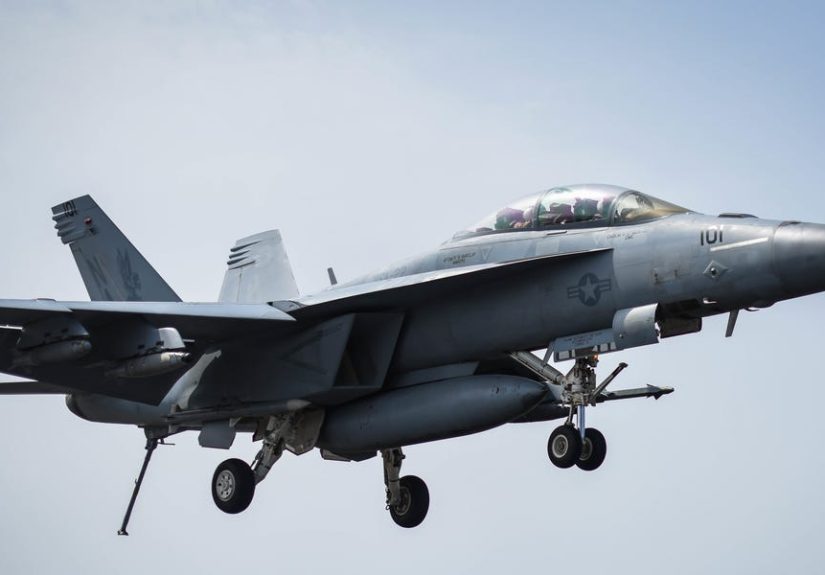
The U.S. Navy’s F/A-18E/F Super Hornet has never been the flashiest aircraft in the carrier air wing. It is not a stealth celebrity like the F-35C, and it does not arrive with the futuristic mystery of the Navy’s coming F/A-XX fighter. But if naval aviation had a pickup truck with afterburners, folding wings, radar-guided missiles, and a habit of showing up to work every day in rough weather, it would be the Super Hornet.
Now the Navy is making sure that trusted workhorse can keep pulling heavy loads well into the 2030s and 2040s. Through the Block III upgrade and the Service Life Modification program, older Block II Super Hornets are being rebuilt, rewired, digitally modernized, and prepared for a future fight that depends on networking, electronic warfare resilience, sensor fusion, and fast decision-making. In plain English: the jet is getting a smarter brain, a longer career, and a much better dashboard.
This is not a cosmetic refresh. Nobody is simply polishing the canopy and calling it a day. The upgrade package includes longer service life, a modern cockpit, advanced avionics, stronger networking, improved computing, passive infrared target detection, and compatibility with newer targeting systems. The result is a fourth-generation fighter that can behave more like a connected node in a fifth-generation battlespace. That may not sound as dramatic as “new stealth fighter,” but for carrier operations, readiness, and budget reality, it is a very big deal.
Why the Super Hornet Still Matters
The F/A-18E/F Super Hornet is a carrier-based multirole fighter designed for air-to-air combat, strike missions, fleet defense, close air support, reconnaissance support, and buddy-tanking roles. It can launch from a catapult, trap on a pitching deck, carry a useful weapons load, and operate from the tight, punishing world of an aircraft carrier. That last point matters. A fighter that looks fantastic on a poster but cannot reliably survive carrier life is about as useful to the Navy as a screen door on a submarine.
The Super Hornet entered operational service in the early 2000s and became the backbone of U.S. Navy strike fighter squadrons. It replaced older legacy Hornets in many front-line roles and became a flexible platform for both combat deployments and daily carrier operations. Its two main versions are the single-seat F/A-18E and the two-seat F/A-18F. The related EA-18G Growler, based on the two-seat Super Hornet airframe, handles electronic attack.
Even as the F-35C brings stealth and advanced sensor fusion to carrier decks, the Navy still needs large numbers of reliable fighters that can launch, strike, defend, refuel other aircraft, and integrate with the broader fleet. That is where the Super Hornet remains essential. It is not being upgraded because the Navy is nostalgic. It is being upgraded because aircraft carriers need capacity, and the Super Hornet still provides a lot of it.
What Is the Block III Super Hornet Upgrade?
The Block III Super Hornet is the most advanced version of the aircraft. For new-build jets, Block III capabilities are added during production. For older Block II aircraft, the Navy and Boeing use the Service Life Modification process to extend the aircraft’s life and then integrate Block III improvements.
The biggest headline is service life. Earlier Super Hornets were originally built around a 6,000-flight-hour life. The Service Life Modification effort is designed to push selected aircraft to 10,000 flight hours. That is a major structural and sustainment achievement. Carrier aircraft live hard lives: catapult launches, arrested landings, salt air, high-G maneuvering, and endless maintenance cycles. Extending their usable life is not like adding more miles to a family sedan. It is more like rebuilding a professional athlete’s knees, spine, nervous system, and smartwatch all at once.
Key Block III Improvements
The Block III package includes an Advanced Cockpit System, a large-area cockpit display, upgraded avionics, improved networking, modernized electrical systems, more powerful computing, and technologies designed to reduce radar signature. It also supports the Navy’s broader goal of turning aircraft into connected pieces of a larger kill web, where sensors, shooters, ships, aircraft, and command centers share information quickly.
One of the most visible changes is the cockpit. Older fighters often present information across several smaller displays, requiring pilots to mentally stitch together what is happening. Block III gives the Super Hornet a large touchscreen display that can show tactical information in a more flexible and intuitive way. For pilots managing sensors, weapons, fuel, threats, radios, navigation, and the occasional “please do not hit the boat” landing problem, a better interface matters.
The Cockpit Gets a Big-Screen Makeover
The Advanced Cockpit System is more than a shiny screen. It changes how pilots interact with the aircraft’s sensors and mission systems. A large-area display allows aircrew to customize views, manage information faster, and build a clearer picture of the battlespace. In a modern air fight, the pilot who understands the situation first often gets to act first. That is not just convenient; it can be decisive.
Think of the difference between using an old flip phone and a modern tablet. Both can technically give you information, but one makes you work much harder than the other. The Block III cockpit is designed to reduce workload and help pilots process complex tactical data without feeling like they are solving a crossword puzzle at Mach 0.9.
This matters especially for two-seat F/A-18F aircraft, where the pilot and weapons systems officer can split responsibilities. A better display and improved avionics allow the crew to manage sensors, targeting, electronic warfare cues, and networked information more effectively. That turns the jet into a more capable command-and-control participant, not just a flying weapons rack.
Networking: The Real Superpower
Modern air combat is not only about who has the fastest jet or the biggest missile. It is about who sees first, shares first, decides first, and shoots first. The Block III Super Hornet is designed for that environment. Its upgraded mission systems include the Distributed Targeting Processor-Networked and Tactical Targeting Network Technology, which help the aircraft process and share tactical data at high speed.
In older air combat thinking, a fighter mostly fought with what its own radar, sensors, and pilot could detect. In modern naval warfare, a fighter may receive information from an E-2D Advanced Hawkeye, another fighter, a destroyer, a satellite, or an unmanned system. The Super Hornet upgrade is about making the aircraft a better participant in that network.
That has enormous value in contested environments. If an enemy tries to jam radar, disrupt communications, or hide aircraft and missiles in cluttered airspace, a networked force has more options. One aircraft may detect. Another may identify. A third may launch. A ship may provide additional tracking. The Super Hornet becomes part of the team huddle instead of waiting by itself on the sideline.
IRST Block II: Seeing Without Shouting
Another major improvement is the F/A-18E/F Infrared Search and Track Block II system. IRST is a passive sensor that detects heat signatures from aircraft at long range. Unlike radar, it does not have to emit energy to search for targets. That is valuable because turning on a radar can sometimes announce your presence, like waving a flashlight in a dark room and hoping nobody notices.
IRST Block II helps Super Hornet crews detect and track airborne targets in environments where radar may be jammed, degraded, or tactically risky to use. It complements the aircraft’s AN/APG-79 AESA radar rather than replacing it. The practical benefit is more ways to build a target picture, especially against advanced threats that may rely on electronic attack or reduced radar visibility.
The Navy declared initial operational capability for IRST Block II after testing, marking an important step toward fielding the system across carrier-based Super Hornet squadrons. The sensor is integrated into the front of a modified centerline fuel tank, which is a clever piece of engineering: part gas can, part long-range heat detective. Aviation upgrades are rarely elegant, but sometimes they are delightfully practical.
The APG-79 AESA Radar Still Pulls Its Weight
The Super Hornet’s AN/APG-79 active electronically scanned array radar remains a core part of the aircraft’s combat capability. AESA radar can steer beams electronically at extremely high speed, support multiple modes, and improve tracking and targeting performance compared with older mechanically scanned radars.
For pilots, that means better situational awareness and stronger air-to-air and air-to-surface performance. For maintainers and planners, AESA systems can also offer reliability and growth potential. In the Block III context, the radar becomes one piece of a bigger sensor-and-network puzzle. The jet is not just looking with one eye; it is combining radar, infrared sensing, off-board data, targeting pods, and networked inputs.
Targeting Pods and Precision Strike
The Navy has also been testing the LITENING advanced targeting pod on the F/A-18E/F. Targeting pods are crucial for surveillance, identification, laser designation, and precision strike. They help pilots find and track targets in daylight, at night, and in challenging visual conditions.
Initial flight testing of LITENING on the Super Hornet showed the pod moving through demanding maneuvers representative of operational use. This matters because carrier aircraft do not live in laboratory conditions. Everything must work while the jet accelerates, turns, vibrates, traps, launches, and operates in salt air. If a system can survive that lifestyle, it has earned its coffee.
Improved targeting capability supports missions ranging from strike warfare to close air support and maritime operations. As the Navy prepares for more complex Indo-Pacific scenarios, precision targeting and reliable identification become even more important. Nobody wants to waste expensive weapons, and nobody wants uncertainty when seconds count.
Service Life Modification: The Less Glamorous Hero
It is tempting to focus only on cockpit screens and sensors, but the Service Life Modification program may be the most important part of the story. SLM is the process that extends the aircraft’s structural life while preparing it for Block III modernization. It includes inspections, repairs, structural work, wiring changes, avionics updates, and system improvements.
In 2026, Fleet Readiness Center Southwest completed its first fully organic Block III modification on a Super Hornet, meaning Navy personnel performed the upgrade in-house. That is significant because it shows the Navy is building more internal capacity to modernize and sustain the fleet. As new-build production approaches its end, the ability to maintain and upgrade existing aircraft becomes even more important.
The Navy’s 2024 contract for 17 new Block III Super Hornets also included a technical data package important for long-term sustainment. Technical data may sound boring, but it is the difference between owning a high-performance machine and being permanently dependent on someone else to tell you how to fix it. For a military service, that kind of sustainment independence is strategic.
Why Not Just Buy More New Fighters?
That is the obvious question. If the Navy is developing a future F/A-XX fighter and already fields the F-35C, why spend so much effort upgrading Super Hornets?
The answer is timing, capacity, and cost. Future aircraft take years to design, test, fund, build, and deploy. The F/A-XX program is expected to shape the Navy’s next generation of carrier aviation, but it will not instantly replace hundreds of Super Hornets. Meanwhile, carriers still need air wings today, tomorrow, and next deployment cycle.
Upgrading the Super Hornet gives the Navy a bridge. It keeps squadrons equipped, maintains carrier air wing strength, and gives the service a proven aircraft with modernized systems. In defense planning, bridges are not glamorous, but they are how you avoid falling into the river.
The Upgrade Is Also About the Future Carrier Air Wing
The Super Hornet’s modernization fits into a larger transformation of the carrier air wing. The Navy is adding F-35Cs, improving E-2D Advanced Hawkeye capabilities, developing the MQ-25 Stingray unmanned tanker, upgrading EA-18G Growlers, and planning for F/A-XX. The upgraded Super Hornet must operate inside that evolving mix.
In that future air wing, the Super Hornet may not always be the stealthiest aircraft, but it can carry weapons, share data, support distributed operations, and provide combat mass. The MQ-25 is expected to reduce the need for Super Hornets to serve as tankers, freeing more fighters for strike and air-defense missions. That alone could improve the practical combat power of the carrier air wing.
Networking also allows the Super Hornet to benefit from stealthier or more specialized aircraft. A future F/A-XX or F-35C may detect or classify a threat, while a Super Hornet carries additional weapons or supports the engagement from another position. In other words, the upgraded Super Hornet does not have to be the newest kid in class to be useful. Sometimes the dependable senior with a full backpack is exactly who you need.
What About Conformal Fuel Tanks?
Early Block III discussions often included conformal fuel tanks, or CFTs, which were intended to add fuel without using traditional external drop tanks. More fuel means more range, and range is a serious concern in the Pacific, where distances are enormous. However, the Navy paused work on CFTs after concerns involving cost, schedule, performance, and carrier suitability.
That does not mean range stopped mattering. It means the Navy is balancing practical carrier operations against the desire for more reach. In naval aviation, an upgrade that works beautifully on land but causes headaches on a carrier deck is not necessarily a win. Carrier suitability is the final exam, and the ocean grades harshly.
Even without CFTs as a standard feature, Block III still improves the Super Hornet through avionics, networking, computing, cockpit modernization, service life extension, and sensor upgrades. The range challenge will also be addressed partly through MQ-25 refueling, future aircraft, weapons with longer reach, and operational tactics.
Industrial Base and the End of New Production
Boeing’s new-build Super Hornet production is expected to wind down after final Navy deliveries in 2027. That makes modernization even more important. Once the production line closes, the Navy’s existing fleet becomes the long-term foundation of carrier strike fighter capacity until future aircraft arrive in meaningful numbers.
This is why sustainment, technical data, depot capacity, and organic modification work matter so much. A fighter fleet is not just airplanes. It is parts, software, tooling, maintainers, repair manuals, test equipment, supply chains, engineers, and training pipelines. The Block III upgrade is a technical story, but it is also a logistics story. And in military aviation, logistics is the part that quietly decides whether the impressive jets actually fly.
Real-World Experience: What This Upgrade Means on the Deck, in the Cockpit, and in the Maintenance Shop
To understand why the Navy’s Super Hornet upgrade matters, imagine the aircraft carrier as a floating city with a very loud airport on the roof. Every launch is choreographed. Every recovery is unforgiving. Deck crews work in heat, wind, jet blast, and noise that makes normal conversation feel like a historical artifact. In that environment, reliability is not a nice bonus. It is survival.
For pilots, the upgraded Super Hornet experience is about information. A carrier aviator does not need more random data; they need the right data, organized quickly, while managing fuel state, threats, weapons, communications, weather, and the return to the ship. The large-area display and improved avionics help reduce the “Where is the thing I need?” problem. In a cockpit, hunting through menus at the wrong moment is not just annoying. It can be dangerous.
For maintainers, the upgrade story feels different. They see the aircraft not as a sleek fighter streaking across recruiting posters, but as panels, fasteners, wiring bundles, hydraulic lines, software loads, corrosion inspections, and parts that must be ready before the next cycle. Service Life Modification gives maintainers and engineers a chance to address structural aging and modernize systems in a more deliberate way. It is the aviation equivalent of a deep renovation: open the walls, replace what is tired, improve the wiring, and make sure the house can handle modern appliances.
For carrier air wing commanders, upgraded Super Hornets offer flexibility. A Block III jet can support strike missions, fleet defense, armed overwatch, maritime targeting, and networked operations. It can fly with F-35Cs, receive data from an E-2D, operate alongside Growlers, and eventually benefit from MQ-25 refueling. The value is not only in one spectacular capability. It is in being useful in many scenarios.
For taxpayers and defense planners, the experience is more practical: modernization buys time. Developing next-generation aircraft is expensive and slow. Upgrading a proven fighter does not solve every future problem, but it prevents a capability gap while the next chapter is written. The Navy is not pretending the Super Hornet will be young forever. It is making sure the aircraft can age like a disciplined marathon runner rather than a forgotten treadmill in the garage.
There is also a human factor. Pilots trust aircraft that behave predictably. Maintainers trust systems they can diagnose and repair. Commanders trust platforms that generate sorties. The Block III upgrade supports all three groups by making the Super Hornet more relevant, more connected, and more sustainable. That combination matters more than any single brochure-friendly feature.
The Super Hornet’s future will not be defined by nostalgia for “Top Gun” or by internet arguments about fourth-generation versus fifth-generation fighters. It will be defined by whether the aircraft can launch from carriers, connect with the fleet, carry useful weapons, survive in contested airspace, and come back aboard safely. The Block III upgrade is the Navy’s answer: keep the Rhino flying, make it smarter, and let it keep doing the unglamorous, essential work of naval airpower.
Conclusion: The Rhino Gets Sharper Horns
The Navy’s Super Hornet upgrade is not about turning an older fighter into a magic stealth jet. It is about making a proven carrier aircraft more survivable, more connected, easier to sustain, and more useful in modern warfare. The Block III package brings better cockpit displays, stronger networking, upgraded avionics, improved computing, IRST integration, and a path toward 10,000 flight hours through Service Life Modification.
That is a smart move for a Navy facing a difficult transition. The F-35C is growing in importance. The F/A-XX is on the horizon. The MQ-25 will change carrier refueling. But the Super Hornet remains a central part of the air wing, and the Navy needs it to stay ready. The upgrade gives the aircraft a longer runway into the futurefiguratively, of course, because on a carrier, the runway is still alarmingly short.
In the end, the Super Hornet’s upgrade is a reminder that military modernization is not always about replacing everything with something brand new. Sometimes the smartest strategy is to take a dependable machine, rebuild it carefully, give it better tools, and send it back to work. The Navy’s Rhino is not retiring quietly. It is getting a sharper set of horns.