Table of Contents >> Show >> Hide
- What Makes an Upper East Apt Kitchen Different?
- Start With the Layout: Function Before Fancy
- Cabinetry: The Secret Weapon of Small Luxury
- Countertops: Beauty, Durability, and Real Life
- Backsplash Ideas With Upper East Personality
- Lighting: The Difference Between Chic and Cave-Like
- Appliances: Compact, Quiet, and Smartly Placed
- Ventilation and Indoor Comfort
- Storage Strategies for a Polished Apartment Kitchen
- Color Palettes That Fit the Upper East Side
- Flooring: Durable, Elegant, and Apartment-Friendly
- Renovation Rules: The Less Fun, Very Important Part
- Design Example: A Sophisticated Upper East Apt Kitchen Concept
- Common Mistakes to Avoid
- Experience Notes: Living With an Upper East Apt Kitchen
- Conclusion
An Upper East Apt Kitchen is not just a place to scramble eggs, reheat last night’s Thai food, or pretend that one sad lemon in the bowl counts as “decor.” In a Manhattan apartmentespecially on the Upper East Sidethe kitchen has to do heroic work in a compact footprint. It must look polished enough for a pre-war co-op, function efficiently enough for a real cook, store more than anyone admits owning, and still feel gracious when guests drift in with wine glasses and opinions.
The best Upper East apartment kitchen blends classic New York elegance with modern practicality. Think tailored cabinetry, smart storage, durable countertops, layered lighting, quiet appliances, and a layout that respects the building’s bones. Whether the space is a narrow galley, a petite L-shaped kitchen, or a newly opened cooking zone connected to the living room, the goal is the same: create a kitchen that feels larger, calmer, and more useful than its square footage suggests.
This guide explores how to design, renovate, and live beautifully with an Upper East Apt Kitchen, from layout and materials to lighting, storage, finishes, and real-life experience. The tone is polished, but the advice is practicalbecause even the loveliest marble countertop cannot save a kitchen where the trash can blocks the dishwasher.
What Makes an Upper East Apt Kitchen Different?
The Upper East Side has a very specific design personality. It is refined without being flashy, traditional without being dusty, and modern without trying too hard. Apartment kitchens in this neighborhood often sit inside older buildings with established layouts, thick walls, limited ventilation options, shared plumbing lines, and co-op or condo rules that can make a “simple renovation” feel like applying to a tiny architectural law school.
Many Upper East Side apartments also have unique architectural details: high ceilings, formal dining rooms, original moldings, parquet floors, arched openings, or windowed kitchens that deserve to be treated like treasures. A successful kitchen renovation respects these features instead of bulldozing personality in the name of trendiness. The best result feels as if the kitchen has always belonged therejust with better drawers, brighter lighting, and fewer mysterious cabinets from 1978.
Start With the Layout: Function Before Fancy
Before choosing cabinet colors or falling in love with a slab of stone that costs more than a semester of college, start with the layout. In an Upper East apartment kitchen, every inch matters. A beautiful kitchen that requires six dance steps to move from sink to stove will become annoying quickly, especially when pasta water is boiling and someone is asking where the corkscrew lives.
Galley Kitchens: The Classic Manhattan Workhorse
The galley kitchen is common in NYC apartments for a reason: it is efficient. With counters and cabinets running along one or two parallel walls, a galley kitchen can be extremely functional when planned well. The key is to maintain clear walking space, avoid oversized appliance doors that collide with each other, and place daily-use zones in logical order.
For example, the refrigerator should be near the entry point so someone grabbing sparkling water does not invade the cook’s personal territory. The sink and dishwasher should sit close together, with dish storage nearby. The range should have landing space on at least one side, preferably both. A compact galley can feel luxurious when the cabinetry runs cleanly to the ceiling, the lighting is layered, and the finishes are calm rather than chaotic.
L-Shaped Kitchens: Small Footprint, Big Potential
An L-shaped Upper East Apt Kitchen works well when the kitchen opens into a dining nook or living area. It creates natural work zones while preserving flow. One wall may handle refrigeration and pantry storage, while the other holds the sink, range, and prep counter. Add a small peninsula or built-in banquette, and suddenly the kitchen becomes a social hub instead of a hidden utility corridor.
The trick is restraint. In a small L-shaped kitchen, too many finishes can make the room feel chopped up. Choose one strong design ideasuch as warm white cabinets with brass hardware, soft gray millwork with marble-look quartz, or deep navy lowers with pale uppersand let everything else support it.
Open Kitchens: Elegant, But Not Lawless
Opening a kitchen to the living or dining room can transform an apartment, especially if the original kitchen feels dark or boxed in. However, open kitchens require discipline. When the kitchen is visible from the sofa, every toaster, sponge, coffee pod, and cereal box becomes part of the interior design. That is a lot of responsibility for a box of granola.
In open Upper East apartment kitchens, integrated appliances, appliance garages, concealed trash pull-outs, and panel-ready dishwashers help maintain a polished look. A continuous color palette also matters. If the living room has traditional moldings and warm wood furniture, the kitchen should not suddenly scream “spaceship showroom.” Modern can work beautifully, but it should converse with the rest of the apartment.
Cabinetry: The Secret Weapon of Small Luxury
Cabinetry is the backbone of an Upper East Apt Kitchen. It controls storage, style, sightlines, and daily sanity. In a small apartment kitchen, custom or semi-custom cabinetry is often worth the investment because awkward corners, tall ceilings, and narrow walls demand clever solutions.
Go Vertical Whenever Possible
Upper cabinets that stop short of the ceiling create a dust shelf, which is charming only if your hobbies include climbing step stools with a microfiber cloth. Extending cabinets to the ceiling adds storage and gives the kitchen a more tailored, built-in appearance. The highest cabinets can hold seasonal pieces, serving platters, holiday dishes, or that fondue pot everyone owns emotionally but uses once per decade.
Use Drawers Instead of Deep Lower Cabinets
Deep lower cabinets can become archaeological sites. Drawers are usually more practical because they bring the contents to you. Wide drawers for pots, pans, dishes, and pantry items reduce bending and make the kitchen easier to use. In a refined apartment kitchen, drawer fronts also create clean horizontal lines that feel modern without looking cold.
Mix Closed Storage With a Little Display
Open shelving can look beautiful, but in a working NYC kitchen, it should be used carefully. A pair of small shelves for ceramics, cookbooks, or glassware can add warmth. Too much open shelving, however, can become visual clutter faster than a group chat during brunch planning. Closed cabinetry keeps the kitchen calm, especially in open-plan spaces.
Countertops: Beauty, Durability, and Real Life
Countertops in an Upper East Apt Kitchen should be handsome, durable, and easy to maintain. Marble is a classic choice and looks stunning in traditional Manhattan apartments, but it stains and etches. For homeowners who cook frequently or prefer low drama, quartz, quartzite, porcelain slabs, or honed granite may be more practical.
A marble-look quartz can offer the soft veining people love without the maintenance anxiety. Quartzite provides natural stone beauty with impressive durability, though it still requires sealing. Porcelain slabs are sleek, heat resistant, and increasingly popular for modern kitchens. The right choice depends on how the kitchen is used. A homeowner who cooks nightly with red wine, citrus, and tomato sauce may want a different surface than someone whose primary kitchen activity is arranging takeout containers onto plates.
Backsplash Ideas With Upper East Personality
The backsplash is where an Upper East apartment kitchen can show personality without overwhelming the room. Classic subway tile still works, especially in handmade or slightly irregular finishes. Zellige-style tile adds shimmer and softness. Marble slabs create a seamless, upscale look. Delft-inspired blue-and-white tile can bring old-world character into a compact kitchen, especially when paired with simple cabinetry.
For a more modern approach, use the same material on the countertop and backsplash. This creates visual continuity and can make a small kitchen feel larger. In a galley kitchen, fewer visual breaks often equal more calm. The kitchen does not need to shout; this is the Upper East Side, after all. It can speak in a very confident indoor voice.
Lighting: The Difference Between Chic and Cave-Like
Lighting can make or break an apartment kitchen. Many older kitchens suffer from one overhead fixture that makes everyone look like they are being questioned in a detective show. A strong lighting plan uses layers: ambient, task, and accent lighting.
Under-Cabinet Lighting
Under-cabinet lighting is essential for prep work. It brightens counters, reduces shadows, and makes the kitchen feel more expensive. LED strips or slim fixtures are practical and discreet. Warm white light usually works best in traditional or transitional kitchens, while cooler tones can feel harsh against natural stone and painted cabinetry.
Decorative Fixtures
A small pendant, globe light, or tailored sconce can add character. In an Upper East Apt Kitchen, choose lighting that complements the architecture. Brass, polished nickel, matte black, or antique bronze can all work depending on the palette. Just avoid fixtures so large they make the room feel like it is wearing a hat two sizes too big.
Appliances: Compact, Quiet, and Smartly Placed
Apartment appliances must balance performance with proportion. A massive professional range may look impressive, but it can overpower a small kitchen and steal storage. Many Upper East apartment kitchens benefit from counter-depth refrigerators, 24-inch dishwashers, induction cooktops, speed ovens, or built-in microwaves that do not dominate the counter.
Panel-ready appliances are especially useful in open kitchens because they blend into the cabinetry. A paneled refrigerator can make a narrow kitchen feel calmer and more architectural. A slim dishwasher may be enough for a small household, while a full-size model makes sense for families or frequent entertainers.
Ventilation and Indoor Comfort
Ventilation deserves serious attention in any apartment kitchen. Cooking creates steam, grease, odors, and particles that should be managed with a good range hood whenever possible. In many NYC apartments, venting directly outdoors may be limited by building rules or existing shafts, so a high-quality recirculating hood with proper filters may be the practical option.
Even when the ventilation system is not glamorous, it matters. A kitchen that looks beautiful but smells like last Thursday’s salmon is not living its best life. Choose a hood that fits the cooking style, use it consistently, and keep filters clean. Quiet operation is also important in an open apartment because nobody wants the range hood to sound like a helicopter landing during dinner.
Storage Strategies for a Polished Apartment Kitchen
Storage is where great small kitchens earn their applause. In an Upper East Apt Kitchen, storage should be planned by activity, not by random cabinet availability. Coffee supplies should live near mugs and water. Pots should sit near the range. Cutting boards and knives should be near the prep counter. Dishware should be near the dishwasher or dining area.
Smart Storage Ideas That Work
Consider pull-out pantry cabinets, toe-kick drawers, tray dividers, corner pull-outs, spice inserts, vertical baking sheet storage, and built-in trash and recycling. A narrow pull-out can hold oils and spices. A drawer with peg dividers can store dishes safely. A tall pantry wall can replace several cluttered cabinets.
Small appliances need a plan too. If the coffee maker, blender, toaster, air fryer, and stand mixer all sit on the counter, the kitchen can feel crowded even when it is technically clean. Store daily items where they are easy to reach and hide occasional appliances in deeper cabinets or an appliance garage with outlets.
Color Palettes That Fit the Upper East Side
Upper East apartment kitchens often look best in timeless palettes with subtle richness. Warm whites, soft grays, mushroom tones, navy, charcoal, sage, deep green, and pale blue all work beautifully. The most successful palettes feel connected to the rest of the apartment.
For a classic look, combine creamy cabinetry, marble-look counters, polished nickel hardware, and oak or walnut accents. For a modern traditional style, try deep blue lower cabinets with white uppers and brass pulls. For a quieter luxury mood, use greige cabinetry, honed stone, and soft bronze lighting. The goal is not to chase trends but to create a room that still feels good five or ten years from now.
Flooring: Durable, Elegant, and Apartment-Friendly
Kitchen flooring in an apartment must handle spills, foot traffic, and building requirements. Wood flooring creates continuity when the kitchen opens to living areas, but it should be properly finished and maintained. Porcelain tile is highly durable and comes in styles that mimic stone, terrazzo, or wood. Luxury vinyl can be practical in some budget-conscious updates, though high-end apartments often benefit from more permanent materials.
In older buildings, flooring changes may require soundproofing or board approval. This is where design meets paperwork, the least glamorous but very necessary part of renovation. Always confirm building rules before ordering materials.
Renovation Rules: The Less Fun, Very Important Part
Renovating an Upper East Apt Kitchen often involves more than choosing finishes. Co-op and condo buildings may require board approval, alteration agreements, licensed contractors, insurance certificates, work-hour limits, elevator reservations, and professional drawings. Plumbing, electrical, gas, ventilation, or layout changes may require permits and licensed trades.
This does not mean a renovation should feel impossible. It means planning early is essential. The smoothest projects start with a clear scope, realistic timeline, experienced professionals, and respect for the building’s rules. In Manhattan, a good contractor is not just someone who can install cabinets; it is someone who knows how to protect hallways, schedule freight elevators, coordinate approvals, and keep neighbors from forming a protest committee over drilling noise.
Design Example: A Sophisticated Upper East Apt Kitchen Concept
Imagine a compact pre-war apartment kitchen with one window, a narrow footprint, and a doorway to the dining area. The old kitchen has dark cabinets, poor lighting, a refrigerator that sticks out too far, and a countertop where two cutting boards cannot coexist peacefully.
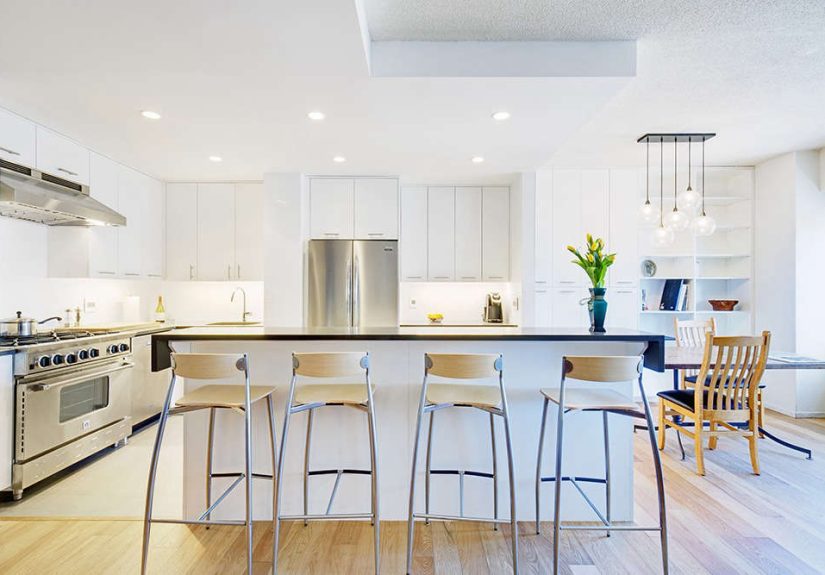
The renovation keeps plumbing mostly in place to control cost and simplify approvals. Cabinets extend to the ceiling in a warm off-white finish. Lower drawers replace old base cabinets. A counter-depth paneled refrigerator sits near the entry. The range wall gets a slim hood, marble-look quartz backsplash, and under-cabinet lighting. A small walnut shelf displays coffee cups and a framed sketch of Central Park. The floor is refinished to match the adjacent dining room, creating continuity.
The result feels elegant but not precious. It is a kitchen where someone can cook a real meal, pour drinks for friends, unpack groceries without panic, and still enjoy a room that looks calm from the living area. That is the sweet spot: beauty with manners and muscle.
Common Mistakes to Avoid
One common mistake is over-designing a small kitchen. Too many cabinet colors, tile patterns, hardware finishes, and decorative objects can make the space feel busy. Another mistake is choosing appliances before confirming measurements and clearances. In apartment kitchens, an extra inch can decide whether a dishwasher opens fully or bumps into your shin like a tiny stainless-steel villain.
Another mistake is ignoring lighting until the end. Lighting should be part of the plan from the beginning because wiring, switches, and fixture placement affect construction. Finally, do not underestimate storage. A kitchen can look magazine-ready on installation day and become frustrating a month later if there is no place for pantry goods, cleaning supplies, and small appliances.
Experience Notes: Living With an Upper East Apt Kitchen
The real test of an Upper East Apt Kitchen begins after the renovation dust settles and daily life moves back in. On the first morning, the kitchen may feel almost too perfect to use. The counters are clear, the drawers glide like they are on good behavior, and the backsplash has not yet met olive oil. Then reality arrives: coffee needs brewing, groceries need unpacking, someone drops a blueberry, and the kitchen officially becomes part of the home.
One of the biggest lessons from living with a compact apartment kitchen is that convenience beats fantasy. It is tempting to design for an imaginary version of life where every dinner involves fresh herbs, linen napkins, and classical music. But the better kitchen supports the real routine: quick breakfasts, late-night snacks, weeknight pasta, weekend hosting, and the occasional heroic attempt at baking. The best storage is not the storage that looks clever on a plan. It is the storage you can use with one hand while holding a hot pan with the other.
In an Upper East apartment, quiet luxury often comes from small details. A drawer insert that keeps utensils from fighting each other. A pull-out trash cabinet that prevents an ugly bin from sitting in the open. A dimmer switch that turns the kitchen from task mode to dinner-party mode. A counter-depth refrigerator that no longer blocks the doorway. These changes may not sound dramatic, but they make daily life smoother.
Another real-life lesson is that countertop discipline matters. In a smaller kitchen, the counter is prime real estate. Leave out only what earns its place. A coffee machine used every morning deserves a spot. A blender used twice a year can live elsewhere. Decorative items should be useful or meaningful: a ceramic bowl for fruit, a small tray for oils, a favorite cutting board leaning against the backsplash. The goal is warmth, not clutter cosplay.
Hosting also changes in a well-designed apartment kitchen. Guests naturally gather near food, even if the kitchen is small. A smart layout allows one person to cook while another pours drinks without creating a traffic jam. In an open kitchen, a beautiful backsplash or refined cabinet finish becomes part of the entertaining space. In a closed galley, good lighting and efficient storage make preparation easier before the meal moves to the dining room.
Maintenance is another experience worth mentioning. Choose finishes according to personality, not just taste. If water spots on marble will ruin your morning, choose quartz or another low-maintenance surface. If polished brass aging over time feels charming, use it proudly. If patina makes you twitch, choose a finish that stays more consistent. A kitchen should support your temperament, not test it daily.
Finally, a successful Upper East Apt Kitchen feels personal. It may borrow from classic Manhattan style, but it should not look like a showroom with better manners. Add a vintage runner, a framed print, a family recipe box, colorful dishes, or a small lamp if space allows. These human touches make the kitchen feel lived in rather than staged. After all, the best apartment kitchens are not simply renovated. They are used, loved, reorganized, spilled in, cleaned up, and quietly admired while the coffee brews.
Conclusion
An Upper East Apt Kitchen is a study in smart elegance. It asks for thoughtful planning, refined materials, efficient storage, and a healthy respect for apartment realities. Whether the kitchen is a narrow galley, a compact L-shape, or an open-plan renovation, the best design choices make the space feel brighter, calmer, and easier to use.
The winning formula is simple: honor the architecture, plan the layout carefully, invest in cabinetry, layer the lighting, choose durable surfaces, manage ventilation, and keep clutter under control. Do that, and even a small Manhattan kitchen can feel like a polished, high-functioning jewel boxone that can handle dinner, guests, groceries, and the occasional dramatic search for the missing corkscrew.
Note: This HTML article is written for web publishing, with original wording, SEO-friendly structure, and no embedded source-link elements or content reference tags.