Table of Contents >> Show >> Hide
- What Is Confectioners’ Sugar?
- What’s in the bag (and why it matters)
- Confectioners’ sugar vs. granulated sugar
- When to use confectioners’ sugar (aka: where it shines)
- How to Make Confectioners’ Sugar at Home
- Storage, shelf life, and keeping it lump-free
- Quick FAQs
- Bakers’ Real-Life Moments (500+ words of confectioners’ sugar experience)
- Final Sprinkle
Confectioners’ sugar is the fairy dust of the baking world. It shows up when cakes need a silky frosting, cookies want a snowy finish,
and your kitchen counter needs an excuse to look like it just hosted a tiny blizzard.
But what is it, exactly? Why does it sometimes taste “sweeter” than regular sugar? And how can you make it at home when you’re
halfway into a buttercream and your pantry hits you with that cruel, empty-bag plot twist?
What Is Confectioners’ Sugar?
Confectioners’ sugar (often called powdered sugar) is granulated white sugar that’s been ground into an ultra-fine powder.
In most U.S. grocery stores, “powdered sugar” and “confectioners’ sugar” are effectively the same thing: the soft, cloudlike sugar that disappears
into frostings and glazes without leaving a gritty trail behind.
You’ll also hear it called icing sugar (common outside the U.S.) or 10X sugar. The “X” grading refers to fineness:
more Xs generally mean a finer powder, which matters when you’re chasing that smooth-as-satin icing.
What’s in the bag (and why it matters)
Here’s the part many people don’t notice until they read the ingredient label: most confectioners’ sugar contains a small amount of
starchusually cornstarch. That starch isn’t there to ruin your fun. It’s there to keep your fun from turning into
a sugar brick.
Why cornstarch is added to powdered sugar
Powdered sugar is basically tiny sugar particles with a huge surface area. That means it loves moisture. If it absorbs humidity, it clumps,
and clumps are the mortal enemy of smooth frosting. A little starch helps absorb moisture and prevents caking so the sugar stays free-flowing.
Bonus: starch can help certain icings “set” with a lightly dry surfacegreat when you want a glaze that firms up instead of staying sticky and smudgy.
Cornstarch vs. tapioca (and the “chalky” mystery)
Some bakers swear they can taste cornstarch in powdered sugar, especially in uncooked frostings. That’s not your imagination being dramatic.
Cornstarch doesn’t dissolve at room temperature the same way sugar does, so it can read as faintly “chalky” in certain recipes.
That’s why some brandsoften organic optionsuse tapioca starch (or sometimes potato starch) instead. Tapioca can taste more neutral
to many people, particularly in buttercream and cream-cheese frosting where the flavor is front and center.
Confectioners’ sugar vs. granulated sugar
Chemically, they’re both sucrose. Functionally, they behave like two completely different roommates.
Granulated sugar builds structure in baked goods: when creamed with butter, its crystals help create tiny air pockets that contribute to lift and texture.
Confectioners’ sugar is too fine for that jobmore “velvet paint” than “tiny scaffolding.”
Why confectioners’ sugar can taste “sweeter”
Even though it’s the same sugar, the finer particles dissolve faster on your tongue. That quick dissolve can make the sweetness feel more immediate,
like your taste buds got hit with a surprise party.
Why you usually shouldn’t swap it 1:1 in baking
Two reasons: volume and behavior.
- Volume: A cup of powdered sugar is “fluffier” and weighs less than a cup of granulated sugar. If you swap by volume, you’re not swapping
equal amounts of sugar. - Behavior: Confectioners’ sugar dissolves quickly and contains starch, which can reduce crispness and shift texture toward soft and tender.
That can be amazing in shortbread or pâte sablée, but sad in a cookie that’s supposed to snap.
If you must substitute, do it by weight (and expect the texture to change anyway). Baking is science with sprinkles, not a vibes-only sport.
When to use confectioners’ sugar (aka: where it shines)
Confectioners’ sugar is the go-to when you need sweetness without crunch. It dissolves quickly, blends smoothly, and plays nicely with fats and liquids.
Best uses
- Buttercream frosting: For classic American buttercream (butter + powdered sugar), this is the main event.
- Cream-cheese frosting: Smooth texture, stable sweetness, and less graininess than granulated sugar.
- Glazes and icings: A simple powdered sugar glaze can go from “meh” to bakery-case in 60 seconds.
- Whipped cream: It dissolves fast and helps stabilize the cream slightly compared with granulated sugar.
- Dusting: Doughnuts, brownies, beignets, French toastanything you want to look instantly more charming.
- Candy and fudge: Fine sugar helps you get that smooth bite without gritty crystals.
Pro tip for dusting (avoid the “vanishing snow” problem)
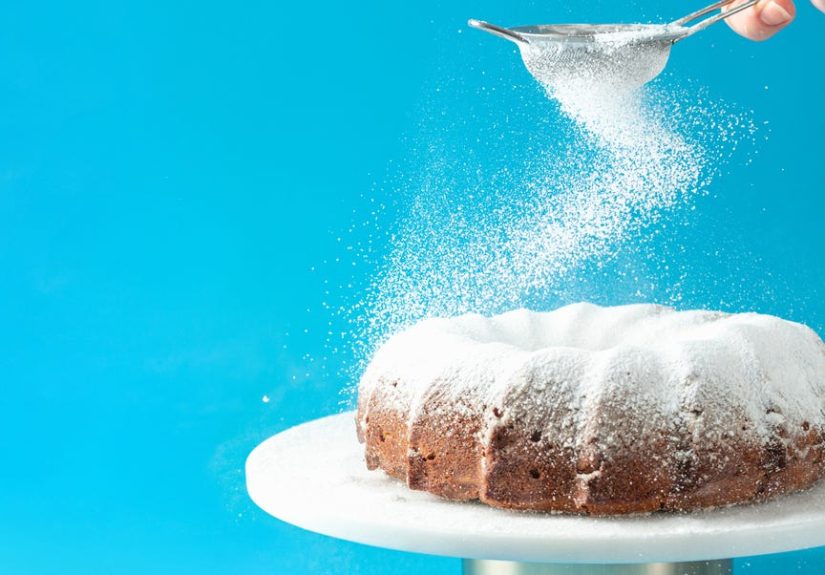
If your powdered sugar disappears into warm pastries, that’s moisture at work. Let baked goods cool slightly before dusting, sift from higher up for an even
“snowfall,” and use a light hand. If you need a dusting that lasts longer, look for specialty non-melting sugars (different product, different purpose).
How to Make Confectioners’ Sugar at Home
Yesyou can make confectioners’ sugar at home. Noit won’t always be exactly like store-bought 10X, especially if your blender is more “enthusiastic
squirrel” than “jet engine.” But for most icings and emergency frosting situations? It works beautifully.
Ingredients
- 1 cup granulated sugar
- 1 tablespoon cornstarch (optional but recommended for anti-caking and icing stability)
If you’re using it immediately and you strongly dislike starch flavor, you can reduce the cornstarch or omit itbut expect more clumping and less “set” in glazes.
Equipment options (ranked by “most likely to succeed”)
- High-speed blender: Fast and very fine texture.
- Clean coffee/spice grinder: Great for small batches; don’t do huge quantities or you’ll be there all day.
- Food processor: Works, but often takes longer and may be slightly less fine.
Step-by-step method
- Add sugar + cornstarch to your blender/processor. Start with at least 1 cup sugar for better circulation around the blade.
- Blend until powdery. In a strong blender, this can take about 1–3 minutes. In a food processor, plan on longer.
- Let the dust settle for 30–60 seconds before opening the lid. Your lungs will thank you.
- Sift to remove any stubborn bits. If you see pebbly pieces, blend again briefly and re-sift.
- Measure with care: Homemade powdered sugar is airy. If precision matters, measure by weight or spoon lightly into a cup and level.
How much does it make?
Because the sugar becomes fluffy as it’s powdered, the volume increases. A common yield from 1 cup granulated sugar is roughly
about 1 3/4 cups confectioners’ sugar (sometimes closer to 2 cups depending on how finely it’s ground and how much it aerates).
Troubleshooting homemade confectioners’ sugar
- It’s gritty: Blend longer, then sift. Also make sure your machine is truly pulverizing, not just politely tossing sugar around.
- It clumps quickly: Add the starch next time, store airtight, and keep it away from steam (hello, dishwasher vent).
- It smells warm or “toasty”: Your blender is heating the sugar. Pulse in short bursts and rest between rounds.
- My frosting still tastes grainy: The sugar might not be fine enough. For ultra-smooth royal icing or competition-level buttercream,
store-bought 10X can be worth it.
Storage, shelf life, and keeping it lump-free
Store confectioners’ sugar in an airtight container in a cool, dry place. Humidity is the villain. If you live somewhere sticky, consider adding a food-safe
desiccant packet in the container (the same kind you see in packaged foods).
If it clumps, you don’t have to throw it out. Sift it. Whisk it. Or blitz it briefly. Sugar is patient; it’s just waiting for you to stop storing it near the
kettle.
Quick FAQs
Is confectioners’ sugar gluten-free?
Sugar itself is gluten-free, and cornstarch is typically gluten-free, but cross-contact can happen depending on manufacturing. If you’re baking for someone
with celiac disease, check labels and choose a certified product.
Is “powdered sugar” always the same as “confectioners’ sugar” in the U.S.?
In everyday American baking, yes. The terms are used interchangeably, and most products include a small amount of starch. If you’re hunting for starch-free,
read the ingredient list carefully (and be prepared for some label gymnastics).
How do I measure it correctly?
For consistency, weigh it. If you don’t have a scale, spoon it into a dry measuring cup and level itdon’t pack it down like brown sugar.
(Also, yes, recipes sometimes say “sifted,” and they mean it.)
If you’re converting from a one-pound box, many baking references place it at roughly 3 1/2 to 4 cups when unsifted, depending on how
settled it is. Translation: a scale prevents a lot of icing heartbreak.
Bakers’ Real-Life Moments (500+ words of confectioners’ sugar experience)
If confectioners’ sugar had a personality, it would be that friend who shows up late, dressed perfectly, and somehow saves the entire event. You weren’t sure
the party was going to happenthen boomfrosting appears, glossy glaze lands like a finishing move, and suddenly your “rustic” cake looks intentionally rustic,
not “I ran out of time and hope no one notices.”
One of the most common home-baker experiences is realizing you’re out of powdered sugar at the exact worst time. Not at the beginning of the recipe, when you
could calmly pivot. No. Right when your butter is softened, your mixer bowl is ready, and your cake layers are cooling with that smug “decorate me” energy.
That’s when confectioners’ sugar becomes a quest item.
This is also when people discover the secret emotional range of a blender. On one end: triumph. You grind sugar into a soft cloud, you add a little starch,
you sift, and you feel like you just hacked the baking system. On the other end: the blender launches a powdered sugar plume the moment you lift the lid,
and your kitchen briefly looks like it hosted a tiny skiing competition. The fix is simplewait a beat for the dust to settlebut in the moment, it feels like
you’ve angered the Sugar Gods.
Another classic: the “grainy frosting mystery.” Someone makes American buttercream and it tastes sweet, but the texture is… suspicious. Like sand at a beach
you didn’t plan to visit. Nine times out of ten, the powdered sugar wasn’t sifted, or it absorbed moisture and formed tiny lumps, or it wasn’t ground fine enough
in a DIY batch. The moment you sift (or re-grind) and the frosting turns silky, it’s borderline magicallike upgrading from standard definition to 4K.
Then there’s the rite of passage known as “dusting.” The first time you dust powdered sugar over brownies, you expect a delicate bakery finish. The second time,
you learn the difference between “dusting” and “covering like you’re insulating an attic.” A fine-mesh sieve helps, but the real skill is restrainttap gently,
move continuously, and remember you can always add more snow. Removing snow is… complicated.
Bakers also learn fast that confectioners’ sugar isn’t just for sweetnessit’s for texture control. Want whipped cream that doesn’t weep as quickly? Powdered sugar
helps. Want a glaze that sets with a tidy finish on a bundt cake? Powdered sugar is your shortcut. Want cookies that are tender and crumbly instead of crisp?
Some recipes use powdered sugar specifically because it changes the bite. It’s not just “sugar, but smaller.” It’s sugar with a different job description.
And finally: the cornstarch debate. Some people never notice it. Others can detect it instantly in uncooked frostings and will happily pay extra for a tapioca-based
version. If you’ve ever made a frosting and thought, “Why does this taste faintly… powdery?” that’s the moment you understand why ingredient labels matter.
The good news is there’s no single “right” answerjust the right choice for your recipe and your taste buds.
The funniest part is how often confectioners’ sugar turns a baking near-disaster into a win. A too-dry cake? Add a glaze. A plain cookie? Roll it in powdered sugar.
A slightly uneven layer cake? Frosting covers a multitude of sinsdeliciously. Confectioners’ sugar doesn’t just sweeten; it rescues, upgrades, and occasionally redecorates
your entire kitchen in a fine white dust. Consider that the price of admission.
Final Sprinkle
Confectioners’ sugar is finely ground sugar (usually with a touch of starch) designed for smooth mixing, quick dissolving, and beautiful finishing. It’s the reason
buttercream turns fluffy, glazes set neatly, and desserts can look “bakery fancy” without requiring a culinary degree. And when you run out, you can make a solid
homemade version with granulated sugar and cornstarchjust blend, let the dust settle, sift, and carry on like the prepared baking legend you now are.