Table of Contents >> Show >> Hide
- A direction wasn’t chosenone was inherited
- From fluffy cloud to flat disk: how the solar system got its “lane markings”
- How the disk makes “same direction” the default outcome
- “All the planets” is basically true… with a few important asterisks
- Zooming out: do other planetary systems orbit the same way?
- So why do the planets orbit the same direction in our solar system?
- Experiences: Making “same direction” feel real (without needing a spaceship)
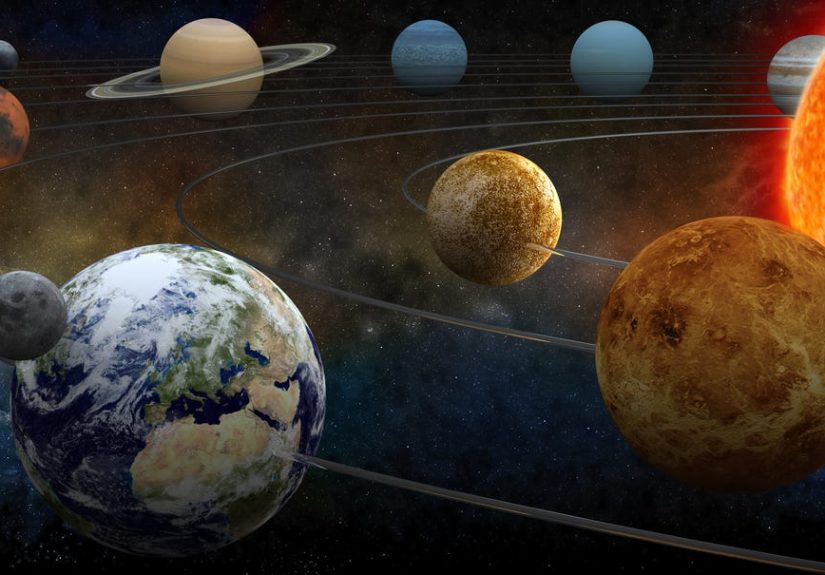
If you’ve ever looked at a diagram of the solar system, you’ve probably noticed something oddly satisfying:
the planets all go around the Sun the same way. It’s like the universe agreed on traffic rules and thenmiracle of miracleseveryone followed them.
No cosmic U-turns. No Mars cutting across five lanes to make an exit. Just a neat, mostly orderly swirl.
That shared direction isn’t a coincidence, and it’s not because “gravity prefers clockwise” (gravity is famously indifferent).
It’s a fossil clueleftover motion from the solar system’s baby photosstamped into every orbit like a family resemblance.
The short version: planets formed inside a spinning disk, and when you’re born in a merry-go-round, you tend to keep going the way the merry-go-round goes.
A direction wasn’t chosenone was inherited
Gravity pulls inward, but it doesn’t pick “left” or “right”
Gravity’s job is to gather matter. It makes gas and dust clump, collapse, and eventually form a star. But gravity alone doesn’t assign a preferred spin
direction. If you dropped a bunch of marbles into a bowl, they’d roll inward. Whether they swirl clockwise or counterclockwise depends on tiny
imbalanceswho had a little sideways motion, who bumped whom, who arrived first. Same physics, bigger stage.
Early on, our solar system was a cloud of gas and dust (often called the “solar nebula”). It wasn’t perfectly still. Real clouds in space are messy:
they drift, shear, tumble, and get nudged by their neighborhood. Even if the cloud’s net rotation was slight, it mattered a lot once the cloud began
shrinking under gravity.
The cosmic figure skater effect (a.k.a. conservation of angular momentum)
Here’s the simplest mental picture: a figure skater spins slowly with arms out, then spins faster when pulling arms in. Nothing “mystical” happened
the skater didn’t summon extra spin out of thin air. The rotation sped up because angular momentum is conserved: when mass moves closer to the axis,
the rotation rate increases.
A collapsing nebula behaves similarly. As gravity pulls material inward, the cloud spins faster. That increasing spin makes it harder for material to
keep falling straight in along the “equator” of the spin. The result is a flattened, rotating disk: a protoplanetary disk around a young Sun.
And once you have a disk, you’ve basically built a planet-making machine that naturally produces orbits aligned in the same general direction.
From fluffy cloud to flat disk: how the solar system got its “lane markings”
Why a disk forms instead of a perfect ball
Imagine the original cloud as a lumpy blob that’s rotating a little. Gravity collapses it fastest in the direction where it’s easiest to compress.
Random motions and collisions among particles bleed off “up-and-down” movement, while rotation keeps the sideways motion organized.
Over time, the cloud squashes into a disk, with most of its mass and motion concentrated in one plane.
This disk is why the planets mostly orbit in nearly the same plane (the ecliptic plane) and why they orbit in the same direction. The disk isn’t
just a backdrop; it’s the environment that sets the rules of the game. If all the building material is circulating one way in a flattened swirl,
then the objects that grow inside that swirlplanetesimals, then protoplanets, then planetsinherit the swirl’s overall direction.
Why the cloud had any spin at all
A fair question is: “Okay, but what started the spin?” The unsatisfying but true answer is: almost everything in the universe has some.
Interstellar clouds aren’t isolated. They’re part of a rotating galaxy, stirred by turbulence, tugged by nearby masses, and shaped by events like
stellar winds and past supernovae. Those influences don’t need to create a huge spinjust a tiny net rotation is enough, because collapse amplifies it.
In other words, the solar system didn’t flip a coin and decide “clockwise.” It simply continued a small, pre-existing motion and scaled it up
dramatically as it formed.
How the disk makes “same direction” the default outcome
Gas drag and collisions: nature’s orbital smoothers
Early planet formation wasn’t polite. Dust grains collided, stuck, broke, re-stuck, and gradually grew into larger bodies. In a gas-rich disk, those
collisions and the surrounding gas act like a smoothing filter:
orbits that are highly tilted or wildly eccentric tend to get damped over time, because plowing through gas costs energy and repeated collisions
average out weird motions.
The key is that the disk has a dominant, shared direction of motionits overall angular momentum vector. Bodies moving “with the flow” can grow
efficiently because their relative speeds are lower. Bodies moving against the flow face higher-speed collisions, which are more likely to shatter
than to build. So the disk doesn’t just encourage alignment; it rewards it.
Why planets don’t usually form on backward orbits
Could a planet form orbiting backward inside the same disk? In practice, it’s extraordinarily unlikely.
A retrograde (backward) orbit inside a prograde disk would mean the object is constantly crashing through oncoming traffic.
The relative velocities would be so high that growth by gentle sticking becomes a demolition derby.
Backward orbits are far more plausible as a later outcomeafter formationvia gravitational chaos, close encounters, or captures.
“All the planets” is basically true… with a few important asterisks
Asterisks #1: Orbits vs. spins are different stories
When people say “everything moves the same direction,” they often mix up two motions:
(1) planets orbiting the Sun, and (2) planets rotating on their own axes.
The planets’ orbits are famously consistent: they go around the Sun in the same general direction and near the same plane.
But rotation is messier. Venus spins backward compared with most planets, and Uranus is tipped over so dramatically that it’s basically
rolling around the Sun like a barrel.
That doesn’t contradict the disk idea. It actually supports it: orbit direction is set by the shared disk,
while spin can be altered by later collisions, tidal effects, and long-term interactions.
Axial rotation is easier to “mess up” than an entire solar orbit.
Asterisks #2: Small bodies don’t always behave
The eight major planets are the poster children for tidy, prograde orbits. Smaller objects are more rebellious.
Many comets and some distant objects have steeply tilted or even retrograde paths. A classic example is Halley’s Comet, which travels around the Sun
opposite the planets’ directiontrue retrograde motion, not just an illusion in the night sky.
Why the difference? Small bodies are easier to perturb. Over billions of years, gravitational interactionsespecially with giant planetscan scatter
comets and icy bodies into high-inclination or retrograde orbits. They’re like cosmic pinballs: light enough to get flung into odd trajectories.
Asterisks #3: Some moons are “captured” and go the wrong way on purpose
The solar system also contains retrograde moons. Neptune’s large moon Triton is the standout: it orbits opposite Neptune’s rotation, which is
one reason scientists think it was capturedlikely a Kuiper Belt object that Neptune snagged long after the planet formed.
Capture scenarios can flip the usual rules because the object wasn’t born in the planet’s original, orderly disk.
Zooming out: do other planetary systems orbit the same way?
Many do… but exoplanets taught us the universe loves plot twists
If every planetary system formed quietly in a disk and then stayed quiet forever, we’d expect most planets to orbit aligned with their star’s spin.
And often they do. But astronomers have found plenty of systems where orbits are tilted, misaligned, or (in some cases) effectively “backward”
relative to the star’s rotation.
One famous example from early discoveries is the hot Jupiter WASP-17b, which was identified as having a retrograde orbit relative to its star’s spin.
Cases like this suggest that many planets form in an orderly disk, then later experience dramatic eventsplanet-planet scattering, gravitational nudges
from companion stars, or complex dynamical effectsthat tilt their orbits.
How we can tell: the Rossiter–McLaughlin effect (the “stellar Doppler wobble during transit” trick)
When a planet passes in front of its star (a transit), it blocks a small slice of the star’s rotating surface. Because one limb of a rotating star is
moving slightly toward us and the other limb is moving slightly away, the transit creates a subtle, time-changing distortion in the star’s measured
velocity. That distortion can reveal whether the planet’s orbital path is aligned with the star’s rotationor dramatically tilted.
The takeaway is important: disks still build planets, but gravity keeps sculpting the system after the disk fades.
“Same direction” is the default starting point; it doesn’t guarantee a peaceful adulthood.
So why do the planets orbit the same direction in our solar system?
Because the solar system formed from a collapsing, rotating cloud that flattened into a disk, and the planets grew inside that disk.
The disk’s shared rotation set a dominant direction for orbital motion, and gas drag plus countless collisions helped damp out wild inclinations,
making the resulting planetary orbits broadly aligned.
Put even more simply: the planets orbit the same way for the same reason runners on a track usually run the same direction
they didn’t agree to it in a meeting; they inherited the track.
A quick “myth-buster” checklist
- Myth: Gravity forces everything to orbit one way. Reality: Gravity pulls inward; direction comes from angular momentum.
- Myth: Everything in the solar system is perfectly aligned. Reality: Planets are mostly aligned; many comets and some moons aren’t.
- Myth: Backward motion is impossible. Reality: It’s uncommon for planets here, but common enough in exoplanet systems to be scientifically juicy.
Experiences: Making “same direction” feel real (without needing a spaceship)
One of the coolest “aha” moments people have with this topic doesn’t come from a textbookit comes from the sky. If you’ve ever watched the planets
over several evenings, you may notice they tend to show up along the same band of the sky. That band is the ecliptic, the projection of the solar
system’s flat orbital plane onto our view. At a star party, someone will inevitably point a laser pointer (responsibly!) and say, “See that line?
That’s where the planets live.” It’s like discovering your city has a secret expressway… and every planet commutes on it.
Another common experience is stumbling into the phrase “retrograde motion” and thinking, “Waitplanets go backward?” This is where the universe
plays a prank with vocabulary. Most of the time, retrograde motion you hear about in astronomy is apparent retrograde motion: from our moving
viewpoint on Earth, Mars (for example) can seem to drift westward against the stars for a while when Earth “laps” it in orbit. It’s a perspective
effectlike passing a slower car on the highway and watching it slide backward in your side window. That experience actually helps you appreciate how
much motion is baked into the solar system, and how our point of view can make orderly orbits look weird.
If you want a hands-on feel for why disks form and directions line up, there’s a classic classroom-style demo: spin on a swivel chair holding small
weights in your hands. Pull the weights closer and you spin faster. You didn’t add energy; you rearranged where mass sits relative to the axis. That
“spin-up” is the same basic idea behind a collapsing cloud becoming a faster-spinning system. Another simple demo is a shallow pan with a bit of water:
swirl it gently and you’ll see how quickly a flat, rotating flow becomes organized. Real protoplanetary disks are wildly more complex, but the core
intuitionrotation + collapse → diskclicks fast when you can see motion organize itself.
There’s also a practical, modern experience that makes the idea feel oddly personal: planet-tracking apps. When an app draws the ecliptic on your phone,
it’s basically handing you a map of the solar system’s “directional agreement.” You can watch where Venus and Jupiter line up, notice that the Moon’s
path hugs the same neighborhood, and realize you’re standing inside a flattened, rotating system. Even planetary alignments and “planet parades”
(when several planets appear along the same arc) are really a visibility bonus caused by the same disk-like geometry. It’s not that the planets are
marching in formation for you. It’s that you’re peeking along the edge of the track.
Finally, the exceptions can be a memorable experience tooespecially when you learn about captured moons like Triton or truly retrograde objects like
Halley’s Comet. Those are the moments where a neat rule gains depth. The solar system starts you with a satisfying patternsame direction, mostly same
planeand then teaches you scientific humility: patterns come with histories. Order is often the beginning of the story, not the end. Once you see it
that way, every orbit becomes less like a diagram and more like a biography written in motion.