Table of Contents >> Show >> Hide
- What Does White Grass Usually Mean?
- 1. Powdery Mildew: The “Flour on the Lawn” Problem
- 2. Herbicide Injury: When Weed Killer Gets a Little Too Enthusiastic
- 3. Fertilizer Burn and Salt Stress
- 4. Frost, Cold Injury, and Winter Stress
- 5. Drought Stress Can Make Grass Look Pale or Whitish
- 6. Slime Mold: Weird, Sudden, and Usually Harmless
- 7. Insect or Grub Damage Can Look Pale
- 8. Soil Problems and Nutrient Imbalances
- 9. Mower Stress and Dull Blades
- 10. Newly Seeded Grass Turning White
- How to Diagnose White Grass in 5 Minutes
- Best Ways to Prevent Grass From Turning White
- Real-World Experience: What White Grass Teaches Homeowners
- Conclusion
One day your lawn looks like a respectable green carpet. The next day, it looks as if someone dusted it with powdered sugar, spilled bleach, or let a ghost practice yoga on it. If you are staring out the window asking, “Why is my grass turning white?” you are not alone. White grass is a surprisingly common lawn problem, and the cause can range from harmless surface mold to herbicide injury, disease, frost, drought stress, nutrient imbalance, or simple mower drama.
The good news is that white grass does not always mean your lawn is dead. The better news is that you usually do not need to panic-buy every bottle in the garden aisle. The best fix starts with diagnosis: Is the grass coated in white powder? Are only the tips white? Did the color change after spraying weed killer? Is the lawn in deep shade? Did the weather swing from wet and cool to hot and dry? Your lawn is leaving clues. You just have to play detective without wearing a trench coat in front of the neighbors.
This guide explains the most common reasons grass turns white, how to identify each one, and what to do next so your lawn can return to green instead of continuing its audition for a winter-themed musical.
What Does White Grass Usually Mean?
White grass usually means one of three things: something is sitting on the grass blades, something has damaged the leaf tissue, or the plant is struggling to produce or hold chlorophyll. Chlorophyll is the green pigment that helps grass use sunlight for energy. When it is disrupted by disease, chemicals, stress, or environmental conditions, grass can look pale, silver, gray, straw-colored, or white.
Before treating anything, look closely at the affected area. White powder on the blade surface is different from bleached leaf tissue. A few white patches in shade suggest a different issue than white streaks after mowing. White grass after a weed-control application points in another direction entirely. The more specific your observation, the less likely you are to waste money on the wrong fix.
1. Powdery Mildew: The “Flour on the Lawn” Problem
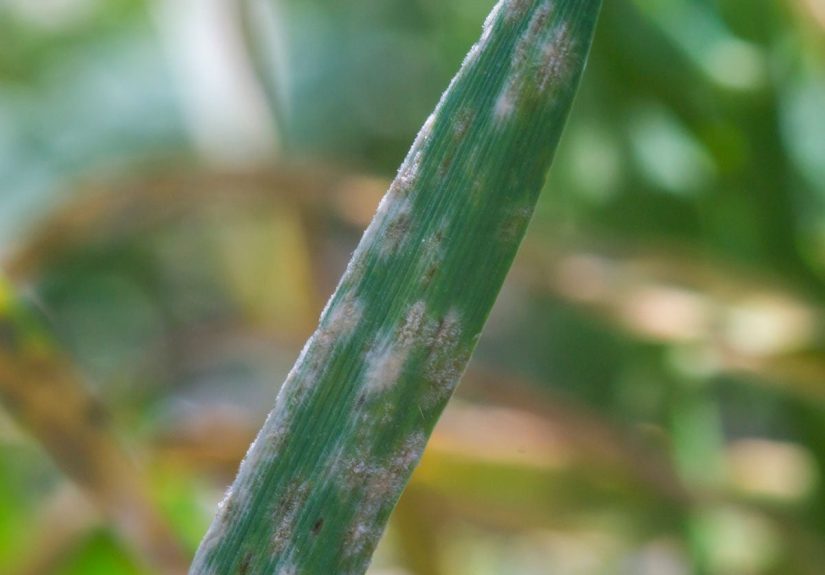
The most common reason grass turns white is powdery mildew, a fungal disease that creates a white or gray powdery coating on grass blades. It often looks like someone shook a bag of flour over the lawn. Powdery mildew is especially common in shady areas, places with poor air movement, and lawns that stay humid for long periods.
How to Identify Powdery Mildew
Powdery mildew usually starts as small white spots on individual blades. Over time, those spots spread and may cover entire patches of turf. The grass may look dusty, dull, gray-white, or chalky. If you rub a blade between your fingers, the white coating may partially come off. Older grass blades often show symptoms first, and heavily infected grass can eventually turn yellow, tan, or brown.
Why It Happens
Powdery mildew loves weak turf growing in shade. It also becomes more likely when grass is planted too densely, air circulation is poor, nitrogen fertilizer is overused, or the lawn is watered late in the day. Cool nights, mild days, and high humidity can make the problem worse. In other words, powdery mildew is the lawn equivalent of a guest who shows up when the room is crowded, damp, and nobody opened a window.
How to Fix Powdery Mildew
Start by improving the growing conditions. Prune low tree branches or thin nearby shrubs to bring in more light and air. Water in the morning so blades dry before evening. Avoid heavy nitrogen applications, especially when the lawn is already lush and soft. Mow at the recommended height for your grass type and keep mower blades sharp. If the area is permanently shaded, consider overseeding with a shade-tolerant grass mix or replacing that section with mulch, groundcover, stepping stones, or a shade garden. Sometimes the lawn is not failing; it is simply trying to tell you it does not want to live under a maple tree forever.
2. Herbicide Injury: When Weed Killer Gets a Little Too Enthusiastic
If your grass turns white shortly after applying weed killer, crabgrass preventer, or another herbicide, chemical injury may be the cause. Some herbicides affect pigment production, leaving grass looking bleached, pale, or white. Others burn the leaf tissue, especially when applied during hot, dry weather or at too high a rate.
Signs of Herbicide Damage
Herbicide injury often appears in patterns. You may see white streaks where the sprayer passed, pale spots where liquid overlapped, or damage near sidewalks and driveways where spray concentrated. Sometimes the damage appears a few days after application. In other cases, grass slowly turns pale as new growth emerges. Young, newly seeded, drought-stressed, or heat-stressed lawns are usually more vulnerable.
What to Do After Herbicide Injury
Do not immediately apply more products. That is how a small problem becomes a lawn soap opera. Water the area deeply but not excessively to reduce stress. Mow normally, but avoid cutting too short. If the crowns and roots are healthy, the grass may grow out of the injury over several weeks. If the turf dies, rake out the damaged material and reseed or sod when the weather is suitable for your grass type.
For future applications, read the label carefully, measure accurately, avoid spraying during heat or drought stress, and never assume that “a little extra” will work better. With lawn chemicals, “a little extra” often translates to “congratulations, you invented beige.”
3. Fertilizer Burn and Salt Stress
Fertilizer can help grass grow thick and green, but too much fertilizer can scorch it. When fertilizer granules sit on grass blades or when soluble salts build up around the roots, the plant can lose moisture and develop pale, yellow, tan, or whitish areas. Fertilizer burn is more likely when products are applied unevenly, spilled, applied before hot weather, or not watered in properly.
How to Recognize Fertilizer Burn
Fertilizer burn often appears as streaks, bands, or patches that match the path of a spreader. A spill may create a sharply defined dead or pale spot. The grass may look crispy at the tips, and the damage may show up quickly after application. If the lawn looks striped like a poorly planned football field, your spreader pattern may be the culprit.
How to Help the Lawn Recover
Water the affected area thoroughly to move salts away from the leaf surface and dilute the concentration in the root zone. Remove visible fertilizer piles immediately. Avoid fertilizing again until the lawn recovers. In the future, use a calibrated spreader, follow soil-test-based recommendations, and apply fertilizer when grass is actively growing. More fertilizer does not create a greener lawn faster; it creates a more expensive problem faster.
4. Frost, Cold Injury, and Winter Stress
Grass can look white after frost because ice crystals form on the blades. This kind of white appearance may be temporary and disappear as the frost melts. However, cold injury or winter desiccation can also leave grass pale, straw-colored, silver, or whitish, especially in exposed areas with wind, poor snow cover, or foot traffic while frozen.
When Frost Is Harmless
If the whiteness appears early in the morning and disappears by midmorning, you are probably just seeing frost. Avoid walking on frosted grass because frozen blades are brittle and can break. Yes, the dog will ignore this advice, because dogs believe every lawn is a public sidewalk with smells.
When Winter Damage Needs Repair
If the lawn remains pale after temperatures warm and the grass should be actively growing, inspect the crowns near the soil line. Green or firm crowns suggest the lawn may recover. Brown, mushy, or dead crowns mean reseeding or patch repair may be needed. Rake lightly, remove dead material, and overseed at the correct time for your region and grass species.
5. Drought Stress Can Make Grass Look Pale or Whitish
Drought-stressed grass usually turns bluish-gray, dull green, tan, or straw-colored, but in strong sunlight it can appear pale or whitish. The blades may fold, curl, or leave footprints after you walk across the lawn. When drought stress continues, the lawn thins and becomes more vulnerable to weeds, pests, and disease.
How to Test for Drought Stress
Step on the lawn and look for footprints. Healthy, hydrated grass springs back quickly. Drought-stressed grass stays flattened. You can also push a screwdriver into the soil. If it is difficult to insert, the soil is likely dry and compacted. Dry soil plus white-looking grass is a strong clue that your lawn needs water, not a mystery potion from the garden center.
How to Water Correctly
Water deeply and less frequently rather than giving the lawn a tiny daily sprinkle. Morning irrigation is best because it reduces evaporation and gives blades time to dry. Most established lawns perform better when water reaches the root zone. Shallow watering encourages shallow roots, and shallow roots panic the moment summer walks into the room.
6. Slime Mold: Weird, Sudden, and Usually Harmless
Slime mold can appear suddenly on lawns as white, gray, blue-gray, or even pinkish patches. It may look alarming, but it usually grows on the surface of grass blades and does not seriously harm the turf. Slime mold is more common during warm, wet weather and often disappears on its own when conditions dry out.
What to Do About Slime Mold
In most home lawns, control is not necessary. If the appearance bothers you, gently rake, brush, mow, or rinse the affected grass to break up the mold. Avoid overwatering and improve airflow where possible. The key is not to treat slime mold like a five-alarm emergency. It is more “strange lawn visitor” than “villain in a gardening movie.”
7. Insect or Grub Damage Can Look Pale
Some lawn pests damage grass roots or feed on blades, leaving turf yellowish, off-white, thin, or droughty-looking. White grubs feed below the surface, damaging roots so grass cannot take up water properly. Leafhoppers and other insects can also cause pale stippling or off-color turf. Pest damage is often mistaken for drought because the symptoms overlap.
How to Check for Grubs
If a pale patch lifts easily like loose carpet, roots may be damaged. Cut and peel back a small square of turf near the edge of the affected area and look for C-shaped white larvae in the soil. A few grubs are normal. A large number may justify treatment, but the threshold depends on grass type, region, and overall lawn health.
How to Respond
Do not apply insecticide just because the lawn looks pale. Confirm the pest first. Healthy lawns can tolerate some insect activity, and unnecessary pesticide use can harm beneficial organisms. If pests are present at damaging levels, choose a product labeled for that pest and apply it at the proper timing.
8. Soil Problems and Nutrient Imbalances
Grass can turn pale when soil conditions prevent healthy growth. Low nitrogen often makes turf light green or yellow rather than bright white, but severe nutrient stress can make a lawn look washed out. Soil pH problems can also reduce nutrient availability, especially iron and other micronutrients. Compacted soil, poor drainage, low organic matter, and heavy thatch can all contribute to weak, pale turf.
Why Soil Testing Matters
A soil test is one of the smartest lawn-care tools available. It tells you the soil pH, nutrient levels, and sometimes organic matter content. Without a soil test, fertilizing is mostly educated guessing with a spreader. Testing every few years helps you apply only what the lawn actually needs.
How to Improve Weak Soil
Core aeration can help compacted lawns by improving air, water, and nutrient movement into the root zone. Topdressing with compost may improve soil structure over time when done correctly. Fertilizer should be applied according to grass type, season, and soil-test recommendations. If the pH is too low or too high, lime or sulfur may be recommended, but only after testing. Guessing with lime is like seasoning soup blindfolded: sometimes fine, sometimes unforgettable for the wrong reason.
9. Mower Stress and Dull Blades
Sometimes grass turns white at the tips because the mower blade is dull. Instead of cutting cleanly, a dull blade tears the grass. Torn tips dry out, fray, and turn tan or whitish. From a distance, the whole lawn can look hazy or pale after mowing.
How to Spot Mower Damage
Inspect individual blades. If the ends are shredded, ragged, or split, your mower blade needs sharpening. Clean cuts heal faster and lose less moisture. Ragged cuts invite stress and disease. Think of it as the difference between a haircut from a professional and a haircut from someone using kitchen scissors during a power outage.
How to Prevent It
Sharpen mower blades regularly, mow when grass is dry, and avoid removing more than one-third of the blade height at a time. Set mowing height based on your grass species. Taller mowing often helps cool-season lawns shade the soil, grow deeper roots, and resist stress.
10. Newly Seeded Grass Turning White
New grass can turn white from herbicide exposure, fertilizer burn, drought, heat, disease, or being planted in the wrong conditions. Seedlings are tender. They do not have the root system or energy reserves of established turf, so they react dramatically to stress.
Common Seedling Mistakes
Applying weed killer too soon after seeding is a common problem. Many herbicides require a waiting period before or after seeding. Overfertilizing is another issue. So is letting the seedbed dry out after germination. New grass needs consistent moisture, gentle care, and protection from heavy traffic until it is established.
How to Save New Grass
Keep the soil evenly moist but not soggy. Avoid additional chemicals until the grass has been mowed several times and product labels say it is safe. If the seedlings are dead, reseed during the best planting window for your grass type. Cool-season grasses usually establish best in early fall, while warm-season grasses are often planted in late spring or early summer.
How to Diagnose White Grass in 5 Minutes
Start with a close look. If the white color rubs off, suspect powdery mildew or slime mold. If the blade itself is bleached, think herbicide injury, fertilizer burn, frost damage, or severe stress. If only the tips are white and ragged, check the mower blade. If the lawn pulls up easily, inspect for grubs. If the affected area is shaded and humid, powdery mildew moves to the top of the suspect list.
Next, review your recent lawn history. Did you spray anything? Fertilize? Mow low? Water at night? Have a heat wave? Get frost? Install new sod? Overseed? Let the dog claim the same corner as a personal restroom? Lawns are not random. They respond to what happened recently, even when they respond in confusing colors.
Best Ways to Prevent Grass From Turning White
Healthy grass is more resistant to disease, pests, drought, and chemical injury. Prevention starts with matching the right grass to the right location. Sun-loving turf will struggle in deep shade no matter how encouragingly you talk to it. Shade-tolerant seed blends, groundcovers, mulch beds, or landscape changes may be better long-term solutions for low-light areas.
Water early in the morning, mow at the proper height, sharpen mower blades, fertilize according to need, and avoid applying herbicides during heat or drought stress. Improve airflow by pruning dense shrubs and tree branches. Reduce compaction with core aeration when appropriate. Test soil every few years instead of guessing. And perhaps most importantly, do not treat every pale patch with the same product. A fungicide will not fix herbicide burn. Fertilizer will not sharpen a mower blade. Water will not remove too much shade. Diagnosis comes first; treatment comes second.
Real-World Experience: What White Grass Teaches Homeowners
Most homeowners discover white grass the same way: by walking outside with coffee, expecting peace, and finding a suspicious pale patch staring back like it has secrets. The first instinct is usually panic. The second instinct is to search online. The third instinct is to buy something. Experience teaches that the third instinct should wait.
One common situation happens in shady side yards. The grass under a fence line, oak tree, or north-facing wall starts to look dusty white in late summer or fall. Many people assume the lawn is dying from lack of fertilizer, so they feed it heavily. Unfortunately, that extra nitrogen can produce soft growth that powdery mildew enjoys. The better fix is usually more light, better airflow, morning watering, and a more shade-tolerant grass mix. In some locations, the most honest answer is to stop fighting nature and redesign the area with mulch, hostas, stepping stones, or another shade-friendly option. The lawn is not being lazy; it is living in a cave.
Another frequent experience involves herbicide injury. A homeowner sprays weeds on a warm afternoon, feels productive, and then notices pale or white grass a few days later. The pattern often follows the spray path or appears where the sprayer overlapped. The lesson is simple but painful: labels matter. Weather matters. Measuring matters. Lawn products are tools, not magic spells. When used correctly, they help. When used casually, they leave evidence.
Mower-related whitening is also surprisingly common. A lawn may look fine before mowing and pale afterward. Up close, the grass tips look shredded and dry. This is not a disease; it is a blade problem. Sharpening the mower blade can make the next cut look cleaner almost immediately. It is one of the cheapest lawn improvements available, and it does not require a PhD in turfgrass sciencejust a little maintenance and respect for sharp metal.
Homeowners also learn that watering is not just about quantity; it is about timing and depth. A lawn watered lightly every evening may stay humid on the leaf surface while still having shallow roots. That combination can encourage disease and weaken drought tolerance. Morning watering, done deeply when needed, usually works better. The goal is not to keep the grass constantly wet. The goal is to help roots grow strong enough that the lawn does not faint every time July clears its throat.
The biggest practical lesson is patience. Grass grows from crowns and roots, not from homeowner anxiety. Many white-grass problems improve when stress is reduced and new growth replaces damaged blades. Powdery mildew can fade when conditions change. Herbicide injury may grow out if the plant survives. Frost melts. Slime mold disappears. Drought-stressed lawns can rebound after proper watering. But if the crown is dead, no amount of wishful thinking will resurrect it, and reseeding or sodding becomes the realistic path.
In the end, white grass is a message. Sometimes it says, “I need more sunlight.” Sometimes it says, “Please stop spraying me at 2 p.m. in August.” Sometimes it says, “Your mower blade is basically a butter knife.” Listen closely, fix the cause, and your lawn has a good chance of returning to green without turning your weekend into a full-blown turf therapy session.
Conclusion
Grass turning white can look dramatic, but the cause is usually diagnosable. Powdery mildew is the classic culprit when grass blades look coated in flour, especially in shady and humid areas. Herbicide injury, fertilizer burn, frost, drought stress, slime mold, pests, poor soil, and dull mower blades can also make grass appear pale or white. The right solution depends on the pattern, timing, and symptoms.
Before treating your lawn, inspect the grass closely, review recent lawn-care activities, and consider the weather. Improve growing conditions first: more light where possible, better airflow, proper watering, sharp mowing, careful fertilizer use, and soil testing. When chemicals are needed, follow the label exactly. A green lawn is not built by guessing harder; it is built by understanding what the grass is trying to tell you.
Note: This article is for general lawn-care education. Always follow local extension guidance and the label directions on any fertilizer, herbicide, fungicide, or pesticide used on your lawn.