Table of Contents >> Show >> Hide
- The F-16 Is the “Next Step” Because Ukraine’s War Has Changed
- Why NATO Countries Chose the F-16
- Why Denmark and the Netherlands Took the Lead
- Why Not Send Them Immediately?
- The Escalation Question
- What F-16s Can Realistically Do for Ukraine
- Why NATO Nations See a Long-Term Benefit
- Why Some Allies Remain Cautious
- Experience Notes: What the F-16 Debate Teaches About Modern War
- Conclusion: Why the F-16 Decision Matters
- SEO Tags
For Ukraine, the F-16 fighter jet has become more than a sleek aircraft with a pointy nose and a dramatic movie-trailer silhouette. It is a symbol of the next stage of Western military support: not just helping Ukraine survive Russia’s invasion, but helping it build a modern air force that can plug into Western systems, protect cities, and hold Russian forces at greater risk.
That is why some NATO nations have pushed to send F-16s to Ukraine after earlier waves of aid such as artillery, air defense systems, armored vehicles, HIMARS rockets, and main battle tanks. The logic is simple enough: if Russia keeps attacking from the air with missiles, drones, glide bombs, and aircraft, Ukraine needs more tools in the sky. The reality, naturally, is less simple. Fighter jets are not like toasters. You do not unwrap them, plug them in, and start making crispy battlefield results by breakfast.
The debate over sending F-16s to Ukraine sits at the intersection of military need, political risk, alliance strategy, pilot training, maintenance, ammunition supply, and long-term deterrence. Some NATO members see the aircraft as a practical answer to Ukraine’s immediate air defense problem. Others see them as the foundation of Ukraine’s future Western-style air force. Many see both.
The F-16 Is the “Next Step” Because Ukraine’s War Has Changed
At the beginning of Russia’s full-scale invasion in 2022, Ukraine’s urgent needs were anti-tank missiles, air defense, ammunition, and anything that could help stop armored columns. Later, the conversation shifted to artillery, precision rockets, Patriot air defense systems, Western tanks, and armored fighting vehicles. As the war dragged on, Ukraine’s aging Soviet-designed aircraft became harder to sustain, while Russia intensified missile and drone attacks against Ukrainian cities, power infrastructure, ports, and military targets.
That created a new question for NATO governments: how can Ukraine keep defending its skies when its old aircraft fleet is shrinking, spare parts are scarce, and Russian attacks arrive in waves? For several NATO countries, the answer was to begin transitioning Ukraine to F-16s, one of the most widely used Western fighter jets in the world.
The word “next” matters here. F-16s are not a replacement for ground-based air defense like Patriot, NASAMS, IRIS-T, or Gepard systems. They are part of a layered defense. Ground systems cover cities and key infrastructure. Mobile teams hunt drones. Electronic warfare disrupts navigation and control. Fighter jets add speed, range, flexibility, and the ability to respond across a large airspace. In military terms, it is a team sport. The F-16 is not the whole team; it is the fast winger with expensive shoes.
Why NATO Countries Chose the F-16
1. The F-16 Is Available in NATO Inventories
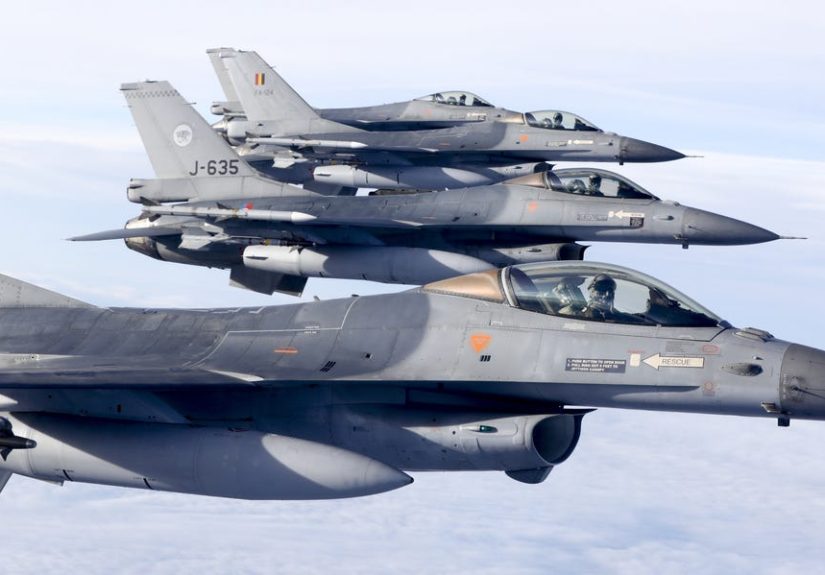
One major reason some NATO nations want to send F-16s to Ukraine is availability. Denmark, the Netherlands, Belgium, and Norway have operated F-16s for years, and several have been replacing or planning to replace them with newer F-35 fighters. That creates an opportunity: aircraft that are no longer central to a donor nation’s future fleet can be transferred, refurbished, used for training, or turned into spare parts for Ukraine’s fleet.
In plain English, some allies are upgrading their own garages and deciding that Ukraine could really use the still-useful car they are moving out. Except the “car” is a multirole fighter jet, and the garage requires trained crews, secure air bases, classified software, specialized tools, and a maintenance schedule that would make a luxury sports car look low-maintenance.
2. The F-16 Is Familiar Across the Alliance
The F-16 is widely used among U.S. allies and partners. That matters because Ukraine is not just receiving a plane; it is joining an ecosystem. Training programs, simulators, spare parts, weapons integration, technical manuals, maintenance crews, and mission planning knowledge already exist across NATO and partner countries.
For Ukraine, this is a bridge away from Soviet-era aircraft such as the MiG-29 and Su-27. Those jets have served Ukraine with grit and courage, but they were never designed for easy integration with modern Western weapons, communications, or sustainment pipelines. Moving to the F-16 helps Ukraine build a more NATO-compatible force over time.
3. F-16s Help Ukraine Defend Against Missiles and Drones
One of the strongest arguments for sending F-16s is air defense. Russia has repeatedly used cruise missiles, ballistic missiles, Iranian-designed Shahed drones, glide bombs, and other aerial threats to pressure Ukraine. F-16s can help intercept certain airborne threats, especially when paired with the right missiles, radar support, and command systems.
Ukraine has already used F-16s in an air defense role, and reports have described the aircraft as part of the broader network protecting Ukrainian skies. This does not mean every Russian missile can be chased down by a fighter jet like a scene from an action movie. Some threats are too fast, too numerous, or better handled by ground-based systems. But F-16s add another layer, and in a country as large as Ukraine, every additional layer matters.
4. The Jets Give Ukraine More Tactical Options
The F-16 is a multirole aircraft, meaning it can perform different missions depending on weapons, sensors, training, and operational conditions. It can support air defense, strike missions, suppression of enemy air defenses, and defensive counter-air operations. That flexibility is one reason NATO countries have kept the aircraft relevant for decades.
For Ukraine, the most realistic value is not Hollywood-style dogfighting over the front line. Russia has dense air defenses, long-range missiles, electronic warfare, and aircraft of its own. Instead, F-16s can give Ukraine more choices: intercept drones and cruise missiles, launch compatible Western weapons, force Russia to adjust its air operations, and complicate Moscow’s planning.
Why Denmark and the Netherlands Took the Lead
Denmark and the Netherlands became central players because they had both the aircraft and the political willingness to move early. They helped lead the F-16 training coalition for Ukraine, working with the United States and other allies on pilot training, ground crew preparation, maintenance, and eventual aircraft transfer.
This leadership fits a broader pattern in Ukraine aid. Smaller NATO countries have often moved first or pushed the alliance toward decisions that larger powers initially approached with caution. The Netherlands and Denmark were not acting alone, but their willingness helped turn the F-16 discussion from a wish list item into a structured program.
Belgium and Norway also joined the group of NATO countries connected to F-16 support for Ukraine. Meanwhile, the United States played a key enabling role because the F-16 is an American-made aircraft, and transfers from third countries required U.S. approval. Washington also became involved in training Ukrainian pilots and later approved support packages for F-16 training and sustainment.
Why Not Send Them Immediately?
If F-16s are useful, why did the process take so long? Because fighter jets come with a long checklist. Pilots need training. Ground crews need training. Air bases need preparation. Spare parts must be available. Weapons must be supplied. Maintenance procedures must be understood. Secure storage, communications, mission planning, and software support must be organized.
A fighter jet without trained pilots is a museum exhibit with better paint. A fighter jet without maintenance is a temporary decoration. A fighter jet without missiles is an expensive way to make noise. That is why the F-16 effort focused not only on aircraft donations but also on training, simulators, sustainment, spare parts, and long-term support.
There is also the issue of pilot capacity. Ukraine has skilled pilots, but transitioning from Soviet aircraft to Western fighters is a major task. Pilots must learn English aviation terminology, new cockpit layouts, new weapons systems, NATO-style tactics, and procedures for operating in a highly contested environment. Maintenance crews face an equally demanding transition. The people behind the aircraft are as important as the aircraft themselves.
The Escalation Question
Another reason the F-16 debate moved slowly is fear of escalation. Since the start of Russia’s full-scale invasion, NATO governments have tried to support Ukraine while avoiding direct war between NATO and Russia. Each new category of weapons has triggered debate: anti-tank missiles, long-range rockets, air defense systems, tanks, and then fighter jets.
Some NATO officials worried that sending Western fighter jets could be portrayed by Moscow as a major escalation. Others argued that Russia had already escalated repeatedly by attacking Ukrainian cities, annexing territory, striking energy infrastructure, and using mass missile and drone barrages. In that view, denying Ukraine modern aircraft would reward Russian intimidation.
Over time, the second argument gained strength among several allies. The F-16 became framed not as a tool for NATO intervention, but as a tool for Ukrainian self-defense. NATO pilots are not flying combat missions over Ukraine. Ukrainian pilots are. NATO nations are supplying equipment, training, and support, while Ukraine conducts its own defense.
What F-16s Can Realistically Do for Ukraine
The F-16 can improve Ukraine’s air defense, expand its ability to use Western weapons, and help modernize its air force. It can also make Russian planners more cautious. If Russia must account for Ukrainian F-16 patrols, intercept capabilities, and possible precision strikes, it has to spend more energy protecting aircraft, logistics hubs, radar sites, and command nodes.
However, the F-16 is not a magic switch that turns the war off. Ukraine will not suddenly gain full air superiority simply because some Western jets arrive. Russia’s air defense network remains dangerous. Russian aircraft can launch glide bombs from beyond the reach of many Ukrainian systems. Ukraine still needs more air defense missiles, electronic warfare systems, drones, artillery, and ammunition.
The better way to understand the F-16 is as a force multiplier. It strengthens other parts of Ukraine’s defense when used in combination with radar coverage, intelligence, ground-based air defense, trained crews, and reliable weapons supply. It is one piece of a larger puzzle, not the entire puzzle dumped triumphantly on the table.
Why NATO Nations See a Long-Term Benefit
Some NATO countries want Ukraine to receive F-16s not only for today’s battlefield, but for tomorrow’s security architecture. Even if the war eventually freezes, ends, or shifts into another phase, Ukraine will need a credible air force to deter future Russian aggression. A modern Western aircraft fleet helps create that deterrent.
This is where the F-16 program becomes bigger than the aircraft itself. It teaches Ukrainian pilots NATO-style tactics. It trains technicians in Western maintenance standards. It creates supply chains for spare parts and weapons. It encourages Ukraine to build air bases, command systems, and planning processes compatible with Western partners.
In other words, F-16s are a down payment on Ukraine’s future defense. NATO nations that support the transfer are betting that a stronger Ukrainian military makes Europe safer. Their argument is straightforward: helping Ukraine defend itself now is cheaper and safer than allowing Russia to win and threaten more of Europe later.
Why Some Allies Remain Cautious
Even among Ukraine’s supporters, caution remains. F-16s are expensive to operate. They require steady supplies of missiles and spare parts. They are vulnerable on the ground if air bases are targeted. They also require careful coordination with Ukraine’s existing air defense network to avoid confusion in crowded skies.
There is also the problem of expectations. Politicians may present fighter jets as a dramatic breakthrough, while military planners know the results will be gradual. A handful of aircraft cannot transform the battlefield overnight. The real impact comes from scale, training, maintenance, weapons integration, and months of operational learning.
This gap between public excitement and military reality is one reason defense experts often sound like they are carrying a bucket of cold water. They are not saying F-16s do not matter. They are saying the aircraft matter most when expectations are realistic.
Experience Notes: What the F-16 Debate Teaches About Modern War
Watching the F-16 debate unfold offers a useful lesson in how modern military support actually works. From the outside, it is tempting to imagine defense aid as a simple shopping list: Ukraine asks for jets, NATO countries check the shelf, and the aircraft are delivered like an oversized online order. In reality, every major weapon system arrives with politics, logistics, training, maintenance, risk calculations, and a long chain of people who rarely appear in headlines.
The first experience this debate highlights is that timing matters. Ukraine wanted Western fighter jets early, but allies moved gradually. That delay frustrated Kyiv and many supporters, yet it also reflected the complexity of transferring an advanced aircraft system during an active war. The aircraft had to be available, pilots had to be selected, training sites had to be prepared, and governments had to align their legal and political positions. The F-16 story shows that military aid is not only about generosity; it is about execution.
The second lesson is that the unglamorous parts of war are often decisive. News headlines focus on the jet, but pilots, mechanics, weapons loaders, intelligence analysts, air traffic controllers, fuel crews, and logistics officers determine whether that jet can fly again tomorrow. A fighter aircraft is not a lone knight in the sky. It is the visible tip of a very large and very expensive iceberg. If the spare parts pipeline breaks, the aircraft stays grounded. If missiles run short, the jet’s usefulness drops. If training slots are limited, aircraft can arrive faster than qualified pilots.
The third lesson is that politics and military planning move at different speeds. Political leaders need to signal resolve. Military professionals need to make sure systems actually work. The F-16 debate forced NATO nations to balance both. They wanted to show Russia that Western support would not fade, but they also had to avoid promises that could not be delivered safely or effectively. That is why the coalition model became important: one country could provide aircraft, another training, another money, another maintenance, and another political cover.
The fourth experience is about public expectations. Many people naturally look for a single weapon that can change everything. In earlier stages of the war, Javelins, HIMARS, Patriots, tanks, and long-range missiles each carried that hope. Each helped, but none ended the war by itself. F-16s belong in the same category. They are important, but they work best as part of a system. The most realistic expectation is not instant air superiority; it is better air defense, better interoperability, more tactical flexibility, and a stronger future Ukrainian air force.
Finally, the F-16 debate reveals how Ukraine has changed NATO thinking. Before the invasion, many defense plans were theoretical. Ukraine turned theory into a brutal daily test. Drones, electronic warfare, missile barrages, air defense shortages, ammunition consumption, and rapid battlefield adaptation have reshaped how NATO countries think about deterrence. Sending F-16s is not only about Ukraine receiving jets. It is about NATO learning that modern defense requires speed, depth, industrial capacity, and partners who can adapt under pressure.
Conclusion: Why the F-16 Decision Matters
Some NATO nations want to send F-16s to Ukraine next because the war has moved into a phase where air defense, long-term modernization, and alliance interoperability are impossible to ignore. Ukraine needs more ways to intercept aerial threats, replace aging Soviet-era aircraft, and build a Western-compatible air force. Donor nations have available F-16s, training experience, and strategic reasons to help.
Still, the F-16 is not a miracle machine. Its value depends on trained pilots, ground crews, spare parts, secure bases, weapons supply, and integration with Ukraine’s larger defense network. The aircraft can strengthen Ukraine’s position, but it cannot single-handedly win the war. The real significance is broader: NATO countries are helping Ukraine move from emergency survival toward a more durable defense posture.
In the end, the F-16 debate is about more than jets. It is about whether Ukraine can defend its skies, whether Europe can deter Russia, and whether NATO can turn political promises into practical military power. The answer, like the aircraft itself, requires lift, thrust, fuel, and a lot of maintenance.