Table of Contents >> Show >> Hide
- The Problem Trinitron Solved
- The Aperture Grille: Trinitron’s Secret Weapon
- The Single-Gun, Three-Cathode Design
- Brightness That Changed Expectations
- The Famous Damping Wires
- Color That Felt Rich Without Looking Fake
- Why Trinitron Was Loved by Gamers
- FD Trinitron WEGA: The Flat-Screen Era Before Flat Panels Took Over
- Trinitron in Computer Monitors
- Why Trinitron Beat Many Competitors
- The Downsides: Because Even Legends Have Problems
- Why Trinitron Still Matters Today
- Real-World Experiences: Living With a Sony Trinitron
- Conclusion
Editor’s note: This article is written for web publication and intentionally avoids visible source links inside the body while using verified historical and technical information.
Before televisions became thin enough to hang on a wall like framed artwork, they were furniture. Serious furniture. A big Sony Trinitron could dominate a living room the way a grand piano dominates a music roomexcept the Trinitron also weighed like it had swallowed the piano. And yet, for decades, people gladly made space for it because the picture was just that good.
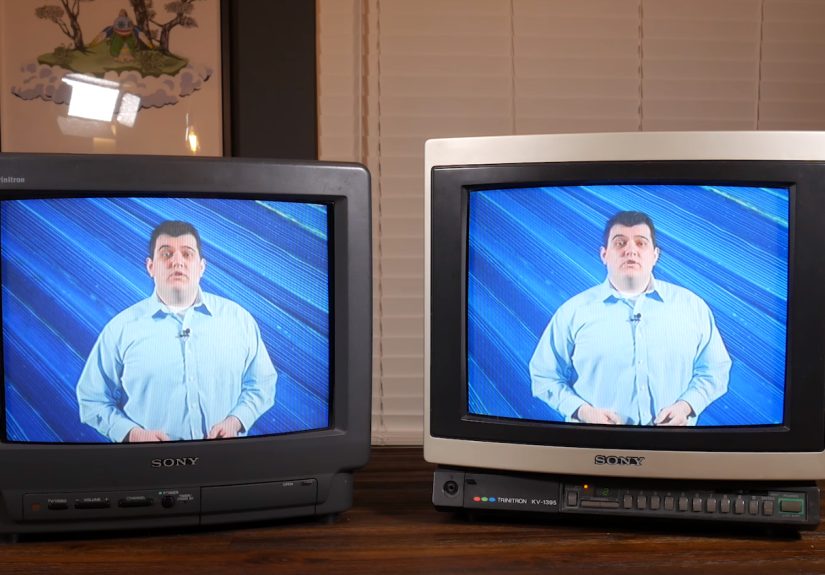
The phrase “Sony Trinitron” still makes vintage electronics fans, retro gamers, video engineers, and former Saturday-morning-cartoon kids sit up a little straighter. It was not simply another cathode-ray tube television. It was a clever redesign of how color CRTs worked, and that redesign gave Trinitron tubes their famous brightness, sharpness, color, and almost magical punch.
So why were Sony’s Trinitron tubes considered the best? The answer is a mix of engineering, manufacturing discipline, visual character, and a little bit of old-school Sony stubbornness. Trinitron was not perfect, but when it was good, it was spectacular.
The Problem Trinitron Solved
To understand why Sony Trinitron tubes were so impressive, it helps to know what most color CRT televisions were fighting against. Traditional color CRTs commonly used a shadow mask. This was a thin metal sheet with thousands of tiny holes placed behind the glass screen. Three electron beamsred, green, and bluepassed through those holes and struck matching phosphor dots to create color images.
The shadow-mask system worked, but it was not especially efficient. A lot of electron energy was blocked by the mask before it ever reached the phosphors. Less energy reaching the phosphor meant less brightness. In plain English: the TV was throwing a party, but the doorman was stopping half the guests at the entrance.
Sony wanted something brighter, simpler to align, and more vivid. The result was the Trinitron system, introduced in 1968 with the KV-1310 color television. It used a different internal structure that helped more light reach the viewer’s eyes. At a time when color TV was still a premium technology, that extra brightness was not a small improvementit was a living-room revolution.
The Aperture Grille: Trinitron’s Secret Weapon
The most important difference between a Trinitron tube and many conventional color CRTs was the aperture grille. Instead of using a shadow mask with tiny round holes, Sony used a grille made of fine vertical metal strips. Behind the screen, the phosphors were arranged in vertical red, green, and blue stripes rather than dot clusters.
This design allowed more of the electron beam to pass through and hit the phosphor. More electrons reaching the screen meant a brighter picture. That is one major reason Trinitron televisions had such a lively, glowing image compared with many competing sets.
The aperture grille also helped create the “Trinitron look”: bold color, strong contrast, and crisp vertical detail. Bright whites looked clean. Reds had energy. Blues felt deep. Cartoons popped. Sports looked more immediate. Movie night had less “dim fish tank” and more “tiny cinema with a power cord.”
Why the Picture Looked So Sharp
Trinitron’s vertical phosphor stripes gave images a distinctive clarity. Fine vertical details could appear especially clean because the screen structure itself favored vertical precision. Text on Trinitron computer monitors often looked excellent, which is why the technology later became prized not just in televisions but also in high-end computer displays.
This sharpness mattered in real life. A news broadcast looked cleaner. A VHS tape looked less muddy. A game console connected through a good input could look surprisingly rich. Even today, when retro gamers chase Sony CRTs, they are often chasing that specific combination of sharpness and analog softnessthe image is clear, but it does not look brutally pixelated the way old games can look on modern flat panels.
The Single-Gun, Three-Cathode Design
Another major Trinitron innovation was Sony’s single electron gun with three cathodes. Many conventional color CRTs used three separate guns. Trinitron combined the three color signals into a more unified gun structure, helping improve focus and alignment.
Color CRTs depend on accurate convergence. The red, green, and blue beams must land in the right places, or the image develops colored fringes around objects. Anyone who has seen an old TV with fuzzy red or blue edges knows the look: it is like the picture had too much coffee and could not sit still.
By using a single-gun approach with three cathodes, Sony reduced some of the alignment headaches that could affect traditional three-gun designs. The result was cleaner color registration and a picture that felt more controlled. This was especially valuable in premium displays, where buyers expected sharp images and accurate color rather than “close enough for the couch.”
Brightness That Changed Expectations
One of Trinitron’s most famous advantages was brightness. Sony’s own historical materials describe the early Trinitron system as achieving roughly twice the brightness of the mainstream shadow-mask method of the time. That claim helps explain why the technology made such a strong impression when it arrived.
Brightness was not just about making the image flashy. A brighter tube could preserve color intensity in normal room lighting. It could make daytime viewing easier. It could give highlights more sparkle. In the era before HDR, before OLED, and before living rooms became mini home theaters, Trinitron made color television feel more alive.
That brightness also gave Sony a marketing edge. Consumers did not need an engineering lecture to understand it. They could walk into a store, see several televisions side by side, and notice that the Sony picture seemed to leap forward. In retail, that kind of visual impact is priceless.
The Famous Damping Wires
No discussion of Sony Trinitron tubes is complete without mentioning the faint horizontal lines visible on many models. These were not defects. They were damping wires, used to stabilize the vertical aperture grille.
Because the aperture grille was made of fine vertical elements under tension, it needed support. The damping wires reduced vibration and helped keep the grille stable. On many computer monitors, especially larger ones, one or two thin horizontal lines could be seen against bright white backgrounds.
Some users found those lines annoying at first. Others barely noticed them after a day. Among Trinitron fans, the lines became almost a badge of authenticity. If you saw them, you knew you were looking at an aperture-grille display. It was the display equivalent of a sports car having a stiff ride: not always convenient, but part of the machine’s personality.
Color That Felt Rich Without Looking Fake
Trinitron tubes earned a reputation for excellent color reproduction. They could deliver saturated color while still maintaining natural tonal separation. Skin tones, animation, sports uniforms, video game sprites, and broadcast graphics all benefited from the tube’s brightness and stripe-based phosphor layout.
In consumer televisions, this made shows and movies more enjoyable. In professional environments, Sony’s Trinitron-based PVM and BVM monitors became trusted tools for production, editing, and broadcast work. Professionals needed monitors that could show what was actually in the signal, not a vague interpretation wearing a colorful hat.
The best Sony professional video monitors were expensive, heavy, and serious. They were not built to match the sofa. They were built to help editors, colorists, and engineers make decisions. That professional reputation helped strengthen the Trinitron legend.
Why Trinitron Was Loved by Gamers
Long after CRT televisions disappeared from most living rooms, Trinitron tubes found a second life with retro gamers. Classic consoles were designed for CRTs. Their graphics assumed scanlines, phosphor glow, analog blending, and near-instant display response. On a modern flat-screen TV, the same game may look too sharp, too blocky, or slightly delayed due to scaling and processing.
A good Sony Trinitron can make old games look “right” again. Pixel art gains texture. Dithering patterns blend into smooth shading. Motion feels fluid. Light-gun games and timing-sensitive platformers behave the way players remember. It is not just nostalgia; it is compatibility with the visual language those games were built around.
For many retro gamers, a Trinitron with component inputs is a sweet spot. It offers excellent image quality without requiring professional broadcast equipment. A PVM or BVM may be sharper, but a good consumer Trinitron often gives the perfect balance of quality, size, availability, and that warm living-room arcade feeling.
FD Trinitron WEGA: The Flat-Screen Era Before Flat Panels Took Over
In the late 1990s, Sony pushed the technology further with FD Trinitron WEGA displays. These were flat-screen CRT televisions, not flat-panel televisions. They still had large glass tubes, but the front surface was flatter than older curved CRT designs.
The flatter glass reduced reflections and geometric distortion, making the image feel more modern. WEGA sets became popular premium televisions in the United States and helped extend the life of CRT technology even as plasma and LCD displays were waiting in the wings.
Some FD Trinitron models were enormous. They delivered excellent pictures, but moving one was a team sport. A large WEGA could weigh well over 150 pounds, and the biggest models were the kind of object that made staircases feel like personal enemies. Still, owners loved them because the image quality was outstanding for DVDs, broadcast TV, and many game systems.
Trinitron in Computer Monitors
Sony Trinitron technology also made a major impact in computer monitors. Before LCDs became dominant, serious desktop users often wanted CRT monitors because they handled multiple resolutions naturally, had excellent motion clarity, and offered rich contrast. Trinitron computer monitors were especially admired for sharp text, vibrant color, and high refresh-rate performance.
Graphic designers, gamers, engineers, and office users all benefited from the technology. A high-quality Trinitron monitor could make a desktop feel crisp and premium. Compared with many budget CRTs, it had a cleaner image and a more polished visual character.
Of course, it also occupied half the desk and generated enough warmth to make winter slightly less threatening. But in its prime, the trade-off felt reasonable. You gave up desk space and spinal health; Sony gave you a gorgeous picture.
Why Trinitron Beat Many Competitors
Trinitron’s reputation was not based on one feature alone. It was the combination that made it special. The aperture grille improved brightness. The phosphor stripe layout contributed to clarity. The single-gun design helped convergence. Sony’s manufacturing quality helped keep performance consistent. Later models added better electronics, flatter screens, improved inputs, and more refined picture controls.
Competitors eventually created their own aperture-grille-style technologies, especially after key patents expired. Some were excellent. Mitsubishi Diamondtron monitors, for example, developed a strong following. But Sony had the brand history, the early lead, and the deep association between “Trinitron” and premium picture quality.
For many buyers, Trinitron became shorthand for “the good TV.” Not every Sony set was perfect, and not every competing set was inferior, but the reputation was earned through decades of strong performance.
The Downsides: Because Even Legends Have Problems
Trinitron tubes were not flawless. First, they were heavy. Very heavy. A large Trinitron was less of a television and more of a domestic appliance with opinions. Moving one required planning, grip strength, and at least one friend you were willing to owe pizza.
Second, aperture-grille tubes could show damping-wire lines. Most people ignored them, but they bothered some users, especially on computer monitors displaying white backgrounds.
Third, CRTs in general required careful handling. They used high voltage, contained vacuum tubes, and included heavy glass. They also consumed more power and space than modern flat-panel displays. As LCD, plasma, and later OLED televisions improved, the practical advantages of thin, light screens became impossible to ignore.
Finally, geometry and convergence could drift with age. A well-maintained Trinitron could still look beautiful, but old CRTs are not immortal. Capacitors age, tubes wear, and settings can wander. Vintage display ownership is part technology hobby, part archaeology, and part furniture rescue mission.
Why Trinitron Still Matters Today
Sony ended Trinitron production after the flat-panel revolution made CRTs commercially obsolete. But the technology’s influence remains huge. Trinitron helped establish Sony as a premium television brand in the United States and around the world. It changed expectations for brightness and color quality. It shaped professional video monitoring. It became part of gaming history.
Today, when people search for Sony Trinitron CRT TVs, Sony PVM monitors, Sony BVM displays, or FD Trinitron WEGA sets, they are not simply chasing old electronics. They are chasing a viewing experience that modern displays do not exactly replicate. OLED may beat CRT in black level and thinness. Modern gaming monitors may beat CRT in resolution and convenience. But a great Trinitron has a physical, glowing, analog beauty that feels different.
That is why Trinitron remains beloved. It was not just technically strong for its time; it had character. The picture had density, warmth, and immediacy. It made broadcast TV look exciting. It made games feel alive. It made computer graphics look smooth and sharp before flat panels learned how to behave.
Real-World Experiences: Living With a Sony Trinitron
Using a Sony Trinitron was an experience in itself. You did not casually “place” one in a room. You installed it, like a monument. The box was huge, the glass was thick, and the first rule of ownership was simple: decide where it goes before your back files a formal complaint.
But once it was powered on, the inconvenience started to make sense. The screen came alive with a kind of glow that modern displays often imitate but rarely duplicate. Standard-definition TV looked comfortable rather than ugly. Old game consoles looked natural. DVDs had texture. Even static menus had a certain electric crispness.
One of the most memorable things about a Trinitron was how forgiving it could be with older content. Modern 4K screens are brutally honest. Feed them a low-resolution signal and they may respond like a food critic reviewing gas-station sushi. A Trinitron, by contrast, was kinder. Its scanlines, phosphor glow, and analog blending helped smooth rough edges without destroying detail.
That is why a Super Nintendo, Sega Genesis, PlayStation, Nintendo 64, or early DVD player could look so good on one. The display was not exposing every pixel like evidence in a courtroom. It was completing the image in a way that matched the era. Developers created graphics with CRT behavior in mind, whether consciously or simply because CRTs were the standard. On a Trinitron, those choices still make sense.
There was also the sound and ritual of using one. The soft electronic hum. The tiny static feel near the glass. The brief flash when the tube powered down. The screen did not simply turn on; it woke up. Modern TVs are faster and smarter, but a Trinitron had presence. It felt mechanical, electrical, and alive in a way today’s feather-thin screens usually do not.
For families, the Trinitron often became the main household screen. It hosted cartoons, news, sports, movies, game nights, and rented tapes from stores that smelled like popcorn and plastic cases. For students and young gamers, it might have been the heavy hand-me-down in a bedroom, the one nobody wanted to move but everyone wanted to use. For video professionals, it was a trusted reference. For collectors now, it is a prize.
The funny part is that many people once gave these sets away for free. As flat screens became cheaper, giant CRTs were treated like unwanted dinosaurs. Now, certain Trinitron models are hunted, repaired, discussed, compared, and preserved. The same television that once sat sadly on a curb may now be considered a treasure by someone building the perfect retro gaming setup.
That renewed interest says something important: image quality is not only about resolution. A modern screen can have millions more pixels and still fail to reproduce the emotional feel of older media on a proper CRT. Trinitron tubes remind us that display technology is about light, motion, response, color, and context. The “best” screen is not always the newest screen. Sometimes it is the one that makes the content feel most correct.
In that sense, Sony’s Trinitron tubes were the best because they balanced engineering and experience. They were bright, sharp, colorful, and reliable enough to become legendary. But they were also memorable. People remember how they looked, how they felt, and how heavy they were when someone said, “Can you help me move this real quick?” That sentence was never quick. The picture, however, was worth it.
Conclusion
Sony’s Trinitron tubes were not famous by accident. They earned their reputation through a smart technical design that solved real problems in color CRT performance. The aperture grille allowed more brightness. The vertical phosphor stripes contributed to clarity. The single-gun, three-cathode system helped deliver cleaner alignment. Sony’s premium manufacturing and later FD Trinitron WEGA refinements kept the technology desirable for decades.
Today, Trinitron stands as one of the great names in display history. It represents a time when televisions were heavy, repairable, deeply engineered machinesand when picture quality had a glow you could feel from across the room. Modern displays are thinner, sharper, and more convenient, but a great Sony Trinitron still has a look that makes people stop and say, “Oh. That’s why everyone talks about these.”