Table of Contents >> Show >> Hide
- What the Number on a Weight Machine Usually Means
- Why Weight Machine Numbers Can Be Misleading
- Machines Are Not BadThey Are Just Not Universal Truth Machines
- How to Use Weight Machine Numbers the Smart Way
- Common Examples: When the Same Number Feels Different
- How to Progress Without Being Fooled
- What to Do When You Switch Gyms
- The Best Rule: Trust Performance, Not the Sticker
- Personal Training Experiences: What the Numbers Taught Me the Hard Way
- Conclusion
- SEO Tags
Walk into almost any gym and you will see it: a proud little stack of iron plates wearing numbers like name tags at a conference. 20. 40. 60. 100. Maybe pounds. Maybe kilograms. Maybe “mystery units from a planet where gravity negotiates.” You slide the pin into the stack, sit down, push or pull, and suddenly the number feels either heroic or humiliating.
Here is the truth your gym machine never prints on its instruction sticker: the number on a weight machine is not always the actual resistance your muscles experience. It is often only a rough label for the stack, the plate setting, or the manufacturer’s idea of what might be useful for tracking. That does not mean weight machines are bad. Far from it. Machines can be excellent for beginners, muscle growth, controlled movement, injury-sensitive training, and learning how a movement should feel. But trusting the number too literally can lead to bad comparisons, ego lifting, sloppy form, and some very dramatic gym diary entries.
The smarter approach is simple: use machine numbers as reference points, not absolute truth. Think of them like hotel star ratings, serving sizes on cereal boxes, or the “five minutes away” text from your friend. Helpful? Sure. Scientifically sacred? Absolutely not.
What the Number on a Weight Machine Usually Means
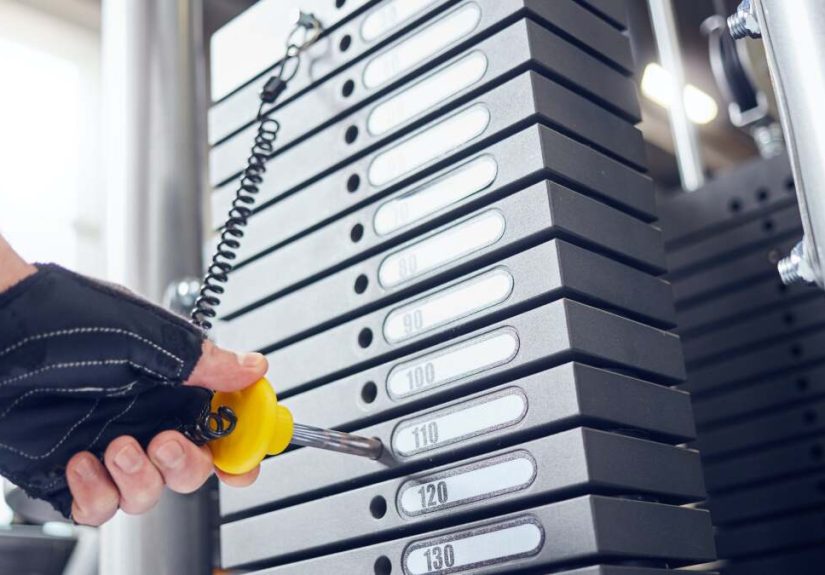
On a basic selectorized machine, the number usually refers to the amount selected on the weight stack. If the pin is placed at 80, the stack may be lifting 80 pounds of plates. But that is not the same as saying your hands, feet, shoulders, or legs are receiving exactly 80 pounds of resistance.
Between the stack and your body are cables, pulleys, lever arms, cams, guide rods, handles, pads, and moving parts. Each part changes how force is transferred. The machine may be designed to make the exercise smoother, safer, or better matched to your body’s strength curve. That engineering is useful, but it also means the printed number is not the whole story.
For example, a cable machine with a 2:1 pulley ratio may require you to move the handle twice as far as the weight stack moves. In exchange, the handle may feel like roughly half of the selected stack weight before friction and other mechanical factors are considered. So a “100-pound” setting might feel closer to 50 pounds at the handle. On another machine, the ratio may be different. On a plate-loaded machine, the lever arm may make two 45-pound plates feel nothing like a 90-pound dumbbell. Same numbers, different reality.
Why Weight Machine Numbers Can Be Misleading
1. Pulley Ratios Change the Actual Load
Pulleys are the polite little tricksters of the gym. Their job is to redirect force and make movement paths practical. They can also create mechanical advantage, meaning the force you apply at the handle may not equal the weight selected on the stack.
This is especially common on functional trainers, cable crossovers, and adjustable pulley towers. One machine may use a 1:1 ratio, another may use 2:1, and another may use a more complex setup. That is why 60 pounds on one cable station can feel like a warm-up, while 60 pounds on another feels like you accidentally challenged a gorilla to arm wrestling.
2. Friction Eats Some of the Force
Real gym machines are not frictionless physics diagrams. Cables rub, pulleys rotate, guide rods collect dust, and weight stacks sometimes move with the elegance of a shopping cart with one bad wheel. Friction can make a machine feel heavier or less smooth than the number suggests.
A well-maintained machine usually feels predictable. A neglected one may feel sticky at the start, easier in the middle, and weird near the top. If you have ever started a rep and felt a sudden “pop” as the stack unstuck itself, congratulations: you have met friction, the unpaid intern of gym equipment.
3. Cams and Levers Change Resistance Through the Movement
Many strength machines use cams or lever systems to vary resistance throughout the range of motion. This is not a design flaw. It is often intentional. Your muscles are stronger at some joint angles and weaker at others, so some machines try to adjust resistance to match that natural curve.
Think about a leg extension. The exercise may feel different at the bottom, middle, and top of the rep. That is because your knee angle changes, the machine’s lever changes, and your quadriceps’ ability to produce force changes. The number on the stack does not tell you what torque is happening at your knee at each point. It only tells you which setting you selected.
4. Different Brands Do Not Speak the Same Language
A 100-pound chest press on Brand A is not automatically equal to a 100-pound chest press on Brand B. Even machines that train the same muscle group can use different seat angles, handle paths, lever lengths, pulley ratios, and resistance curves. The result is a giant fitness translation problem.
This is why comparing machine numbers across gyms is risky. You may proudly log “lat pulldown: 140 pounds” at your neighborhood gym, then travel to a hotel gym and discover that 140 pounds there has been personally trained by a linebacker. The number did not betray you; the machines are simply not standardized like competition barbells.
5. Your Setup Changes the Exercise
Seat height, pad position, handle grip, foot placement, back support, and range of motion all change how an exercise feels. On a chest press, moving the seat one notch higher may shift the handle path from mid-chest to upper chest. On a leg press, placing your feet higher may emphasize glutes and hamstrings more, while placing them lower may challenge the quads differently.
Even your limb length matters. A taller lifter and a shorter lifter may select the same machine setting but experience different leverage, joint angles, and difficulty. This is why two people can use the same weight machine and have completely different opinions about whether the number is “easy,” “heavy,” or “invented by a villain.”
Machines Are Not BadThey Are Just Not Universal Truth Machines
Let’s be fair to machines. They are useful, convenient, and often safer for people who are new to lifting or who want a controlled movement. Machines can help reduce balance demands, isolate specific muscles, and allow quick changes in resistance. They can also be excellent for higher-volume training because you do not need to spend half your workout chasing plates around the gym like a confused treasure hunter.
The problem is not the machine. The problem is treating the number as if it were a certified measurement of your strength. It is not. It is a training marker. It helps you track progress on that specific machine, with that specific setup, using that specific technique.
Free weights are not automatically superior in every situation, either. Dumbbells and barbells require more stabilization and often transfer well to real-world movement, but they also require more skill and control. Machines and free weights both have a place. The smartest lifters use the tool that fits the goal, then track progress honestly.
How to Use Weight Machine Numbers the Smart Way
Track the Machine, Not Just the Weight
If you log your workouts, do not write only “row machine: 90 pounds.” Write enough detail to make the number meaningful later. A better entry might be: “Life Fitness seated row, seat 4, chest pad 3, neutral grip, 90 pounds, 3 sets of 10, slow tempo.” That sounds nerdy, yes. But gym nerdy is just future-you being grateful.
When you return to the same machine and keep the setup consistent, the number becomes useful. If you can perform more reps with the same form, or increase the setting while keeping the same range of motion, you are probably progressing.
Use Reps and Effort as Your Reality Check
The most practical question is not, “Is this really 100 pounds?” The better question is, “Can I lift this with good form for the target number of reps?”
If your plan calls for 8 to 12 reps, choose a setting that lets you complete that range with control. The last few reps should feel challenging, but not like a live audition for a disaster documentary. If you finish 12 reps and could casually do 12 more while discussing lunch plans, increase the resistance. If your form collapses by rep four, reduce the setting.
Pay Attention to RPE and RIR
RPE means rating of perceived exertion. RIR means reps in reserve. Both are simple ways to judge effort. If you finish a set and feel like you could have done two more clean reps, you had about two reps in reserve. That information may be more useful than the machine’s printed number.
For muscle growth, many lifters do well working close to muscular fatigue while maintaining safe technique. For strength, heavier loads and lower reps can be useful, but only when the movement is controlled and appropriate for the lifter’s experience. Either way, effort and execution matter more than bragging rights on a sticker.
Keep Tempo Consistent
A fast, bouncy rep is not the same as a slow, controlled rep. Momentum can make a heavy setting look easier than it really is. If you swing, jerk, or slam the stack, you are not proving strength; you are filing a noise complaint against yourself.
Try a simple tempo: lift with control, pause briefly where appropriate, and lower smoothly. When your tempo stays consistent, your progress becomes easier to measure. If the number goes up but your range of motion shrinks and every rep looks like a small earthquake, the progress is mostly theatrical.
Common Examples: When the Same Number Feels Different
Lat Pulldown vs. Assisted Pull-Up Machine
On a lat pulldown, adding weight usually makes the exercise harder. On an assisted pull-up machine, adding weight makes the exercise easier because the machine is helping lift your body. This is a classic beginner confusion point. The number is not “how strong you are.” It is simply the setting that changes the task.
Cable Triceps Pushdown vs. Dumbbell Skull Crusher
A 40-pound cable pushdown does not equal a 40-pound dumbbell skull crusher. The cable has a pulley ratio and a constant line of pull. The dumbbell changes leverage as your elbow angle changes. Your muscles experience the two exercises differently, even if the number sounds similar.
Leg Press vs. Barbell Squat
A 400-pound leg press does not mean you can squat 400 pounds. The leg press supports your torso, guides the sled, changes the angle of resistance, and reduces stabilization demands. It can be a fantastic lower-body exercise, but it is not a squat calculator.
How to Progress Without Being Fooled
Progressive overload means gradually increasing the training challenge over time. That challenge can come from more weight, more reps, more sets, better range of motion, slower tempo, shorter rest, or improved technique. The machine number is only one piece of the puzzle.
A smart progression might look like this: start with a weight you can lift for 10 clean reps. Over several sessions, work toward 12 clean reps. Once you can do 12 reps for all sets with good form, increase the machine setting slightly and return to 8 or 10 reps. Repeat the process. This method works even if the number is not perfectly accurate because you are comparing your performance against your own previous performance on the same machine.
Also, do not chase numbers at the expense of joints. Muscle fatigue is normal. Sharp pain, pinching, numbness, or joint pain is not a badge of honor. Adjust the machine, reduce the load, change the exercise, or ask a qualified trainer or healthcare professional for help.
What to Do When You Switch Gyms
When you train at a new gym, treat every machine like a new exercise. Start lighter than your usual setting and test the movement. Check the seat, pad, and handle positions. Perform a few controlled reps before deciding your working weight.
This is especially important when traveling. Hotel gyms are famous for machines that look familiar but feel suspiciously like they were assembled during a thunderstorm. Your normal numbers may not apply. Use your warm-up sets to find the right challenge for that day.
The Best Rule: Trust Performance, Not the Sticker
The number on a weight machine is useful when it helps you repeat and progress a workout. It is not useful when it becomes a source of ego, comparison, or confusion. Trust your form. Trust your range of motion. Trust your ability to repeat clean reps. Trust your training log. Treat the sticker as a rough address, not the whole map.
Machines are tools. Numbers are labels. Your body is the final judge. And unlike the little sticker on the stack, your body actually knows whether the set was hard.
Personal Training Experiences: What the Numbers Taught Me the Hard Way
One of the funniest lessons about weight machines comes from watching people move between gyms. Someone may be strong and consistent at their regular gym, then visit a new facility and suddenly feel like their strength packed a suitcase and left town. The first reaction is usually panic. “Last week I did 120 pounds on this!” But after checking the machine design, cable path, seat angle, and pulley ratio, the mystery becomes less dramatic. The body did not get weaker overnight. The machine changed the rules.
A common experience is the cable station surprise. At one gym, a person may perform triceps pushdowns with 70 pounds for smooth sets of 12. At another gym, 70 pounds barely moves. At a third gym, 70 pounds flies down so easily that it feels like the machine is offering emotional support. This is why experienced lifters often warm up by feel instead of assuming the old number will transfer. They test the stack, adjust the load, and choose the resistance that matches the target effort.
Another memorable example is the leg press. Many lifters love the leg press because the numbers climb quickly. It feels satisfying to load plate after plate until the machine looks like it is preparing for a moon launch. But the leg press can be deeply misleading. The sled angle, starting position, depth, foot placement, and machine design change the difficulty enormously. A person may claim a huge leg press number while moving the sled only a few inches. Someone else may use less weight but perform deep, controlled reps that challenge the muscles far more. The second lifter is usually getting the better training effect, even if the first lifter wins the Instagram caption.
Beginners often have the best instinct once they stop worrying about the numbers. They will say, “This feels right,” or “This feels too heavy,” and that honest feedback is valuable. The trouble starts when they think the machine number should match what someone else is using. A smaller person using 50 pounds with excellent control may be training harder than a larger person swinging 100 pounds with half the range of motion. Strength is personal, and machines make comparison even messier.
There is also a confidence lesson here. Some people feel discouraged when they move from a machine to free weights and cannot lift the same number. That is normal. A machine chest press may guide the path and reduce the need for stabilization. Dumbbells require balance, coordination, and control from smaller supporting muscles. Dropping the load is not failure; it is the price of a different skill. The same applies in reverse. Someone may struggle with free weights but feel strong and comfortable on machines, especially when learning a movement pattern or training around cranky joints.
The most useful habit is to create your own standard. Use the same machine when possible. Set the seat the same way. Use the same grip. Move through the same range. Keep the same tempo. Then the number becomes meaningful because it belongs to your own system. If you improved from 80 pounds for 10 clean reps to 80 pounds for 14 clean reps, that is progress. If you moved from 80 to 90 pounds while keeping the same form, that is progress too. The goal is not to prove the machine is accurate. The goal is to prove your training is working.
In the end, weight machines are like gym GPS. They can guide you, but they do not always know the road conditions. Use the numbers, but do not worship them. Your best evidence is consistent performance, clean technique, controlled effort, and a body that gets stronger without constantly filing complaints through your knees, shoulders, and lower back.
Conclusion
You should not trust the numbers on weight machines as exact measurements because they are shaped by pulley ratios, friction, cams, levers, machine brands, body setup, and technique. But you should not ignore them completely either. Use them as repeatable markers on the same machine, not universal proof of strength.
The best lifters are not the ones who blindly chase the biggest number on the stack. They are the ones who understand the tool, control the movement, track their progress, and leave the gym stronger instead of merely louder. So the next time a machine tells you it is “100 pounds,” nod politely, do your set with good form, and remember: the sticker has an opinion, not a PhD.