Table of Contents >> Show >> Hide
- The Official Cause of Death Is Now Public
- Why Hulk Hogan’s Death Feels So Big
- From Hulkamania to Hollywood Hogan
- The Match That Made Him Immortal
- A Pop Culture Star Beyond the Ring
- A Legacy That Includes Greatness and Controversy
- The Tributes Show What He Meant
- What Hulk Hogan Meant to Wrestling History
- What Fans Experienced When the News Broke
- Final Thoughts
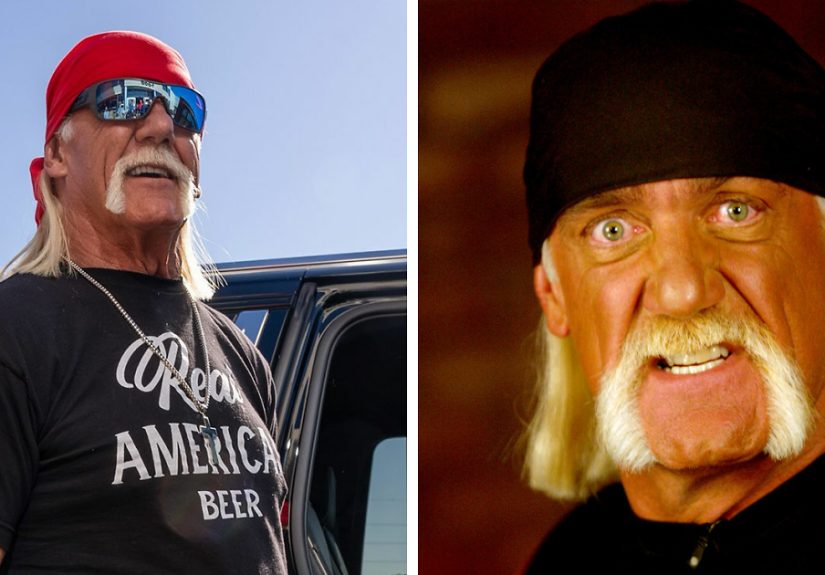
Some headlines feel like they belong in a history book the second you read them. This is one of those headlines. Hulk Hogan, the bleach-blond face paint-free superhero of wrestling’s biggest boom years, has died at 71, and the official cause has now been revealed. For millions of fans, that news landed like a steel chair to the nostalgia. For the wrestling business, it marked the end of a truly outsized chapter.
Hogan, born Terry Gene Bollea, was never just another wrestler. He was a cultural event with a handlebar mustache. He helped turn pro wrestling from regional spectacle into mainstream entertainment, a Saturday morning obsession, a pay-per-view juggernaut, and eventually a global brand. When people talk about the rise of modern WWE, they are really talking about the era Hogan helped define.
Now, a week after news of his death shocked fans, more details have emerged. The official cause of death was acute myocardial infarction, better known as a heart attack. Medical documents also indicated Hogan had a history of atrial fibrillation, an irregular heart rhythm, as well as leukemia. His death was ruled natural.
That confirmed cause answers the question many fans were asking after initial reports said emergency crews responded to a cardiac-arrest call at his Clearwater, Florida, home. First responders transported him to a hospital, where he was pronounced dead. In the days that followed, tributes poured in from wrestlers, actors, friends, and fans who knew exactly what Hogan meant to the business and to pop culture at large.
The Official Cause of Death Is Now Public
In the immediate aftermath of Hulk Hogan’s passing, the first details were limited. Authorities confirmed that emergency responders had been called to his home for a cardiac arrest incident. That early wording led to widespread speculation, because when a public figure dies suddenly, the internet tends to behave like it just chugged three energy drinks and a rumor.
The later medical documentation cleared things up. Hogan died from acute myocardial infarction, the clinical term for a heart attack. Reports also noted that he had atrial fibrillation and leukemia in his medical history. Those added details helped explain why family members and those close to him had quietly referenced recent health issues after his death.
His wife, Sky Daily, shared that he had been dealing with health problems but said she still believed they would overcome them. That message hit many fans hard because it painted a much more human picture than the larger-than-life red-and-yellow image most people carried in their heads. Behind the legend was a 71-year-old man with real health challenges, real pain, and a body that had spent decades absorbing the punishment of the ring.
Why Hulk Hogan’s Death Feels So Big
Plenty of wrestlers become stars. Very few become shorthand for an entire era. Hogan was that rare figure. If you say “1980s wrestling” to almost anyone, the mental picture arrives fast: ripped shirt, bandana, giant biceps, booming catchphrases, and a crowd losing its collective mind before the bell even rang.
His rise in the 1980s helped push what was then the World Wrestling Federation into mainstream American culture. He wasn’t just winning matches. He was selling the spectacle. He made wrestling feel larger, brighter, louder, and somehow more patriotic than fireworks on the Fourth of July.
He headlined the first WrestleMania in 1985 and appeared in the main event of seven of the first eight WrestleManias, a run that tells you almost everything you need to know about his central place in WWE history. He won the WWE championship six times, captured world titles across major promotions, and later became a two-time WWE Hall of Famer.
That kind of résumé is not just impressive. It is foundational. Hogan was one of the performers who helped make wrestling appointment television. Without that era, the business probably still grows. It just does not grow in quite the same way, at quite the same speed, or with quite the same neon-colored swagger.
From Hulkamania to Hollywood Hogan
One reason Hogan remained relevant for so long was that he understood reinvention. The all-American hero version of Hulk Hogan was the engine behind Hulkamania, but that was not the final version of the character. Far from it.
After conquering WWF in the 1980s and early 1990s, Hogan eventually moved to WCW and shocked the wrestling world by becoming “Hollywood” Hogan, the villainous centerpiece of the New World Order. It was one of the most important turns in wrestling history. The guy who once told kids to say their prayers and take their vitamins suddenly became the cool bad guy in black. Wrestling fans did not just accept it. They devoured it.
That reinvention extended his legacy beyond nostalgia. It proved Hogan was not only the symbol of wrestling’s golden mainstream boom but also a key figure in one of the industry’s most famous creative shifts. He did not merely survive change. He became it.
Later, he returned to WWE and delivered one of the most memorable late-career chapters imaginable, including his iconic WrestleMania showdown with Dwayne “The Rock” Johnson in 2002. That match still gets talked about because it felt like a transfer of energy between generations. Hogan may not have won that night, but he hardly needed to. The crowd reaction was a victory all its own.
The Match That Made Him Immortal
If there is one image that permanently lives in wrestling folklore, it is Hulk Hogan body-slamming Andre the Giant at WrestleMania III in 1987. That moment was more than a highlight. It became mythology.
Yes, wrestling is performance. Yes, fans know that. And yes, the magic still works when the story is told well enough. Hogan understood that better than almost anyone. The Andre slam was not just a move. It was the visual proof that Hulk Hogan had become bigger than the sport that created him.
He was not subtle, and that was the point. Hogan’s genius was that he knew wrestling was part athletic contest, part morality play, and part carnival-sized theater. He gave audiences exactly what they came for: a hero to root for, a villain to boo, and a reason to believe that if they screamed loudly enough, the comeback would happen right on cue.
A Pop Culture Star Beyond the Ring
Hogan’s fame did not stop at the ropes. His appearance as Thunderlips in Rocky III helped push him into the broader American mainstream, and from there he built a mixed but memorable entertainment résumé. He starred in films like No Holds Barred, Suburban Commando, Mr. Nanny, and Santa with Muscles. Were they all cinematic masterpieces? Let’s just say the Academy was not exactly clearing shelf space.
Still, that crossover mattered. Hogan was one of the first wrestlers to prove that a ring persona could become a full-scale celebrity brand. Long before wrestler-turned-actor became a polished career lane, Hogan was stomping around it in bright boots and making the route look possible.
He later brought fans into his family life with the reality show Hogan Knows Best, which introduced him to a different audience and turned his household into part of the celebrity conversation in the 2000s. That show complicated his public image in interesting ways. Suddenly the immortal Hulkster was also a dad, a husband, and a reality-TV patriarch navigating everyday chaos with more bandanas than most closets can legally support.
A Legacy That Includes Greatness and Controversy
Any honest look at Hulk Hogan’s legacy has to include the uncomfortable parts, too. He remained one of wrestling’s most important figures, but his later years were also marked by controversies that changed how many fans viewed him.
His legal battle with Gawker became one of the most talked-about media cases of the 2010s. He also faced intense criticism after a recording surfaced in which he used a racial slur, leading to a WWE suspension before he was later reinstated. And in 2024, his political appearances and support for Donald Trump once again made him a polarizing public figure.
That does not erase his impact on wrestling. It does, however, complicate the legacy. And maybe that is the most accurate way to remember him: as a performer who changed the industry forever, even as his public image became increasingly layered, debated, and difficult in later years.
Legends are rarely simple. Hogan definitely was not.
The Tributes Show What He Meant
One of the clearest ways to measure Hogan’s impact is to look at who spoke up after he died and what they chose to remember. Dwayne Johnson shared a tribute recalling how Hogan once kept a promise he made to him as a child, then reflected on their unforgettable WrestleMania encounter years later. Sylvester Stallone remembered working with Hogan on Rocky III and described him as a force of nature on set.
His wife’s message was more intimate, emphasizing not just the global icon, but “my Terry.” His daughter Brooke shared a deeply emotional tribute of her own and described a bond that remained powerful despite family strain. Those public remembrances made it clear that Hogan’s impact was not just commercial or historical. He left emotional fingerprints on people who knew him professionally and personally.
WWE, meanwhile, honored him as one of the defining figures in the company’s rise to worldwide recognition. That is not corporate exaggeration. It is simply history.
What Hulk Hogan Meant to Wrestling History
Strip away the catchphrases, the music, the posing, the color, and the cartoonish charisma, and Hulk Hogan still stands as one of the most influential performers in pro wrestling history.
He helped shape the template for the modern wrestling megastar: an instantly recognizable look, a simple but powerful character, crossover appeal, strong merchandise potential, and a knack for making big events feel enormous. He could sell a comeback, command a crowd, and turn a ring entrance into a communal ritual.
He also helped prove that wrestling could live at the center of American entertainment rather than on the margins of it. That shift changed business models, television strategy, merchandising, event promotion, and the scale of stars who came after him.
In short, Hogan did not just ride the boom. He was the boom.
What Fans Experienced When the News Broke
For many fans, the news of Hulk Hogan’s death was not just sad. It was disorienting. It felt like hearing that a giant billboard from childhood had suddenly come down overnight. Hogan was so visually fixed in memory that he could seem almost permanent, as if time itself had agreed not to mess with the guy in red and yellow.
That is why the reaction was so emotional across generations. Older fans remembered the Hulkamania era, when Hogan was practically the human mascot of mainstream wrestling. They remembered renting pay-per-views, repeating his promos, and believing every time he cupped his hand to his ear that the noise from the crowd had actual magical properties.
Younger fans often came to him differently. Maybe through old VHS tapes, classic WWE packages, his 2002 match with The Rock, or reruns and reality TV. For them, Hogan was not always the current top star. He was the reference point. The name every other legend had to be measured against. The guy announcers mentioned when they needed a benchmark for crowd reaction, drawing power, or pure wrestling fame.
And that is part of why this story has resonated so widely. Hulk Hogan was not merely famous in wrestling. He was one of the few wrestlers who became recognizable even to people who never watched a full match. Grandparents knew the name. Kids knew the mustache. Pop culture knew the silhouette.
When the official cause of death was revealed, it brought a difficult clarity. The speculation slowed, and reality took over. This was not a mystery headline anymore. It was the death of a 71-year-old icon whose body had lived through decades of wear, stress, surgeries, and public life. The details made the loss feel less abstract and more painfully real.
There is also something uniquely emotional about how wrestling fans process grief. Wrestling lives in memory differently than most forms of entertainment. Fans remember not just what happened, but where they were when it happened. They remember watching WrestleMania with family, arguing about finishers at school, copying poses in the mirror, and dropping “brother” into conversations like it was legally required. Hogan was woven into those personal memories.
That is why so many tributes sounded less like standard celebrity condolences and more like people describing a chapter of their own lives. Dwayne Johnson’s story about a headband was not really about a headband. It was about what Hogan represented to a young fan who later became a giant star himself. Stallone’s memories were not just about a movie role. They were about the shock of encountering someone whose presence was already impossible to ignore.
Even people who had mixed feelings about Hogan’s later controversies often reacted to the news with a complicated kind of sorrow. That, too, is part of the story. Public figures can be transformative and flawed at the same time. Wrestling fans understand that tension better than most because the business itself is built on contradictions: real pain, scripted outcomes, genuine emotion, and performance all tangled together under bright lights.
In the end, Hulk Hogan’s death did what the biggest cultural losses always do. It made people stop, look backward, and realize how much space one person had occupied in the national imagination. Whether fans loved him unconditionally, admired him cautiously, or viewed him through a more critical modern lens, they knew one thing for sure: there will never be another first Hulk Hogan.
Final Thoughts
Hulk Hogan’s death closes the book on one of wrestling’s most influential, complicated, and unforgettable lives. The official cause has now been revealed, giving fans clarity, but it does not lessen the emotional weight of the news. He was a six-time WWE champion, a two-time Hall of Famer, a crossover pop culture star, a lightning rod for debate, and a central figure in the transformation of wrestling into big business.
For better, worse, and everything in between, Hulk Hogan mattered. He mattered to wrestling history. He mattered to television history. He mattered to people who grew up believing that charisma could shake an arena. And he mattered because when the lights were brightest, few performers in any medium understood spectacle better.
The man is gone. The character, the era, and the echoes of Hulkamania are not going anywhere.