Table of Contents >> Show >> Hide
- What Makes a Chromatic Harmonica Different?
- Way 1: Learn the Layout and Make Friends with the Slide
- Way 2: Focus on Clean Single Notes and Breath Control
- Way 3: Turn Scales, Tabs, and Simple Songs into Music
- Common Beginner Mistakes to Avoid
- A Simple 15-Minute Practice Routine
- Final Thoughts
- Extended Player Experiences: What Learning Chromatic Harmonica Really Feels Like
- SEO Tags
If the harmonica family had a smooth-talking overachiever, it would be the chromatic harmonica. It is sleek, expressive, surprisingly compact, and armed with a little side button that basically says, “Yes, I can play that note too.” For beginners, that can feel exciting and mildly terrifying at the same time.
The good news is that learning how to play chromatic harmonica does not have to feel like you enrolled in a secret conservatory program by accident. You do not need to start with blazing jazz solos, heroic vibrato, or the kind of facial expressions that make people think you are wrestling a bee. You just need a clear path.
In this guide, you will learn three simple ways to play chromatic harmonica: first by understanding the layout and slide, second by producing clean single notes with solid breath control, and third by turning scales, tabs, and simple songs into actual music. Along the way, we will cover beginner-friendly tips, common mistakes, and a few practical examples so you can make progress without sounding like a confused kettle.
What Makes a Chromatic Harmonica Different?
Before jumping into technique, it helps to know what makes this instrument special. A chromatic harmonica is designed to play all twelve notes in Western music. Unlike a standard diatonic harmonica, which is built around one main key and leaves some notes out unless you use advanced techniques, the chromatic uses a slide button to access the half steps in between. In plain English: press the button, and you unlock the sharps and flats.
Most beginner models are 12-hole chromatic harmonicas in the key of C. That is a smart place to start because the layout is common, the note pattern repeats in an orderly way, and many learning materials are written for it. On a typical solo-tuned chromatic harmonica, the note arrangement repeats every four holes, which makes scales and melodies much easier to map once your brain stops filing a formal complaint.
That repeating layout is one reason chromatic harmonica for beginners can be more approachable than people expect. You still need practice, of course, but you are not constantly fighting the instrument to find missing notes. The notes are there. Your job is to meet them politely.
Way 1: Learn the Layout and Make Friends with the Slide
Start with the right setup
The first simple way to play chromatic harmonica is not glamorous, but it is essential: understand the instrument before trying to sound like a legend. Hold the harmonica so the low notes are on your left and the button is on the right. If you are using a standard C chromatic, the unpressed slide gives you the natural notes of the layout, while pressing the button raises them by a half step.
Think of the slide as a shortcut, not a panic button. New players often jab it like they are entering a secret vault code. Relax. The button should become part of your normal motion, not a dramatic event.
Memorize the repeating four-hole pattern
One of the smartest things you can do early on is learn the repeating note pattern. On a solo-tuned C chromatic, the blow notes follow a repeating C-E-G-C pattern, and the draw notes follow D-F-A-B. Once you see that pattern, the instrument becomes much less mysterious.
Here is the practical takeaway: every four holes behave like a familiar little neighborhood. When you learn one octave, you are not starting from scratch on the next one. You are meeting the same neighbors on a higher floor.
Practice the button in slow motion
Do not wait until a song forces you to use the slide. Practice it right away. Start on hole 4 blow, then press the button and play the same hole again. Listen carefully to the half-step change. Repeat with hole 4 draw, then move to holes 5, 6, and 7. This teaches your ear what the button actually does.
A great beginner drill is this:
Hole 4 blow
Hole 4 blow with slide
Hole 4 draw
Hole 4 draw with slide
Keep the motion small and controlled. If the slide feels clunky, it is usually because the hand is tense or the player is rushing. Chromatic harmonica technique rewards calm hands and patient repetition.
Example: play a chromatic climb
Try playing four notes in order:
4 blow = C
4 blow + slide = C#
4 draw = D
4 draw + slide = D#
Congratulations. You are already playing a chromatic sequence. That may not win a Grammy this afternoon, but it is real progress, and real progress is annoyingly effective.
Way 2: Focus on Clean Single Notes and Breath Control
Single notes come first
The second simple way to play chromatic harmonica is to master single notes. If your sound is airy, fuzzy, or hitting three notes at once, do not worry. That is not failure. That is the official sound of being new.
Many teachers introduce beginners to a lip-blocking or relaxed pucker-style embouchure because it helps isolate a single hole without excessive tension. The key is not to pinch the mouth into a tiny, stressed-out dot. Instead, keep the mouth relaxed, place the harmonica comfortably into the lips, and let the lower lip help narrow the opening.
Use a relaxed mouth position
A good harmonica embouchure should feel stable and loose, not stiff and dramatic. Put the instrument a little deeper into your mouth than you think you should. Many beginners play right on the edge of the holes, which makes the tone thin and the targeting sloppy.
Try this checklist:
- Relax your lips and jaw.
- Keep the harmonica slightly tilted for comfort.
- Let the lower lip help block nearby holes.
- Avoid puffing your cheeks like a cartoon trumpet player.
The goal is a clear, centered note. Not a heroic amount of air. Not a facial workout. Just one good note.
Control the airflow, do not attack it
Breath control is one of the biggest differences between sounding musical and sounding like you are trying to inflate a bicycle tire with your soul. Use steady, moderate airflow. Blow and draw gently. The harmonica responds better to control than brute force.
New players often assume louder air equals better tone. Usually, it equals harsher tone and faster fatigue. A better approach is to think of the breath as flowing through the instrument rather than blasting into it. Smooth airflow gives you cleaner notes, better phrasing, and more control over dynamics.
Practice one hole at a time
Start with hole 4, because it sits in a comfortable middle range. Alternate blow and draw until both sound clear. Then move slowly across holes 4, 5, 6, and 7. Do not race. If one note squeaks or splits, pause and reset your mouth position.
Try this beginner exercise:
4 blow, 4 draw
5 blow, 5 draw
6 blow, 6 draw
7 blow, 7 draw
Then reverse it. This teaches note accuracy, breath direction, and confidence moving across the instrument.
Avoid obsessing over bends right away
Here is a helpful truth: on chromatic harmonica, you do not need to learn dramatic bending early in order to play complete melodies. That is one of the instrument’s biggest beginner advantages. Because the slide gives you the missing notes, you can focus on tone, phrasing, and accuracy first.
That means your early practice can stay musical instead of turning into a weekly argument with one stubborn note.
Way 3: Turn Scales, Tabs, and Simple Songs into Music
Learn one major scale really well
The third simple way to play chromatic harmonica is to connect your note accuracy to actual music. The easiest place to begin is the C major scale in the middle register. If you are using a 12-hole C chromatic, that middle area is friendly, balanced, and less awkward than the extremes.
A basic scale routine helps you understand the layout, reinforce breath direction, and hear how melodies move. Even if scales sound about as thrilling as assembling office furniture, they work.
Play your scale slowly, then try it again with a metronome. Once it feels steady, break it into little groups of three or four notes. This makes it easier to remember and more useful for improvisation later.
Use harmonica tabs wisely
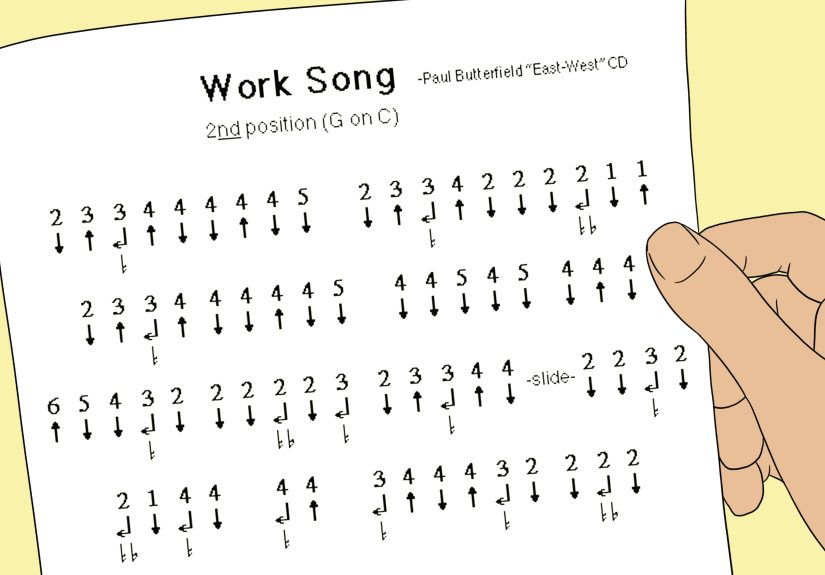
Harmonica tabs are useful because they show hole numbers and the order of notes. They are especially helpful when you already know how a melody sounds. But tabs do not show rhythm clearly, and they do not teach phrasing on their own.
So use tabs as training wheels, not permanent furniture. Sing the melody first if you can. Then use the tab to locate the notes. This approach helps your ears stay involved instead of letting your eyes do all the work like overachieving hall monitors.
Choose simple melodies with stepwise motion
The best beginner songs on chromatic harmonica are simple, singable tunes with nearby notes. Folk melodies, children’s songs, hymn-like melodies, and pop hooks with small intervals work beautifully. They help you coordinate breath changes and slide use without forcing huge jumps across the instrument.
As you practice, ask yourself three questions:
- Did I hit the correct note cleanly?
- Did I switch between blow and draw smoothly?
- Did I press the slide cleanly without wrecking the rhythm?
If you can answer “mostly yes,” you are doing great.
Try simple improvisation
Once you know a scale and a few melody fragments, begin improvising in tiny doses. Not a ten-minute jazz odyssey. Just play four notes, pause, then answer yourself with four more. This teaches musical thinking faster than mindless repetition.
Improvisation also makes practice more fun, and fun matters. The more enjoyable your sessions are, the more often you will come back to them. Consistency beats intensity almost every time when learning an instrument.
Common Beginner Mistakes to Avoid
Pressing the slide too hard
The button should move smoothly. Forcing it creates noise, tension, and bad habits. Use just enough pressure to engage it cleanly.
Using too much air
If your tone sounds harsh or you feel winded after a few minutes, back off. The chromatic harmonica responds well to controlled airflow, not hurricane mode.
Playing only exercises and never songs
Technique matters, but songs are the reward system. Even one simple tune can keep motivation high and prove that your practice is working.
Ignoring rhythm
Playing the right notes at the wrong time still sounds wrong. Clap the rhythm, sing it, then play it. Your future self will be grateful.
A Simple 15-Minute Practice Routine
If you want a practical plan, here is a beginner-friendly routine:
Minutes 1-5: note clarity
Play single notes on holes 4 through 7, blow and draw. Focus on tone and accuracy.
Minutes 6-10: slide drills and scales
Practice natural notes and slide notes on the same holes. Then play one major scale slowly.
Minutes 11-15: melody work
Use a simple song or short tab. Play it slowly, then repeat with better rhythm and smoother slide use.
This kind of short, focused routine is much more effective than one giant weekly practice session fueled by guilt and coffee.
Final Thoughts
Learning how to play chromatic harmonica becomes much less intimidating when you break it into manageable skills. First, understand the layout and the slide. Second, build clean single notes with relaxed breath control. Third, use scales, tabs, and simple melodies to turn technique into music.
The chromatic harmonica has a reputation for sophistication, and that reputation is fair. It can handle jazz, blues, pop, classical, and beautifully expressive melodies. But it does not demand that you become advanced overnight. It just asks you to listen carefully, practice consistently, and stop treating the slide button like it owes you money.
Stick with the basics, keep your tone relaxed, and let your ears lead the way. The more familiar the instrument becomes, the more musical freedom it gives back. And that is when this shiny little box of reeds starts feeling less like a puzzle and more like a voice.
Extended Player Experiences: What Learning Chromatic Harmonica Really Feels Like
One of the most common beginner experiences with chromatic harmonica is surprise. Not because it sounds bad, although the first few minutes may resemble a duck negotiating a contract, but because the instrument feels both simple and deep at the same time. You can make sound immediately, which is encouraging, but making that sound clean, expressive, and musical is where the journey really begins.
Many new players start out thinking the slide button will be the hardest part. In reality, the bigger challenge is often note accuracy. The first time you aim for one note and accidentally play a crunchy cluster of neighboring holes, it is humbling. But it is also normal. Almost everyone goes through that phase. Then one day, usually after several small practice sessions rather than one heroic marathon, the notes begin to separate cleanly. That is a satisfying moment. Suddenly, the harmonica stops feeling random and starts feeling playable.
Another experience beginners often report is how physical the instrument feels. You become aware of your lips, tongue, jaw, breathing, posture, and timing all at once. It is a tiny instrument, but it recruits a surprising number of body parts. The upside is that this physical awareness can make practice oddly calming. Once you settle into a routine of steady breathing and focused listening, playing chromatic harmonica can feel less like drilling an instrument and more like tuning your attention.
There is also the emotional side of learning songs. A scale is useful, but a melody is personal. The first time a recognizable tune comes out of the instrument, even a very simple one, it creates a different kind of confidence. You are no longer just practicing mechanics. You are making music. For many players, that is the moment the habit sticks.
Then comes the phase where the chromatic harmonica starts revealing its personality. You notice how smoothly it can handle lyrical melodies. You hear how expressive a gentle draw note can be. You realize that the slide is not just for “extra notes,” but for color, motion, and emotional shape. This is where many players fall in love with the instrument. It can sound playful, elegant, bluesy, cinematic, or intimate depending on how you phrase a line.
Perhaps the most valuable experience of all is learning patience. Chromatic harmonica rewards consistency more than speed. Tiny improvements add up: cleaner attacks, better rhythm, smoother slide timing, fuller tone. None of these feel dramatic in the moment, but together they transform your playing. That is why many beginners who stay with the instrument end up describing the process the same way: challenging at first, deeply rewarding later, and strangely addictive the whole time.