Table of Contents >> Show >> Hide
- Before You Start: Know What You Are Dealing With
- How to Get Dirt Out of Your Eye: 12 Steps
- 1. Stop rubbing your eye immediately
- 2. Wash your hands with soap and water
- 3. Move to a clean, well-lit area
- 4. Blink several times and let tears do their job
- 5. Pull the upper lid gently over the lower lid
- 6. Remove contact lenses if you wear them
- 7. Flush the eye with clean, lukewarm water
- 8. Use sterile saline or eyewash if available
- 9. Check the lower eyelid carefully
- 10. Avoid tweezers, cotton swabs on the cornea, and random eye drops
- 11. Rest your eye after the dirt is gone
- 12. Get medical help if symptoms continue or seem serious
- What Not to Do When Dirt Gets in Your Eye
- How to Tell If the Dirt Is Out
- How to Prevent Dirt, Dust, and Grit From Getting in Your Eyes
- Common Examples: What to Do in Real Situations
- When to Call a Doctor Right Away
- Conclusion
- Experience Notes: Real-Life Lessons About Getting Dirt Out of Your Eye
- SEO Tags
Note: This guide is for loose dirt, dust, sand, grit, or a tiny eyelash-like particle on the surface of the eye. If something is stuck in the eye, the eye was hit, chemicals splashed into it, metal or glass may be involved, or vision changes occur, skip the DIY hero moment and get medical care right away.
Dirt in your eye is one of those tiny problems that instantly becomes the star of the entire day. You can be walking peacefully, gardening like a weekend legend, biking through a windy street, or cleaning a dusty shelf when suddenly your eye says, “Excuse me, we have an emergency meeting.” The good news is that most small particles can be removed safely with blinking, tears, clean water, or sterile saline. The not-so-good news? Rubbing your eye like you are polishing a window can make things worse.
Learning how to get dirt out of your eye the right way helps protect the cornea, the clear front surface of the eye. Dirt, dust, sand, or tiny debris can scratch this delicate area, especially if you rub or poke at it. The goal is simple: stay calm, keep things clean, flush gently, and know when to call a professional. Your eye is small, sensitive, and very dramatic for a reasonit is protecting your vision.
Below are 12 safe, practical steps to remove dirt from your eye, plus prevention tips, warning signs, and real-life experience notes that make the process easier to remember when your eye is watering like it just watched a sad movie.
Before You Start: Know What You Are Dealing With
A loose speck of dirt usually causes watering, blinking, mild stinging, scratchiness, or the feeling that “something is in there.” This is called a foreign body sensation. Sometimes the particle is visible on the white of the eye or inside the lower lid. Other times, your eye’s natural tears may already have washed it away, but the surface still feels irritated for a while afterward.
Do not treat the situation at home if the object is embedded, sharp, large, or caused by hammering, grinding, drilling, yard tools, fireworks, broken glass, or metal work. Also seek urgent help if you have severe pain, bleeding, light sensitivity, sudden blurry vision, discharge, a cut, swelling, or symptoms that do not improve after flushing.
How to Get Dirt Out of Your Eye: 12 Steps
1. Stop rubbing your eye immediately
Your first instinct may be to rub. Your eye disagrees. Rubbing can drag dirt across the cornea and create a scratch, turning a simple speck into a bigger irritation. Instead, close your eye gently for a few seconds and let it water. Tears are not just emotional background music; they are part of your eye’s cleaning system.
2. Wash your hands with soap and water
Before touching your face, eyelids, contact lenses, towel, or eye cup, wash your hands well. Dirt plus dirty fingers is not a power couple. Use soap and running water, scrub under your nails if needed, and dry with a clean towel. This reduces the chance of introducing germs while your eye is already irritated.
3. Move to a clean, well-lit area
Find a bathroom mirror, bright room, or any clean place where you can see what is happening. Avoid dusty rooms, wind, fans, smoke, or pet hair while you are trying to flush your eye. Good lighting helps you check whether the dirt is on the white part of the eye, under the lower lid, or already gone.
4. Blink several times and let tears do their job
For a tiny speck of dust or dirt, blinking may be enough. Blink gently and repeatedly. Do not squeeze your eyelids shut with force. Your tears may float the particle toward the inner corner of your eye, where it can be flushed or wiped away safely from the skin near the eye.
5. Pull the upper lid gently over the lower lid
If the particle feels trapped under the upper eyelid, try this simple trick: look down, gently pull your upper eyelid outward and down over your lower eyelid, then release. The lower lashes may brush the underside of the upper lid and help move the particle out. It sounds strange, but it is a classic first-aid movebasically your eyelashes doing light housekeeping.
6. Remove contact lenses if you wear them
If you wear contacts, remove the lens before or during flushing if you can do so easily. Dirt can become trapped under a contact lens, causing more irritation. If the contact does not come out easily, do not dig for it. Continue rinsing gently and seek eye care if it remains stuck or your eye feels worse.
7. Flush the eye with clean, lukewarm water
Use a gentle stream of clean, lukewarm water. You can rinse at a sink, use a clean cup, or stand in the shower and let water run from your forehead down over the affected eye. Keep the eyelid open as much as you comfortably can. The water should flow gently across the eye, not blast directly into it. Your eyeball is not a dirty driveway; no pressure washing required.
8. Use sterile saline or eyewash if available
Sterile saline solution or a store-bought eyewash can be helpful because it is designed for rinsing eyes. Tilt your head so the affected eye is lower than the other eye, allowing fluid and debris to drain away rather than across the bridge of your nose into the other eye. Keep flushing for several minutes or until the gritty feeling improves.
9. Check the lower eyelid carefully
After rinsing, look in the mirror. Gently pull down the lower eyelid and look up. If you see a tiny speck sitting on the inner eyelid or near the corner of the eye, rinse again. If the particle is floating on the tear film near the white of the eye, flushing is still the safest option. Avoid poking the eye surface.
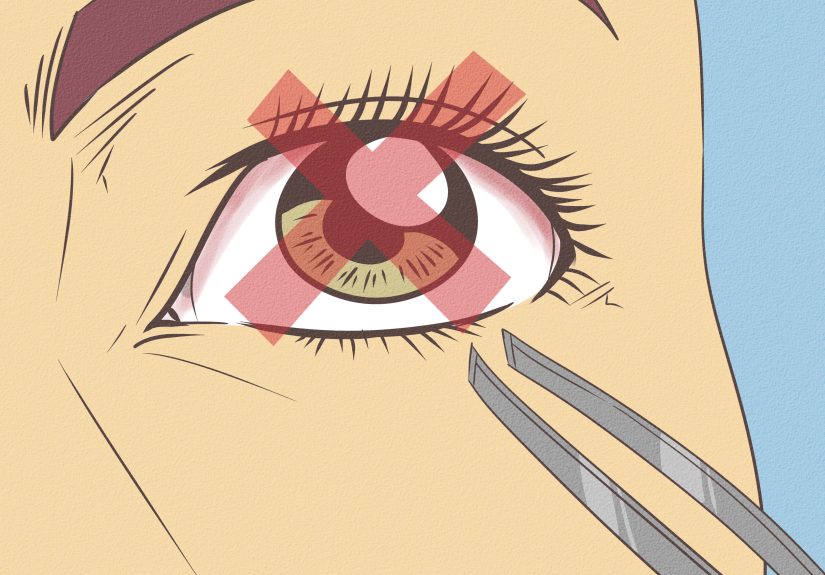
10. Avoid tweezers, cotton swabs on the cornea, and random eye drops
Never use tweezers, toothpicks, fingernails, makeup tools, tissues, or cotton swabs directly on the colored part of the eye or the cornea. Also avoid medicated eye drops unless a healthcare provider recommends them. Artificial tears may soothe mild dryness after the particle is gone, but “mystery drops from the back of the drawer” are not a medical plan.
11. Rest your eye after the dirt is gone
Once the dirt appears to be out, give your eye a break. Avoid contact lenses, eye makeup, dusty tasks, swimming pools, and long screen sessions for a little while if your eye still feels irritated. Mild scratchiness can linger because the eye surface may have been rubbed by the particle. However, discomfort should gradually improve, not get worse.
12. Get medical help if symptoms continue or seem serious
Call an eye doctor, urgent care clinic, or emergency department if you cannot remove the dirt, the object seems stuck, your vision changes, pain is strong, redness increases, light hurts your eye, discharge appears, or the foreign body sensation lasts longer than expected. Also get care right away for metal, glass, wood chips, chemicals, cuts, punctures, or any injury from tools or high-speed particles.
What Not to Do When Dirt Gets in Your Eye
Do not rub your eye. Do not press on the eyeball. Do not use sharp objects. Do not ask a friend to “just grab it real quick” unless your friend happens to be an eye doctor with proper equipment. Do not rinse an eye that has a penetrating injury or an embedded object; protect it gently and seek emergency care. Do not ignore symptoms just because the speck looks small. Tiny particles can cause big irritation, especially if they scratch the cornea.
If chemicals are involved, rinse immediately with clean running water or saline and seek urgent medical care. Chemical exposure is different from ordinary dust. The priority is flushing quickly and continuously, then getting professional evaluation.
How to Tell If the Dirt Is Out
You may notice less tearing, less blinking, and less sharp scratchiness. Your eye may still feel mildly irritated for a short time, especially if the dirt scraped the surface. That lingering “something is still there” feeling does not always mean the particle remains. Sometimes it means the eye surface is irritated. Still, if the feeling does not improve, vision becomes blurry, or pain increases, have it checked.
How to Prevent Dirt, Dust, and Grit From Getting in Your Eyes
Prevention is much easier than standing over a sink blinking like a confused goldfish. Wear protective eyewear when mowing, gardening, sanding, drilling, grinding, sweeping dusty areas, using leaf blowers, cleaning overhead shelves, or playing sports where particles may fly. Choose safety glasses or goggles with side protection when debris can come from the side.
When working in dusty spaces, wash your hands before touching your face. Brush dust off hats, helmets, hair, or safety goggles before removing them. If you wear contact lenses, carry backup glasses and sterile saline when traveling, camping, biking, or working outdoors. A little preparation can save you from a watery-eyed adventure later.
Common Examples: What to Do in Real Situations
Dirt from gardening
Stop gardening, wash your hands, remove contacts if needed, and flush the eye with clean water or saline. Avoid rubbing, even if the dirt feels gritty. Wear wraparound glasses next time, especially when digging, trimming, or handling dry soil.
Dust from cleaning
Move away from the dusty area first. Rinse the eye gently and avoid using the same dusty towel or shirt sleeve to wipe your face. If you were cleaning overhead fans, shelves, or vents, consider safety glasses next time. Yes, cleaning your home can apparently turn into a tiny weather event.
Sand at the beach
Do not rub, even though sand feels especially annoying. Use bottled clean water, sterile saline, or a shower station if available. Remove contacts if you can. Seek help if the scratchy feeling persists, because sand can irritate the cornea quickly.
Debris from tools or metal work
Do not try to remove it yourself. Metal fragments, wood chips, and high-speed particles can embed in the eye. Cover the eye gently without pressure and get urgent medical care. This is not the moment for bathroom-mirror surgery.
When to Call a Doctor Right Away
Seek medical care immediately if you notice vision loss, sudden blurry vision, severe pain, bleeding, a visible object stuck in the eye, a cut, a misshapen pupil, swelling, discharge, strong light sensitivity, or redness that worsens. You should also get care if you were hammering, grinding, drilling, or exposed to metal fragments. If dirt or grit will not flush out, or your eye still feels painful after removal, an eye professional can check for a corneal abrasion or hidden particle under the lid.
Conclusion
Getting dirt out of your eye safely comes down to three main rules: do not rub, rinse gently, and know when to get help. Most loose dirt, dust, or sand can be handled with clean hands, blinking, tears, sterile saline, or a gentle stream of lukewarm water. But your eye is not a place for tweezers, fingernails, cotton-swab experiments, or “I saw this trick online” confidence.
If the dirt comes out and your eye quickly feels better, you can usually rest it and move on with your day. If pain, redness, blurry vision, light sensitivity, or the gritty feeling continues, take it seriously and contact an eye care professional. Vision is too valuable to gamble with, especially over something as tiny and rude as a speck of dirt.
Experience Notes: Real-Life Lessons About Getting Dirt Out of Your Eye
Anyone who has ever walked into a windy parking lot, opened a dusty closet, or tried to garden on a dry day knows that dirt in the eye has a special talent for ruining the mood. The first lesson from real life is that panic makes people rub. Rubbing feels like the fastest solution, but it usually makes the eye angrier. The better move is to pause, breathe, and let the eye water. It may feel silly to stand still while one eye tears up, but those tears are doing useful work.
A common experience is thinking the dirt is still there even after rinsing. This happens because the surface of the eye can remain irritated. For example, after a tiny grain of sand is flushed out, the eye may still feel scratchy for a few hours. That does not always mean you failed. It may mean the cornea is irritated. The key is whether symptoms are improving. If each hour feels a little better, rest and gentle care may be enough. If the pain stays sharp, vision changes, or light feels unbearable, it is time to get help.
Another lesson: clean water matters, but gentle flow matters too. People sometimes lean directly into a powerful faucet stream, which can feel overwhelming. A softer method is to let water hit the forehead or side of the face and flow across the eye. A clean cup can also help. The goal is not force; it is steady rinsing. Think lazy river, not fire hose.
Contact lens wearers often have a different experience. Dirt can hide under a lens and make the eye feel intensely scratchy. Removing the lens can bring quick relief, but only if it comes out easily. If the lens feels stuck, more rinsing is safer than digging at the eye. Keeping backup glasses in a bag, car, or desk can turn a stressful situation into a manageable one.
Parents also learn fast that kids hate eye rinsing. The trick is staying calm, explaining each step, and using a gentle stream while the child tilts their head. Bright lights and big mirrors can make children more nervous, so a calm voice helps. If a child cannot keep the eye open, symptoms continue, or the injury involved tools, chemicals, or flying debris, professional care is the safer path.
The final practical lesson is prevention. Safety glasses may not win fashion week, but they are excellent at keeping dirt, dust, grass clippings, and grit out of your eyes. Wear them while mowing, trimming, sanding, sweeping dusty garages, or cleaning overhead spaces. Most eye-dirt dramas are preventable with one simple habit: protect your eyes before the dust gets ambitious.