Table of Contents >> Show >> Hide
- Tip 1: Create a Clear Phone Routine Before the Lesson Starts
- Tip 2: Separate Productive Phone Use From Distracting Phone Use
- Tip 3: Build Student Buy-In With Fairness, Conversation, and Digital Self-Control
- Common Classroom Phone Problems and Practical Fixes
- How Phone Management Supports a Better Classroom Culture
- Experience-Based Reflections: What Managing Phone Use Looks Like in Real Classrooms
- Conclusion
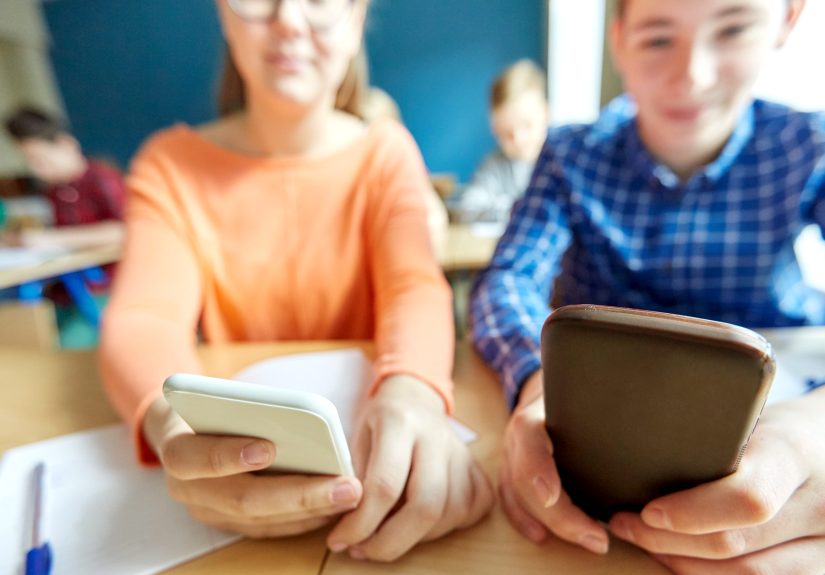
Phones in class are a little like glitter in a craft project: useful in the right moment, impossible to ignore, and mysteriously everywhere five minutes later. For teachers, the issue is not simply that students own phones. The issue is that phones compete with the lesson, the discussion, the group task, the quiz, the peer sitting nearby, and sometimes the teacher’s last nerve.
Cell phone distraction has become one of the most visible classroom management challenges in American schools. Pew Research Center found that 72% of U.S. high school teachers say students being distracted by cellphones is a major problem in their classrooms, while one-third of public K-12 teachers overall call it a major problem. At the same time, students do not all see the solution the same way adults do. In a 2025 Pew survey, 41% of teens supported classroom phone bans, but only 17% supported banning phones for the entire school day. Adults were much more supportive of both classroom and all-day restrictions.
That gap matters. A phone policy that sounds perfect in a staff meeting can fall apart by second period if students see it as random, unfair, or impossible to follow. The goal is not to win a daily wrestling match with rectangles. The goal is to create a classroom where attention is easier, learning time is protected, and students gradually build healthier digital habits.
Below are three practical, research-informed tips for managing phone use in class without turning every lesson into “Teacher vs. TikTok: The Sequel.”
Tip 1: Create a Clear Phone Routine Before the Lesson Starts
The best phone policy is not the one with the most dramatic punishment. It is the one students understand before they sit down. Ambiguity is where classroom phone problems breed. If students have to guess whether today is a “phones away,” “phones face down,” or “phones are tools” day, they will often choose the option that comes with the most notifications.
A clear classroom phone routine should answer four questions:
- Where should the phone be when students enter?
- When, if ever, will the phone be used for learning?
- What happens if a student uses it at the wrong time?
- How will exceptions be handled?
Edutopia has described a simple visual system using red, yellow, and green signals: red means phones are off and stored; yellow means phones are silenced and placed face down for possible limited use; green means phones are ready for a planned learning activity. The beauty of this kind of system is that it removes the exhausting daily speech. Students can see the expectation as they walk in. No lecture. No courtroom drama. No “But yesterday you said…” negotiations.
Make the Storage Location Boringly Consistent
Consistency is not flashy, but it is classroom gold. Decide whether phones go in backpacks, a numbered phone holder, a visible corner of the desk, or a designated “phone parking lot.” Then stick with it. When students know exactly where the device belongs, enforcement becomes less personal. You are not targeting Jayden because he smiled suspiciously at his hoodie pocket. You are simply applying the same routine to everyone.
For many classes, a numbered storage chart works well. Each student has a slot. Attendance can even be checked by glancing at the holder. If a student has a documented medical need, an individualized education plan, or a family emergency arrangement, that exception should be handled privately and respectfully. The rule stays clear, but the teacher remains human.
Teach the Routine Like Academic Content
Do not assume students know how to follow a phone routine just because the words are posted on the wall. Teach it. Model it. Practice it. Repeat it after long breaks, field trips, testing days, and any Monday that feels spiritually connected to winter.
A useful mini-script might sound like this: “When the sign is red, your phone is silenced and in the holder before the bell. If I see it during instruction, I’ll give one quiet reminder. If it happens again, I’ll follow our class consequence. When we need phones for a learning task, I’ll tell you exactly when to get them.”
The key phrase is “exactly when.” Phones should not hover in a vague maybe-zone. A phone that might be used later is still a temptation now.
Tip 2: Separate Productive Phone Use From Distracting Phone Use
Not all phone use is the same. A student using a phone to photograph lab results, submit a quick poll response, translate a vocabulary word, or check a classroom platform is not doing the same thing as a student watching sports highlights under the desk. A strong classroom phone policy makes that distinction clear.
Research and school reporting suggest that phone restrictions can improve engagement and behavior, but implementation matters. Education Week reported that seven in ten educators said cellphone limits had a positive impact on classroom behavior and student engagement, while also noting that having a policy is not the same as implementing it well. Stanford-led research on school cellphone bans found reduced phone use but mixed academic effects, with researchers emphasizing that benefits may take time and that schools should be patient during implementation.
That means teachers should avoid two extremes. One extreme is “phones are always evil,” which ignores legitimate learning uses and student realities. The other is “students can self-regulate without structure,” which is adorable in the way a raccoon in sunglasses is adorable: charming, but not a classroom management plan.
Use Phones Only When They Improve the Task
Before allowing phones, ask one question: “Does the phone make this activity better than a non-phone option?” If the answer is no, do not use them. If students can answer on paper, discuss with a partner, use school devices, or write on a whiteboard, those options may be less distracting.
However, phones can be useful when they serve a specific instructional purpose. For example:
- Students scan a QR code to access a short primary source.
- English learners use a translation tool for a targeted vocabulary task.
- Students photograph a science experiment before cleaning up.
- A class uses a quick formative assessment poll.
- Students record a 30-second speaking practice clip.
In each case, the teacher controls the start time, the end time, and the learning target. The phone is a tool, not a guest lecturer with unlimited screen time.
Announce the Purpose, Time Limit, and Closing Cue
When phones are allowed, give students a tight frame. Say what they are using the phone for, how long they have, and what they should do when time is up. For example: “You have three minutes to open the poll and answer the two questions. When the timer ends, phones return face down in the top right corner of your desk.”
Short time limits matter because phone use has a way of expanding like bread dough. A two-minute check becomes a seven-minute detour, and suddenly someone is “researching” the history of sneakers during a lesson on photosynthesis.
Use a visible timer. Give a verbal countdown. Then require a physical reset: phone face down, in the holder, or back in the bag. The physical reset signals that the learning mode has changed.
Tip 3: Build Student Buy-In With Fairness, Conversation, and Digital Self-Control
Rules work better when students understand the reason behind them. That does not mean every policy must be voted on like a classroom reality show. Teachers still need authority. But students are more likely to cooperate when they see the phone routine as a way to protect learning, not as a random adult power move.
The U.S. Department of Education’s personal device policy playbook encourages schools to design policies with input from educators, students, parents, and caregivers, while also considering storage, emergencies, disability accommodations, consequences, training, rollout, and evaluation. RAND’s survey findings also show why balance matters: many schools now use bell-to-bell restrictions, but youth generally prefer lighter restrictions than principals do.
Buy-in starts with a simple explanation: “I’m not trying to control your life. I’m trying to protect the part of the day where your brain gets to focus without being interrupted every ten seconds.” Students may roll their eyes. That is fine. Eye-rolling is practically a teen punctuation mark. The message still matters.
Discuss Attention Honestly
Students often know phones distract them. They just do not always know what to do about it. A short class discussion can be powerful. Ask:
- When is your phone genuinely helpful in school?
- When does it make learning harder?
- What notifications are hardest to ignore?
- What should a fair classroom phone routine include?
This kind of conversation turns the policy into a shared problem-solving exercise. It also helps students name the challenge: attention is limited. Multitasking feels productive, but switching between a lesson and a phone usually weakens both.
Harvard Graduate School of Education has highlighted that phone bans alone are not a complete solution; students also need digital agency, or the ability to use technology intentionally and responsibly. NASBE has similarly emphasized that restrictions should be paired with media literacy and skills for appropriate technology use.
Use Consequences That Are Predictable, Not Theatrical
Phone consequences should be calm, boring, and consistent. The teacher who turns every phone violation into a courtroom monologue may win the moment but lose the room. Students should know what happens before it happens.
A simple sequence might look like this:
- First issue: quiet reminder or nonverbal cue.
- Second issue: phone moves to the designated storage area.
- Repeated issue: parent or guardian contact and documentation.
- Ongoing issue: conference with student, family, counselor, or administrator.
The language should be neutral: “Your phone needs to move to the holder now.” Not “Why are you always on that thing?” The first sentence enforces the rule. The second sentence invites a debate, a defense, and possibly a dramatic reenactment of injustice.
Common Classroom Phone Problems and Practical Fixes
Problem: Students Say They Need Phones for Emergencies
This concern deserves respect. Many families see phones as safety tools. A good policy should explain how emergency communication works. Schools should tell families when to contact the office, how urgent messages will reach students, and how students with medical or safety needs can access devices appropriately. Education Commission of the States notes that state and local policies often include emergency communication and accessibility considerations, especially for students with medical needs or disability accommodations.
Problem: Students Hide Phones Anyway
Some students will test the system. That does not mean the system has failed. It means the system is meeting adolescence. Keep the response consistent. Avoid public shaming. Look for patterns. If the same student repeatedly checks a phone, the issue may be boredom, anxiety, family pressure, social conflict, or habit. A private conversation often works better than another public warning.
Problem: Parents Text During Class
Families may not realize that a “quick text” lands in the middle of a quiz, lab, presentation, or reading discussion. Send a short family note at the start of the term explaining the phone routine and the school’s communication process. Most parents are not trying to sabotage third period. They just need a clear alternative.
Problem: Teachers Use Phones Too
Students notice. If teachers check personal messages while telling students not to, the policy loses credibility. Of course, teachers may need phones for attendance, emergency alerts, timers, or school communication. The fix is transparency: “I’m using my phone as a timer,” or “I’m checking the office message about our schedule.” Adults do not need to be perfect, but they do need to model intentional use.
How Phone Management Supports a Better Classroom Culture
Managing phones is not just about removing distraction. It is about protecting the conditions that make learning possible: attention, conversation, belonging, and trust. The CDC notes that school connectedness has long-lasting effects on health and well-being, and students who feel connected at school are less likely to experience certain health risks later. Phone routines should support that connectedness, not turn class into a daily battle.
When students are not constantly checking notifications, they are more available for peer discussion. They hear instructions the first time. They participate more fully in labs, seminars, writing workshops, and group projects. They also get practice being present, which may be one of the most underrated academic skills of the decade.
Phones are not going away. That is exactly why students need structured practice using them wisely. A classroom phone plan should create focus today and build self-management for tomorrow.
Experience-Based Reflections: What Managing Phone Use Looks Like in Real Classrooms
In many classrooms, the first days of a new phone routine feel awkward. Students reach for their pockets automatically. A teacher gives the same reminder five times before attendance is finished. Someone insists they are “just checking the time,” even though there is a clock on the wall large enough to guide ships safely into harbor. This is normal. A phone habit is not just a behavior; it is a reflex.
One experience many teachers describe is that the first real victory is not silence. It is recovery. At the beginning, a student may need three reminders to put the phone away. After two weeks of consistent practice, that same student may catch themselves after one glance and return it without argument. That small moment matters. It shows the student is internalizing the routine.
Another common experience is that students often complain about phone rules publicly but appreciate them privately. A student may groan when asked to place a phone in the holder, then later admit that the class feels easier when the device is out of reach. This does not mean every student will suddenly write a thank-you card decorated with tiny paper apples. But many students recognize that phones pull at their attention more strongly than they want to admit.
Group work also changes when phones are managed well. Without clear rules, one student checks messages, another watches, a third asks what happened, and the group task quietly collapses like a cheap folding chair. With phones stored or clearly assigned for a purpose, students are more likely to look at each other, divide tasks, and solve problems together. The room feels less like a waiting area and more like a learning community.
Teachers may also find that phone management reduces emotional friction. Instead of reacting to every hidden screen, the teacher relies on the routine. The conversation becomes less personal: “The sign is red today,” not “You are being disrespectful.” This lowers the temperature. It also helps students save face, which matters more than adults sometimes realize.
There will still be exceptions. A student may be worried about a sick family member. Another may use a phone for diabetes monitoring, translation, or an accessibility tool. A rigid policy that ignores these realities can damage trust. A strong policy is firm enough to protect learning and flexible enough to respect legitimate needs.
The most useful lesson from classroom experience is this: phone management is not a one-time announcement. It is a classroom habit built through repetition. The routine should be visible, practiced, and reinforced. The teacher should explain the why, enforce the how, and review the system when it stops working.
When done well, managing phone use does not make a classroom feel colder or more controlled. It can make the room feel calmer, more focused, and more human. Students talk to each other. Teachers teach without competing against every app on earth. The phone becomes what it should be in a classroom: sometimes a tool, often unnecessary, and never the main character.
Conclusion
Managing phone use in class is not about pretending students live in 1998. It is about helping them learn in 2026 without being interrupted by every notification, group chat, and algorithmic rabbit hole available to humanity. The best approach combines three moves: create a clear routine, use phones only when they genuinely support learning, and build student buy-in through fairness and digital self-control.
A good classroom phone policy should be simple enough for students to follow, consistent enough for teachers to enforce, and flexible enough to handle real-life exceptions. It should protect attention without treating students like tiny criminals with chargers. Most of all, it should help the classroom become a place where students can think, talk, read, write, experiment, listen, and learn without a screen constantly tapping them on the shoulder.
Note: This article is based on current U.S. education research, classroom-management guidance, and policy reporting. It is fully rewritten for original publication and avoids raw source links in the article body.