Table of Contents >> Show >> Hide
- What Is 6G?
- How Is 6G Different From 5G?
- When Will 6G Launch?
- What Will 6G Be Used For?
- Will 6G Replace Wi-Fi?
- Will You Need a New Phone for 6G?
- What Are the Biggest Challenges Facing 6G?
- Is 6G Safe?
- Should You Be Excited About 6G?
- Experience Section: What the Road to 6G Feels Like in Real Life
- Conclusion
- SEO Tags
Every few years, the wireless industry looks at perfectly good technology and says, “Cute. Let’s make it faster, smarter, and slightly more mysterious.” That is where 6G comes in. While many people are still waiting for flawless 5G coverage in elevators, rural roads, and that one suspicious corner of the kitchen, engineers, researchers, governments, and telecom companies are already building the foundation for the next generation of wireless connectivity.
So, what is 6G exactly? In simple terms, 6G is the planned sixth generation of mobile network technology. It is expected to follow 5G and 5G Advanced, with early standards work happening now and broader commercial launches expected around the end of this decade. But 6G is not just “5G, but with a cape.” It is being designed as a much more intelligent, sensing-aware, AI-driven network that could connect phones, cars, robots, satellites, factories, smart cities, wearable devices, and machines we have not even named yet.
If 5G was about faster mobile broadband and low-latency connections, 6G wireless technology is expected to go further: immersive experiences, AI-native networks, integrated sensing, stronger resilience, better coverage, and more efficient use of spectrum. In other words, 6G wants to be less like a pipe that carries data and more like a nervous system for the digital world. No pressure, right?
What Is 6G?
6G refers to the sixth generation of cellular network technology, currently being developed under the global framework often called IMT-2030. The “2030” part is a big clue: the industry is generally working toward final standards and commercial deployment around 2029 to 2030, although pre-commercial testing and trial devices may appear earlier.
Like previous generations, 6G will be defined through international standards. These standards matter because your future 6G phone, smartwatch, car, router, drone, or industrial sensor needs to work across networks and countries without behaving like a confused tourist at airport customs. Organizations such as ITU and 3GPP help coordinate the technical requirements, radio specifications, and compatibility rules that make global mobile networks possible.
The main keyword here is connectivity, but 6G is expected to expand what connectivity means. Today, a network mainly connects devices so they can send and receive data. With 6G, networks may also help devices understand their surroundings, process AI workloads closer to the user, coordinate machines in real time, and provide coverage through a mix of towers, satellites, high-altitude platforms, and edge computing systems.
How Is 6G Different From 5G?
The easiest answer is speed, but that is also the most boring answer. Yes, 6G is expected to be faster than 5G. Yes, peak theoretical speeds could reach eye-popping numbers in research settings. And yes, someone will absolutely use those numbers in a marketing slide with dramatic blue lightning. But the real difference between 5G vs 6G is not only download speed.
1. 6G Will Be More AI-Native
5G networks already use automation and software intelligence, but 6G is expected to bake AI deeper into the network from the start. This means artificial intelligence could help manage traffic, reduce energy use, detect problems, improve security, and allocate network resources dynamically. Instead of waiting for engineers to manually adjust everything, the network could become more self-optimizing.
Imagine a concert stadium where 80,000 people are streaming video, posting clips, ordering rides, and trying to find their friends. A 6G network could use AI to predict demand, shift capacity, prioritize critical services, and keep the experience smoother. In theory, fewer spinning loading icons. In practice, still expect someone to complain on social media.
2. 6G May Combine Communication and Sensing
One of the most exciting 6G ideas is integrated sensing and communication. That means future wireless signals may not only carry information but also help detect movement, distance, location, objects, or environmental changes. The network could act a little like radar while still acting like a communication system.
This could be useful for traffic safety, smart homes, industrial automation, healthcare monitoring, public safety, and robotics. For example, a smart factory might use 6G signals to track machines, detect hazards, and coordinate robots without needing a separate sensing system for every task.
3. 6G Could Improve Coverage With Satellites and Non-Terrestrial Networks
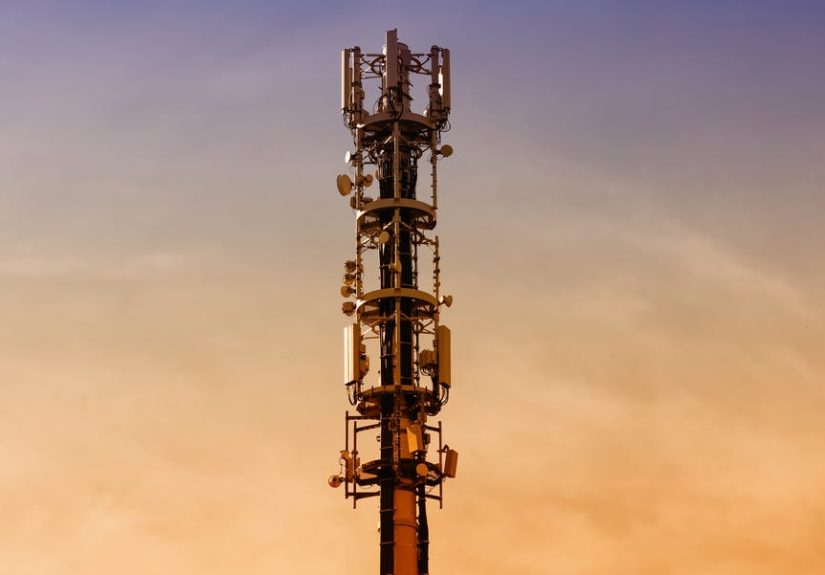
Coverage is one of the great unsolved dramas of mobile life. You can have a powerful smartphone, a premium plan, and still lose signal on a mountain road or inside a building that apparently has walls made of signal-eating dragon scales. 6G is expected to lean more heavily on non-terrestrial networks, including satellites and aerial platforms, to extend connectivity beyond traditional cell towers.
This does not mean every 6G connection will come from space. Most urban and suburban service will still rely heavily on ground-based infrastructure. But satellites could play a larger role in emergency response, rural broadband, maritime coverage, aviation, agriculture, and remote industrial operations.
4. 6G Will Need New Spectrum Strategies
Wireless networks run on spectrum, and spectrum is like beachfront property: valuable, limited, and frequently argued over. 6G may use a mix of low-band, mid-band, upper mid-band, millimeter wave, and possibly sub-terahertz frequencies. Each range has trade-offs. Lower frequencies travel farther and penetrate buildings better, while higher frequencies can carry more data but usually require shorter distances and more advanced equipment.
This is why governments and regulators are already studying spectrum options. Without enough suitable spectrum, 6G cannot deliver its biggest promises. The future of 6G is not just about clever chips and antennas; it is also about policy, auctions, coexistence rules, and interference management. Glamorous? Not always. Essential? Absolutely.
When Will 6G Launch?
The honest answer: 6G is expected around 2030, but the road there has several stages. Research is already underway. Technical requirements and evaluation methods are being developed. Standards work is moving through the pipeline. Pre-commercial tests may appear before the end of the decade. Consumer availability will likely come later, depending on country, carrier, spectrum, infrastructure, device chips, and whether your carrier’s coverage map is being optimistic again.
Historically, mobile generations arrive roughly every ten years. 4G took off in the early 2010s, 5G began commercial deployment around 2019 and 2020, and 6G is being aimed at the 2030 era. That does not mean everyone will wake up one morning in 2030 with a 6G icon on their phone. Rollouts are gradual. Premium cities, test zones, enterprise campuses, and advanced industrial areas may get early deployments before widespread consumer coverage.
Another important point: 5G is not finished. 5G Advanced will continue improving current networks with better efficiency, positioning, AI-assisted operations, and expanded use cases. In many ways, 5G Advanced is the bridge between today’s 5G and tomorrow’s 6G.
What Will 6G Be Used For?
The best way to understand 6G is to look at the problems it may help solve. Faster movie downloads are nice, but they are not enough to justify a new wireless generation. The bigger goal is enabling new experiences and systems that are difficult or impossible with today’s networks.
Immersive Communication
6G could support richer extended reality, including augmented reality, virtual reality, mixed reality, and eventually more realistic holographic-style communication. Instead of a video call where everyone freezes mid-sentence like a haunted portrait, future immersive communication could feel more natural, spatial, and responsive.
This matters for remote work, telemedicine, education, entertainment, design, training, and collaboration. A surgeon could consult with specialists in an immersive environment. Engineers could inspect a digital twin of a bridge. Students could walk through a virtual reconstruction of ancient Rome without anyone stealing their lunch money at the Colosseum.
Smart Transportation
Autonomous vehicles, connected traffic systems, drones, and logistics networks all need fast, reliable, low-latency communication. 6G may help vehicles communicate with roads, traffic lights, nearby vehicles, pedestrians, cloud systems, and edge servers. The goal is safer, smoother, more coordinated transportation.
For example, a 6G-enabled intersection might detect hazards, prioritize emergency vehicles, adjust traffic flow, and share real-time information with cars and bikes. That does not mean traffic jams disappear forever, but it could make transportation systems smarter than “everyone honk and hope.”
Factories and Industrial Automation
Smart factories are one of the strongest business cases for 6G. Industrial robots, sensors, cameras, machines, and control systems require reliable connectivity. With 6G, factories could use wireless networks for real-time monitoring, predictive maintenance, machine coordination, and digital twins.
This could reduce downtime, improve safety, and make manufacturing more flexible. Instead of rewiring a facility every time production changes, companies could rely more on wireless systems that adapt quickly.
Healthcare and Wearables
6G may support more advanced remote healthcare, wearable monitoring, connected medical devices, and emergency response systems. Patients could be monitored continuously with secure, low-power devices. Doctors could access richer data, and hospitals could coordinate equipment, staff, and patient care more intelligently.
Of course, healthcare use cases will require strict privacy, reliability, and security. Nobody wants their medical data handled with the same energy as a forgotten gym password.
Rural Connectivity
One of the most meaningful promises of 6G is better connectivity for underserved areas. If non-terrestrial networks, smarter spectrum sharing, and more efficient infrastructure mature as expected, 6G could help expand broadband access in rural communities, farms, remote worksites, and disaster zones.
This is not automatic. Rural coverage depends on economics, public policy, infrastructure investment, and practical deployment. But 6G is being discussed with ubiquitous coverage as a major design goal, not an afterthought.
Will 6G Replace Wi-Fi?
Probably not. 6G and Wi-Fi will likely continue to coexist, just as 5G and Wi-Fi do today. Wi-Fi is excellent for homes, offices, schools, coffee shops, airports, and indoor environments. Cellular networks are better for wide-area mobility, managed coverage, and carrier-grade services.
The future may involve more seamless movement between Wi-Fi, 5G Advanced, 6G, satellites, and private networks. Your device may simply choose the best connection without making you think about it. That is the dream: less network babysitting, more actual internet.
Will You Need a New Phone for 6G?
Yes. When 6G becomes commercially available, you will need 6G-compatible hardware to use it. Current 5G phones cannot magically become 6G phones through a software update. The radios, modems, antennas, power systems, and network support will need to be built for 6G standards.
That said, there is no reason to panic-buy anything today. Real consumer 6G networks are still years away. If you are buying a phone now, focus on practical needs: battery life, camera quality, software support, storage, display, durability, and whether it survives being dropped on the bathroom tile with heroic dignity.
What Are the Biggest Challenges Facing 6G?
6G sounds exciting, but it is not guaranteed to be easy. Several major challenges stand between today’s research and tomorrow’s networks.
Energy Efficiency
Networks already consume significant power. If 6G connects more devices, processes more data, and supports AI workloads, energy efficiency becomes critical. A faster network that drains batteries and increases emissions would be a very expensive way to create new problems.
Security and Privacy
AI-native networks, sensing capabilities, connected healthcare, smart cities, and industrial automation all raise serious security questions. 6G must be designed with privacy, resilience, authentication, and threat detection from the start. The more a network can sense and infer, the more carefully it must be governed.
Infrastructure Cost
Deploying a new wireless generation costs money. Carriers may need new radios, antennas, software, backhaul, fiber, edge computing facilities, testing systems, and spectrum licenses. Consumers may need new devices. Businesses may need new integration plans. 6G will not arrive by sprinkling fairy dust on 5G towers.
Real Consumer Value
Perhaps the biggest challenge is proving why ordinary people should care. Faster speeds alone may not be enough. For many users, current networks already stream video, support video calls, and load apps reasonably well. To win public excitement, 6G must deliver clear benefits: better coverage, more reliable service, improved safety, smarter devices, and new experiences that feel useful rather than gimmicky.
Is 6G Safe?
6G safety will be evaluated through the same broad categories that apply to wireless technology today: radiofrequency exposure limits, device compliance, network security, privacy, and operational reliability. Because 6G standards are still being developed, final technical details are not complete. However, wireless systems are typically required to follow national and international safety rules before commercial deployment.
It is also important to separate two different meanings of “safe.” One is physical exposure to radio signals. The other is digital safety, including privacy, hacking, surveillance, and misuse of data. For 6G, the second category may become even more important because AI and sensing capabilities could make networks more powerful and more sensitive.
Should You Be Excited About 6G?
Yes, but with realistic expectations. 6G could become a major leap in wireless technology, especially for AI, robotics, immersive media, smart infrastructure, and global connectivity. But it will not instantly fix every dropped call, slow hotspot, or basement dead zone. The magic will depend on standards, spectrum, investment, devices, regulation, and practical deployment.
The smartest way to think about 6G is this: it is not just the next phone network. It is a platform being designed for a world where intelligence, sensing, communication, and computing blend together. That could reshape industries and everyday lifebut only if the technology is built securely, sustainably, and with real human benefits in mind.
Experience Section: What the Road to 6G Feels Like in Real Life
To understand why 6G matters, think about the experience of using wireless technology today. Most of us do not care what frequency band our phone is using. We care whether the video call stays clear, whether the map loads before we miss the exit, whether the payment app works at the register, and whether our phone still has battery at 4 p.m. In that sense, the story of 6G is not really about laboratory speed records. It is about removing friction from daily digital life.
Imagine traveling in 2031. You leave home wearing lightweight AR glasses that show directions, translate signs, summarize messages, and help you find your gate at the airport. Your connection moves from home Wi-Fi to a city network, then to airport private wireless, then to satellite-supported coverage during flight, and finally to a local 6G network when you land. Ideally, you never manually switch networks. You never hunt for a password printed on a coffee shop receipt. The device simply finds the best secure connection and keeps working.
Or picture a family living outside a major city. Today, their broadband options might be limited, expensive, or unreliable. In a mature 6G world, improved wireless access, satellite integration, and smarter spectrum use could give that household better remote work, telehealth, online education, and emergency communication. That kind of improvement is not flashy like a hologram demo, but it may be far more important.
In the workplace, 6G could feel like invisible coordination. A warehouse worker might use smart glasses that identify inventory, warn about hazards, and guide repairs. A technician could inspect equipment with real-time digital overlays. A farmer could monitor soil, drones, irrigation, weather, and machinery from one connected system. The technology fades into the background, and the work becomes faster, safer, and less guessy.
Of course, the experience could also be annoying if companies get it wrong. Nobody wants “smart” systems that are intrusive, overloaded with ads, or constantly asking for permissions nobody understands. If 6G enables richer sensing and AI, users will demand clear privacy controls, strong security, and honest explanations about what data is collected. Trust will be as important as speed.
The most realistic experience of early 6G may be uneven. Big cities, stadiums, campuses, factories, and premium zones may see benefits first. Rural and lower-income areas may need policy support and investment to avoid being left behind. Early devices may be expensive. Battery life may be a concern. Coverage maps may look more confident than reality. In other words, the beginning of 6G may feel a lot like the beginning of every wireless generation: exciting, imperfect, and full of commercials featuring people smiling at invisible data.
Still, the long-term potential is real. If 6G delivers better coverage, intelligent networks, secure sensing, lower latency, and energy-efficient design, it could become one of the key technologies behind the next era of computing. The best version of 6G will not make people think, “Wow, my network generation is impressive.” It will make them think, “Everything just works better.” And honestly, that may be the most futuristic feature of all.
Conclusion
6G is the next major step in mobile connectivity, but it is not simply a faster version of 5G. It is being shaped as an AI-native, sensing-capable, more resilient, more flexible wireless platform for the 2030s. The most important 6G features may include immersive communication, integrated sensing, improved coverage, smarter networks, lower latency, better energy efficiency, and deeper support for machines, vehicles, healthcare, factories, and connected cities.
For everyday users, the big question is not whether 6G can hit impressive lab speeds. The real question is whether it can make digital life more reliable, useful, secure, and accessible. If it does, 6G could become much more than another icon in the corner of your phone screen. It could become the quiet infrastructure behind a smarter, more connected world.