Table of Contents >> Show >> Hide
- What Is a MIDI Harmonica?
- Why This Idea Makes So Much Sense
- How a MIDI Harmonica Actually Works
- Traditional Harmonica vs. MIDI Harmonica
- The Current Landscape: What Counts as a MIDI Harmonica Today?
- Who Is a MIDI Harmonica For?
- The Learning Curve Is Real
- Setup Tips for Better Results
- Limitations You Should Know Before Falling in Love
- The Future of the MIDI Harmonica
- Player Experience: What It Actually Feels Like
- Conclusion
- SEO Tags
If the phrase MIDI harmonica makes you picture a blues harp that secretly moonlights as a spaceship dashboard, you are not entirely wrong. It is one of those musical ideas that sounds slightly absurd right up until it sounds brilliant. The basic appeal is simple: take the intimacy, portability, and breath-driven expression of a harmonica, then plug that energy into the massive sound world of MIDI. Suddenly, one tiny instrument can trigger synth leads, string pads, organ swells, sampled brass, ambient textures, and enough cinematic drama to frighten your neighbors.
But here is the catch: a MIDI harmonica is not one single, standardized thing. Depending on the instrument, it might be a harmonica-shaped MIDI controller, a digital harmonica with onboard sounds and MIDI capability, or a related “keyboard harmonica” or melodion that lives in the same family photo but sits in a different chair at Thanksgiving. That is exactly why this topic is so fascinating. It sits at the intersection of traditional harmonica technique, modern music production, live performance, and pure creative mischief.
For players, producers, and curious gear nerds, a MIDI harmonica represents a very modern musical promise: you do not have to give up the physical feel of a wind instrument just because you want electronic flexibility. And honestly, that is a pretty glorious sentence.
What Is a MIDI Harmonica?
A MIDI harmonica is best understood as a harmonica-style controller or digital instrument that uses MIDI data to control sound. That last part matters. MIDI does not send audio like a microphone cable does. Instead, it sends performance information: which note you played, how hard or softly you played it, whether pitch changed, how expression moved, and which sound source should respond.
In plain English, a MIDI harmonica does not just make noise on its own and hope for the best. It tells another device or sound engine what to do. That device might be a software instrument inside a DAW, a hardware synth, a tablet app, or an internal sound engine if the instrument includes one. The result is a harmonica-like playing experience with far more tonal options than a traditional reed instrument could ever carry in one pocket.
That is the big difference between a traditional harmonica and a MIDI harmonica. A standard harmonica creates sound acoustically through reeds and airflow. A MIDI harmonica translates breath, pressure, note choice, and control gestures into digital musical instructions. One is proudly mechanical. The other is gloriously data-driven. Both can be expressive. One just happens to speak fluent synth.
Why This Idea Makes So Much Sense
The harmonica has always been more expressive than its size suggests. It is tiny, emotional, direct, and surprisingly dramatic. A good player can make it laugh, cry, bark, whisper, and complain about life in under twelve bars. MIDI, meanwhile, has spent decades liberating performance from a single fixed sound. That is the magic of the pairing.
When you combine harmonica-style phrasing with MIDI, you get an instrument that can feel human and futuristic at the same time. Breath becomes a control source. Pitch inflection becomes meaningful data. Vibrato and dynamic shaping can drive a soft synth in ways that feel more organic than stabbing at a keyboard. For musicians who think with their lungs instead of just their fingers, that is a big deal.
It also solves a classic creative problem. Plenty of musicians love the expressive feel of wind instruments but do not want to be limited to one acoustic timbre. A MIDI harmonica offers a way to keep the phrasing of a wind player while opening the door to electronic production, film scoring, experimental music, pop layering, live looping, and portable composing.
How a MIDI Harmonica Actually Works
Breath becomes control
Many MIDI wind instruments rely on breath sensors or pressure sensing. Instead of only detecting whether a note is on or off, the instrument can also respond to airflow intensity. That means breath can influence volume, expression, timbre, modulation, or even entirely custom assignments. If you want a synth patch to bloom when you blow harder, that is the kind of thing MIDI is very happy to arrange.
Notes are triggered by a harmonica-style layout
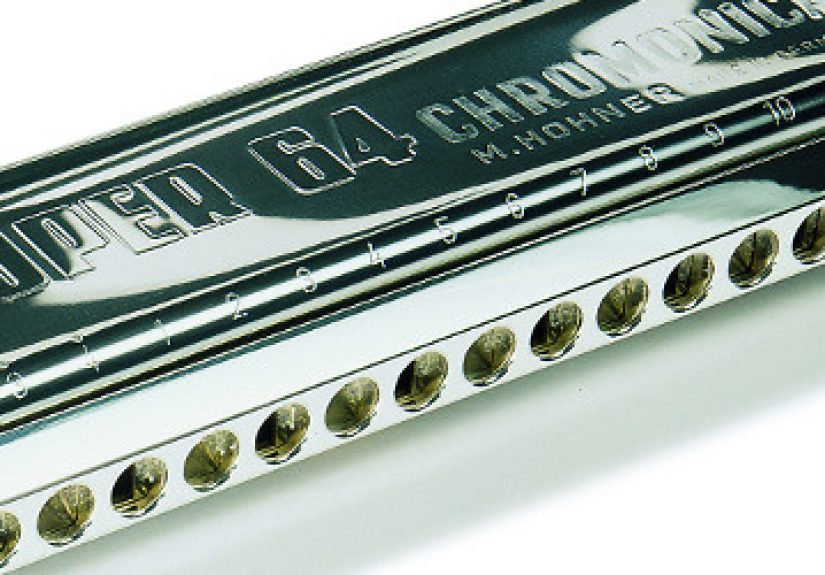
Some harmonica-style MIDI devices mimic the logic of a chromatic harmonica, while others borrow from diatonic layout ideas. This matters because harmonica players are not merely pressing piano keys in a different shape. They are navigating a layout tied to blowing, drawing, bending, and key relationships. Good design in this category respects that instead of forcing players into a keyboard mindset wearing a fake mustache.
Pitch bend and expression make it musical
MIDI has long supported pitch bend, and that is crucial here. A harmonica without expressive pitch movement is like barbecue without smoke: technically possible, emotionally suspicious. The best MIDI harmonica concepts build in ways to bend pitch, add vibrato, control modulation, shift transposition, or customize scales. That is what helps the instrument move from “novel gadget” to “legitimate musical tool.”
Traditional Harmonica vs. MIDI Harmonica
A traditional harmonica still wins certain battles. It has the tactile complexity of real reeds, the acoustic rasp players love, and a directness that technology can imitate but not fully replace. Bending on an acoustic harmonica is deeply physical and famously difficult to master. In fact, that challenge is part of the instrument’s charm. You earn those expressive notes.
A MIDI harmonica, on the other hand, wins on flexibility. One compact instrument can control countless sounds. You can practice silently with headphones, record MIDI into a DAW, edit performances later, transpose more easily, and use one wind-style interface across genres that have never once invited a blues harp to the session. Ambient electronica? Sure. Neo-soul pads? Why not. Sci-fi soundtrack with suspiciously emotional synth oboe? Absolutely.
The question is not which one is better in some grand universal way. The real question is what kind of musical life you want. If you want raw acoustic tone, old-school blues phrasing, and reeds under your breath, stay acoustic. If you want expression plus sound design plus MIDI workflow, the digital road starts looking very tempting.
The Current Landscape: What Counts as a MIDI Harmonica Today?
1. Pure harmonica-style MIDI controllers
This is the clearest version of the idea. Instruments in this category are designed primarily to send MIDI data. They are controllers first, sound engines second, if at all. A strong example is the Lekholm DM48X, a digital chromatic harmonica-style controller built around independent pressure sensing for blow and draw behavior, customizable tunings, multichannel output, MPE-style options, ribbon control, USB, and Bluetooth MIDI. In other words, it is not trying to be a traditional harmonica with a fancy paint job. It is a serious expressive controller for people who want harmonica-like performance logic in the MIDI world.
This kind of device is appealing for players who already work with synths, virtual instruments, or DAWs. It can be silent when needed, deeply configurable, and wildly expressive when mapped well. The tradeoff is obvious: if there is no onboard sound engine, you need external sound sources. The instrument is the steering wheel, not the engine.
2. Digital harmonicas with onboard sounds and MIDI ambitions
The next category is the digital harmonica that includes built-in sounds and also behaves as a modern electronic controller. That makes it more approachable for beginners and more portable for casual use. You can pick it up and play without immediately booting a laptop like a stage tech in a mild panic.
The Tonova Digital Harmonica is a good example of where this category is heading. It has been described with multiple harmonica modes, onboard voices, pitch bend, pressure sensitivity, and a built-in speaker. That combination is important. It means the instrument is trying to function both as a playable standalone product and as a controller-minded platform. For newer players, that lowers the barrier to entry. For experienced players, it suggests a more hybrid workflow: practice anywhere, then connect into larger setups when inspiration gets ambitious.
3. Adjacent instruments that look similar but are not truly MIDI harmonicas
Here is where online searches get messy. If you look for a MIDI harmonica, you will often encounter keyboard harmonicas or melodions, including the Hammond/Suzuki PRO-44H. This is an electric-acoustic keyboard harmonica with a built-in pickup microphone and output jack. It is a cool instrument. It can run through amplifiers and effects. It belongs in the conversation because it shows how wind-driven handheld instruments are evolving. But it is not the same thing as a pure MIDI harmonica controller.
That distinction matters because plugging a reed instrument into effects is not the same as sending MIDI note, pitch, and control data. Both routes are useful. They simply solve different musical problems. One expands acoustic tone through amplification and effects. The other turns performance into digital instructions that can control almost anything.
Who Is a MIDI Harmonica For?
A MIDI harmonica is especially appealing to three groups.
First, harmonica players who want more sounds. Maybe you love harmonica phrasing but do not want every gig to sound like a dusty roadside jukebox. MIDI lets you play leads, textures, pads, organs, and cinematic voices while keeping a wind-style interface.
Second, producers who want more expression. Keyboard controllers are powerful, but breath-driven controllers can feel dramatically more alive on certain patches. A slow synth swell played with breath and micro-expression often feels less programmed and more performed.
Third, live performers who want portability. A compact breath-based controller can be easier to carry than larger wind instruments or keyboards, especially for players building hybrid stage rigs with laptops, tablets, loopers, and software instruments.
That said, this is not automatically a beginner’s dream machine. If you are brand new to both harmonica and MIDI, the learning curve can feel like trying to learn two languages while assembling furniture. Very rewarding, yes. Immediately intuitive, not always.
The Learning Curve Is Real
People sometimes assume that adding technology makes an instrument easier. That is adorable. What it usually does is move the difficulty around.
With a MIDI harmonica, you may gain easier access to transposition, broader sound choices, and digital editing. But you also have to think about mappings, sensitivity settings, MIDI channels, software instruments, latency, and how your breath interacts with each patch. One preset may feel gorgeous. The next may react like it drank three espressos and forgot how dynamics work.
Players coming from acoustic harmonica may also need to recalibrate expectations. A chromatic-style digital controller might feel more logical for MIDI work because chromatic systems naturally support all keys. Diatonic players may love the familiar spirit but still need time to adapt when the instrument starts behaving like a controller rather than a box of reeds with opinions.
Setup Tips for Better Results
If you want a MIDI harmonica setup to feel musical instead of frustrating, a little strategy goes a long way.
Start with sounds that reward breath. Organs, synth leads, winds, brass layers, and ambient pads usually respond beautifully. Some piano patches, by contrast, can feel strangely stubborn because they were designed around keyboard attack rather than continuous breath expression.
Use moderate sensitivity at first. Overly sensitive settings can cause accidental triggering, while sluggish settings make the instrument feel sleepy. The sweet spot is the one where your breathing feels connected but not punished.
Map expression intentionally. Breath does not have to control only volume. It can also shape filter cutoff, vibrato depth, modulation, timbre, or layered dynamics. Smart mapping is where a MIDI harmonica stops being a novelty and starts becoming your instrument.
And for the love of musical sanity, monitor latency. Nothing kills joy faster than blowing a note and hearing it answer from the future.
Limitations You Should Know Before Falling in Love
A MIDI harmonica can be expressive, portable, and deeply creative. It can also be niche, expensive, and occasionally fussy.
The market is still small. Unlike MIDI keyboards, this is not a crowded category with endless choices at every price point. Support communities may be smaller, learning resources more scattered, and setup advice more dependent on trial and error.
There is also the emotional truth that even the best controller will not magically recreate the exact acoustic personality of a traditional harmonica. If what you truly want is reeds, breath resistance, wood, metal, and old-school bite, a digital controller may feel inspiring in a different way rather than a better way.
Still, limitation is not failure. It is just honesty. A MIDI harmonica is not trying to be every instrument. It is trying to be a bridge between physical wind expression and electronic possibility. And in that role, it is genuinely exciting.
The Future of the MIDI Harmonica
The broader controller world has been moving away from the idea that every musician should communicate through a piano keyboard. That shift matters. More players want controllers that reflect how they already think physically: drummers want pads, guitarists want fret-based logic, and wind players want breath-oriented interfaces. A MIDI harmonica fits naturally into that movement.
As MIDI workflows continue to improve, especially with better wireless options, richer expression, smarter mapping, and more musician-friendly mobile apps, the harmonica-shaped controller concept becomes more plausible, not less. The instruments are getting more portable, more configurable, and more comfortable with hybrid roles. That is a promising combination.
In other words, the MIDI harmonica is not some goofy side quest in music technology. It is part of a larger trend: giving performers tools that respect both human nuance and digital flexibility. Which, frankly, is a sentence worth humming.
Player Experience: What It Actually Feels Like
The lived experience of using a MIDI harmonica is where the whole idea stops being theoretical and starts getting personal. For many players, the first surprise is how familiar and unfamiliar it feels at the same time. You bring the instrument to your mouth, shape breath, and expect a direct musical response. That part feels natural. Then instead of one classic harmonica tone, the instrument answers with a synth lead, a soft pad, an organ swell, or a sampled brass voice, and your brain does a tiny double take. It is a little like opening your front door and finding your living room has quietly turned into a recording studio.
In early practice sessions, players often notice how exposed their breath control becomes. On a standard harmonica, tone and technique already matter, but on a MIDI harmonica every tiny inconsistency can become data. Blow too aggressively and the patch may jump in volume. Ease off too suddenly and the phrase can collapse before the emotion lands. That can be frustrating for about ten minutes and incredibly useful after that. You start learning not just how to play notes, but how to sculpt them.
The next big experience is expressive freedom. Once the setup is dialed in, a MIDI harmonica can feel wonderfully alive. A long note can swell like a singer holding a phrase. A lead patch can bend and shimmer without feeling trapped inside a keyboard grid. Ambient sounds become especially addictive. You can drift into a note with breath, nudge the pitch, add modulation, and create phrases that feel less programmed and more narrated. It is the difference between entering notes and actually performing them.
There is also a practical joy to the instrument. Many players love how small and portable the format can be. You can practice with headphones, sketch ideas without filling the room with acoustic volume, and move from casual experimentation to full production surprisingly fast. One minute you are testing phrasing. The next minute you are layering tracks in a DAW and wondering when your “quick idea” turned into a three-hour arrangement spiral.
Of course, not every experience is magical. Some sessions are pure troubleshooting theater. A patch may respond poorly. Breath sensitivity may need adjustment. Bluetooth may behave like it has personal boundaries. And if latency enters the picture, the whole performance can feel slightly disconnected. But once those technical issues are handled, the reward is real.
What many musicians end up loving most is the sense that a MIDI harmonica invites exploration without demanding that they think like a pianist. It gives wind-style expression to people who phrase through breath and motion rather than black-and-white keys. That can be deeply freeing. It encourages experimentation, rewards nuance, and makes electronic sound design feel more embodied.
So what does playing a MIDI harmonica feel like overall? It feels curious. It feels modern. It feels a little weird in the best possible way. And when everything clicks, it feels like you have found a secret door between acoustic instinct and digital imagination.
Conclusion
A MIDI harmonica may still be a niche instrument, but it solves a very real musical problem in a very elegant way. It gives harmonica-style or breath-based players access to the vast world of MIDI without forcing them into a keyboard-first mindset. That alone makes it more than a novelty.
Whether you are drawn to a pure controller like a digital chromatic harmonica, a hybrid digital harmonica with onboard sounds, or an adjacent amplified keyboard harmonica, the key is understanding what you want from the instrument. Do you want acoustic tone with effects? Full MIDI control? Standalone convenience? Studio integration? Live portability? Once you answer that, the category starts making much more sense.
And maybe that is the best way to describe a MIDI harmonica: it is not a replacement for the classic harmonica. It is a new chapter for players who want breath, expression, portability, and electronic possibility in one very clever package. Tiny instrument. Big imagination. Not a bad deal.