Table of Contents >> Show >> Hide
- Introduction: The Floating Airfield Club Is Small, Expensive, and Very Loud
- What Counts as an Aircraft Carrier?
- The Quick Global List by Country
- United States: The Carrier Superpower
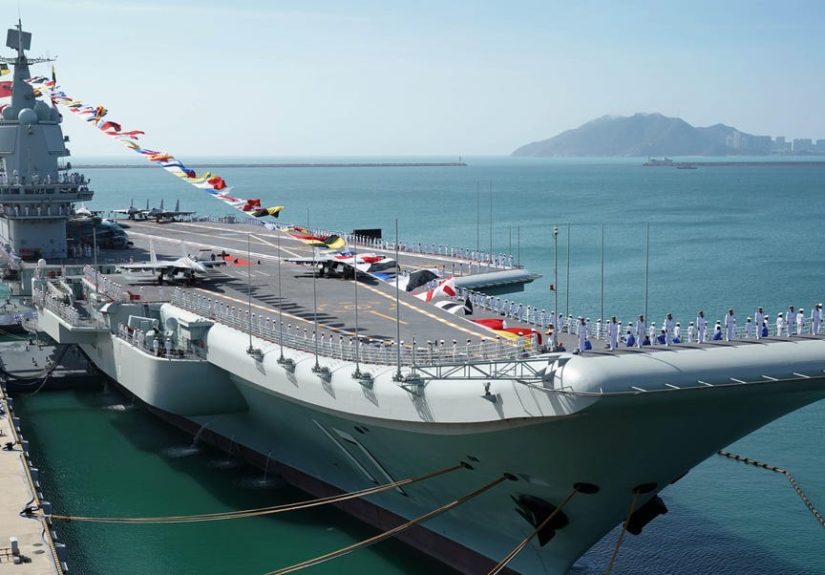
- China: The Fastest-Rising Carrier Fleet
- United Kingdom: Two Big Carriers, One F-35B Strategy
- India: Two Carriers for the Indian Ocean
- France: One Nuclear Carrier and Three Mistrals
- Italy: Cavour and Trieste
- Japan: “Helicopter Destroyers” That Look a Lot Like Light Carriers
- Spain: Juan Carlos I
- Turkey: TCG Anadolu and the Drone Carrier Idea
- Australia, Egypt, South Korea, Brazil, and Thailand
- Russia: Admiral Kuznetsov, the Carrier That Became a Cautionary Tale
- Why Aircraft Carriers Still Matter
- Experience Notes: How to Understand the World’s Aircraft Carriers Without Getting Lost in Naval Alphabet Soup
- Conclusion
Note: This article counts full-deck aviation ships that serve as aircraft carriers, light carriers, helicopter carriers, amphibious assault ships, or drone-capable carriers. Navies use different names for political, legal, and strategic reasons, so a “helicopter destroyer” in one fleet may look suspiciously like a small aircraft carrier to everyone else with eyes.
Introduction: The Floating Airfield Club Is Small, Expensive, and Very Loud
Aircraft carriers are the luxury SUVs of naval power: huge, expensive, fuel-hungry, hard to park, and absolutely impossible to ignore. A carrier lets a country move an airfield across oceans, launch aircraft without asking for a nearby runway, support allies, evacuate civilians, respond to disasters, and, when necessary, make adversaries check their calendars for “bad day incoming.”
But not all carriers are created equal. The United States operates nuclear-powered supercarriers that are basically small cities with jet noise. China is racing upward with a rapidly maturing carrier force. Britain, India, France, Italy, Japan, Spain, Turkey, and others operate smaller but strategically important ships. Some launch fighter jets. Others carry helicopters, drones, marines, vehicles, and medical teams. All of them matter because sea-based aviation is no longer just about war; it is also about influence, crisis response, and showing up before anyone else can find a runway.
As of 2026, the global aircraft carrier map is led overwhelmingly by the United States, followed by China’s expanding fleet and a broad group of regional powers with light carriers or helicopter carriers. Russia’s carrier, Admiral Kuznetsov, is a special case: famous, smoky, accident-prone, and largely out of operational relevance. In other words, it is less “ready for global deployment” and more “please stop asking when the repairs are done.”
What Counts as an Aircraft Carrier?
A classic aircraft carrier has a full-length flight deck, hangar space, aviation fuel, aircraft elevators, command systems, and the ability to launch and recover aircraft at sea. The elite category is the CATOBAR carrier, which uses catapults and arresting gear. U.S. supercarriers and France’s Charles de Gaulle fall into this family, while China’s new Fujian brings electromagnetic catapults into the non-U.S. world.
STOBAR carriers use a ski-jump ramp and arresting wires. India’s INS Vikramaditya and INS Vikrant, plus China’s Liaoning and Shandong, are examples. STOVL carriers operate short-takeoff-and-vertical-landing aircraft such as the F-35B or the older Harrier. Britain’s Queen Elizabeth-class ships, Italy’s Cavour, Spain’s Juan Carlos I, and Japan’s modified Izumo-class ships fit here in different ways.
Then there are helicopter carriers and amphibious assault ships. They may not launch conventional fighter jets, but they carry helicopters, troops, drones, landing craft, hospitals, and command centers. In modern naval strategy, that still makes them floating aviation power.
The Quick Global List by Country
| Country | Carrier/Aviation Ships | Main Type |
|---|---|---|
| United States | 11 supercarriers, 9 large-deck amphibious assault ships | Nuclear carriers, LHA/LHD assault ships |
| China | Liaoning, Shandong, Fujian, plus Type 075 LHDs | STOBAR/CATOBAR carriers, helicopter assault ships |
| United Kingdom | HMS Queen Elizabeth, HMS Prince of Wales | STOVL aircraft carriers |
| India | INS Vikramaditya, INS Vikrant | STOBAR aircraft carriers |
| France | Charles de Gaulle, Mistral, Tonnerre, Dixmude | Nuclear carrier, helicopter assault ships |
| Italy | Cavour, Trieste | STOVL/light carrier and LHD |
| Japan | Izumo, Kaga, Hyuga, Ise | Helicopter destroyers/light carrier-capable ships |
| Spain | Juan Carlos I | STOVL amphibious aircraft carrier |
| Turkey | TCG Anadolu | Drone/amphibious assault carrier |
| Australia | HMAS Canberra, HMAS Adelaide | Landing helicopter docks |
| Egypt | Gamal Abdel Nasser, Anwar El Sadat | Mistral-class helicopter carriers |
| South Korea | Dokdo, Marado | Amphibious helicopter carriers |
| Brazil | Atlântico | Multipurpose helicopter carrier |
| Thailand | Chakri Naruebet | Small helicopter carrier |
| Russia | Admiral Kuznetsov | Sidelined heavy aircraft-carrying cruiser |
United States: The Carrier Superpower
The United States is in a category of its own. Its 11 nuclear-powered aircraft carriers include the newest USS Gerald R. Ford and ten Nimitz-class ships: USS Nimitz, Dwight D. Eisenhower, Carl Vinson, Theodore Roosevelt, Abraham Lincoln, George Washington, John C. Stennis, Harry S. Truman, Ronald Reagan, and George H. W. Bush. These are not just ships; they are mobile air bases with fighter squadrons, airborne early warning aircraft, electronic warfare jets, helicopters, and thousands of sailors.
The U.S. also operates large-deck amphibious assault ships, including America-class and Wasp-class vessels. Officially, they support Marine expeditionary operations. Practically, when loaded with F-35B jets, they become “lightning carriers,” giving commanders another sea-based air option. The America class, especially USS America and USS Tripoli, was designed with aviation-heavy operations in mind. The Wasp-class ships remain central to U.S. amphibious ready groups.
China: The Fastest-Rising Carrier Fleet
China’s carrier story has moved from experiment to acceleration. Liaoning, China’s first carrier, began life as a Soviet hull. Shandong was China’s first domestically built carrier, still using a ski-jump layout. Fujian, commissioned in 2025, is the major leap: a much larger carrier with electromagnetic catapults, designed to launch heavier aircraft, including early-warning planes and advanced fighters.
China also operates Type 075 amphibious assault ships such as Hainan, Guangxi, and Anhui. These ships strengthen helicopter, amphibious, and expeditionary capabilities. Together, China’s carriers and big-deck assault ships signal a navy moving from coastal defense toward blue-water power projection. The learning curve is steep, but Beijing is climbing it quickly.
United Kingdom: Two Big Carriers, One F-35B Strategy
The Royal Navy operates HMS Queen Elizabeth and HMS Prince of Wales, the largest warships ever built for Britain. These ships use a ski-jump design and operate F-35B stealth fighters. They do not use catapults or arresting wires, which keeps the design simpler but limits aircraft options.
Britain’s carrier strategy is built around coalition operations. A British carrier strike group may include U.S. Marine Corps F-35Bs, allied escorts, NATO partners, and support ships. The ships are national symbols, but they are also alliance tools. When one sails, it carries more than aircraft; it carries Britain’s intention to stay relevant on the global maritime stage.
India: Two Carriers for the Indian Ocean
India operates INS Vikramaditya and INS Vikrant. Vikramaditya is a heavily modified former Soviet/Russian ship, while Vikrant is India’s first domestically built aircraft carrier. That matters. Building a carrier is not just a naval project; it is an industrial exam with steel, electronics, aviation systems, deck operations, and national pride all crammed into one floating final.
Both carriers use STOBAR operations with MiG-29K fighters and helicopters. India’s carrier force is designed for the Indian Ocean, where sea lanes, regional competition, and strategic geography all matter. With China’s navy becoming more active in the region, India’s carriers serve as mobile airpower, deterrent symbols, and diplomatic calling cards.
France: One Nuclear Carrier and Three Mistrals
France operates Charles de Gaulle, the only nuclear-powered aircraft carrier outside the United States. It uses catapults and arresting gear, enabling operations with Rafale M fighters and E-2C Hawkeye aircraft. That gives France a high-end carrier aviation capability unmatched by most European navies.
France also operates three Mistral-class amphibious assault ships: Mistral, Tonnerre, and Dixmude. These ships carry helicopters, landing craft, troops, vehicles, command facilities, and medical capacity. They are extremely useful in crisis response, amphibious missions, and humanitarian operations. France’s carrier fleet is therefore split between elite strike aviation and flexible expeditionary support.
Italy: Cavour and Trieste
Italy operates Cavour, a light aircraft carrier capable of handling F-35B operations, and Trieste, a large amphibious assault ship with aviation potential. The older Giuseppe Garibaldi has been retired, closing a long chapter in Italian carrier history.
Cavour gives Italy a serious fixed-wing naval aviation platform, while Trieste expands amphibious and command capabilities. Together, they allow Italy to contribute meaningfully to NATO, Mediterranean security, crisis response, and international naval operations. Italy may not have supercarriers, but it has practical sea-based aviation tools for the missions it is most likely to face.
Japan: “Helicopter Destroyers” That Look a Lot Like Light Carriers
Japan officially calls ships such as Izumo and Kaga “helicopter destroyers,” which is one of those naval labels that makes everyone nod politely while noticing the full-length flight deck. Izumo and Kaga have been modified to operate F-35B fighters, giving Japan a revived sea-based fixed-wing aviation capability for the first time since World War II.
Japan also operates the smaller Hyuga and Ise helicopter destroyers. These ships support anti-submarine warfare, helicopter operations, disaster response, and command missions. Japan’s carrier-like fleet reflects regional pressures, especially around the East China Sea, Taiwan Strait, and wider Indo-Pacific.
Spain: Juan Carlos I
Spain’s Juan Carlos I is a flexible amphibious assault ship capable of operating helicopters and AV-8B Harrier jets. It is also the design ancestor of Turkey’s Anadolu and Australia’s Canberra-class ships. Its ski-jump ramp gives it fixed-wing aviation potential, though Spain faces a looming challenge as the Harrier ages and no simple European STOVL replacement exists.
Juan Carlos I is valuable because it combines aircraft operations, amphibious lift, command facilities, and disaster-response utility. It is the kind of ship that proves a carrier does not need to be gigantic to be strategically useful.
Turkey: TCG Anadolu and the Drone Carrier Idea
Turkey’s TCG Anadolu began as an amphibious assault ship design related to Spain’s Juan Carlos I. Originally, it could have supported F-35B operations, but Turkey’s removal from the F-35 program changed the plan. Rather than sulk in the corner, Turkey pivoted toward drones.
Anadolu is now widely described as a drone carrier and amphibious flagship. Its future air wing is expected to emphasize unmanned systems, helicopters, and expeditionary operations. If the concept works, it could influence other navies that want carrier-style reach without the crushing cost of a traditional carrier air wing.
Australia, Egypt, South Korea, Brazil, and Thailand
Australia operates HMAS Canberra and HMAS Adelaide, large landing helicopter docks based on a Spanish design. They do not currently operate fixed-wing fighters, but they provide major amphibious, helicopter, logistics, and humanitarian support capacity.
Egypt operates two Mistral-class ships, Gamal Abdel Nasser and Anwar El Sadat. These give Egypt one of the strongest amphibious aviation capabilities in the Middle East and Africa.
South Korea operates Dokdo and Marado, amphibious helicopter carriers that support marine operations, disaster relief, and regional contingencies. Brazil operates Atlântico, a former British helicopter carrier now serving as a multipurpose flagship. Thailand operates Chakri Naruebet, one of the world’s smallest carriers. Today it mainly serves helicopter, patrol, disaster relief, and symbolic roles.
Russia: Admiral Kuznetsov, the Carrier That Became a Cautionary Tale
Russia’s Admiral Kuznetsov is technically an aircraft-carrying cruiser, but in practical terms it has become a case study in how difficult carrier ownership can be. The ship has suffered fires, repair delays, dry-dock problems, machinery issues, and long periods out of service. Reports in 2025 indicated that Russia was considering scrapping or selling it after years of stalled modernization.
The lesson is simple: owning a carrier is not the same as operating a carrier. A navy needs aircraft, pilots, escorts, maintenance yards, training cycles, logistics, doctrine, and money. Lots of money. Kuznetsov shows that a carrier without a healthy support ecosystem becomes less of a weapon and more of a very large invoice.
Why Aircraft Carriers Still Matter
Critics argue that carriers are vulnerable to missiles, submarines, drones, and long-range sensors. They are not wrong. Modern anti-ship weapons make carrier operations more dangerous than ever. But vulnerability is not the same as irrelevance. Air bases on land are also vulnerable, and unlike carriers, they cannot move overnight.
Aircraft carriers matter because they create options. They can patrol crisis zones, reassure allies, evacuate citizens, provide disaster relief, enforce air control, strike targets, hunt submarines, or simply appear on the horizon and change the political temperature. A carrier is diplomacy with a flight deck.
The future will likely bring more drones, unmanned helicopters, electronic warfare aircraft, and smaller carrier-like ships. Supercarriers will remain the top tier, but light carriers and drone carriers may become more attractive for countries that want sea-based aviation without buying a floating Pentagon.
Experience Notes: How to Understand the World’s Aircraft Carriers Without Getting Lost in Naval Alphabet Soup
One of the best ways to understand aircraft carriers is to stop thinking of them as simple “big ships” and start thinking of them as systems. The flight deck is only the most visible part. Underneath it are hangars, aviation fuel lines, weapons magazines, maintenance shops, medical facilities, command rooms, elevators, firefighting teams, and enough procedures to make a clipboard nervous.
For readers exploring this topic, a useful experience is comparing carrier types side by side. Look at a U.S. Ford-class carrier, then look at Britain’s Queen Elizabeth class, India’s Vikrant, Japan’s Kaga, and Turkey’s Anadolu. The differences tell a story. The U.S. wants maximum sustained airpower across oceans. Britain wants a flexible stealth-fighter platform tied closely to NATO operations. India wants regional airpower in the Indian Ocean. Japan wants defensive reach around island chains. Turkey wants to test the future of drones at sea.
Another helpful experience is watching flight operations videos. Carrier aviation looks glamorous for about ten seconds, then you realize it is controlled chaos. Jets launch in brutal wind. Deck crews work in color-coded jerseys. Helicopters hover near moving ships. Every movement is choreographed because mistakes are expensive, dangerous, and occasionally explosive. The phrase “floating airport” is accurate, but it undersells the difficulty. Airports do not usually pitch, roll, and sail into storms.
Museum ships also make the topic real. Walking a preserved carrier deck helps explain why these ships dominate naval imagination. The deck feels enormous until you imagine launching dozens of aircraft from it. The hangar feels cavernous until you picture engines, tools, spare parts, missiles, and people filling every corner. Carrier life is a combination of engineering, aviation, logistics, discipline, and controlled discomfort. Nobody joins a carrier crew for spacious private accommodation and quiet evenings.
The most important experience, though, is understanding why smaller carriers still matter. It is easy to compare everything to a U.S. supercarrier and declare the rest “tiny.” That misses the point. A Mistral-class ship delivering helicopters and medical aid after a disaster can be more useful than a supercarrier in that moment. A Japanese light carrier operating F-35Bs near contested islands serves a different purpose than a French nuclear carrier in the Mediterranean. A Turkish drone carrier may become a laboratory for future naval warfare.
Aircraft carriers are not just about size. They are about national strategy. Every carrier answers a question: What does this country need to do from the sea? For the United States, the answer is global power projection. For China, it is blue-water expansion. For India, it is Indian Ocean influence. For France and Britain, it is strategic independence and alliance leadership. For smaller carrier operators, it is flexibility, presence, and crisis response. That is why the world’s aircraft carriers remain fascinating. They are not only warships; they are floating summaries of national ambition.
Conclusion
The world’s aircraft carriers form a small but powerful club. The United States dominates with unmatched nuclear-powered supercarriers and aviation assault ships. China is rising fast with Liaoning, Shandong, Fujian, and a growing amphibious fleet. Britain, India, France, Italy, and Japan maintain serious sea-based aviation forces, while Spain, Turkey, Australia, Egypt, South Korea, Brazil, and Thailand operate ships that expand their reach through helicopters, drones, amphibious forces, or disaster-response capability.
The future of aircraft carriers will not be one-size-fits-all. Some navies will build bigger carriers with catapults. Others will invest in F-35B light carriers. Some will choose drone carriers or helicopter assault ships. The common thread is mobility. In an uncertain world, the ability to move airpower, command centers, troops, and relief supplies across the sea remains a strategic superpower. Aircraft carriers are expensive, complicated, and occasionally controversialbut when a crisis erupts, everyone still asks the same question: where are the carriers?