Table of Contents >> Show >> Hide
- Introduction: Two Stealth Fighters, Two Very Different Jobs
- What Is the F-22 Raptor?
- What Is the F-35 Lightning II?
- F-35 vs. F-22: The Core Difference
- Stealth: Quiet on Radar, Loud in Strategic Value
- Speed and Maneuverability
- Weapons and Mission Flexibility
- Combat Experience and Operational Use
- Cost, Sustainment, and the Not-So-Glamorous Side of Stealth
- Modernization: Keeping Fifth-Generation Fighters Relevant
- Which Jet Is Better?
- Why the F-35 and F-22 Work Better Together
- Real-World Experience and Practical Takeaways: Living With the F-35 and F-22 Conversation
- Conclusion: The F-35 and F-22 Define Two Eras of Airpower
“`
Note: This article is based on publicly available information from reputable U.S. defense, aviation, government, and manufacturer sources, including the U.S. Air Force, U.S. Navy/NAVAIR, U.S. Marine Corps, F-35 Joint Program Office, GAO, CBO, DOT&E, Lockheed Martin, Pratt & Whitney, and U.S. defense reporting.
Introduction: Two Stealth Fighters, Two Very Different Jobs
The F-35 and F-22 are often mentioned in the same breath, usually with the kind of dramatic background music normally reserved for movie trailers and very expensive coffee commercials. Both are fifth-generation stealth fighter jets. Both were built by Lockheed Martin as prime contractor. Both are designed to survive in dangerous airspace where older aircraft might have a very short and very bad day.
But the F-35 Lightning II and F-22 Raptor are not twins. They are more like two brilliant siblings who chose different careers. The F-22 is the air dominance specialist, designed to hunt enemy fighters, seize control of the sky, and make hostile aircraft question their life choices. The F-35 is the multirole networked fighter, built to strike targets, collect intelligence, share data, support allied operations, and connect the battlespace like a flying high-security Wi-Fi router with missiles.
Understanding the difference between the F-35 and F-22 matters because modern airpower is not just about speed, altitude, or who looks cooler on a poster. It is about stealth, sensors, software, sustainment, interoperability, cost, mission design, and how aircraft operate with ships, satellites, ground forces, drones, and other fighters. In short: the future of air combat is a team sport, and these two jets play very different positions.
What Is the F-22 Raptor?
The F-22 Raptor is a single-seat, twin-engine stealth fighter developed primarily for the U.S. Air Force. It entered service as the world’s first operational fifth-generation air superiority fighter and remains one of the most capable combat aircraft ever built. Its mission is simple to describe and extremely hard to accomplish: dominate the air.
The F-22 combines stealth, supercruise, extreme maneuverability, integrated avionics, advanced sensors, and powerful engines. “Supercruise” means it can fly at supersonic speeds without relying on fuel-guzzling afterburners. That gives the Raptor a major tactical advantage because it can move fast, stay efficient, and reduce some of the heat and fuel penalties associated with traditional supersonic flight.
The Raptor’s design focuses heavily on “first look, first shot, first kill.” In normal human language, that means the F-22 is built to detect threats before being detected, engage them before they can respond, and leave the area before the enemy fully understands what happened. It is not subtle in purpose, even if it is very subtle on radar.
Why the F-22 Is So Special
The F-22’s strength is its air-to-air performance. Its thrust-vectoring nozzles help it maneuver aggressively, while its radar, electronic warfare systems, and sensor fusion help the pilot understand the fight quickly. The Raptor can also perform air-to-ground missions, but its reputation was earned as an air dominance fighter.
Production of the F-22 ended early compared with original expectations. The final production aircraft rolled out in 2011, and the fleet remained exclusive to the U.S. Air Force. Unlike the F-35, the F-22 was never exported, partly because U.S. law restricted foreign sales. That makes the Raptor rare, strategically guarded, and somewhat like the limited-edition supercar of military aviationexcept the supercar can carry AIM-120 missiles.
What Is the F-35 Lightning II?
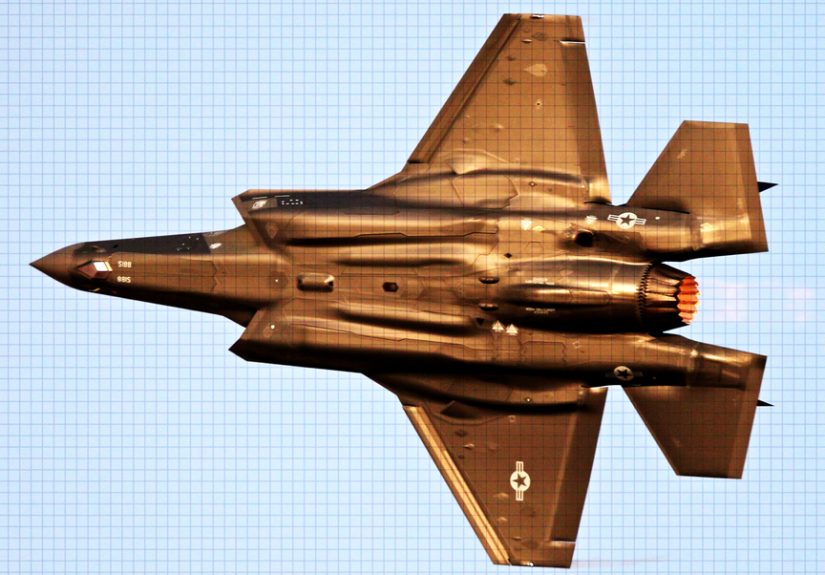
The F-35 Lightning II is a single-seat, single-engine fifth-generation stealth fighter designed for multiple services and allied nations. Unlike the F-22, which is centered on air dominance, the F-35 was built as a multirole fighter. It can conduct air-to-air combat, precision strike, close air support, electronic warfare, intelligence gathering, surveillance, reconnaissance, and network-enabled operations.
The F-35 program includes three main variants:
- F-35A: Conventional takeoff and landing variant used by the U.S. Air Force and many allied air forces.
- F-35B: Short takeoff and vertical landing variant used by the U.S. Marine Corps and some international partners.
- F-35C: Carrier-based variant designed for U.S. Navy aircraft carrier operations.
This three-variant structure is one of the most important differences between the F-35 and F-22. The F-35 is not just one aircraft for one service. It is a family of aircraft built around shared technology, global partnerships, and common logistics. That makes it more flexible, more widely deployed, and more politically and industrially significant.
The F-35 as a Flying Sensor Node
The F-35’s most important feature may not be its speed or weapons load. It is its ability to gather, process, and share information. With advanced sensors, sensor fusion, electronic warfare systems, and network connectivity, the F-35 can act as a forward scout and command-and-control contributor in contested environments.
A common way to describe the F-35 is that it lets pilots “see” more of the battlespace. The aircraft’s systems pull information from radar, infrared sensors, electronic signals, and other sources, then present it in a more useful form. Instead of forcing the pilot to mentally juggle a dozen screens like an overworked air traffic controller, the jet helps organize the chaos.
F-35 vs. F-22: The Core Difference
The simplest comparison is this: the F-22 is optimized to win the air-to-air fight, while the F-35 is optimized to do many jobs and connect the force. That does not mean the F-35 cannot fight other aircraft, and it does not mean the F-22 is useless outside air combat. It means their design priorities are different.
| Category | F-22 Raptor | F-35 Lightning II |
|---|---|---|
| Main Role | Air superiority and air dominance | Multirole strike, sensing, networking, and air combat |
| Engines | Twin-engine | Single-engine |
| Primary Operator | U.S. Air Force only | U.S. Air Force, Navy, Marine Corps, allies, and partners |
| Variants | One main operational variant | F-35A, F-35B, and F-35C |
| Export Status | Not exported | Widely used by allied and partner nations |
| Best Known For | Stealth, supercruise, maneuverability, air dominance | Stealth, sensor fusion, data sharing, multirole flexibility |
Stealth: Quiet on Radar, Loud in Strategic Value
Both aircraft use stealth shaping and radar-absorbent materials to reduce detectability. However, stealth is not invisibility. No fighter jet is a magic ghost with landing gear. Stealth reduces the range and reliability of enemy detection, giving pilots more time, better positioning, and a stronger chance of surviving inside advanced air defense networks.
The F-22 was designed during an era when defeating enemy fighters and penetrating defended airspace were top priorities. Its stealth, speed, and maneuverability support that mission. The F-35, developed later, emphasizes stealth along with broader sensor and networking capability. In many mission scenarios, the F-35’s advantage comes from knowing more, sharing more, and helping other forces act faster.
Speed and Maneuverability
The F-22 has the edge in raw air combat performance. Its twin engines, thrust vectoring, and supercruise capability make it exceptional in high-end air-to-air scenarios. If the mission is to kick down the door of hostile airspace and challenge enemy fighters, the Raptor is purpose-built for that environment.
The F-35 is also supersonic and highly capable, but it was not designed to out-Raptor the Raptor. It trades some pure kinematic performance for multirole capability, advanced onboard computing, sensor fusion, and commonality across services. That tradeoff is not a weakness; it is a design decision. A Swiss Army knife is not worse than a scalpel because it has more tools. It just solves different problems.
Weapons and Mission Flexibility
Both the F-35 and F-22 can carry weapons internally to preserve stealth. Internal weapons carriage is a major part of fifth-generation fighter design because external weapons create radar reflections and drag. When stealth is less important, both aircraft can also carry external stores, though doing so changes their low-observable profile.
The F-22 typically emphasizes air-to-air missiles such as the AIM-120 AMRAAM and AIM-9 Sidewinder, with air-to-ground capability available for precision strike missions. The F-35 was designed from the beginning as a multirole aircraft with a broader strike mission. It can carry precision-guided bombs, air-to-air missiles, and other weapons depending on the variant, software configuration, and mission needs.
Combat Experience and Operational Use
The F-22 made its combat debut in 2014 during operations against ISIS, striking ground targets and supporting coalition air operations. Since then, it has also been used in deterrence missions, deployments to Europe and the Indo-Pacific, and high-visibility homeland defense events. Its presence alone can send a strategic message: the United States brought the serious hardware.
The F-35A was declared combat ready by the U.S. Air Force in 2016 and conducted its first U.S. Air Force combat employment in 2019. The aircraft has also become increasingly important for allies, with many partner nations choosing the F-35 as their future fighter backbone. Its global adoption gives the F-35 a major interoperability advantage because allied pilots, maintainers, planners, and commanders can operate around a common platform.
Cost, Sustainment, and the Not-So-Glamorous Side of Stealth
No discussion of the F-35 and F-22 is complete without talking about money. Stealth fighters are astonishing machines, but they are also expensive to buy, maintain, upgrade, and operate. The F-22’s limited production run means the aircraft is rare and costly to sustain. Its specialized systems and stealth coatings require careful maintenance, and the fleet must be modernized to remain relevant against improving threats.
The F-35 program, meanwhile, is one of the largest defense acquisition programs in history. Its scale brings benefits, including a broad supply chain, international participation, and shared modernization. But it also brings scrutiny. U.S. oversight organizations have repeatedly examined F-35 sustainment costs, readiness challenges, software delays, modernization issues, and long-term affordability. The aircraft is powerful, but power comes with paperwork, maintenance hours, and budget hearingsthree things that can humble even the flashiest fighter jet.
Modernization: Keeping Fifth-Generation Fighters Relevant
Air combat does not stand still. Adversaries improve radars, missiles, electronic warfare systems, cyber capabilities, and integrated air defenses. That means the F-35 and F-22 must continue evolving.
The F-35 is undergoing modernization through hardware and software upgrades, including Technology Refresh 3 and Block 4-related improvements. These upgrades are intended to support better processing power, new weapons, improved electronic warfare, and enhanced mission systems. However, modernization has also faced delays and technical challenges, especially around software maturity and integration.
The F-22 is also being modernized. Although it is older and no longer in production, the Raptor remains strategically valuable. Upgrades to sensors, communications, weapons integration, and sustainment are intended to keep it effective until future systems, including Next Generation Air Dominance concepts, mature. The F-22 may be a “legacy” fifth-generation fighter, but calling it outdated would be like calling a championship boxer old while he is still holding the belt.
Which Jet Is Better?
Asking whether the F-35 or F-22 is better is a little like asking whether a quarterback or a linebacker is better. Better at what?
For pure air superiority, the F-22 is generally considered superior. It was designed to defeat enemy fighters, control airspace, and operate with extreme performance. Its speed, altitude, maneuverability, stealth, and twin-engine power make it a terrifying opponent in an air-to-air fight.
For multirole operations, allied integration, data sharing, production scale, and future force networking, the F-35 has the advantage. It is more widely used, more adaptable across services, and central to many U.S. and allied modernization plans. The F-35 is not merely a fighter; it is a platform for information dominance.
Why the F-35 and F-22 Work Better Together
The most interesting answer is not F-35 versus F-22. It is F-35 plus F-22. In a high-end conflict, the F-22 could help establish air dominance by countering enemy fighters and opening access. The F-35 could penetrate contested airspace, detect threats, share targeting data, strike key nodes, and support joint forces. Together, they create a layered fifth-generation team.
The F-22 brings the punch. The F-35 brings the network. One clears the skies; the other maps the fight, shares the picture, and helps the entire force move smarter. That combination is why both aircraft remain important even as the U.S. explores sixth-generation systems, collaborative combat aircraft, and new forms of air warfare.
Real-World Experience and Practical Takeaways: Living With the F-35 and F-22 Conversation
For aviation enthusiasts, defense analysts, military families, airshow visitors, and anyone who has ever paused a documentary just to admire a takeoff shot, the F-35 and F-22 inspire a special kind of curiosity. These jets are not just machines; they are symbols of technology, national strategy, industrial ambition, and the constant pressure to stay ahead in a dangerous world.
One common experience when learning about the F-35 and F-22 is realizing that online debates often oversimplify them. People love clean winners. They want one aircraft to be “the best” and the other to be “overrated.” Unfortunately for hot-take enthusiasts, modern combat aviation is allergic to simple answers. The F-22 is not automatically better because it is faster and more maneuverable. The F-35 is not automatically better because it is newer and more connected. Each aircraft reflects a different theory of airpower.
At an airshow, the difference becomes physical. Watching an F-22 demonstration is like watching physics receive a strongly worded complaint. The jet climbs, pivots, turns, and accelerates with a kind of controlled violence that makes the crowd collectively forget how blinking works. Its thrust-vectoring maneuvers show why the Raptor earned its reputation as an air dominance fighter. It looks less like an airplane and more like a rulebook loophole.
The F-35 experience is different but equally impressive. Its demonstration may not always look as wildly acrobatic as the F-22’s, but the aircraft represents another kind of power. The F-35’s real magic is not fully visible from the ground. You cannot see sensor fusion from a lawn chair. You cannot hear data links over the roar of the engine. You cannot watch electronic warfare ripple through a battlespace like invisible chess. That is the point: much of the F-35’s value happens inside systems, screens, networks, and mission planning rooms.
For service members and maintainers, the experience is even more practical. These aircraft are not museum sculptures. They must launch on time, return safely, be inspected, repaired, updated, refueled, armed, and prepared again. Stealth coatings need care. Software must be managed. Parts must arrive. Engines must be sustained. The glamorous image of a fighter jet taking off at sunset depends on thousands of unglamorous tasks completed correctly. The wrench is as important as the wing.
For taxpayers and policy watchers, the experience can be more complicated. The F-35 offers enormous capability, but its costs and delays have drawn serious criticism. The F-22 offers unmatched air dominance, but its small fleet size limits availability and increases sustainment pressure. Both aircraft show that advanced defense technology always comes with tradeoffs. Performance, affordability, readiness, modernization, and industrial capacity must all be balanced. In other words, the jets may fly at supersonic speed, but the budgeting process still moves like it is taxiing behind a nervous student pilot.
The most useful takeaway is this: the F-35 and F-22 should not be judged only by dramatic comparison charts. They should be understood as parts of a larger airpower ecosystem. The Raptor remains a premier air superiority platform. The Lightning II is reshaping multirole operations through connectivity and scale. Together, they reveal where air combat has been and where it is going: stealthier, faster, more networked, more software-driven, and increasingly dependent on cooperation between aircraft, people, and systems.
Conclusion: The F-35 and F-22 Define Two Eras of Airpower
The F-35 and F-22 are both fifth-generation stealth fighters, but they answer different military questions. The F-22 asks, “How do we dominate the sky?” The F-35 asks, “How do we connect, sense, strike, survive, and fight across the entire battlespace?” That difference explains why both aircraft remain central to U.S. airpower.
The F-22 Raptor is still the air dominance icon: fast, stealthy, agile, rare, and built for the most demanding air-to-air missions. The F-35 Lightning II is the multirole workhorse of the future force: stealthy, connected, widely adopted, and designed to evolve through software, sensors, and weapons upgrades.
In the end, the smartest comparison is not about declaring one winner. The real story is how these two aircraft complement each other. The F-22 gives the United States a high-end air superiority edge. The F-35 expands that edge through information, interoperability, and mission flexibility. One is the spear. The other is the networked blade that tells the rest of the force where to strike.
“`