Table of Contents >> Show >> Hide
- What Is Vanderhurd Studio?
- Why Vanderhurd Fabrics and Linens Stand Out
- The Craft Behind the Cloth
- How to Use Vanderhurd Fabrics in Interior Design
- Popular Vanderhurd Fabric Styles and Design Directions
- Vanderhurd in the American Design Market
- How Vanderhurd Fabrics Compare With Ordinary Linens
- Care and Practical Considerations
- Experience: Living With Fabrics and Linens Inspired by Vanderhurd Studio
- Conclusion
If fabric could walk into a room wearing fabulous shoes, carrying a sketchbook, and casually mentioning it once designed for the world’s most stylish interiors, it would probably be from Vanderhurd Studio. Known for expressive textiles, elegant linens, bespoke rugs, embroidered panels, and patterns that somehow feel both worldly and wonderfully personal, Vanderhurd is not the sort of studio that makes fabric fade politely into the background. It makes fabric stand up, clear its throat, and become the reason the room suddenly has a personality.
Founded by textile designer Christine Van Der Hurd, Vanderhurd Studio has built a reputation around craftsmanship, color, texture, and a very clear belief: textiles should not simply cover furniture; they should tell stories. From screen-printed linen fabrics to hand embroidery, woven textures, block prints, wallpapers, cushions, and rugs, the studio’s work brings together fine materials and bold design intelligence. The result is a world of fabrics and linens that feels refined, artistic, and refreshingly unafraid of a strong pattern.
For homeowners, interior designers, collectors, and anyone who has ever stared at a beige sofa and whispered, “You deserve better,” Vanderhurd Studio offers a compelling reminder that fabric can transform a space faster than a fresh coat of paint and with far more charm.
What Is Vanderhurd Studio?
Vanderhurd Studio is a London-based textile and rug design house known for bespoke rugs, hand-printed fabrics, embroidered textiles, linens, wallpapers, cushions, and decorative pieces created with a strong emphasis on craft. The studio operates from Portobello Road in Notting Hill, an area with a rich creative and antique-trading history. That location matters because Vanderhurd’s work often feels like a conversation between old-world collecting and contemporary interior design.
Christine Van Der Hurd began her career in textile design after studying at Winchester School of Art. Over time, her designs were associated with respected names in fashion, interiors, and decorative arts, including Liberty, Yves Saint Laurent, Osborne & Little, Cappellini, and Louis Vuitton. That résumé is not just impressive; it explains why the studio’s fabrics feel fashion-aware without being trendy, artistic without being untouchable, and luxurious without shouting through a megaphone.
Today, Vanderhurd is especially admired for its ability to customize. Designers can work with the studio to adapt patterns, colors, sizes, and applications for specific rooms. Whether the goal is a dramatic upholstered headboard, a quietly textured curtain, an embroidered wall panel, or a linen fabric that pulls an entire room together, the studio approaches textiles as a design foundation rather than an afterthought.
Why Vanderhurd Fabrics and Linens Stand Out
The phrase “luxury fabric” gets tossed around so often that it sometimes feels like marketing confetti. Vanderhurd earns the description through process, material, and design depth. Its fabrics are associated with quality linen, careful printing, embroidery, weaving, and a strong respect for artisanship. Many of the studio’s linens are screen printed in England on linen woven from pure flax, while hand embroidery and block-printed work often reflect long-standing relationships with skilled makers.
Material Quality That Feels Intentional
Linen has a natural elegance that makes it a favorite for sophisticated interiors. It is breathable, tactile, and relaxed in a way that says, “Yes, I look expensive, but I also know how to enjoy Sunday morning coffee.” Vanderhurd’s linen fabrics use that relaxed quality as a canvas for pattern. Instead of flattening the personality of the material, the studio lets the texture support the design.
This is especially important in interiors where fabrics need to do more than photograph well. Drapery must hang gracefully. Upholstery must feel substantial. Cushions should invite actual use rather than exist as decorative museum guards. Vanderhurd fabrics are often chosen for rooms that need comfort, depth, and visual confidence.
Patterns With Artistic Backbone
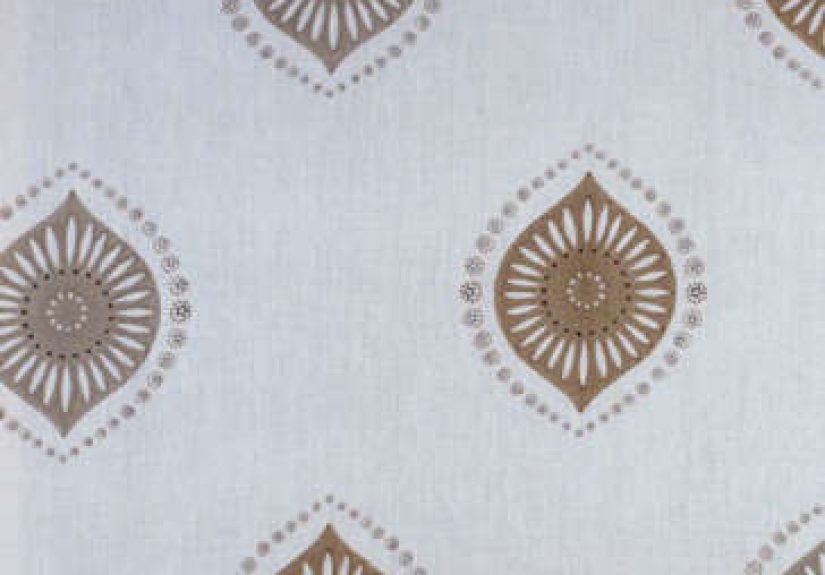
Vanderhurd patterns often combine geometry, florals, stripes, cut-out motifs, painterly shapes, and optical movement. Collections such as Opticality explore illusion-like geometry, positive and negative space, and energetic block-printed effects. Other designs draw from antique textiles, modernist forms, travel, architecture, and archival sketches.
The best thing about these patterns is that they rarely feel random. A Vanderhurd print may be bold, but it usually has structure. A geometric fabric can feel playful without becoming chaotic. A floral can be decorative without floating away into sweetness. A striped embroidery can feel orderly, but still relaxed enough to live with.
The Craft Behind the Cloth
One of Vanderhurd Studio’s strongest appeals is its commitment to craft. In a world where many fabrics are produced at industrial speed, the studio’s work values processes that leave room for the human hand. Screen printing, block printing, embroidery, weaving, and custom rug-making all bring slight variations, texture, and life to the finished product.
That handmade quality is not a flaw; it is the whole point. In block printing, for example, tiny irregularities can give a pattern warmth and movement. In embroidery, the stitch direction, density, and thread choice can completely change the personality of a fabric. In woven textiles, the structure itself becomes part of the design. Vanderhurd understands that the difference between “nice fabric” and “memorable fabric” often lives in these details.
Hand Embroidery and Bespoke Detail
Vanderhurd’s embroidered textiles are especially useful for designers who want a room to feel personal. Embroidery can be used for panels, cushions, headboards, chair backs, bed throws, and decorative wall applications. Instead of relying only on printed pattern, embroidery introduces dimension. It catches light differently. It invites touch. It gives a surface that subtle raised quality that says, “Someone spent time on this,” which is interior design’s version of a standing ovation.
Hand embroidery can also be customized to echo a room’s palette. For example, an interior designer might choose a durable woven fabric for a chair seat and then use an embroidered Vanderhurd textile on the chair back, allowing the piece to look special without sacrificing everyday function. That kind of practical artistry is one reason the studio remains popular among serious decorators.
How to Use Vanderhurd Fabrics in Interior Design
Vanderhurd fabrics and linens are versatile, but they work best when used with intention. These are not anonymous background materials. They are design ingredients with flavor. Like chili oil, a little can wake up the whole dish; too much without planning can cause guests to blink rapidly and look for water.
1. Start With One Hero Textile
A smart way to decorate with Vanderhurd fabric is to begin with one textile you genuinely love. This could be a patterned linen, a geometric embroidery, a block print, or a cushion fabric. Let that piece become the anchor for the room’s color palette. Pull one shade from the pattern for the wall color, another for upholstery, and a third for smaller accents.
For example, if you choose a Vanderhurd linen with indigo, ocher, and soft cream, you might use the cream as the main wall tone, indigo for a chair or rug detail, and ocher for lampshades or pillows. Suddenly, the room looks layered instead of assembled by panic scrolling at midnight.
2. Use Pattern Continuity, Not Pattern Matching
Great rooms do not need every fabric to match. In fact, overly matched rooms can feel stiff, like they are waiting for a realtor to arrive. Vanderhurd’s style encourages mixing, especially when there is continuity in color, scale, or mood. You can combine a printed linen with a woven texture, an embroidered cushion, and a quieter rug as long as the room has a shared color thread.
The trick is balance. If the drapery is energetic, let the sofa breathe. If the headboard is bold, choose bedding with texture rather than competing motifs. If the wallpaper has movement, use cushions that repeat one color from the wall instead of introducing five new personalities to the party.
3. Try Fabric on Walls
Fabric walling is one of the most luxurious ways to use textiles, and Vanderhurd designs are well suited to this approach. A linen fabric applied as walling can make a bedroom, library, or sitting room feel warmer, softer, and more intimate. Unlike paint, fabric absorbs sound and adds texture. Unlike wallpaper, it brings a textile softness that feels especially inviting in rooms meant for comfort.
This approach works beautifully in smaller rooms too. A compact guest bedroom wrapped in patterned fabric can feel like a jewel box rather than a leftover space where the extra towels go to retire.
4. Invest in a Statement Headboard
A headboard is one of the easiest places to use a special fabric. It does not face the same wear as a sofa seat, but it has enough visual impact to carry a bedroom. A Vanderhurd linen or embroidered textile can turn a plain bed into the room’s central feature. Add simple sheets, good lighting, and a calm rug, and the result feels layered without trying too hard.
For a modern bedroom, consider a graphic pattern in restrained colors. For a romantic room, try a softer floral or embroidered detail. For a guest room, a playful print can make the space feel thoughtful and memorable, which is much better than the usual guest room aesthetic of “Here is a bed and one mysterious framed print.”
Popular Vanderhurd Fabric Styles and Design Directions
Vanderhurd’s textile language is broad, but several style directions appear frequently across the studio’s work. Understanding them can help buyers and designers choose the right fabric for the right project.
Geometric Linens
Geometric fabrics are a major part of Vanderhurd’s appeal. These designs often use repeated shapes, angled lines, grids, and optical effects to create rhythm. They are excellent for headboards, cushions, curtains, roman shades, and accent upholstery. A geometric Vanderhurd linen can make a traditional room feel fresher or give a contemporary space more warmth.
Floral and Cut-Out Patterns
Vanderhurd florals are not the shy, tiny flowers of an old teacup unless they want to be. Many designs feel graphic, stylized, and architectural. Cut-out motifs and bold floral shapes can bring movement to a room without making it feel overly sweet. These fabrics are ideal when you want nature-inspired pattern with a modern edge.
Block-Printed Textiles
Block printing gives fabric a special handcrafted energy. Vanderhurd’s block-printed work, including designs associated with the Opticality collection, celebrates the slight variations and tactile personality of the process. These textiles are particularly compelling for rooms that need a relaxed yet sophisticated feel.
Embroidered Linens
Embroidered Vanderhurd fabrics add texture, detail, and a sense of bespoke craftsmanship. They can be subtle or dramatic depending on the thread, scale, and pattern. Use them for cushions, decorative panels, chair backs, bed throws, or wall hangings when you want the fabric to feel truly special.
Vanderhurd in the American Design Market
Although Vanderhurd Studio is rooted in London, its work has a meaningful presence in the United States through design showrooms and trade representation. Studio Four NYC, for example, carries Vanderhurd fabrics, rugs, and wallpapers for the U.S. market. Design Social Studio also represents Vanderhurd in several southeastern states, making the brand accessible to interior designers working on high-end residential and boutique commercial projects.
This matters because many American interiors today are moving away from flat, showroom-perfect minimalism and toward rooms with texture, story, and individuality. Vanderhurd fits that shift beautifully. Its fabrics can work in a Brooklyn brownstone, a California bungalow, a Palm Beach guest room, a Charleston sitting room, or a mountain house that wants pattern without looking like it got trapped in a ski lodge catalog.
How Vanderhurd Fabrics Compare With Ordinary Linens
Ordinary linen is lovely, but Vanderhurd linen brings design authorship. A plain linen curtain can soften a window. A Vanderhurd linen curtain can soften the window, set the color story, introduce rhythm, and make the room feel considered. That is the difference between fabric as material and fabric as design.
Mass-market textiles often follow trends. Vanderhurd’s fabrics tend to feel more collected. They may nod to modernism, antique textiles, Indian craft, European decorative arts, or contemporary geometry, but they do not feel disposable. This makes them a strong choice for people who want interiors with longevity.
Cost is naturally part of the conversation. Vanderhurd fabrics and bespoke textiles are luxury materials, so they are best used strategically. You do not have to cover every surface. A pair of cushions, a headboard, a single upholstered chair, or fabric used on the inside back of a cabinet can deliver plenty of impact.
Care and Practical Considerations
Before choosing any designer fabric, consider where it will live. Linen is beautiful, but placement matters. Very sunny windows can fade delicate fabrics over time, especially silk or richly colored textiles. Upholstery should be matched to the level of wear. A decorative embroidered textile may be perfect for a headboard or cushion but less suitable for the seat of the family’s most abused breakfast chair.
For drapery, ask about lining and interlining. For upholstery, confirm durability and rub count where available. For walling, work with an experienced installer. For cushions, consider removable covers and appropriate inserts. These details may not sound glamorous, but neither does “my expensive fabric is fading like a Victorian ghost,” so planning is your friend.
Experience: Living With Fabrics and Linens Inspired by Vanderhurd Studio
The first time you bring a serious textile into a room, something funny happens: everything else suddenly has to behave. A cheap throw pillow starts looking nervous. The old beige curtain begins questioning its life choices. The lamp in the corner wonders if it should have gone to art school. That is the power of a fabric with real design presence.
Imagine working with a Vanderhurd-inspired scheme for a sitting room. You begin with a patterned linen in a warm, earthy palette: rust, cream, charcoal, and faded blue. At first, it seems bold. The pattern has movement. The colors are confident. You hold it against the sofa and think, “Is this too much?” Then you place it near a textured wool rug, a vintage wood table, and a simple linen shade, and suddenly it is not too much at all. It is the missing sentence in the room’s story.
The most enjoyable part of decorating with fabrics and linens like these is the layering process. You do not need to solve the entire room at once. Start with the hero textile, then let the room answer back. Maybe the print wants a calmer wall. Maybe the embroidered cushion wants a companion in a woven stripe. Maybe the headboard fabric needs bedside lamps with a little height so the pattern does not visually overpower the bed. Good textiles teach you how to decorate around them.
In a bedroom, Vanderhurd-style linens can create a feeling that is polished but not precious. A patterned headboard, plain white bedding, a small embroidered cushion, and curtains in a coordinating woven texture can make the room feel designed without becoming fussy. The best rooms have a little looseness. They allow a book on the nightstand, slippers under the chair, and a cup of tea that may or may not be forgotten until lunchtime.
In a living room, the experience is more social. Guests notice textiles quickly, even if they do not use the word “textile.” They say things like, “I love that pillow,” or “Where did you find this fabric?” That reaction happens because fabric is close to the body. People sit on it, lean against it, brush past it, and see it in changing light. A good fabric does not just decorate a room; it changes how people feel inside it.
One practical lesson: do not be afraid of mixing patterns, but give them a referee. Color is usually the best referee. If two or three fabrics share a common tone, they can often live together peacefully, even when their patterns differ. A block print, a stripe, and a floral may sound like a dinner party with too many strong opinions, but if they share indigo or terracotta, they can become charming roommates.
Another lesson: texture saves everything. If a room looks too busy, add a plain woven fabric. If it looks too flat, add embroidery. If it feels too formal, bring in linen. If it feels too casual, add a sharper geometric pattern. Vanderhurd Studio’s broader design world is useful because it reminds us that interiors are not built from color alone. They are built from texture, scale, rhythm, and contrast.
The best experience with fabrics and linens is when the room begins to feel collected over time rather than purchased in one afternoon. Vanderhurd’s work has that quality. It suggests travel, memory, craft, and artistic curiosity. It gives a room a layered look that cannot be faked with generic decor. And frankly, that is good news for anyone whose sofa has been quietly begging for a more interesting life.
Conclusion
Vanderhurd Studio proves that fabrics and linens can be more than soft surfaces. They can be architecture, artwork, memory, and mood all at once. From screen-printed linen and hand embroidery to block-printed patterns, woven textures, cushions, wallpapers, and bespoke commissions, the studio’s work speaks to people who want interiors with depth and personality.
For American homeowners and designers seeking luxury textiles that feel crafted rather than manufactured, Vanderhurd offers a rare combination of artistry and usability. Its fabrics can be bold without being loud, refined without being dull, and timeless without taking themselves too seriously. In other words, they are exactly what many rooms need: a little intelligence, a little texture, and just enough drama to keep the beige from getting too comfortable.