Table of Contents >> Show >> Hide
- Why Gochujang Works in Gumbo
- Ingredients for Gochujang Gumbo
- Step-by-Step: How to Make Gochujang Gumbo
- Chef-Level Tips (Without the Chef Ego)
- Easy Variations
- What to Serve With Gochujang Gumbo
- Make-Ahead, Storage, and Reheating
- FAQ
- Cooking Experiences: What Making Gochujang Gumbo Feels Like (and What You Learn Fast)
- Conclusion
Gumbo is already a “welcome, everybody” kind of stew: West African okra roots, Choctaw filé, French roux,
and a whole lot of Louisiana soul in one pot. Now add gochujangthe Korean fermented chili paste that’s
sweet, spicy, and deeply savoryand you’ve got a Korean-Cajun mashup that tastes like it was destined to happen.
This Gochujang Gumbo Recipe keeps gumbo’s classic backbone (a dark roux, the holy trinity,
and a slow simmer) while letting gochujang bring the “sticky-lips, can’t-stop” umami heat. The end result?
A bowl that’s smoky, rich, a little funky in the best way, and 100% worthy of a mound of rice.
Why Gochujang Works in Gumbo
Gochujang isn’t just “spicy paste.” It’s fermented, which means it has layers: heat, sweetness, and a
rounded savory depth that plays beautifully with a dark roux’s toasted nuttiness. In gumbo terms, it
acts like a flavor amplifiersimilar to how Worcestershire or hot sauce can brighten a pot, but with a
deeper, fermented bass note.
Flavor math (no calculator needed)
- Dark roux = toasted, roasty depth
- Andouille = smoke + spice
- Gochujang = sweet heat + umami
- Vinegar = clean finish so the pot doesn’t taste “heavy”
- Okra or filé = body and thickness (pick your vibe)
Ingredients for Gochujang Gumbo
This recipe serves about 6 and aims for a medium heat level. If your gochujang is extra fiery, start with
lessyou can always add more, but you can’t un-spice a gumbo without starting a second pot and pretending it was “on purpose.”
The gumbo base
- 1/2 cup neutral oil (canola, vegetable, or grapeseed)
- 1/2 cup all-purpose flour
- 1 large yellow onion, diced
- 2 celery stalks, diced
- 1 bell pepper (green or yellow), diced
- 4–6 garlic cloves, minced
- 2–3 tablespoons gochujang (start with 2; go up from there)
- 6 cups chicken stock (or seafood stock if you’re going heavy on shrimp)
- 2 teaspoons kosher salt (more or less to taste)
- 1 teaspoon black pepper
- 1 teaspoon smoked paprika
- 1/2 teaspoon dried thyme
- 2 bay leaves
Proteins and thickening
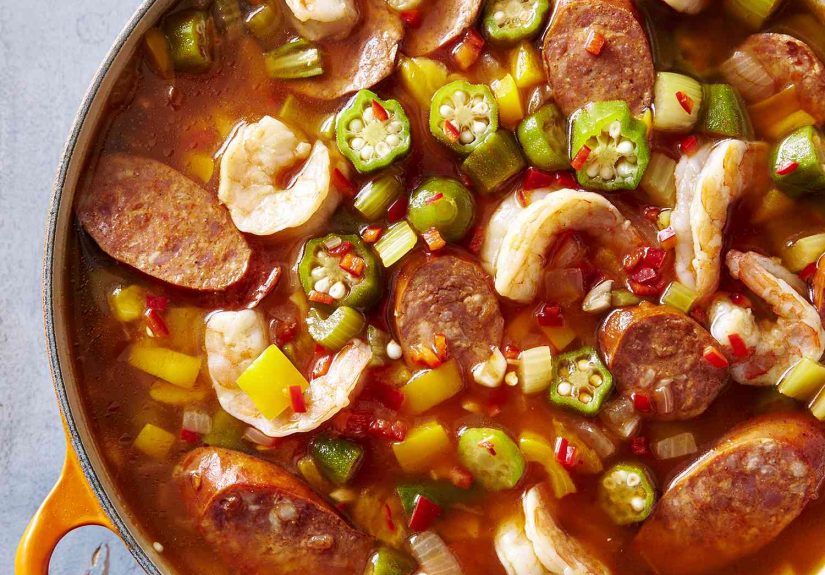
- 8 ounces andouille sausage, sliced into half-moons
- 1 1/2 cups okra (fresh sliced, or frozen thawed and patted dry)
- 1 pound shrimp, peeled and deveined (or a mix of shrimp + shredded chicken)
- 1 tablespoon filé powder (optional, and only used off heat)
Finishing touches
- 1–2 tablespoons red wine vinegar (or rice vinegar)
- Sliced scallions
- Steamed white rice for serving
- Optional: a few drops toasted sesame oil, hot sauce, or extra gochujang at the table
Step-by-Step: How to Make Gochujang Gumbo
1) Brown the sausage (and steal a snack)
- Set a large Dutch oven over medium heat.
- Add sliced andouille and cook until browned and some fat renders, 4–6 minutes.
- Scoop sausage onto a plate, leaving the drippings behind.
Those browned bits are flavor. Don’t scrub them off. They’re doing important work.
2) Make a dark roux (the gumbo “gym session”)
- Lower heat to medium-low. Add oil if your pot looks dry (you want about 1/2 cup fat total).
- Whisk in the flour until smooth.
- Cook, stirring constantly with a wooden spoon or flat spatula, until the roux becomes the color of dark peanut butter to milk chocolate, 15–25 minutes.
A darker roux brings more flavor than thickening power, so don’t rush it. If you see black specks or smell “burnt popcorn,”
the roux is toaststart over. Gumbo will forgive many things, but not that.
3) Add the holy trinity and aromatics
- Stir onion, celery, and bell pepper into the roux.
- Cook until softened, 6–8 minutes, scraping the bottom so nothing sticks.
- Add garlic and cook 30–60 seconds.
4) Bloom the gochujang
- Add 2 tablespoons gochujang directly into the roux-veg mixture.
- Stir for 1 minute so it “wakes up” in the hot fat and coats everything.
This step helps the gochujang taste integrated instead of “plopped in later.” If you want a hotter gumbo, add the third tablespoon now.
5) Build the pot and simmer
- Slowly pour in stock while stirring to prevent lumps.
- Add salt, pepper, smoked paprika, thyme, and bay leaves.
- Return browned sausage to the pot.
- Bring to a gentle simmer, then lower heat and cook uncovered 30 minutes.
6) Add okra (or choose filé later)
- Stir in okra and simmer 15 minutes.
Okra helps thicken while adding a classic gumbo feel. If you’re okra-skeptical, use less (or skip it) and finish with filé instead.
Many cooks prefer using one thickener as the “main character,” not both.
7) Add shrimp at the end (so it stays juicy)
- Add shrimp and simmer 3–5 minutes, just until pink and curled.
- Turn off heat.
8) Finish like you mean it
- Stir in vinegar, starting with 1 tablespoon.
- Taste and adjust: more salt, a little more gochujang, or another splash of vinegar if it needs brightness.
- If using filé powder, stir it in off heat (or let guests add a pinch to their bowls).
- Serve over rice and shower with scallions.
Chef-Level Tips (Without the Chef Ego)
How spicy should it be?
Gochujang brands vary a lot. Start with 2 tablespoons for a balanced heat. If you want it spicier,
increase gochujang and add a pinch of cayenne. If it’s too spicy, add a touch more stock and serve with extra rice.
(Rice is gumbo’s built-in fire extinguisher.)
How thick should gumbo be?
Gumbo is usually thicker than soup but looser than gravy. If it’s too thin, simmer longer uncovered.
If it’s too thick, loosen with stock. Your roux color also matters: darker roux tastes amazing but thickens less than a lighter one,
so okra or filé can help you land the texture you like.
The vinegar trick
A small amount of vinegar at the end lifts the whole pot. It doesn’t make the gumbo taste “sour”;
it makes it taste like you’ve been quietly leveling up your cooking for years.
Easy Variations
Chicken + andouille gochujang gumbo
Swap shrimp for 2 cups shredded rotisserie chicken (stir it in during the last 10 minutes). This version is weeknight-friendly
and still tastes like it belongs at a Sunday table.
Seafood-lover’s version
Use seafood stock, add shrimp plus lump crab meat (fold crab in off heat). Keep the simmer gentle once seafood goes in.
Vegetarian/vegan option
Replace sausage with smoked mushrooms (like shiitake) or a plant-based andouille. Use vegetable stock.
Add extra okra and finish with a spoon of white miso for deeper savoriness.
Gluten-free approach
Skip the flour roux and thicken with okra plus a small slurry of cornstarch (added at a simmer), or use a gluten-free flour blend for roux.
Always check your gochujang label for wheat, since some brands include it.
What to Serve With Gochujang Gumbo
- White rice (classic and essential)
- Cornbread or crusty bread for dunking
- Quick cucumber salad with rice vinegar to cool things down
- Kimchi on the side if you want to lean into the Korean-Cajun fusion
Make-Ahead, Storage, and Reheating
Gumbo is famous for tasting even better the next day because the flavors have time to mingle.
Store leftovers in the fridge in a sealed container for up to 3–4 days.
- Reheat gently on the stove over medium-low, adding a splash of stock if it thickened.
- If you haven’t added shrimp yet, add it fresh while reheating for the best texture.
- Freezing: Freeze the gumbo base (without shrimp) up to 2–3 months; add shrimp after thawing and reheating.
FAQ
Is gochujang gumbo “authentic”?
It’s authentic to the spirit of gumbo: a dish built from cultures meeting in one pot. This version respects the method
(roux, trinity, simmer) while letting gochujang add a modern twist.
Can I use both okra and filé powder?
You can, but many cooks prefer choosing one primary thickener. If you do use filé, add it off heat near serving time
so it thickens without turning ropey.
What if I don’t have andouille?
Use smoked sausage or kielbasa. The key is smokiness, since it balances gochujang’s sweet heat.
Cooking Experiences: What Making Gochujang Gumbo Feels Like (and What You Learn Fast)
The first “experience” most people have with this recipe is realizing that a roux is basically a
high-stakes relationship: it demands attention, it punishes neglect, and it somehow makes you better at commitment.
You start stirring flour and oil thinking, “This is fine,” and five minutes later you’re leaning over the pot like a
scientist watching a lunar landing. The color shift is gradualblond to tan to peanut butterthen suddenly it deepens,
and the kitchen starts smelling nutty and toasted. That’s when you understand why gumbo has such a devoted fan club:
you haven’t even added stock yet, and it already smells like comfort.
Adding the holy trinity to a hot roux is another memorable moment. The pot hisses like it has opinions,
steam rises, and you get that instant payoff: onions turning glossy, peppers softening, celery releasing its
herbal freshness. It’s the “foundation” stage where you can tell you’re building something realnot just tossing
ingredients into hot water and hoping for the best. When gochujang hits the warm roux-veg mixture, the aroma changes again:
sweet chili, a hint of fermentation, and a savory note that feels almost meaty even before the sausage goes back in.
The experience is less “Korean food meets Cajun food” and more “Why did nobody tell me this was a thing?”
The simmer is where the pot becomes a personality. Early on it might taste a little sharpspice forward, stock still
separate from the roux. After 20–30 minutes, it starts to round out. Home cooks often notice the moment the gumbo
“clicks”: the broth looks silkier, the color deepens, and each spoonful tastes connected instead of layered.
This is also when people learn the best gumbo lesson: season in stages. Add a little salt, taste. Add a little more,
taste. The same goes for gochujang. A small spoonful can transform the pot, but too much can make the stew feel sweet-hot
without enough smoky balance. That’s why andouille (or any smoked sausage) is such a good partner hereit grounds
the sweetness and keeps the flavor profile bold instead of candy-spicy.
Okra is its own experience, too. Some folks worry about slime, but in gumbo it usually mellows into a pleasant body.
Using thawed frozen okra often surprises people in a good way: it’s convenient, consistent, and still gives thickness.
Then there’s the “finishing moment,” which is where this recipe starts to feel like a signature dish. That little splash
of vinegar wakes up everything, making the gumbo taste less heavy and more alive. It’s the kind of detail that makes
someone ask, “What did you put in this?” and you get to act mysterious, even though it was literally one tablespoon.
Finally, leftovers. The next day, the gochujang seems to melt even deeper into the broth, and the spice feels smoother.
Reheating gently and adding fresh scallions makes it taste like you put in twice the effort. If you’re serving guests,
that’s the real secret experience: make the base ahead, then add shrimp right before eating so it stays tender.
You get the “I planned this flawlessly” energy without doing anything dramaticunless you count not burning the roux,
which honestly deserves a small trophy.
Conclusion
This Gochujang Gumbo Recipe is comfort food with a passport: classic gumbo technique plus gochujang’s fermented
sweet heat for a stew that’s smoky, rich, and surprisingly balanced. Make it once for a cozy night in, then make it again
when you want to impress people who think they’ve “had every kind of gumbo.” Serve it over rice, finish with scallions,
and don’t forget that tiny splash of vinegarit’s the difference between “good” and “where has this been all my life?”