Table of Contents >> Show >> Hide
- What Is a Hand-woven Cotton Zapotec Bedspread?
- The Craft Story Behind the Weave
- Why Cotton Works So Well for a Bedspread
- What Makes It Different From Ordinary Bedding
- How to Style a Hand-woven Cotton Zapotec Bedspread
- How to Shop Smart
- Care Tips for Everyday Use
- Why It Belongs in a Modern Bedroom
- The Experience of Living With a Hand-woven Cotton Zapotec Bedspread
- Conclusion
If your bedroom feels a little too “assembled in five minutes by a stressed adult with a coupon code,” a hand-woven cotton Zapotec bedspread can change the whole mood. It is colorful without being chaotic, artisanal without trying too hard, and practical enough to earn its keep instead of just posing for photos. In other words, it is the rare decorative piece that can actually pull a room together while still being useful at bedtime.
A hand-woven cotton Zapotec bedspread is more than a blanket tossed across a mattress. It sits at the intersection of textile tradition, bedroom design, and everyday comfort. The best ones bring together bold stripes or geometric motifs, breathable cotton, visible handwork, and a sense of place that mass-produced bedding usually cannot fake. You do not just buy fabric. You bring home texture, labor, pattern, and a little bit of story.
This is where things get especially interesting. Zapotec weaving is strongly associated with Oaxaca, especially Teotitlán del Valle, a community widely known for weaving traditions passed across generations. While many people first meet Zapotec textiles through wool rugs, artisan marketplaces and cultural organizations also show that cotton pieces such as shawls, placemats, runners, blankets, and bedspreads are very much part of the broader weaving conversation. So yes, the hand-woven cotton Zapotec bedspread is real, relevant, and much cooler than the average “boho” bedding set pretending to have a passport.
What Is a Hand-woven Cotton Zapotec Bedspread?
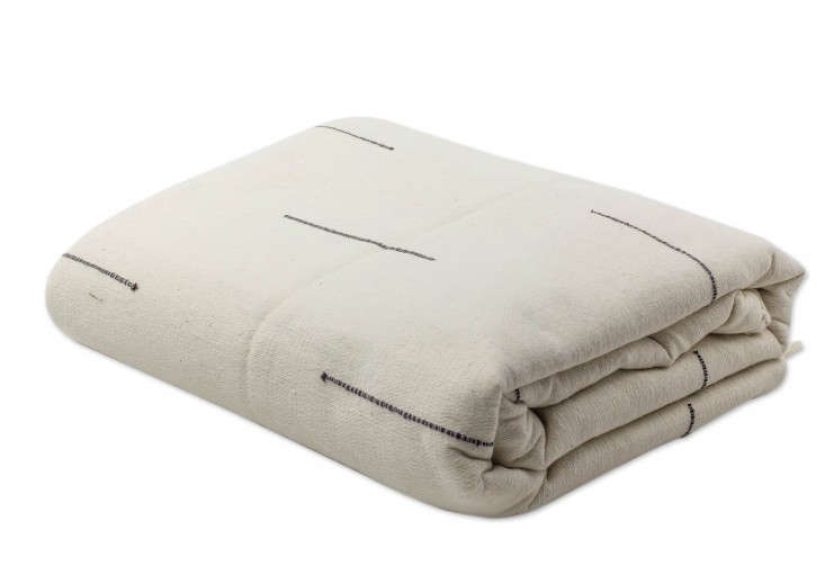
At its simplest, it is a bed covering woven by hand from cotton and designed in the visual language associated with Zapotec textile traditions from Oaxaca, Mexico. Depending on the maker, it may feature stripes, stepped geometrics, repeating bands, or motifs inspired by local design heritage. Some artisan-made examples are woven on traditional floor or treadle looms, often finished with fringe, and offered in practical sizes such as twin, full/queen, or king.
That combination matters. “Hand-woven” means the cloth has character. You are likely to see a more dimensional surface, a denser feel, and slight variations that remind you a human being made it. “Cotton” means the fabric tends to feel lighter, more breathable, and easier to live with than heavy winter-only bedding. “Zapotec” signals cultural and visual lineage rather than generic patterning. Put those three things together and you get a bedspread that can act as a functional top layer while also serving as the star of the room.
The Craft Story Behind the Weave
Oaxaca’s weaving tradition still shapes the look
One reason Zapotec textiles stand out is that they do not feel random. Their patterns are often structured, rhythmic, and architectural. There is a balance to them. Even the boldest stripes usually look intentional rather than loud. That is part of why these textiles work so well in bedrooms: they bring energy, but they also bring order.
Teotitlán del Valle has long been recognized for weaving, and the craft is tied to family knowledge, local identity, and livelihood. Some artisan biographies describe learning to weave from parents as teenagers, working on wooden treadle looms, and continuing an inherited art form through workshops focused on shawls, textiles, and bedspreads. That continuity gives a hand-woven cotton Zapotec bedspread a different emotional weight than a blanket bought because it happened to be on sale next to a checkout line and a candle named something like “Moonlit Fern.”
Natural dyes add depth, not just color
Another big part of the appeal is color. Many artisan Zapotec textiles are associated with natural dye traditions, including shades derived from plants, bark, nuts, flowers, indigo, and cochineal. That matters because natural color often looks layered rather than flat. Reds feel warmer. Blues feel earthier. Neutrals feel alive. You do not always get that with synthetic, mass-market bedding, which can sometimes look like it was printed by a machine that has never seen the sun.
Not every cotton Zapotec bedspread uses natural dyes, and shoppers should not assume that all artisan textiles are dyed the same way. But when makers do use natural materials, the result can be especially rich and visually nuanced. That is part of the reason these textiles often feel both handcrafted and quietly luxurious.
Patterns can carry meaning
Some artisan groups describe their weavings as expressions of Zapotec roots, with stories and symbols embedded in motifs. One cooperative highlights the butterfly pattern as a symbol of beauty and liberty. Others point to geometric forms inspired by the Oaxaca region’s design heritage, landscape, and architecture. This does not mean every stripe is a secret code waiting for you to crack at 2 a.m. It does mean the design is often connected to tradition, memory, and cultural pride rather than simply whatever a trend forecaster declared “hot” for spring.
Why Cotton Works So Well for a Bedspread
A beautiful bedspread still has to function like bedding. That is where cotton earns its applause. Cotton is widely valued for softness, breathability, durability, and relatively easy maintenance. As a bedspread material, it works particularly well because it can add texture and visual weight without making a bed feel suffocating.
If you sleep hot, cotton is often a friend. If you like layering your bed with sheets, a coverlet, and an extra throw, cotton plays nicely with the rest of the cast. If you want one piece that can sit on top of a duvet in colder months and work alone in warmer weather, cotton also makes sense. In short, cotton understands the assignment.
That practicality is important because a hand-woven cotton Zapotec bedspread is usually not the kind of item you tuck away for special occasions. It is the kind of piece you want visible. Draped flat across the bed, folded at the foot, or layered over a duvet, it brings instant texture and pattern while still being usable every day.
What Makes It Different From Ordinary Bedding
The difference starts with surface. Machine-made bedding often aims for uniformity. Hand-woven cotton textiles tend to offer texture you can actually see: a slightly varied weave, a more tactile hand, a subtle firmness, and details like fringe or woven bands that make the piece feel crafted instead of manufactured.
Then there is the pattern language. A hand-woven cotton Zapotec bedspread does not need ruffles, embroidery explosions, or 27 decorative flourishes to make a room interesting. The geometry does the heavy lifting. Clean stripes, repeating motifs, and grounded colors can make even a simple bedroom look more finished.
And finally, there is the human factor. When a product is connected to a workshop, an artisan, or a cooperative, it tends to feel more personal. You are not staring at a generic object from a warehouse galaxy. You are living with something shaped by practice, memory, and manual skill. That does not automatically make every piece perfect, but it does make many of them feel more honest.
How to Style a Hand-woven Cotton Zapotec Bedspread
The easiest approach is to let the bedspread lead the room. If your textile has vivid stripes or strong geometric patterning, keep the sheets and larger furniture relatively calm. White, cream, sand, warm gray, charcoal, clay, and muted blue all tend to work beautifully. Think balance, not competition.
Three easy styling directions
1. Clean and minimal: Pair the bedspread with white sheets, a simple upholstered headboard, and one or two neutral pillows. This lets the weaving stand out without visual clutter.
2. Collected and earthy: Add linen or cotton shams in clay, rust, olive, or oat tones. Bring in wood, pottery, and a woven basket or bench at the foot of the bed. The room feels relaxed, layered, and human.
3. Pattern-on-pattern, but with manners: Mix the bedspread with smaller-scale striped or textured pillows in the same color family. The trick is to vary scale and keep the palette controlled so the room looks curated rather than caffeinated.
A cotton bedspread also works well in layers. Use it on top of a duvet for extra interest, or fold it across the lower third of the bed when you want color without committing to a full-pattern takeover. This is especially useful if you like to change your bedding seasonally without buying a whole new setup every time your mood changes with the weather.
How to Shop Smart
When buying a hand-woven cotton Zapotec bedspread, look closely at materials, technique, and origin. A strong listing should tell you whether the piece is 100% cotton, how it was woven, whether dyes are natural or synthetic, and where it was made. Size matters too, especially because handmade bedding can vary a bit from standard big-box dimensions.
It also helps to check whether the seller shares artisan or workshop information. Bedspreads connected to named makers or cooperatives often come with better context, which is useful both for authenticity and for understanding what makes the piece special. If a listing offers specific details like loom type, fringe length, natural dye use, or workshop history, that is usually a good sign.
Also, keep your expectations smart and healthy. Handcrafted does not mean machine-perfect. Slight variation in motif, size, or color is normal and often part of the charm. If absolute uniformity is your love language, you may be happier with factory bedding. If you like texture, personality, and evidence of real hands at work, you are in the right aisle.
Care Tips for Everyday Use
Care instructions vary, so always follow the maker’s guidance first. Some hand-woven cotton textiles can handle gentle cleaning more easily than others, while certain artisan bedspreads are listed as dry clean only. That is not a flaw. It is simply part of owning a more specialized textile.
For daily life, the best habits are boring but effective: keep the piece out of prolonged direct sun if possible, shake it out occasionally, spot clean quickly when accidents happen, and avoid tossing a handcrafted textile into a washing routine designed for gym socks and emotional chaos. If the bedspread has fringe, handle it with a little extra respect.
If you rotate bedding seasonally, store the bedspread clean and fully dry in a breathable container rather than sealing it in plastic for eternity. Cotton likes a little room to breathe. Honestly, so do we all.
Why It Belongs in a Modern Bedroom
A lot of people assume traditional textiles only work in rustic, bohemian, or globally styled spaces. Not true. A hand-woven cotton Zapotec bedspread can look fantastic in modern, transitional, farmhouse, desert, eclectic, and even minimalist interiors. The reason is simple: good geometry ages well.
In a modern room, the bedspread adds warmth and texture. In a neutral room, it adds color and focus. In a layered room, it brings structure so everything does not dissolve into a fluffy beige cloud. It is one of those rare pieces that can feel collected and intentional without making your room look like you are trying to turn your bedroom into a themed boutique hotel.
The Experience of Living With a Hand-woven Cotton Zapotec Bedspread
There is a difference between owning a bedspread and actually living with one that changes how your room feels. A hand-woven cotton Zapotec bedspread tends to do that quietly, which is probably part of its charm. It does not scream for attention every time you walk in. It simply makes the bed look more grounded, more complete, more like a place meant for actual rest and not just a pile of laundry negotiating a peace treaty.
In the morning, it is the first thing you notice when sunlight hits the weave. The cotton catches light differently than slick, mass-produced fabric. You start to see why texture matters. The stripes or geometrics do not flatten out. They hold their shape and rhythm. The bed suddenly looks styled even if all you did was pull the spread straight and fluff two pillows with only medium enthusiasm.
There is also a sensory pleasure to it. Cotton has a way of feeling breathable and substantial at the same time. A hand-woven version often feels more tactile than standard bedding, almost like it asks you to slow down long enough to notice the fabric itself. You throw a hand across it while passing by. You fold back a corner and appreciate the fringe. You realize your room now has one object with actual presence, and that changes the energy more than buying six tiny accessories ever could.
Over time, the bedspread becomes part of your routine in a comforting, unflashy way. It is there during afternoon naps, lazy Sunday reading, chilly evenings, and those weird in-between weather days when a duvet feels too heavy but a sheet alone is just optimistic nonsense. Because cotton layers so well, the piece becomes adaptable. Folded at the foot of the bed, it looks decorative. Pulled up at night, it becomes functional. That flexibility is part of what makes it feel lived-in rather than precious.
And then there is the visual calm it brings. Bedrooms can easily drift into one of two extremes: painfully plain or accidentally overdecorated. A hand-woven cotton Zapotec bedspread often solves both problems at once. It adds enough pattern to feel interesting, enough craftsmanship to feel soulful, and enough restraint to keep the room from looking busy. It acts like the adult in the design conversation.
Maybe the best part is that it feels connected to something beyond trend. Not in a heavy, lecture-filled way. Just in a human way. A piece tied to weaving traditions, artisan skill, and considered materials tends to age differently in your home. It becomes the thing guests ask about. It becomes the layer you do not want to replace next season just because a catalog invented a new color name. It starts to feel less like bedding and more like part of the room’s identity.
That is the real appeal of a hand-woven cotton Zapotec bedspread. It does the practical job of covering a bed, yes. But it also brings pattern, texture, craft, and a sense of permanence to a space that should feel deeply personal. In a world full of fast décor and forgettable basics, that kind of presence is worth a lot.
Conclusion
A hand-woven cotton Zapotec bedspread is not just a decorative extra. It is a beautifully useful layer that combines breathable cotton, artisan workmanship, and design rooted in a respected weaving tradition. It can warm up a modern room, sharpen a relaxed one, and make almost any bed look more intentional. If you want bedding with texture, soul, and a point of view, this is the kind of piece that earns its place. Not because it is trendy, but because it feels real.