Table of Contents >> Show >> Hide
- Quick Answer: House Centipede vs. Silverfish
- What Is a House Centipede?
- What Is a Silverfish?
- House Centipede vs. Silverfish: The Biggest Differences
- Which Pest Is Worse?
- How to Get Rid of House Centipedes and Silverfish
- How to Tell Which One You Have in Your Home
- Common Homeowner Experiences With House Centipedes and Silverfish
- Final Verdict
- SEO Tags
only, ready to copy and publish.
If you have ever turned on a bathroom light at 2 a.m. and seen something sprint across the floor like it was late for a very important bug meeting, you already know this topic is not theoretical. Two of the most common creepy-crawly suspects inside American homes are house centipedes and silverfish. They both love dark corners, both show up when nobody invited them, and both have a talent for making people question their life choices in under three seconds.
But here is the twist: they are not the same kind of pest, they do not behave the same way, and they create very different problems. In fact, a house centipede may even hunt and eat silverfish. So if silverfish are the snack, the house centipede is the unsettling waiter carrying the tray.
This guide breaks down the difference between house centipede vs. silverfish in plain English. We will look at appearance, behavior, habitat, damage, and control, plus the real-world experiences homeowners tend to have with both. If you are trying to figure out which pest is in your home and what to do next, this is your no-panic, no-nonsense, no-bug-hugging guide.
Quick Answer: House Centipede vs. Silverfish
The biggest difference is simple: a house centipede is a fast-moving predator, while a silverfish is a moisture-loving insect that feeds on starchy materials. One hunts other pests. The other nibbles on your books, wallpaper paste, cereals, cardboard, fabrics, and paper goods.
| Category | House Centipede | Silverfish |
|---|---|---|
| What it is | Predatory arthropod | Wingless insect |
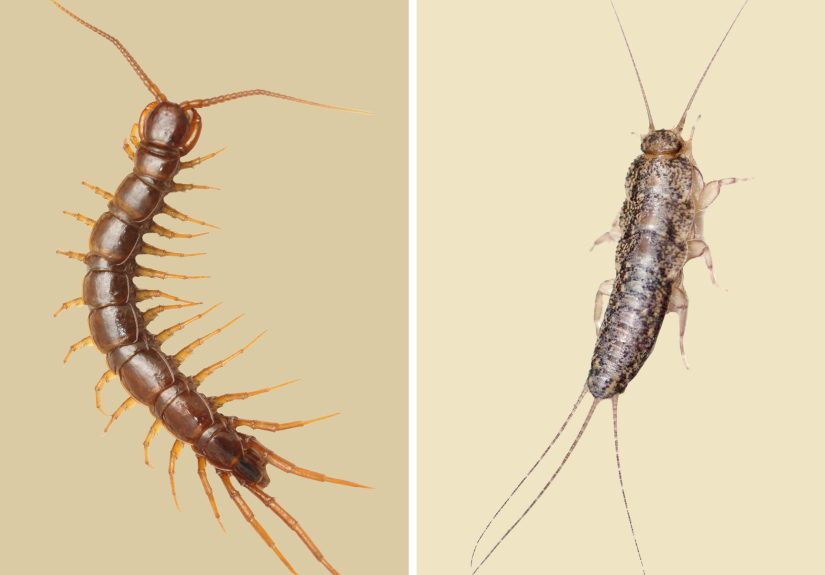
| Looks like | Long body with many very long legs | Small, silvery, carrot-shaped body with 3 tail filaments |
| Diet | Spiders, cockroaches, flies, moths, silverfish, and other small pests | Paper, glue, starch, cereals, pet food, fabrics, and household debris |
| Main problem | Scares humans; may indicate other pests are present | Damages paper goods, books, wallpaper, and stored items |
| Favorite spots | Bathrooms, basements, crawl spaces, damp corners | Bathrooms, closets, attics, basements, bookshelves, storage boxes |
| Risk to people | Usually harmless; bites are rare | Does not bite; mostly a nuisance and material pest |
| What their presence often means | There may be other insects around to feed on | There is likely excess moisture and accessible food sources |
What Is a House Centipede?
A house centipede is the lanky speed demon of indoor pests. Adults typically have a narrow body and 15 pairs of long legs, which makes them look larger and more dramatic than they really are. Their legs and antennae are so long and delicate that they often appear like a blur when they run. And run they do. These things do not stroll. They teleport with opinions.
Unlike many pests that live off your pantry or your drywall dreams, house centipedes are predators. They feed on other small arthropods, including cockroach nymphs, spiders, flies, moths, carpet beetle larvae, firebrats, and yes, silverfish. That means they are not in your home because they want your cereal. They are there because your home offers moisture, shelter, and a buffet of other bugs.
How to identify a house centipede
- Long, flattened body
- Usually yellowish-tan to brownish with darker striping
- Very long legs that seem wildly excessive for the job
- Fast, darting movement
- Usually seen at night or in damp rooms
House centipedes prefer places with high humidity and limited disturbance, such as basements, bathrooms, crawl spaces, utility rooms, and floor-drain areas. If you see one, it does not necessarily mean your home is dirty. It usually means there is enough moisture and enough prey to keep it interested.
What Is a Silverfish?
A silverfish is a small, wingless insect with a flattened, silvery body and a distinctive fish-like wiggle when it moves. It is usually much smaller than a house centipede and far less dramatic at first glance, although it can still trigger the universal human response known as “absolutely not.”
Silverfish are not predators. They are scavengers and nibblers that love materials rich in starches, sugars, glue, cellulose, and proteins. That includes paper, cardboard, wallpaper paste, book bindings, dried foods, clothing starch, and even dust or dead insects. So while a house centipede is chasing pests, a silverfish is quietly trying to snack on your paperback collection like it paid rent.
How to identify a silverfish
- Small, wingless body
- Silvery-gray scales
- Tapered, carrot-shaped appearance
- Long antennae
- Three tail-like appendages at the rear
- Quick, wriggling movement when disturbed
Silverfish thrive in cool, dark, humid spaces. They are often found in bathrooms, laundry rooms, attics, basements, closets, under sinks, inside cardboard boxes, and around bookcases or stored papers. Their presence is often a clue that your home has a moisture issue, poor airflow, or both.
House Centipede vs. Silverfish: The Biggest Differences
1. Appearance
This is the easiest place to tell them apart. A house centipede looks like a tiny, leggy horror-movie extra. A silverfish looks like a sleek, silvery sliver with tail bristles. If it has a ridiculous number of long legs, it is not a silverfish. If it looks like a little metallic carrot with three tails, it is not a centipede.
2. Diet
This difference matters because it tells you what problem you are actually dealing with. House centipedes eat pests. Silverfish eat materials. One may help reduce smaller bugs, although not enough to be considered reliable pest control. The other can damage books, wallpaper, stored food, paper products, and fabric-based items over time.
3. Damage
Silverfish are more likely to cause visible household damage. You may notice chewed edges on paper, irregular holes in wallpaper, damage to book bindings, or contamination of stored dry goods. House centipedes, on the other hand, do not usually damage food, paper, furniture, or clothing. Their primary offense is psychological warfare.
4. Relationship to humans
Silverfish do not bite, sting, or generally harm people. They are annoying, but mostly because they are sneaky and destructive to household materials. House centipedes can bite in rare situations, but they are generally considered low-risk to humans. Most people never get bitten because the centipede would strongly prefer to sprint away and continue being weird in private.
5. What their presence means
If you are seeing silverfish, think moisture, paper clutter, starch sources, and humidity. If you are seeing house centipedes, think moisture plus prey insects. In other words, silverfish suggest that your home is attractive to silverfish. House centipedes suggest your home may already be supporting other bugs worth hunting.
Which Pest Is Worse?
For most homeowners, silverfish are the more damaging pest. They can ruin stored papers, books, wallpaper, photos, textiles, and pantry items over time. They also reproduce in hidden areas, which means a small problem can quietly become a larger one if humidity stays high.
House centipedes are usually more alarming to look at, but they are less destructive. Many pest experts treat them as nuisance invaders rather than serious property pests. That does not mean you need to love them, write them a thank-you note, or name them Larry. It just means they are not usually the main problem. Often, they are a symptom of another pest issue or excess moisture.
How to Get Rid of House Centipedes and Silverfish
If you want lasting results, do not focus only on sprays. Focus on integrated pest control: moisture reduction, sanitation, exclusion, and habitat cleanup. Bugs are a lot like bad guests. If you remove the snacks, lock the side door, and fix the plumbing, they suddenly lose interest.
For house centipedes
- Reduce indoor humidity with fans or dehumidifiers
- Fix leaking pipes, sweating plumbing, and damp areas
- Seal cracks, gaps, and entry points around doors, windows, and utility lines
- Declutter basements, storage rooms, and damp corners
- Address the prey problem by controlling spiders, roaches, silverfish, and other insects
- Use sticky traps to monitor activity
For silverfish
- Lower humidity, especially in bathrooms, basements, attics, and closets
- Store cereals, flour, pet food, and dry goods in sealed containers
- Reduce paper clutter, cardboard storage, and damp books or magazines
- Vacuum regularly to remove dust, crumbs, and insect debris
- Repair leaks and improve ventilation in moisture-prone rooms
- Seal crevices where silverfish hide during the day
If you keep seeing both pests after you have dried out the space and cleaned it up, it may be time to contact a licensed pest professional. Repeated sightings often mean the hidden conditions inside walls, under flooring, or behind storage areas still favor them.
How to Tell Which One You Have in Your Home
Here is the practical version. Ask yourself these questions:
- Did it have a shocking number of long legs? That is probably a house centipede.
- Was it small, silver, wingless, and shaped like a tapered teardrop with three tail bristles? That is probably a silverfish.
- Did it vanish across the floor at impossible speed? Could be either, but house centipedes are the undisputed Olympic sprinters.
- Are books, paper, wallpaper, or dry foods being damaged? Silverfish become the prime suspect.
- Are you also seeing spiders, roaches, or other small bugs? A house centipede may be following the food supply.
Common Homeowner Experiences With House Centipedes and Silverfish
In real homes, the experience of finding these pests is often less about textbook identification and more about a sudden, emotional moment. A homeowner opens a linen closet and spots a silverfish sliding between folded towels. Someone else walks into the basement and catches a house centipede racing along the wall with enough legs to make the whole room feel personally insulting. These are different experiences, and homeowners usually react to them in different ways.
People who discover house centipedes often describe the encounter as startling rather than destructive. The bug looks huge because of its legs, moves unbelievably fast, and seems to appear from nowhere. Many first-time sightings happen in bathrooms, basements, or near drains, especially late at night. The usual response is immediate panic, followed by a reluctant internet search asking whether the bug is dangerous, poisonous, or somehow part alien. Then comes the slightly annoying answer: it is creepy, but it may actually be hunting other pests in the home.
That realization creates a weird emotional conflict. Homeowners do not want the centipede around, but they also do not love the idea that it might be eating spiders, roaches, or silverfish behind the scenes. So the experience becomes less “What is this thing?” and more “What else is living in my walls that convinced this thing to move in?” In many cases, one house centipede leads people to inspect damp storage areas, floor drains, crawl spaces, and utility rooms more carefully than they ever have before.
Silverfish create a different kind of frustration. They are not as visually dramatic, but they are sneakier and more tied to household damage. Homeowners often notice them when opening old boxes, flipping through stored papers, or checking bookshelves in humid rooms. In some cases, the discovery comes after finding chewed wallpaper, tiny feeding marks on paper, or mysterious damage to cardboard and book bindings. Unlike the “jump scare” effect of a house centipede, silverfish tend to produce a slow-building annoyance. They feel like evidence that a space has become too damp, too cluttered, or too ignored.
Another common experience is confusion between the two. Because both pests move quickly and prefer dark, humid places, many people assume they are closely related. They are not. Once homeowners learn the difference, their pest-control strategy usually changes. Instead of trying random products, they start solving the underlying conditions. That might mean running a dehumidifier in the basement, fixing a bathroom leak, throwing out stacks of old cardboard, or cleaning up hidden crumbs and dust in storage areas.
One of the most useful real-world lessons from these experiences is that moisture is often the real villain. A damp home can attract silverfish directly and can also support the smaller insects that house centipedes hunt. So even though the pests are different, the solution often overlaps: dry the space out, improve airflow, reduce clutter, and seal entry points. Homeowners who take those steps usually report the same result over time: fewer sightings, fewer surprises, and a lot less screaming in the hallway.
In other words, the lived experience of house centipede vs. silverfish comes down to this: one pest tends to scare you, while the other tends to quietly test your storage habits. Neither is a dream roommate. But both are manageable once you understand what they are telling you about your home.
Final Verdict
When comparing house centipede vs. silverfish, the key difference is not just what they look like. It is what they do. House centipedes are predators that usually point to moisture and other insects. Silverfish are material-feeding pests that point to humidity, clutter, and accessible starch-rich food sources.
If your goal is to protect books, pantry goods, wallpaper, and fabrics, silverfish deserve your attention first. If your goal is to understand why a terrifying leg cloud is streaking across the bathroom floor, look deeper into moisture problems and the smaller pests it is chasing. Either way, your smartest move is not panic. It is prevention: dry out the house, clean it up, seal it up, and make your home less appealing to both.
Because in the great indoor pest debate, the best winner is still the homeowner.