Table of Contents >> Show >> Hide
- Can You Register to Vote Online?
- Check Your Eligibility Before Starting
- What You Need to Register to Vote Online
- How to Register to Vote Online Step by Step
- 1. Begin with an official government website
- 2. Choose the correct transaction
- 3. Complete the eligibility questions
- 4. Enter your identifying information
- 5. Review political party options
- 6. Review every field before submitting
- 7. Submit the application and save the receipt
- 8. Confirm that your registration was processed
- Online Voter Registration Deadlines Vary by State
- How to Update Your Voter Registration
- What Happens After You Register?
- Special Registration Situations
- Common Online Registration Mistakes
- Conclusion
- Practical Experience: What Online Voter Registration Is Really Like
Registering to vote used to sound like an errand involving fluorescent lighting, a government office, and a pen chained to a counter. Today, many Americans can complete the process from a phone, tablet, or computerpossibly while wearing pajamas and wondering where their Social Security card went.
Online voter registration is usually quick, but it is not identical in every state. Election rules, eligibility requirements, registration deadlines, identification methods, and party-affiliation options are controlled mainly by states and territories. As of May 2026, 42 states, Washington, D.C., Guam, and the U.S. Virgin Islands offer online voter registration. Some other states provide online tools that help prepare an application but still require the voter to print, sign, and return it.
This guide explains how to register to vote online, what information you may need, how to avoid common mistakes, and how to confirm that your application was accepted.
Can You Register to Vote Online?
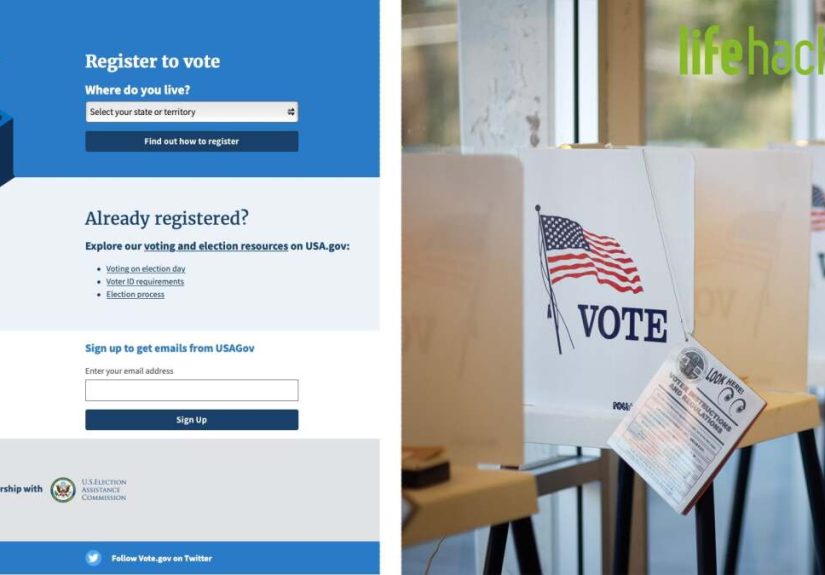
Most states offer a fully online registration system. The safest national starting point is Vote.gov, the official voter registration website of the United States government. After selecting your state or territory, you will be directed to the appropriate election website or given instructions for registering by mail or in person. USAGov and Can I Vote also direct voters to official state and local election resources.
Do not assume that filling out a form on a website always completes your registration. Texas, for example, allows most first-time applicants to enter their information online, but the resulting application generally must be printed, signed, and returned to the county election office. Certain Texans can register electronically while completing an eligible driver’s license or state identification transaction.
North Dakota is the major exception to the registration process because it does not require voter registration. Eligible North Dakota residents must instead satisfy the state’s identification and residency rules when voting.
One more important distinction: registering online does not mean voting online. Registration places your information on the voter list. Casting a ballot is a separate step completed according to your state’s rules.
Check Your Eligibility Before Starting
Although requirements vary, voters generally must be U.S. citizens, residents of the jurisdiction where they intend to vote, and old enough to vote by the applicable election. Some states allow teenagers to preregister before turning 18. California, for example, permits eligible 16- and 17-year-olds to preregister, while New York also allows preregistration at those ages.
Common eligibility questions
- Citizenship: You must be a U.S. citizen to vote in federal elections. A lawful permanent resident, visa holder, or other noncitizen should not submit a voter registration application unless officially eligible under the rules governing that election.
- Age: You generally must be 18 by Election Day, although preregistration ages differ by state.
- Residency: Register where you legally reside. Some states require that you live in the state, county, or precinct for a specified period before the election.
- Criminal conviction: Voting eligibility after a felony conviction varies substantially. Rights may be retained, restored automatically, restored after completion of a sentence, or restored through an additional process.
- Court orders: State rules may affect people subject to certain court findings concerning mental capacity.
Do not guess when your eligibility is uncertain. Check your state election office or ask a local election official. Federal voting laws protect qualified voters against discrimination, but the detailed eligibility rules are often state-specific.
What You Need to Register to Vote Online
Gathering your information before opening the application can turn a frustrating scavenger hunt into a five-minute task. Online voter registration systems commonly ask for:
- Your full legal name
- Your date of birth
- Your residential address
- A mailing address, if different
- A state driver’s license or identification number
- The last four digits of your Social Security number, when permitted or required
- Your previous name or address if you are updating an existing registration
- Your political party preference, when applicable
- An email address or telephone number, which may be optional
Many online systems compare the information you submit with motor vehicle or state identification records. When the details match, the signature already held by the state may become the signature associated with your voter record. If the information does not match, election officials may review the application or ask for additional documentation. Paper registration options remain available for people who cannot use the online system.
Enter your legal name exactly as it appears on your identification whenever the form instructs you to do so. “Robert” on one record and “Bob” on another may not ruin democracy, but it can create an avoidable administrative detour.
How to Register to Vote Online Step by Step
1. Begin with an official government website
Visit Vote.gov and select your state or territory. You can also begin directly through your secretary of state, state board of elections, or official election agency. Look for a .gov address and confirm that the page uses a secure connection.
Avoid registering through an unfamiliar link received in an unsolicited email, text message, advertisement, or social media post. The U.S. Election Assistance Commission has warned voters about phishing messages that impersonate election agencies. When in doubt, close the message and navigate independently to Vote.gov.
2. Choose the correct transaction
Most portals offer several options:
- Register as a new voter
- Update an existing registration
- Change your address
- Change your legal name
- Change your political party affiliation
- Check your current registration status
Selecting the correct option matters. Submitting a new registration when you only need an address update can create delays or duplicate records that officials must review.
3. Complete the eligibility questions
The application may ask you to affirm that you are a citizen, meet the age and residency requirements, and are otherwise eligible under state law. Read each statement carefully. An online registration form is an official government document, not a personality quiz where clicking randomly eventually reveals which founding father matches your aura.
4. Enter your identifying information
Provide your name, birth date, address, identification number, and other requested information. Do not enter a post office box as your residential address unless your state specifically permits an alternative format. Election officials use your residence to determine your precinct, local districts, and ballot contests.
People without a traditional residential address may still be eligible to register. Rules for voters experiencing homelessness differ, so consult the state or local election office for acceptable location and mailing-address formats. Vote.gov provides dedicated guidance for voters without permanent housing.
5. Review political party options
Some applications ask whether you wish to affiliate with a political party. Party registration can affect participation in primary elections, especially in states with closed or partially closed primaries. It does not restrict your choices in a general election; a registered voter may vote for any candidate appearing on that voter’s general-election ballot.
Party-selection rules and change deadlines vary. Do not wait until primary week to discover that your state required an affiliation change months earlier.
6. Review every field before submitting
Check the spelling of your name, apartment number, ZIP code, birth date, and identification number. Also confirm that you selected the correct county and entered your previous address when requested.
Online forms are convenient, but they cannot always recognize that “742 Oak Street” was supposed to be “724 Oak Street.” A tiny typo can send election mail on an exciting but unhelpful neighborhood tour.
7. Submit the application and save the receipt
After submitting, save the confirmation number, download the receipt, or take a screenshot. The confirmation page may explain whether your application was transmitted electronically or whether you must print, sign, and mail a document.
Do not close the page until you know whether another step is required. A completed online questionnaire is not the same as a completed registration when the state requires a handwritten signature or mailed form.
8. Confirm that your registration was processed
An application confirmation proves that information was submitted; it does not necessarily prove that the voter record has been approved. Use your state’s official voter lookup tool after the processing period or contact your local election office. The Election Assistance Commission recommends confirming your status, particularly if you do not receive an acknowledgment.
Online Voter Registration Deadlines Vary by State
There is no single national registration deadline. Federal law generally prevents states covered by the National Voter Registration Act from setting a federal-election registration deadline more than 30 days before Election Day, but states may choose later deadlines or offer same-day registration. Online, mail, and in-person deadlines can also differ within the same state.
| State example | How the rule illustrates state differences |
|---|---|
| Florida | Online registration is available, and the general registration deadline is typically 29 days before an election. |
| Ohio | Registration or updates are generally due 30 days before the election. For the November 3, 2026 general election, the posted deadline is October 5, 2026. |
| Pennsylvania | Online registration is available. The posted deadline for the November 3, 2026 election is October 19, 2026. |
| Washington | Online and mailed registrations are generally due eight days before Election Day, while eligible voters may register in person through Election Day. |
| Texas | Registration is generally due 30 days before Election Day. A first-time applicant may prepare a form online but usually must print, sign, and return it. |
| North Dakota | The state does not require voter registration, although voters must meet eligibility and identification requirements. |
Submit your application early even when the portal technically remains open until the deadline. Early registration provides time to correct mismatched information, replace missing documents, or respond to a notice from election officials.
How to Update Your Voter Registration
You may need to update your registration after moving, changing your legal name, changing party affiliation, or discovering an error in your voter record. Moving within the same county can change your precinct, school district, city council district, or other local contests. Moving to another state normally requires registering in the new state.
Do not rely on mail forwarding to update your registration automatically. Postal records and voter records are separate systems. Use your state’s official update portal and verify the revised information afterward.
If you are already correctly registered, you generally do not need to register again before every election. Checking your status periodically, however, is smartespecially after a move, long period without voting, or government identification change.
What Happens After You Register?
Election officials review the submitted information and add or update your voter record if the application is valid. Depending on the state, you may receive an email, letter, or voter registration card containing your registered address, precinct, party affiliation, or polling-place information.
A voter registration card is useful confirmation, but Vote.gov explains that voters generally do not need to bring the card to vote. Your state may separately require or request an approved form of voter identification.
Before the election, use the official voter lookup tool to verify:
- Your registration is active
- Your name and address are correct
- Your party affiliation is correct, if applicable
- Your polling place has not changed
- Your sample ballot is available
- Your mail-ballot request or status is correct, when relevant
Special Registration Situations
Military members and Americans living overseas
Uniformed service members, eligible family members, and U.S. citizens living abroad should generally use the Federal Post Card Application through the Federal Voting Assistance Program. The FPCA can register an eligible voter and request an absentee ballot at the same time.
Voters with disabilities
Most states provide online registration, and voters may also register by mail or request assistance from an election office. Vote.gov offers dedicated accessibility guidance, while the Help America Vote Act establishes federal requirements intended to improve access to the voting process.
People concerned about address privacy
Voter registration information is treated differently from the secret ballot. Depending on state law, parts of a voter file may be available for election, governmental, academic, journalistic, or political purposes. A voter file may show participation history, but it does not reveal which candidate a person selected.
Many states operate address-confidentiality programs for survivors of domestic violence, stalking, or other qualifying crimes. People with safety concerns should contact the appropriate confidentiality program before submitting a standard online form because entering a residential address into the ordinary system may expose information that requires special handling.
Common Online Registration Mistakes
- Using a third-party website: Begin with Vote.gov or an official state election site.
- Missing the real deadline: Online, mailed, and in-person applications may have different cutoff dates.
- Leaving a required signature unfinished: Some states require a printed and signed form even after information is entered online.
- Entering an old address: Your residence determines which local contests appear on your ballot.
- Ignoring a name mismatch: Use the legal name requested by the state and update your identification when necessary.
- Assuming submission equals approval: Check the official voter lookup system after processing.
- Waiting until the final evening: Websites, printers, internet connections, and human memory all have a mysterious talent for misbehaving near deadlines.
Conclusion
Learning how to register to vote online is mostly a matter of finding the correct government portal, checking your eligibility, entering accurate information, meeting your state’s deadline, and confirming the final record. The process may take only a few minutes, but those minutes determine whether your name, address, precinct, and primary-election options are ready when voting begins.
Start at Vote.gov, follow the instructions for your state, save your submission receipt, and check your registration status afterward. Democracy may be complicated, but the paperwork does not need to become a bureaucratic boss battle.
Practical Experience: What Online Voter Registration Is Really Like
The most successful online registration experiences usually begin before anyone opens the form. A voter gathers a driver’s license or state ID, confirms the current residential address, and checks the registration deadline. That preparation sounds almost suspiciously responsible, but it prevents most problems.
Consider Maya, a hypothetical college graduate who recently moved from Arizona to Pennsylvania. She initially assumes that forwarding her mail will also move her voter registration. It will not. She visits Pennsylvania’s official election website, selects the option to register or update information, and enters her new address. After submitting the application, she saves the receipt and checks the state lookup tool several days later. Her new record appears, and she can see that her polling place is only a few blocks away.
The important lesson from Maya’s example is that voter registration follows legal residence, not the trail of catalogs and restaurant coupons forwarded by the Postal Service. A move across state lines normally requires a new registration in the new state.
Now imagine Jordan, a first-time voter in Texas. Jordan searches for online voter registration and finds the official state application tool. After entering the required information, Jordan discovers that the process is not finished. The form must be printed, signed, and returned to the county election office. Fortunately, Jordan started three weeks before the deadline instead of three minutes before midnight. The signed form is mailed, and the registration status is later confirmed through the state portal.
Jordan’s experience demonstrates why voters should read the confirmation page rather than treating the “Submit” button like the final scene of a movie. In some jurisdictions, the online system only prepares the application. The handwritten signature and physical delivery remain part of the legal process.
Another common scenario involves a voter who believes registration is permanent under every circumstance. Elena has voted for years, but she recently changed her last name and moved to a different apartment. Her old registration still exists, yet the information no longer matches her current identification and residence. Instead of creating a completely separate application, she uses her state’s update function. She then confirms that both the legal name and apartment number appear correctly.
Finally, imagine Alex in Washington, who misses the online registration deadline. The situation is inconvenient but not necessarily hopeless. Washington permits eligible voters to register in person through Election Day. Alex checks the official state instructions, visits an authorized voting center with the required information, registers, and votes. In a state without same-day registration, the result could be differentwhich is precisely why national advice must always be followed by a state-specific check.
These examples share one practical theme: do not rely on assumptions. Check the official deadline, read the final instructions, retain the confirmation, and verify the voter record. When something looks wrong, contact the local election office early. Election officials can usually explain whether an application is pending, incomplete, duplicated, inactive, or assigned to the wrong jurisdiction.
The online process is designed to reduce paperwork, not eliminate personal responsibility. A careful voter spends a few extra minutes reviewing the application today and avoids an unpleasant surprise at the polls later. That is an excellent return on investmenteven without a coupon code.