Table of Contents >> Show >> Hide
- Quick Guide
- What Is Shag Dance?
- Before You Start: Rhythm, Posture, Shoes
- The Carolina Shag Basic Step (Beginner Breakdown)
- Frame & Connection: How to Feel “Smooth”
- 3 Beginner-Friendly Moves After the Basic
- A Simple Practice Plan (That Actually Works)
- Common Mistakes (and Quick Fixes)
- Music & Tempo: What to Dance To
- Where People Actually Shag
- Beginner FAQs
- Beginner Experiences: What Learning Shag Feels Like (500+ Words)
- Conclusion
If you’ve ever watched a couple glide across a dance floor like they’re on invisible roller skatessmooth, relaxed, and somehow still fastyou’ve probably seen the Carolina Shag.
The good news: you don’t need fancy footwork, a sequined outfit, or a secret handshake to start. You need a beat, a basic step, and the willingness to look slightly awkward for about 12 minutes.
After that? You’ll look like you “just naturally dance,” which is the biggest lie dancers tell (and we tell it lovingly).
What Is Shag Dance?
In the U.S., when most people say “shag dance,” they mean Carolina Shaga smooth partner dance born in the beach communities of North and South Carolina and closely tied to “beach music.”
South Carolina even made the Shag its official state dance (yes, your dance hobby can be government-recognized), and North Carolina adopted shagging as its official popular dance.
A quick heads-up: there are other dances with “shag” in the name (like collegiate shag and St. Louis shag). They’re fun, but the vibe is different.
This article focuses on the Carolina Shag basic step, because it’s what you’ll see most often at beach events, clubs, and shag festivals across the Carolinas.
The signature look is gliding and low-to-the-groundmore “cool breeze” than “jumping bean.”
Think: relaxed upper body, controlled footwork, and a calm, confident connection with your partner.
Before You Start: Rhythm, Posture, Shoes
1) The rhythm you’re aiming for
Carolina Shag is danced in a six-count rhythm that many teachers count as:
“1&2, 3&4, 5–6” (also spoken as “one-and-two, three-and-four, five-six”).
The first two parts feel like quick triple/shuffle actions, then you finish with two slower steps.
2) Posture: calm shoulders, busy feet
Your feet are doing the work. Your upper body is basically the chill friend in the group chat.
Stand tall, soften your knees, and keep your shoulders relaxed. Shag style is smoothno dramatic bouncing.
3) Shoes and floor (a.k.a. Don’t fight physics)
You’ll have more fun in shoes that slide a little (not sticky running shoes). Dance sneakers, leather soles, or anything with a bit of glide helps.
If the floor is grippy, keep your steps smaller and focus on weight changes rather than trying to “skim” the surface.
The Carolina Shag Basic Step (Beginner Breakdown)
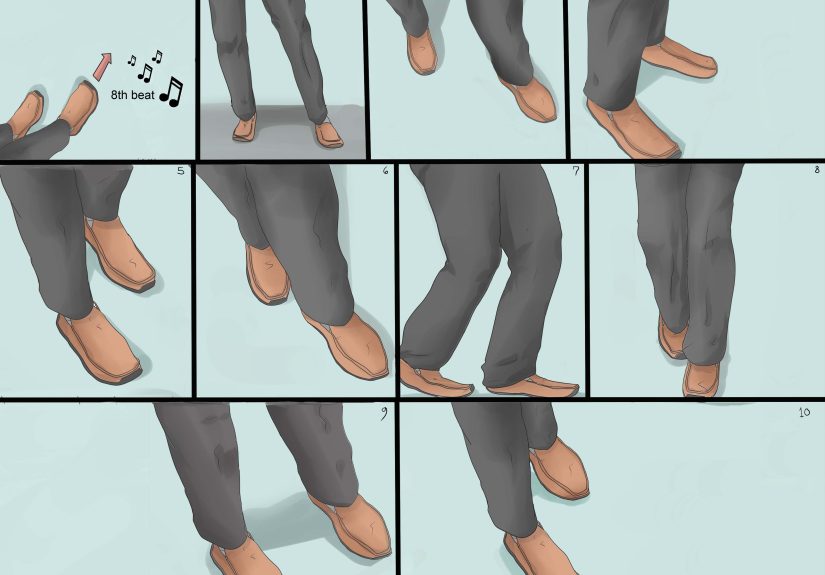
The Carolina Shag basic is famously described as a six-count pattern with eight steps.
Translation: you’ll make a couple “in-between” steps on the “&” counts, which is why it looks so slick when done well.
Step 1: Learn the count first (without traveling)
Before you worry about moving forward and back, practice the timing in place:
say “1-and-2, 3-and-4, 5, 6” out loud and shift weight cleanly each time.
If you can keep the count steady, your feet will stop freelancing.
Step 2: Footwork for the Lead (typical beginner version)
Here’s a common way to learn the lead’s basic footwork (facing your partner, moving in a “slot” line rather than a circle):
- 1: Step left slightly forward
- &: Step right beside left
- 2: Step left slightly back
- 3: Step right back
- &: Step left slightly forward/in place
- 4: Step right back/in place
- 5: Step left back (slow)
- 6: Step right forward (slow)
Notice the vibe: forward for a moment, then you drift back, then settle into the slow steps.
It’s subtlesmall steps are your best friend.
Step 3: Footwork for the Follow
Many beginner classes teach the follow as a mirror version (still in the same slot line):
- 1: Step right slightly forward
- &: Step left beside right
- 2: Step right slightly back
- 3: Step left back
- &: Step right slightly forward/in place
- 4: Step left back/in place
- 5: Step right back (slow)
- 6: Step left forward (slow)
Step 4: Make it look like Shag (the “smooth” checklist)
- Stay grounded: soft knees, minimal bounce
- Keep steps small: shag is tight, not stomp-and-go
- Let the waist down do the talking: upper body stays calm
- Finish the slows: counts 5–6 are not an afterthought
Beginner win condition: you can keep time and switch weight correctly. Fancy styling can come later.
(It will. Your feet will eventually stop arguing with each other.)
Frame & Connection: How to Feel “Smooth”
Open hold: simple, clean, and beginner-friendly
A classic shag position is a single-hand hold: lead’s left hand holding follow’s right, around waist/hip height.
Keep the arms relaxed from the elbow, with a light but clear connectionfirm enough to communicate, soft enough to not feel like a tug-of-war.
Closed or semi-closed position: keep it comfortable
Shag is often danced in a semi-closed or closed position too.
The secret is “close, not clenched.” You want space to move your feet and breathe.
If either partner feels pinned, steps get bigger, timing gets messy, and suddenly you’re doing interpretive running.
Lead-and-follow basics (the non-mystical version)
Leading isn’t yanking. Following isn’t guessing. It’s shared timing plus clear direction.
Start with these simple goals:
- Lead: keep a steady rhythm, give gentle directional cues, and don’t change plans mid-step.
- Follow: keep your own balance, match the rhythm, and respond after you feel the lead (not before).
3 Beginner-Friendly Moves After the Basic
Once the basic step feels steady, you can add simple “ingredients” without turning the dance into a complicated recipe.
Here are three beginner moves that fit naturally with shag timing.
1) The Send-Out (from closed to open)
The lead gently guides the follow away into an open hand hold while both keep the basic.
Think of it as “make space” rather than “push.”
Keep the step size the samenew dancers often travel too far and lose the slot.
2) An Underarm Turn (one clean spin)
On a comfortable moment in the pattern (many dancers like setting it up as the basic finishes),
the lead raises the connected hand to create a simple “window” for the follow to turn under.
The follow keeps stepping on timeturning is just a direction change, not a reason to stop dancing.
3) The Basic Break (a stylish pause without stopping)
Shag dancers often add little breakstiny variations or accentswhile keeping the count steady.
As a beginner, your “break” can be as simple as making counts 5–6 extra smooth and controlled,
then returning to the basic like nothing happened. (Cool people never announce their coolness.)
A Simple Practice Plan (That Actually Works)
Practice #1: 5 minutes of counting + weight shifts
No traveling. Just count “1&2, 3&4, 5–6” and switch weight every step.
This is the boring part that creates the fun part.
Practice #2: 5 minutes of basic footwork (small steps)
Keep your steps under your body. If you feel like you’re lunging, scale it down.
Smooth beats big.
Practice #3: 5 minutes with a partner (connection first)
Hold hands lightly and practice staying in sync.
If you drift off time, don’t panicreset and start again. Shag is social dancing, not a high-speed exam.
Practice #4: Add ONE thing
One turn. One send-out. One break. That’s it.
Beginner dancers often add six things at once and then wonder why everything feels chaotic.
(Because it is. Congratulations, you discovered physics.)
Common Mistakes (and Quick Fixes)
Mistake: Bouncing like it’s a cardio class
Fix: soften knees, keep steps small, and imagine balancing a drink without spilling.
Shag is glide-first.
Mistake: Taking huge steps
Fix: shrink your movement by 30–50%. You’ll instantly look more confident and stay on beat.
Mistake: Forgetting the “&” counts
Fix: clap or tap the rhythm while counting out loud. Those in-between steps are the “secret sauce.”
Mistake: Over-leading (a.k.a. trying to steer a human like a shopping cart)
Fix: lead with timing and gentle direction, not force. If your partner is resisting, something’s offusually the clarity, not their attitude.
Music & Tempo: What to Dance To
Carolina Shag is traditionally danced to beach music with a rhythm-and-blues or soul feel.
For beginners, choose mid-tempo songs where you can clearly hear the beatfast songs are fun later, but early on they can make your feet feel like they’re texting while driving.
Tip: if you can comfortably say “1-and-2, 3-and-4, 5–6” without speed-talking, you’re in a good practice zone.
Where People Actually Shag
Shag is a community dancemeaning it thrives where people gather: beach towns, clubs, shag events, workshops, and local dance nights.
Organizations and events around the Carolinas help keep the music and dance culture active, from social clubs to competitions and festivals.
If you’re traveling near North Myrtle Beach, you’ll find a strong shag culture tied to Ocean Drive (“OD”) and longstanding events.
Even if you’re not, many communities run beginner lessons and social dancesoften the fastest way to learn because you get real-time feedback (and you laugh a lot).
Beginner FAQs
Is shag the same as swing dancing?
They’re related, but not identical. Carolina Shag shares a six-count feel with some swing dances, but the styling is smoother and more slotted, with less bounce and a different overall vibe.
Do I need a partner to learn?
You can learn the basic step solo, and you shouldtiming and footwork get easier that way.
But partner practice teaches the real magic: connection, lead-and-follow, and how to stay together on the beat.
How long until I can dance it “for real”?
Many beginners can social-dance a simple basic in a few practice sessionsespecially if they focus on timing and small steps.
The “effortless” look takes longer, but that’s true of literally everything worth doing (including making pancakes).
Beginner Experiences: What Learning Shag Feels Like (500+ Words)
Here’s the part most tutorials skip: the emotional rollercoaster of learning shag is very real, and it’s also kind of hilarious.
The first time you try the basic step, your brain will insist there are “too many feet involved.” That’s normal.
You’ll count out loud, you’ll lose the “&” counts, and you’ll suddenly understand why dancers love mirrorsbecause mirrors don’t judge (they just quietly reveal the truth).
In a typical first lesson, beginners fall into two camps. Camp A takes steps that are way too big, because it feels saferlike planting a flag on each beat.
Camp B takes steps so tiny they barely move, like they’re trying not to wake a sleeping cat. The funny twist?
Shag rewards the tiny-step people. Once you realize the dance is built on clean weight changes, not big travel, everything gets easier.
Your feet start to “shuffle” instead of stomp, and the timing stops feeling like a math problem.
The next beginner moment is the “Where do I put my arms?” crisis. Your first instinct might be to lock your elbows like you’re carrying a heavy box.
Then someone says “relax your frame,” and you relax so much your arms become cooked spaghetti.
Eventually, you land in the sweet spot: connected but comfortable.
You realize the hand hold isn’t a gripit’s a conversation. A light, clear connection makes the dance feel smooth even before your footwork is perfect.
Practicing with music is where shag becomes addictive. At first, you’ll want slower songs because you can think.
Then one day you try something a little faster, and your body surprises you. The steps get smaller, the rhythm gets clearer, and your brain finally stops narrating every move like a sports commentator:
“And here we see the dancer bravely attempting the &-count… oh no, they have abandoned it entirely.”
That narration fades as the rhythm settles into your muscle memory.
Partner practice adds another layer: learning to stay calm when something goes wrong.
New dancers often freeze if they miss a count, like the dance has been “ruined.”
But shag social dancers do something smarter: they keep moving, smile, and rejoin the basic on the next count.
That’s not cheatingthat’s the skill. Real dance floors are noisy, crowded, and occasionally full of enthusiastic people who have no concept of personal space.
The ability to reset gracefully is what makes you look confident.
The best beginner breakthrough usually happens when you stop chasing “perfect steps” and start chasing “perfect time.”
When you can keep the count steady, everything elseturns, transitions, stylinghas somewhere to land.
Your partner feels safer, your movement looks smoother, and you start enjoying the music instead of surviving it.
That’s when shag becomes what it’s meant to be: a friendly, laid-back, ridiculously fun way to connect with people and a beatno pressure, no performance, just good vibes and better timing.
Conclusion
To learn how to shag dance as a beginner, focus on three things: steady timing, small grounded steps, and comfortable connection.
Nail the six-count rhythm, keep the upper body relaxed, and let the feet do the talking.
Once your basic step feels consistent, add one simple move at a timeand give yourself permission to look a little awkward while you level up.
That “smooth” shag look isn’t magic. It’s practice… with better posture and fewer panic steps.