Table of Contents >> Show >> Hide
- The Short Answer: When a Space Heater Is Actually Cheaper
- What Determines Whether Space Heating Saves Money?
- So, Is a Space Heater Cheaper Than Central Heat?
- What an HVAC Expert Would Tell You to Do Instead
- When Central Heat Is the Better Deal
- Space Heater Safety: The Part You Really Should Not Skip
- The Best Money-Saving Strategy, in Plain English
- Real-World Experiences: What Homeowners Usually Notice
- Conclusion
Winter has a special talent for turning one perfectly normal room into a tiny iceberg with curtains. That is usually when people drag out a space heater, point it at their knees like a personal sun, and ask the big money question: Is a space heater cheaper than central heat?
The honest HVAC-style answer is wonderfully unsatisfying and extremely useful: sometimes. A space heater can absolutely be cheaper when you are heating one small room for a limited amount of time. But if you are trying to warm large parts of the house, run the heater all day, or replace an efficient central system with several portable heaters, the math can turn ugly fast.
In other words, a space heater is not a magical loophole in the laws of utility bills. It is a targeted comfort tool. Use it like a sniper, not like a marching band.
The Short Answer: When a Space Heater Is Actually Cheaper
If you only need warmth in one occupied room for a few hours, a space heater may cost less than running central heat for the whole house. That is especially true during mild cold spells when the rest of the home is already reasonably comfortable.
But if your goal is whole-house comfort, central heat usually wins on practicality and often on cost. Why? Because central systems are designed to heat the home as a system, while most portable electric space heaters are basically 1,500-watt boxes that turn electricity into heat one room at a time. Start multiplying those boxes, and your “cheap little heater” begins acting like a tiny financial gremlin.
An HVAC expert would also tell you something most homeowners overlook: the answer depends heavily on what kind of central heat you have. A gas furnace, an oil boiler, an electric furnace, and a heat pump are not playing the same sport.
What Determines Whether Space Heating Saves Money?
1. Your Central Heating System Type
This is the part that changes everything.
If your home uses an efficient heat pump, a space heater usually is not the budget champion people imagine. Heat pumps move heat instead of generating it the hard way, which makes them far more efficient than electric resistance heat. That matters because most portable electric space heaters are resistance heaters. They are simple and effective, but they are not exactly efficiency superheroes.
If your home has a natural gas furnace, central heat may also be more cost-effective for whole-home heating, especially in colder weather. Fuel costs vary by region, but electricity is often too expensive for portable heaters to compete once you start heating more than one room.
If your home relies on an older, inefficient furnace or boiler, or if one room is chronically colder than the rest, then a space heater can make more financial sense as a short-term patch. It is not the most elegant fix, but neither is wearing a ski jacket in your home office.
2. How Much Space You Need to Heat
A space heater shines when you treat it like zone heating. You are warming the room you are using instead of paying to toast the entire house. The Department of Energy has long supported this idea in the right circumstances: heating one room can be cheaper than heating a full home, especially for short periods.
That does not mean “one space heater for the whole house if you believe in yourself.” It means one room, one person, limited time, and realistic expectations.
3. How Long the Heater Runs
A portable heater used for 30 to 90 minutes while you work at your desk is one thing. A heater running 8 to 12 hours every day is something else entirely. Electric resistance heat is wonderfully direct and brutally honest: the longer it runs, the more you pay.
At the current national residential average electricity price of 17.45 cents per kilowatt-hour, a typical 1,500-watt space heater costs about:
- $0.26 per hour
- $1.05 for 4 hours
- $2.09 for 8 hours
- about $62.82 per month if used 8 hours a day for 30 days
That may not sound terrifying at first. Then someone adds a second heater for the bedroom, a third for the basement, and suddenly the electric bill arrives with the emotional energy of a surprise final exam.
4. Your Local Utility Rates
National averages are useful, but local rates are the boss. In some states, electricity is cheap enough that occasional space heating is no big deal. In others, even modest heater use adds up quickly. This is why two homeowners can have opposite opinions online and both swear they are right.
They may both be right. They are just paying different rates and heating different homes.
5. Your House Itself
Insulation, air sealing, windows, duct layout, ceiling height, and drafts all affect whether central heat or a space heater feels cheaper. If your ducts run through an unconditioned attic or garage, a portion of your heat can disappear before it ever reaches the living room. If one room sits over a garage or near leaky windows, that room may feel cold no matter how high you crank the thermostat.
In those cases, the real villain may not be the heating system. It may be the house quietly leaking comfort like a giant, expensive colander.
So, Is a Space Heater Cheaper Than Central Heat?
Yes, if:
- you are heating one small room,
- you use it for a few hours,
- the rest of the home can stay cooler, and
- you lower the central thermostat instead of running both at full blast.
No, if:
- you are trying to heat multiple rooms,
- you leave it running all day and night,
- your central system is already efficient, especially a heat pump, or
- you think three portable heaters are somehow a clever substitute for a real HVAC strategy.
A recent homeowner-facing HVAC breakdown from Better Homes & Gardens puts the comparison in a practical way: heating a whole house may run roughly $3 to $5 a day, while one space heater for several hours may cost around $1 to $1.50 a day. That sounds like a win for the space heater until you remember that one heater does not replace whole-house heating. The minute you need two or three of them, the math stops being cute.
What an HVAC Expert Would Tell You to Do Instead
Use Zone Heating Intelligently
If you work from home in one room all day, warm that room. Lower the central thermostat a bit and use the space heater only where you are sitting. This is the sweet spot where portable heat can save money and improve comfort.
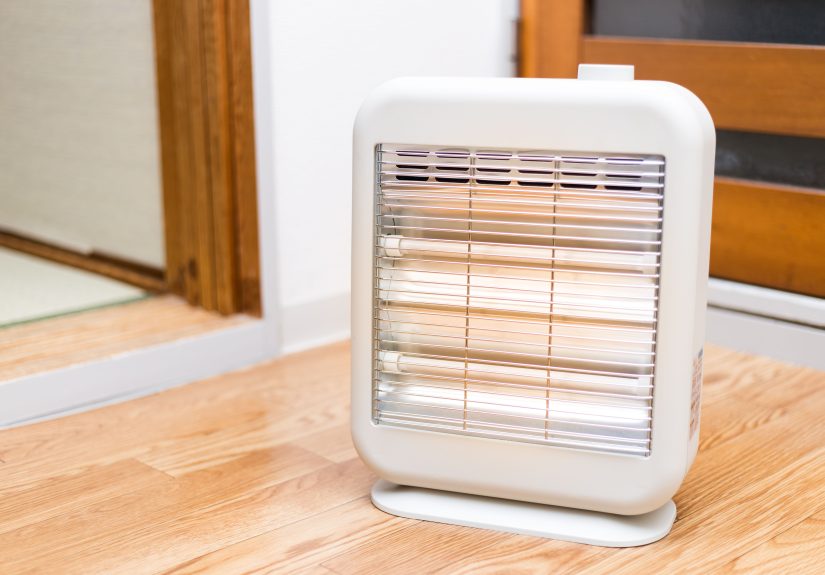
Radiant heaters are especially useful when you are staying in one place for a short period. They warm people and nearby objects directly instead of spending all their energy trying to make every cubic inch of air in the room feel loved.
Do Not Ignore Thermostat Strategy
The Department of Energy says you can save up to 10% a year on heating and cooling by turning the thermostat back 7 to 10 degrees Fahrenheit for 8 hours a day. It also recommends keeping winter settings around 68 to 70 degrees Fahrenheit while awake, then lowering the temperature when you are asleep or away.
Translation: before buying a second space heater, make sure your thermostat habits are not sabotaging you in broad daylight.
Fix the Cold Room Problem at the Source
If one room is always freezing, a space heater might be a bandage, not a cure. An HVAC pro would check for:
- leaky windows or poor insulation,
- imbalanced airflow,
- dirty filters or blocked registers,
- undersized or damaged ductwork,
- an oversized system that short-cycles, or
- an aging furnace or boiler that has lost efficiency.
Sometimes the cheapest long-term move is not more portable heat. It is air sealing, duct repair, insulation, or a system upgrade.
Consider a Ductless Mini-Split for Chronic Problem Areas
If you consistently need supplemental heat in an addition, garage conversion, attic room, or over-the-garage bedroom, a ductless mini-split heat pump may be the grown-up answer. It costs more up front than a space heater, but it can provide efficient zone heating and cooling with far lower operating costs than portable electric resistance heaters.
That is the difference between solving a problem and hosting it.
When Central Heat Is the Better Deal
Central heat is usually the smarter move when:
- the weather is seriously cold,
- more than one or two rooms need heating,
- you have kids, pets, or safety concerns,
- your home uses a heat pump, or
- your current furnace is relatively efficient and properly maintained.
Modern central furnaces can achieve very high efficiency ratings, and properly sized high-efficiency systems can cut fuel waste dramatically compared with older models. If your system is ancient, however, replacement may be worth evaluating. New HVAC installation is not cheap, but neither is feeding a power-hungry workaround forever.
Space Heater Safety: The Part You Really Should Not Skip
Here comes the serious section. Space heaters can be useful, but they are also one of those household devices that can go from “cozy” to “call the fire department” with alarming speed if used carelessly.
According to the Department of Energy and U.S. safety agencies, your safest playbook looks like this:
- Keep the heater at least 3 feet away from curtains, bedding, furniture, papers, and clothing.
- Plug electric space heaters directly into a wall outlet, not a power strip or extension cord.
- Turn the heater off when sleeping or leaving the room.
- Choose a unit with tip-over protection, overheat shutoff, and a thermostat.
- Never use an unvented combustion heater indoors.
- Do not drape laundry, towels, or “just this one sock” over the heater.
NFPA research has found that space heaters are involved in about one-third of home heating equipment fires and account for the majority of associated deaths. So yes, they can save money in some situations. They can also ruin your month if used recklessly. Savings should not come with smoke damage.
The Best Money-Saving Strategy, in Plain English
If you want the HVAC expert version without the jargon, here it is:
- Use central heat for whole-house comfort.
- Use one space heater only for targeted warmth in one occupied room.
- Lower the central thermostat modestly when using zone heat.
- Do not try to replace an efficient heat pump with portable heaters.
- Fix drafts, insulation gaps, and airflow problems before buying more gadgets.
- Prioritize safety every single time.
That is the real answer. It is less dramatic than “space heaters are always cheaper” and much more useful than “just crank the thermostat and hope for the best.”
Real-World Experiences: What Homeowners Usually Notice
In real homes, the experience tends to follow a familiar pattern. The person working from a home office all day often loves a space heater because it delivers immediate comfort without overheating the kitchen, hallway, guest room, and every other unused square foot. For that homeowner, the heater feels like a smart hack. The room gets cozy faster, the thermostat stays lower, and the difference on the electric bill may be modest enough to feel worth it. Comfort improves, arguments over the thermostat cool down, and nobody has to pretend the entire house needs to feel like a tropical resort in January.
Then there is the opposite experience: the homeowner who starts with one space heater and ends up buying three more. One goes in the bedroom, one in the basement, one in the den, and suddenly the “cheap solution” becomes a scattered heating strategy with cords, outlets, and a rising electric bill. These households often discover that portable heat is great for a spot, but not great as a pieced-together replacement for central HVAC. The home may still feel uneven, with one room warm, one room chilly, and one room somehow still auditioning for a documentary about arctic survival.
Families with efficient heat pumps often notice something else: the space heater does not really beat the existing system on cost. What it does provide is personal comfort. Someone who runs cold may enjoy extra warmth in a reading nook or office, but the heat pump remains the workhorse doing the heavy lifting more efficiently in the background. In these homes, the space heater is less of a money saver and more of a comfort accessory.
Older homes tell a different story. Drafty windows, thin insulation, and cold floors can make central heat feel like it is constantly losing a race. Homeowners in these houses often report that a space heater helps, but only temporarily. Once they seal leaks, insulate the attic, rebalance ducts, or replace an aging furnace, the entire house feels better and the need for portable heaters drops. That is usually the moment the lightbulb goes on: the real problem was not just the heat source. It was the building envelope.
Another common experience comes from people with one stubbornly cold room over a garage or at the far end of the duct run. In that case, a space heater can feel like a lifesaver, especially during the morning and evening. But over time, many homeowners realize that a ductless mini-split or an HVAC adjustment would deliver better comfort with fewer safety worries and less daily fuss. Portable heaters are easy to buy; long-term comfort usually takes a smarter fix.
So what do real-world experiences teach us? Mostly this: a space heater can be a brilliant small solution, a terrible whole-house plan, or a temporary stand-in while you fix the actual issue. The cheapest heat is not always the hottest gadget. Very often, it is the combination of smart thermostat habits, better insulation, efficient equipment, and using supplemental heat only where it truly makes sense.
Conclusion
Is running a space heater cheaper than central heat? Sometimes, yes, but only in a narrow and practical lane. If you are warming one room for a few hours and turning down the central thermostat, a space heater can save money. If you are trying to heat several rooms, run heaters all day, or substitute them for an efficient heat pump or well-functioning furnace, central heat is usually the better call.
The smartest move is not choosing sides in a heater cage match. It is matching the tool to the situation. Use central heat for the house, use a space heater for targeted comfort, and fix the home performance issues that are quietly eating your budget in the first place.