Table of Contents >> Show >> Hide
- Why Kitchen Linens Matter More Than People Give Them Credit For
- What “Wild Turkey” Looks Like in Fabric Form
- Choosing the Right Linens for a Wild Turkey Kitchen
- How to Style the Look Without Going Full Gobble-Core
- Care Tips So Your Linens Stay Pretty and Useful
- Who This Look Is Perfect For
- How to Build a Wild Turkey Linen Set on Any Budget
- Final Thoughts: Let the Bird Inspire, Not Take Over
- Experience Notes: Living With Kitchen Linens, Wild Turkey Edition
There are two ways to do turkey-themed kitchen linens. The first is the obvious route: a flock of cartoon birds marching across a dish towel like they own the place. The second, and far more stylish route, is what I call the Wild Turkey Edition: kitchen linens inspired by the real bird’s rich bronze-green feathers, crisp barred wings, rusty tail tips, woodland texture, and unapologetically dramatic attitude. In other words, less “kindergarten Thanksgiving craft,” more “rustic-chic host who definitely owns a favorite pie plate.”
If you love seasonal decorating but do not want your kitchen to look like a craft store exploded in November, this approach hits the sweet spot. It blends function with personality. It respects the fact that kitchen linens are workhorses first and pretty faces second. And it uses the wild turkey as design inspiration in the best possible way: through color, fabric, pattern, and layering.
Done right, a wild turkey linen story can carry your space from early fall through Thanksgiving and even into winter entertaining. Think absorbent cotton towels, lint-free linen pieces for glassware, soft cloth napkins, textured runners, and a palette built from bark brown, wheat, olive, rust, cream, and flashes of coppery sheen. The vibe is grounded, useful, and just a little showy. Much like the bird itself, honestly.
Why Kitchen Linens Matter More Than People Give Them Credit For
Kitchen linens are one of the fastest ways to change the personality of a kitchen without repainting cabinets, replacing hardware, or making financial decisions that require deep breathing. A new set of towels or napkins can shift the room from plain everyday utility to cozy seasonal charm in under five minutes. That is a very high return on investment for a piece of fabric that also wipes counters and rescues hot casserole dishes.
The best kitchen linens also do real work. Cotton towels are popular because they are absorbent, durable, and easy to wash. Waffle weaves are great for everyday drying, while thicker cotton towels can handle spills and heavier cleanup. Linen towels earn their reputation because they are breathable, quick to dry, and especially helpful for polishing glassware with less lint. Cloth napkins and table linens add polish to everyday meals while holding up for repeated use, which makes them both practical and more elevated than a stack of disposable paper squares pretending to be festive.
That is the secret sauce of this whole look: style that earns its keep. A turkey-themed kitchen towel that cannot dry a plate is just wall art with delusions of grandeur.
What “Wild Turkey” Looks Like in Fabric Form
A real wild turkey is much more beautiful than the average novelty print gives it credit for. Its plumage reads dark from a distance, but up close it carries iridescent bronze and green tones. The wings show bold barring in light and dark bands. The tail feathers are tipped in lighter shades that can look rusty, buff, or cream. The head and neck bring muted flashes of red, blue, and gray.
Translate that into kitchen linens, and suddenly you have a much richer design direction than plain orange pumpkins. A wild turkey kitchen decor palette can include:
1. Earthy base colors
Start with brown, oat, mushroom, stone, cream, olive, and charcoal. These anchor the look and keep it from becoming costume-y.
2. Feather-inspired accents
Layer in bronze, copper, muted gold, deep forest green, and rust. These shades mimic the bird’s sheen without screaming, “I purchased every fall item on the shelf.”
3. Natural texture
Choose slubbed cotton, stonewashed linen, waffle weaves, jacquards, or thickly woven napkins. Texture is what makes the theme feel collected rather than printed on demand at 2 a.m.
4. Subtle motifs
Feathers, woodland botanicals, acorns, wheat stems, plaid, stripe, and block print all work beautifully. You can use an actual turkey illustration, but it is best when balanced with solids or quiet coordinating patterns.
Choosing the Right Linens for a Wild Turkey Kitchen
Dish Towels: The Everyday MVP
If you are building this theme from scratch, begin with dish towels. They are affordable, visible, and endlessly useful. Look for a mix of:
Cotton waffle towels for drying dishes and handling daily kitchen chaos. They absorb well and often dry faster than bulkier options.
Flour sack towels for lighter jobs, bread proofing, produce drying, and general “I need a towel but also want it to look cute draped over the oven handle” duties.
Linen or linen-blend towels for polishing glasses, styling open shelving, or elevating your holiday prep game. They bring a slightly more refined texture to the mix.
For the wild turkey look, choose one hero towel with a turkey, feather, or woodland print, then pair it with two quieter coordinates. A stripe in rust and cream, a deep olive waffle towel, and one natural linen piece can create a layered set that looks designed instead of accidental.
Napkins: The Fastest Way to Upgrade a Table
Linen napkins and cotton napkins are the easiest entry point for seasonal entertaining. They instantly make even a weeknight meal feel more intentional. For this theme, go with deep moss, tobacco, rust, natural flax, or a muted plaid. If you want turkey imagery, embroidered corners or a single printed set can work beautifully. You do not need six napkins with giant gobblers staring into everyone’s soul while they eat mashed potatoes.
Cloth napkins also play nicely with rustic fall styling because they bring softness and visible texture to the table. Roll them with twine, tuck in a sprig of rosemary, or thread them through simple rings made of wood, brass, or woven rattan.
Table Runners and Tablecloths: The Mood Setters
A runner is often the smartest move for this aesthetic. It creates a strong seasonal moment without covering the entire table. Choose a linen or cotton runner in a warm neutral or textured jacquard. Feather motifs, harvest plaids, subtle embroidery, or woven stripes all fit the brief.
If you prefer a full fall table linens look, keep the tablecloth understated and let napkins or accessories do the talking. A casual tablecloth should have enough drop to feel intentional but not so much that guests spend dinner wrestling fabric around their knees. For easy dining, a modest drop usually looks relaxed and practical.
Aprons and Utility Linens
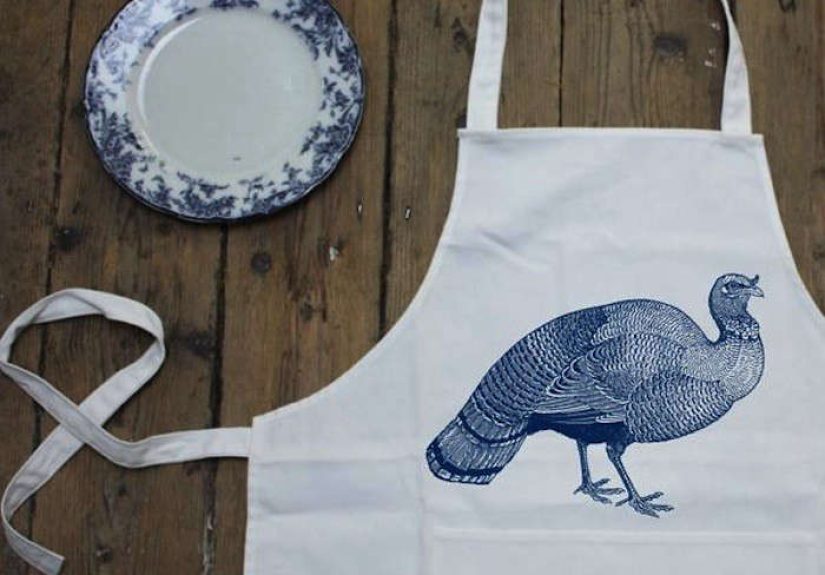
Do not forget the working side of the kitchen. A handsome apron in olive, rust, or ticking stripe adds to the theme while actually saving your shirt during pie season. Pot holders, bread basket liners, and cloth placemats can echo the same palette. The goal is cohesion, not matching everything so perfectly that your kitchen starts to resemble a catalog spread nobody is allowed to touch.
How to Style the Look Without Going Full Gobble-Core
The trick to a memorable theme is restraint. A wild turkey-inspired kitchen should nod to the bird, the season, and the natural world without looking like a taxidermy convention sponsored by a craft aisle.
Keep one focal point
Use one strong motif, such as a printed towel, embroidered napkin set, or runner with feather details. Let solids and textures support it.
Mix patterns carefully
Stripes, plaids, and botanical prints all work with turkey-inspired pieces. Just keep the scale varied. If one fabric is busy, let the others breathe.
Use a natural centerpiece
Mini pumpkins, pears, branches, gourds, wheat, seed heads, or a bowl of walnuts all complement the linen story. Rustic tables look best when they feel gathered from nature, not assembled by committee.
Balance rustic and polished
Pair rougher textures with something refined, such as ironed napkins, polished glassware, or brass flatware. This keeps the look from drifting into “cabin, but make it chaotic.”
Care Tips So Your Linens Stay Pretty and Useful
The best seasonal textiles are the ones that survive actual use. That means gravy, berry stains, butter fingerprints, and the occasional mystery splash nobody claims. A few smart care habits will help your turkey-themed dish towels and table linens last longer.
Wash towels separately when possible
Towels can snag on zippers and rougher items, and overloading the machine makes everything less clean. Giving them their own load helps preserve texture and absorbency.
Go easy on detergent and skip fabric softener
Too much detergent can leave residue, and fabric softener can reduce absorbency. That is a tragic plot twist for a towel.
Check the care label by material
Cotton is generally forgiving and easy to clean. Linen deserves a gentler touch, especially if you want to avoid unnecessary shrinkage and fiber damage. Delicate or vintage-style table linens often do best with air-drying.
Wash table linens soon after use
The longer stains sit, the more stubborn they become. Holiday meals are delicious, but cranberry sauce has a memory like an elephant.
Store by season, but do not bury them
Fold neatly, keep sets together, and store clean linens completely dry. A beautiful runner does not become more charming after spending eleven months smelling faintly like a forgotten closet.
Who This Look Is Perfect For
The Kitchen Linens, Wild Turkey Edition approach works especially well for people who love autumn, host holiday meals, or want a kitchen that feels warm and lived-in without becoming cluttered. It suits farmhouse kitchens, traditional homes, transitional spaces, and even modern interiors that need a little seasonal softness.
It also works for shoppers who want their décor to feel smarter and more layered. Rather than buying a pile of novelty items that only make sense for nine days in November, you can invest in textiles that function across a longer stretch of the year. A bronze-striped towel, a flax linen runner, or a moss-green napkin set can stay relevant well beyond Thanksgiving.
That versatility is what makes this idea so good. You are not just decorating for a holiday. You are building a seasonal textile wardrobe for your kitchen. Yes, I said wardrobe. Your oven handle is dressed better already.
How to Build a Wild Turkey Linen Set on Any Budget
Budget-friendly
Start with three towels, four napkins, and one runner. Choose mostly solids and one patterned statement piece. This gives you the theme without turning your wallet into a seasonal casualty.
Mid-range
Add a second set of napkins, a better-quality linen runner, and a coordinating apron. Mix cotton workhorse pieces with one or two nicer items for entertaining.
Elevated
Invest in high-quality linen napkins, layered runners, specialty towels for glassware, and a tablecloth for larger gatherings. Go subtle on prints and rich on texture. That is where the expensive-looking magic lives.
Final Thoughts: Let the Bird Inspire, Not Take Over
The best version of Kitchen Linens, Wild Turkey Edition is not loud, gimmicky, or overloaded with seasonal clichés. It is thoughtful. It pulls from the real bird’s extraordinary color story, from rustic fall entertaining, and from the practical truth that kitchen textiles should be beautiful and hardworking.
When you combine absorbent cotton, elegant linen, earthy tones, layered texture, and a light touch with motifs, you get a kitchen that feels inviting, grounded, and festive without trying too hard. That is the dream. Or at least it is a lot closer to the dream than a synthetic orange towel with glitter leaves glued to it for no clear reason.
So go ahead: dress the kitchen for the season. Let the towels hang proudly. Let the napkins show off. Let the runner earn compliments. And let the wild turkey be your muse, not your mascot.
Experience Notes: Living With Kitchen Linens, Wild Turkey Edition
The first time I tried a wild turkey-inspired linen setup, I expected it to be charming for exactly one dinner and then quietly annoying forever after. Seasonal décor can be like that. It sweeps in with big promises, looks adorable for 48 hours, and then becomes one more thing to wash, store, and resent. But this one surprised me. The kitchen felt warmer immediately, not because it was dramatically transformed, but because the textiles made the room feel used, cared for, and ready for company.
I started small: one bronze-striped towel, one natural linen towel, and a set of rust-colored napkins. That was it. No giant turkey graphic. No glitter. No decorative nonsense trying to pass itself off as practical. The towels looked good hanging near the sink, and they actually worked. The cotton one handled spills and dish duty, while the linen one became my favorite thing for drying wine glasses without leaving fuzz behind. I felt strangely competent every time I used it, like I had become the kind of person who says things such as “Let’s set the good napkins out,” and means it.
Then came the table runner. I picked a textured neutral one with just enough depth to suggest feathers and bark without literally depicting either. Suddenly the table looked intentional. I added a bowl of pears, a few clipped branches, and some mismatched brass candlesticks. The result felt relaxed and seasonal, but not trapped inside Thanksgiving. That was the breakthrough. The look worked on a random Tuesday with soup just as well as it did for a holiday meal with too many side dishes and one relative asking if there were more rolls.
What I liked most was how forgiving the palette felt. Earthy greens, browns, flax, and rust do not panic when life gets messy. A small splash of coffee, a crumb trail from cornbread, a smear of butter on a napkin cornernone of it looked catastrophic. In fact, the whole room felt more livable because the textiles were chosen for use, not just display. They were allowed to wrinkle a little. They were allowed to soften after washing. They were allowed to become part of the rhythm of the kitchen.
Guests noticed, too, though not in the usual “Oh, how cute, turkey towels” way. The comments were more like, “This feels cozy,” or “Your table looks really beautiful,” which is exactly what you want. The theme registered emotionally before it registered literally. People felt the warmth, texture, and season before they identified the inspiration. That is the sweet spot for themed decorating.
Over time, the experience became less about holiday styling and more about habit. I found myself reaching for cloth napkins more often, using runners for casual dinners, and keeping a better rotation of kitchen towels because I liked how the space looked when it was layered. The wild turkey idea gave me a starting point, but the real payoff was creating a kitchen that felt more welcoming every day. That is why this edition works. It is not just a theme. It is a way of making utility look generous, and making everyday meals feel a little more like occasions.
Note: Prepared for direct web publishing; unnecessary citation placeholders and editor artifacts have been removed.