Table of Contents >> Show >> Hide
- What Kepler Actually Found
- Why the Number 219 Was a Big Deal
- The 10 Near-Earth-Size Candidates Everyone Talked About
- How Scientists Sorted Real Signals From Space Noise
- Kepler’s Bigger Legacy: More Planets Than Stars
- Why This Discovery Still Matters Today
- Examples of What Kepler Taught Us About Planet Variety
- What “Possible New Planets” Really Means
- The Human Side of Exoplanet Discovery
- Experiences Inspired by Kepler’s 219 Possible New Planets
- Conclusion
Space is rude in the best possible way. Just when humanity starts to feel a little special, NASA’s Kepler Space Telescope drops another reminder that the universe is absolutely packed with places we have never seen, never visited, and definitely cannot book on a travel app. In one of the mission’s most exciting catalog releases, scientists announced that Kepler had identified 219 possible new planets, adding yet another giant stack of cosmic “maybe” to the ever-growing pile of worlds beyond our solar system.
Even better, 10 of those candidates were near-Earth size and located in the habitable zone of their starsthe region where temperatures may allow liquid water to exist on a rocky surface. That does not mean NASA found 10 new Earth twins with beachfront property and breathable air. It does mean astronomers got 10 more intriguing reasons to keep staring into the sky like the galaxy owes us answers.
This announcement mattered for more than its headline number. It represented the final and most comprehensive catalog from Kepler’s original field of view, based on the spacecraft’s first four years of observations. In plain English: this was not a random batch of space leftovers. It was a carefully refined census designed to help scientists understand how common different kinds of planets really are.
What Kepler Actually Found
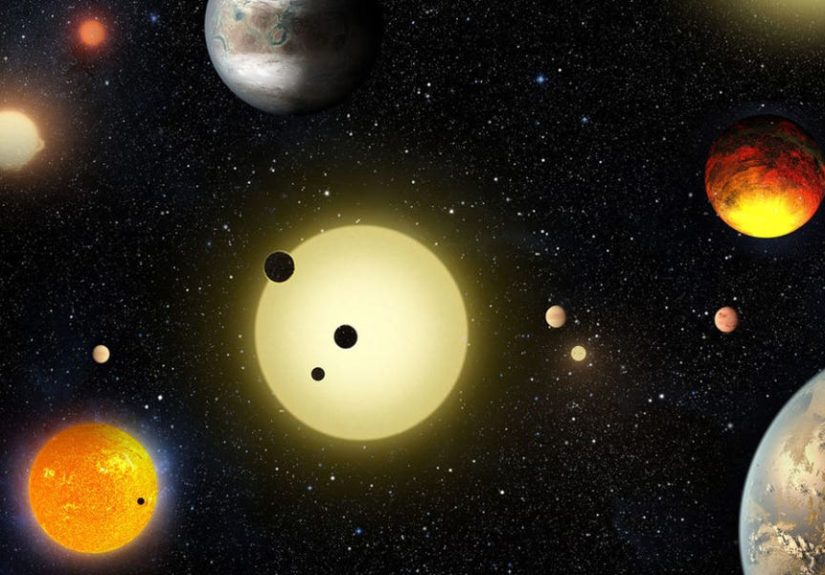
When people hear that NASA “spotted” new planets, it can sound as though Kepler had a giant cosmic zoom lens and snapped a family portrait of alien worlds. That is not how it worked. Kepler used the transit method, which means it looked for tiny dips in a star’s brightness. If a planet crossed in front of its host star from our point of view, the star would dim ever so slightly. Repeat that dip on a regular schedule, and astronomers start paying close attention.
With this technique, Kepler monitored around 150,000 stars during its primary mission in one patch of sky in the constellations Cygnus and Lyra. Over time, that turned into one of the most productive planet-hunting operations in scientific history. By the time the telescope retired in 2018, it had helped reveal that planets are not rare cosmic decorations. They are everywhere.
The 219 newly reported candidates were part of a larger catalog effort that pushed the total number of Kepler planet candidates in that survey field to more than 4,000. Scientists used the release not only to identify new potential worlds but also to improve the reliability of the entire list. That matters because astronomy is not just about finding cool stuff. It is about finding cool stuff and being reasonably sure it is real.
Why the Number 219 Was a Big Deal
The number itself was exciting, but the real scientific value came from how the catalog was built. This release was designed to be uniform and carefully vetted, which made it especially useful for population studies. Instead of celebrating one flashy discovery at a time, astronomers could step back and ask larger questions: How many planets are small and rocky? How many orbit close to their stars? How many may sit in habitable zones? Are solar systems like ours common or weird?
That shift from isolated discovery to statistical understanding is one of Kepler’s greatest achievements. Before Kepler, exoplanets were fascinating headlines. After Kepler, they became a measurable population. The telescope helped transform the search for planets from a series of lucky finds into something closer to a census of the galaxy.
In other words, Kepler did not just hand scientists a few interesting addresses. It helped them understand the layout of the neighborhood.
The 10 Near-Earth-Size Candidates Everyone Talked About
Out of the 219 candidates, the most attention went to the 10 near-Earth-size planets in habitable zones. That phrase sparked obvious excitement because it lands right in the sweet spot for one of humanity’s favorite questions: Are we alone?
Still, it is important to slow the hype train just a little. “Near-Earth size” does not automatically mean “Earth-like.” A planet can be similar in size but wildly different in temperature, atmosphere, chemistry, magnetic field, surface pressure, or general friendliness to life. Likewise, the habitable zone does not guarantee oceans, forests, or tiny extraterrestrials with strong opinions. It simply means the planet gets roughly the right amount of stellar energy for liquid water to be possible under suitable conditions.
That may sound like a scientific disclaimer parade, but it is also what makes the discovery exciting. These worlds are strong targets for future study. They narrow the field. They give astronomers places to investigate using follow-up observations and more advanced telescopes.
Why Size Matters
Size is a huge clue when studying exoplanets. Smaller planets are more likely to be rocky, while larger ones often hold thick envelopes of gas. Kepler’s catalog helped reinforce the idea that planets in our galaxy come in many formsbut not in perfectly smooth proportions.
In fact, Kepler data contributed to a striking finding in exoplanet science: a gap in the size distribution between about 1.5 and 2 times Earth’s radius. Planets tend to cluster into two groups: smaller rocky worlds and larger mini-Neptunes with thick atmospheres. That gap suggests many planets may start with gaseous envelopes, but some lose them over time due to radiation from their stars. The result is a cleaner divide between rocky planets and gas-rich worlds.
For anyone hoping to find a solid planet that is not just a puffed-up gas ball in disguise, that is very good news.
How Scientists Sorted Real Signals From Space Noise
Finding a planet candidate is only the beginning. Stars flicker. Binary stars can mimic planetary signals. Instruments produce noise. Data can be messy in the same way a teenager’s bedroom can be described as “technically containing everything.”
That is why the Kepler team built increasingly sophisticated vetting systems to separate likely planets from false positives and false alarms. By the time of this catalog release, researchers were using a more automated and carefully tested review process to improve consistency across the data set. The goal was not just to find more candidates, but to understand how complete and how trustworthy the search really was.
This is a major reason the 219 candidates mattered. The catalog was valuable because scientists could use it to estimate how many planets might still be hiding below the threshold of easy detection. In astronomy, what you miss can matter almost as much as what you find.
Kepler’s Bigger Legacy: More Planets Than Stars
Kepler launched in 2009 with a bold mission: determine how common Earth-size planets are around Sun-like stars. At the time, fewer than 400 exoplanets had been discovered. That now feels almost quaint, like remembering when a smartphone had one blurry camera and people thought that was impressive.
Kepler changed everything. It showed that planets are a normal outcome of star formation. Not a rare cosmic fluke. Not a once-in-a-galaxy miracle. A standard feature of the universe.
The mission’s data helped scientists conclude that there may be billions of planets in the Milky Way, including many small worlds orbiting in temperature ranges that make them especially interesting for astrobiology. By retirement, Kepler had left behind a legacy of more than 2,600 confirmed planet discoveries, plus thousands of additional candidates for ongoing study.
That is an astonishing return for one space telescope peering at one slice of sky. Imagine checking a single window in a giant apartment complex and discovering the building has way more residents than anyone guessed.
Why This Discovery Still Matters Today
Some science news burns bright and vanishes. The 219-planet announcement did the opposite. Its long-term value lies in how it shaped future research. The catalog gave astronomers better targets, better statistics, and better questions.
It also helped prepare the ground for later missions such as TESS and for powerful follow-up observations by facilities including the James Webb Space Telescope. Kepler was the scout. It pointed at the crowd and said, “There are worlds everywhere.” Later missions could then focus on nearby stars, atmospheric studies, and deeper characterization.
That is how science usually works when it is going well. One mission finds the treasure map. The next mission brings a flashlight. Another mission shows up with a microscope and a very serious budget request.
Examples of What Kepler Taught Us About Planet Variety
The Kepler mission revealed that our solar system is not the universal template many people once assumed. We now know there are hot Jupiters whipping around stars in days, super-Earths that have no equivalent in our own planetary lineup, and compact multi-planet systems where several worlds orbit closer to their star than Mercury does to the Sun.
Kepler also showed that small planets are especially common. That alone was revolutionary. For decades, large planets were easier to detect, so early exoplanet catalogs were biased toward giants. Kepler pushed the field toward smaller, subtler worlds, closer to the kinds of planets people care about when asking whether life might exist elsewhere.
So when NASA announced 219 additional possible planets, it was not just adding dots to a chart. It was sharpening humanity’s view of how planetary systems are built and how ordinaryor extraordinaryEarth may be.
What “Possible New Planets” Really Means
The word possible is doing honest work here. These objects were planet candidates, not instant confirmations. In astronomy, confirmation usually requires additional analysis and, in many cases, follow-up observations. Some candidates later graduate into fully confirmed planets. Others get demoted after closer scrutiny.
But that should not make the announcement sound flimsy. Candidate catalogs are essential. They are how astronomers build the pipeline of future discoveries. They also allow researchers to study patterns in the candidate population, especially when the detection and vetting process is well understood.
Think of it as the difference between a movie trailer and the full film. The trailer is not the final product, but it can still tell you a lot about what is coming.
The Human Side of Exoplanet Discovery
It is easy to turn exoplanet science into a parade of numbers, acronyms, and polished NASA graphics. But behind the 219 candidates were years of work by engineers, mission planners, software specialists, data analysts, and astronomers who spent enormous amounts of time trying to make sure the telescope’s whisper-thin signals meant what they seemed to mean.
Kepler’s success did not come from magic. It came from persistence. The spacecraft survived technical challenges, including reaction wheel failures, and still managed to continue science operations through its extended K2 mission. That resilience turned Kepler into one of NASA’s great comeback stories. Even with setbacks, it kept delivering discoveries that changed how we understand the galaxy.
There is something wonderfully human about that: a mission designed to answer one profound question continuing to produce insight even after the hardware started showing its age. Space exploration has a habit of being expensive, difficult, and occasionally dramatic. Kepler managed all three while quietly rewriting astronomy textbooks.
Experiences Inspired by Kepler’s 219 Possible New Planets
There is a special feeling that comes with reading news like “NASA’s Kepler Space Telescope Spots 219 Possible New Planets.” It is not the same as reading about a new phone launch or a trendy streaming show. It lands differently. The mind does that weird and wonderful thing where it suddenly tries to imagine places it cannot picture. One moment you are sitting at a desk with coffee going cold beside you, and the next you are mentally wandering across worlds that may circle stars hundreds or thousands of light-years away.
For many people, discoveries like this create an experience of scale. Everyday problems do not disappear, but they shrink a little. Emails still need answers. Laundry still exists. The kitchen sink still performs surprise acts of betrayal. Yet hearing that 219 more possible planets have joined the cosmic guest list makes human life feel connected to a much larger story. It is a reminder that our species is young, curious, and still learning where it lives.
Students often experience this kind of news as an invitation. A headline about Kepler can turn a vague interest in science into something more personal: a decision to read about astronomy, to watch NASA briefings, to learn how telescopes work, or to ask why a tiny dip in starlight can reveal an entire planet. That is the quiet power of discoveries like this. They do not just expand catalogs. They expand ambition.
There is also the experience of suspense. Exoplanet announcements are full of careful languagecandidate, possible, likely, habitable zone, near-Earth size. To some readers, that caution may sound less dramatic. To others, it adds to the thrill. Science is not guessing wildly in the dark; it is building confidence step by step. Following that process can feel like being part of a detective story where the clues are buried in light curves and the suspects are entire worlds.
Then there is the emotional tug of possibility. Even if none of the 10 near-Earth-size habitable-zone candidates turn out to be true Earth cousins, the idea still resonates. It invites people to imagine oceans under unfamiliar skies, sunsets tinted by different atmospheres, or silent rocky landscapes circling distant suns. This is not fantasy pretending to be fact. It is imagination standing respectfully beside evidence, waiting for the next telescope, the next data set, and the next breakthrough.
For longtime space fans, Kepler’s discoveries can feel deeply personal. Many people followed the mission from launch to retirement, watching it evolve from bold experiment to historic success. Each catalog release became another chapter in a long-running story about whether planets like ours are rare or common. The 219 candidates were not just numbers on a chart; they were proof that years of patient observation had paid off in a big way.
And perhaps the most meaningful experience of all is humility. Kepler did not find a second Earth we can visit next summer. It did something more profound. It showed that the universe is rich with possibility. It made the night sky feel less empty and more inhabited, even if only by worlds we know through shadows and statistics. That changes how people look up. The stars stop being distant decorations and start feeling like markers above countless unseen systems, each with its own history, physics, and maybe surprises.
That is why a headline about 219 possible new planets continues to matter. It gives people a sense of perspective, wonder, and momentum. It reminds us that exploration is not only about rockets and hardware. It is also about attentionabout choosing to measure, question, and imagine. Kepler did all three brilliantly. And for anyone who has ever stared at the night sky and felt both tiny and inspired, that experience is part of the mission’s legacy too.
Conclusion
NASA’s announcement that the Kepler Space Telescope had spotted 219 possible new planets was more than an exciting science headline. It was a milestone in the larger effort to understand how common planets are, what kinds of worlds fill our galaxy, and where Earth-sized candidates in habitable zones might be hiding. The catalog showcased the power of careful data analysis, long-term observation, and scientific patience.
Most importantly, it reinforced Kepler’s greatest lesson: our galaxy is not short on planets. If anything, it is overflowing with them. Some are strange, some may be rocky, some may be wrapped in thick atmospheres, and a few may live in the narrow conditions where life as we know it could potentially emerge. Kepler did not answer every big question, but it made those questions richer, sharper, and far more exciting to ask.