Table of Contents >> Show >> Hide
- What Makes an English Townhouse So Appealing?
- The Architectural Bones: Why the Structure Matters
- The Decorating Formula: Cozy, Collected, and Clever
- Room-by-Room Ideas for a Perfect English Townhouse
- How to Make a Townhouse Feel Bigger Without Losing Its Soul
- The Role of Antiques, Vintage Finds, and “Things With Stories”
- Common Mistakes to Avoid
- Why the Perfect English Townhouse Still Feels Modern
- What It Feels Like to Live in a Perfect English Townhouse
- Conclusion
There are homes that look nice in photographs, and then there are homes that make you want to cancel your plans, put the kettle on, and dramatically stare out a tall sash window as if you have an inheritance to protect. The perfect English townhouse belongs in the second category. It is elegant without being stiff, layered without being cluttered, and charming without trying so hard that it starts to feel like a theme restaurant. In other words, it has good bones, good manners, and just enough personality to keep things interesting.
In design terms, the ideal English townhouse balances architecture and atmosphere. It respects history, but it is not trapped inside a museum label. It makes room for daily life, modern storage, family routines, and the occasional pile of unopened mail that absolutely does not match the wallpaper. Whether you are dreaming of a London-inspired renovation, styling a narrow urban home, or simply borrowing a few British ideas for an American townhouse, the goal is the same: create a home that feels collected, comfortable, and quietly unforgettable.
What Makes an English Townhouse So Appealing?
The magic starts with proportion. English townhouses are famous for their vertical layout, defined rooms, tall windows, and staircases that do more than move you from one floor to another. They create rhythm. Each landing, doorway, and corridor offers a pause, a view, or a small opportunity for drama. Even when the footprint is compact, the house can feel generous because the eye keeps traveling upward and onward.
Another reason the English townhouse endures is that it rarely depends on one style trick. The best versions mix old and new with confidence. You may see crown moldings and plaster medallions paired with contemporary lighting, antique case goods next to a modern sofa, or a classic fireplace surrounded by art that feels fresh and playful. This balance gives the home depth. It feels lived in, not staged. It suggests that the owner has a point of view, not a shopping addiction with overnight shipping.
The Architectural Bones: Why the Structure Matters
1. Height, light, and flow
A perfect English townhouse works with its architecture rather than fighting it. High ceilings, long sightlines, original trim, stair halls, and tall windows give these homes a sense of grandeur even when individual rooms are modest. Instead of flattening everything into an open-plan box, townhouse design often celebrates separation. A drawing room can feel intimate. A dining room can feel ceremonial. A top-floor bedroom can feel tucked away from the world.
2. Original details deserve respect
If the house has original plasterwork, wood floors, paneling, fireplaces, or period doors, those features should lead the conversation. The goal is not to freeze them in time, but to make them useful again. Restoring architectural detail instantly adds authenticity. Even in a renovation, thoughtful choices like traditional millwork, paneled walls, or a graceful stair runner can echo that historic character without tipping into costume.
3. Vertical living is part of the charm
Townhouses are not ranch homes wearing a British accent. Their beauty depends on levels, transitions, and movement. That means a successful townhouse interior uses the staircase as a design asset, not just a circulation device. A richly painted stair hall, a gallery wall climbing upward, or a runner that softens the steps can turn the vertical layout into one of the home’s strongest visual moments.
The Decorating Formula: Cozy, Collected, and Clever
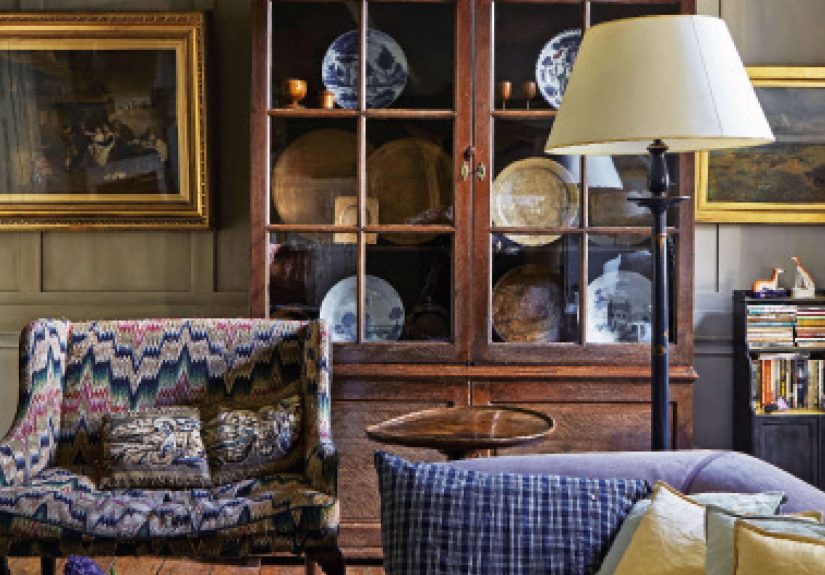
If there is one rule for decorating the perfect English townhouse, it is this: do not make it too polished. English-inspired interiors tend to feel layered and personal. Rooms look as though they evolved over time, even if they were finished last month. That means texture matters. Patina matters. Books matter. Lamps matter. A chair with a little age and a lot of character often works better than something that looks like it was designed by a committee of minimalists who fear joy.
Layering without chaos
A layered room includes upholstery, drapery, rugs, books, artwork, ceramics, and natural materials, but each piece still earns its place. The perfect English townhouse is not cluttered. It is edited. The coffee table may hold stacked books, a small bowl, and fresh flowers, not fifteen random objects performing a group project. The shelves may be full, but they are not screaming.
Pattern with restraint
Florals, stripes, checks, and subtle botanical motifs all feel at home here. The trick is balance. If the sofa wears a print, the walls may stay quieter. If the wallpaper is bold, the upholstery can relax. Great English style often combines pattern in a way that feels accidental but intelligent, like someone who effortlessly throws together the perfect outfit and swears they did not plan it.
Color that feels rich, not loud
The best palettes tend to be moody, earthy, or softly romantic. Think olive, oxblood, navy, peat, mushroom, smoky blue, dusty rose, warm cream, and the occasional confident hit of tangerine or mustard. Color in an English townhouse often works architecturally. It highlights trim, deepens alcoves, warms north-facing rooms, and makes small spaces feel intentional instead of apologetic.
Room-by-Room Ideas for a Perfect English Townhouse
The entry: small, useful, memorable
The entrance should set the tone immediately. A narrow console, a vintage mirror, wall hooks, a slim bench, and a patterned runner can make even a tiny foyer feel welcoming. In a townhouse, the entry must work hard. It needs a place for keys, coats, muddy shoes, and that one umbrella you only remember when it is not raining. Practicality is not the enemy of beauty here. It is part of the design.
The living room: conversation over spectacle
A perfect English townhouse living room is arranged for actual living. Seating should encourage conversation, not just face a television like an obedient audience. Deep sofas, side tables within reach, layered lighting, and a mix of upholstered and wood pieces help the room feel human. Add bookshelves, framed art, a wool or sisal rug, and curtains that skim the floor. If the room feels a little literary, a little sleepy, and a little elegant, you are on the right track.
The kitchen: classic but not precious
The English townhouse kitchen tends to favor timeless cabinetry, often Shaker-inspired, with finishes that age gracefully. Painted cabinets, unlacquered brass, stone counters, freestanding furniture, and open shelves or glazed cupboards can all add warmth. The space should feel functional, but not sterile. A bowl of lemons, a rail for linens, a vintage stool, or a piece of art leaning on the counter keeps the kitchen from looking as though it was designed exclusively for admiring, never cooking.
The dining room: intimate and atmospheric
Dining rooms in English-style homes are often smaller than American entertaining spaces, and that is part of their appeal. They feel cocooning. A darker paint color, a pendant or chandelier, framed artwork, candles, and upholstered dining chairs can make the room feel generous without needing extra square footage. This is a space that should flatter both dinner guests and takeout containers. Design should be inclusive.
The bedroom: restful, layered, slightly romantic
Bedrooms work best when they lean into softness. Upholstered headboards, gathered or tailored drapes, bedside lamps, warm paint, and a mix of crisp and rumpled textiles create that relaxed English look. This is also the perfect place for a reading chair, a small writing desk, or a vintage chest at the foot of the bed. The room should feel private, calm, and mildly irresistible on a rainy afternoon.
The bathroom: traditional details, modern comfort
Bathrooms in the English townhouse style often mix classic fittings with cozy finishing touches. Think polished nickel or aged brass, paneled vanities, stone or checkerboard tile, framed mirrors, soft wall colors, and proper task lighting. Even small bathrooms benefit from one touch of elegance, whether that is a pendant, a skirted sink, a painted cabinet, or a piece of art that says, “Yes, someone cared about this room too.”
How to Make a Townhouse Feel Bigger Without Losing Its Soul
One of the smartest lessons from townhouse design is that small spaces do not need to pretend to be giant lofts. They need to be better organized, better lit, and better proportioned. Use vertical storage. Install shelves where walls are underused. Choose furniture with legs so the room breathes. Use wall lights when table space is limited. Add mirrors strategically, especially across from windows or at the end of a hallway.
Most important, preserve room identity. A smaller home can feel more spacious when each area has a clear job. A reading corner feels purposeful. A stair landing with art feels intentional. A kitchen banquette with hidden storage feels brilliant. The perfect English townhouse does not chase square footage. It chases usefulness, charm, and visual rhythm.
The Role of Antiques, Vintage Finds, and “Things With Stories”
Nothing ruins the English townhouse mood faster than a room full of brand-new furniture that all arrived on the same day and seem to know it. Character comes from variation. Antiques and vintage pieces bring contrast, age, and texture. A mahogany chest, a worn Persian rug, a cane chair, a gilt mirror, or a stack of old books can keep the room from feeling flat.
That does not mean every room must look inherited from an eccentric great-aunt with impeccable taste and strong opinions about silver. It simply means the best interiors feel assembled over time. A modern sofa can sit happily beside an antique side table. A contemporary painting can energize a traditional mantel. The point is not to be historically pure. The point is to create depth.
Common Mistakes to Avoid
Making it too themed
A perfect English townhouse is not a souvenir shop. A few nods to British style are charming. An avalanche of bulldog pillows, fake aristocratic portraits, and Union Jack accessories is another matter entirely. Restraint is your friend.
Ignoring comfort
If a room looks beautiful but no one wants to sit in it, something has gone wrong. English-inspired interiors are stylish, yes, but they are also deeply comfortable. The room should welcome people in, not intimidate them into perching nervously on the edge of a chair.
Forgetting storage
Townhouses can become messy quickly because life happens on multiple levels. Built-ins, baskets, cupboards, hooks, benches, and furniture that hides practical necessities are essential. Good storage is what allows layered rooms to stay charming instead of descending into decorative panic.
Why the Perfect English Townhouse Still Feels Modern
The style lasts because it solves a timeless problem: how to make a house feel elegant and real at the same time. It values craftsmanship, but it also values daily rituals. It appreciates beauty, but it leaves room for personality. And in an era when many homes are designed to photograph well for five seconds and then feel strangely anonymous, the English townhouse still offers something better: atmosphere.
It invites you to slow down and notice things. The line of the stair rail. The glow of a shaded lamp in the evening. The way olive paint makes brass look richer. The way books, flowers, textiles, and old wood create a room that feels finished but never final. That is the secret. The perfect English townhouse is not perfect because it is flawless. It is perfect because it feels alive.
What It Feels Like to Live in a Perfect English Townhouse
Living in a perfect English townhouse is less about square footage and more about the daily theater of the place. Mornings begin with light angling through tall windows, stretching across old floors that creak just enough to remind you the house has seen things. You make coffee in a kitchen that is compact but deeply competent, where every shelf has a purpose and every drawer seems to know where the tea towels belong. There may be painted cabinetry, a row of mugs on a rail, and a slightly dramatic lamp in the corner that serves no practical purpose in daylight but somehow improves your mood anyway.
The staircase becomes part of life in a way most homes never manage. You carry books up, laundry down, flowers from one room to another, and each trip feels oddly cinematic. Landings are not wasted space; they are opportunities. One holds a chair and a reading lamp. Another has a small table with a bowl for keys and a stack of mail that you promise to sort later. The walls rise beside you with art, photographs, or a paint color so rich it makes even your most ordinary errands feel vaguely aristocratic.
The best part of townhouse living is the sequence of rooms. Instead of one giant area trying to do everything at once, each room has a personality. The front room might be bright and social, the place for conversation, afternoon reading, or pretending you are about to write letters by hand. The back room might be quieter, more tucked in, with a garden view or at least a determined potted plant doing its best. Even when the house is narrow, it never feels one-note.
Evenings are where the townhouse really shows off. Lamps come on one by one. Curtains soften the windows. The rooms seem to pull inward and become warmer. Dinner might be simple, but it feels nicer in a dining room with candles and proper shadows. A rainy night becomes an asset rather than an inconvenience. Wind at the windows? Excellent. More atmosphere. The house has a talent for making ordinary weather feel like part of the set design.
Guests notice the mood first. They may compliment the fireplace, the bookshelves, the paint, or the rug, but what they usually mean is that the house feels good. It feels settled. There is a difference between expensive and convincing, and the perfect English townhouse is convincing. It suggests that beauty comes from accumulation, memory, and confidence rather than from buying every matching item on page twelve of a catalog.
Most of all, the experience is deeply personal. You start to understand why layered rooms matter, why worn wood is comforting, why a stair runner can transform a house, and why a home can feel elegant without becoming untouchable. The perfect English townhouse gives daily life a little more character. It turns routines into rituals, corners into destinations, and an ordinary Tuesday into something a touch more romantic. Not bad for a house with stairs.
Conclusion
The perfect English townhouse is not about copying one historical period or filling a home with precious antiques. It is about creating a layered, welcoming interior that honors architecture, uses space intelligently, and feels richer with time. Tall windows, thoughtful storage, classic cabinetry, warm color, vintage character, and deeply comfortable rooms all play a part. When those elements come together, the result is a house that feels elegant without being formal and cozy without being cluttered.
That is why the style continues to resonate. It blends beauty and practicality in a way that suits modern life. It makes room for books, guests, muddy boots, dinner parties, and quiet mornings. It values mood as much as function. And perhaps that is the true secret: the perfect English townhouse does not just look good. It knows how to live well.
Note: This article is publication-ready HTML, based on a synthesis of reputable U.S. design and home publications, with source links intentionally omitted per your request.