Table of Contents >> Show >> Hide
- Before the Lawsuit, There Was Red’s Dream
- Then Came Uniracers, a Game That Looked Like Trouble
- Did Pixar Really Claim to Own Unicycles?
- Why the Lawsuit Still Felt Absurd Anyway
- The Real Casualty Was Uniracers
- What This Says About Pixar, Creativity, and Corporate Fear
- Why the Story Keeps Rolling Back Into Conversation
- Experiences Related to “Pixar Went To Court To Prove They Invented ‘Unicycles’”
- Conclusion
There are lawsuits that feel understandable, lawsuits that feel strategic, and lawsuits that make you stare into the middle distance like a confused golden retriever. Pixar’s clash with Nintendo and DMA Design over Uniracers belongs firmly in that third category. On the surface, it sounded ridiculous: a major animation studio appeared to march into court and argue that it had some kind of special claim over unicycles. Not patents. Not a new engine. Not a spacecraft. A unicycle. One wheel, a seat, some pedals, and apparently enough legal drama to derail a video game.
Of course, the real story is a little more complicated than “Pixar invented the wheel, but lonelier.” Pixar did not literally claim to have invented the real-world unicycle. What it was trying to protect was something copyright law actually recognizes: the specific expressive way an object can be animated and turned into a character. That nuance matters. But it also does not stop the whole episode from feeling wonderfully absurd in hindsight, because the practical result looked an awful lot like this: Pixar sued over animated unicycles, won, and a promising SNES game wound up permanently hobbled.
And that is exactly why this bizarre little legal footnote still fascinates people. It sits at the crossroads of animation history, video game culture, intellectual property law, and one eternal human truth: creative industries can turn almost anything into a fight. If two companies can battle over anthropomorphic unicycles, then honestly, your weird office disagreement about a logo color is doing just fine.
Before the Lawsuit, There Was Red’s Dream
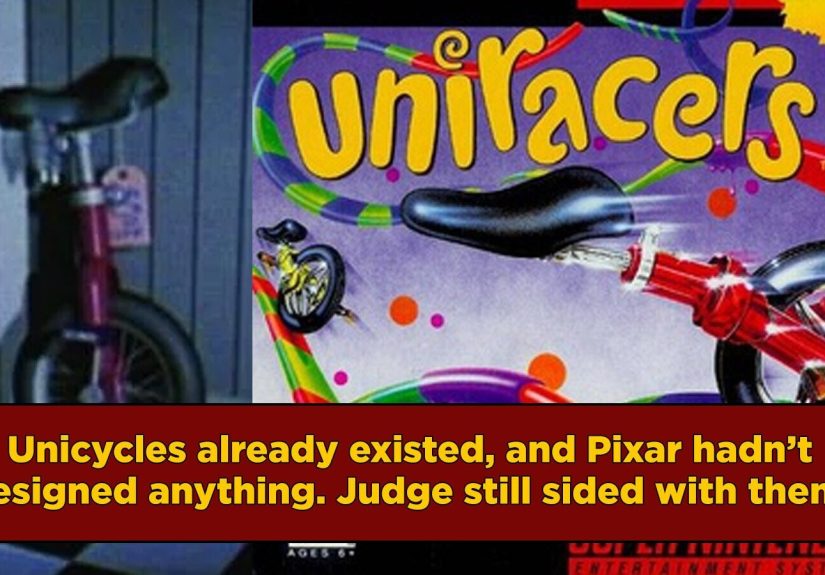
To understand why Pixar got protective, you have to go back to the studio’s pre-Toy Story era. In 1987, Pixar released Red’s Dream, one of its early short films. The short centers on Red, a unicycle sitting sadly in the clearance corner of a bike shop called Eben’s Bikes. In Red’s fantasy, the lonely one-wheeler becomes the star of a circus act, stealing the spotlight from a clown and juggling to roaring applause. Then reality crashes back in with rain, darkness, and a reminder that being a forgotten display item is, frankly, not a glamorous lifestyle.
For early Pixar, this short was more than a moody little story about a circus dreamer with exactly one wheel and several emotional problems. It was a technical showcase. Pixar’s own history notes that Red’s Dream premiered at SIGGRAPH and arrived during a formative period when the studio’s in-house animation tools and RenderMan were coming online. In other words, this was part of Pixar building its identity: emotional object animation, technical innovation, and the now-familiar trick of making audiences care deeply about something that absolutely should not have this much personality.
That last part is important. Pixar was not merely drawing a unicycle. It was animating one as a character. Red had body language. Red had timing. Red had emotional presence. The audience was meant to read intention, sadness, pride, and longing into a piece of circus equipment. That is exactly the kind of artistic transformation that animation studios take seriously, because it turns a plain object into protected creative expression.
Then Came Uniracers, a Game That Looked Like Trouble
Fast-forward to December 1994, when DMA Design and Nintendo released Uniracers for the Super Nintendo. The game was fast, weird, and deliciously confident in its own strangeness. Players raced riderless unicycles across twisting tracks, launching off ramps, pulling tricks, and trying not to fly into failure at cartoon velocity. It was part racer, part stunt game, and part proof that the 1990s would greenlight almost any concept if it moved quickly enough.
That is one reason the game developed such a cult reputation. Uniracers was not just about crossing a finish line; it was about style, momentum, and turning a ludicrous premise into something mechanically sharp. In a decade full of mascot games and genre experiments, it still stood out. A stunt-based racer starring sentient unicycles sounds like a dare someone lost at lunch, yet the final product was lively and inventive.
Unfortunately, Pixar saw something else: similarities between the unicycles in the game and Red from Red’s Dream. Shortly after release, Pixar sued DMA Design, arguing that the game had copied the expressive design and animation of its unicycle character. The dispute was serious enough that production of additional cartridges was halted. Retrospectives and reference pages on the game consistently point to that legal outcome as the reason Uniracers never enjoyed the long commercial life it might otherwise have had.
Did Pixar Really Claim to Own Unicycles?
Not in the literal, hardware-store, “please stop selling one-wheeled bikes” sense. That is where the headline version of this story gets both funnier and less accurate.
U.S. copyright law does not protect ideas, concepts, systems, or methods by themselves. It protects original expression. You cannot own the concept of “a lonely lamp,” which is why someone else can still make a lamp character. But you can protect a specific artistic rendering of that idea. The same logic applies here. Pixar could not own the general notion of a unicycle. Unicycles existed long before the 1990s, long before Pixar, and long before anyone at a corporate legal department began billing by the hour over circus-themed transportation.
That is why the “Pixar invented unicycles” framing is a joke with teeth. It captures how exaggerated the lawsuit looked from the outside, especially to gamers who saw a studio attack a video game over a common object. But the narrower legal argument was likely about the particular way Pixar had anthropomorphized and animated its unicycle character. The seat, frame, posture, and movement could all contribute to a protectable expression if they were distinctive enough.
That distinction may sound dry, but it is the entire ballgame. Ideas are free. Expression is protectable. The problem is that once a lawsuit enters public memory, almost nobody remembers the doctrinal nuance. They remember the headline. And the headline, in this case, was basically: “Pixar lawyered up over a unicycle.”
Why the Lawsuit Still Felt Absurd Anyway
Even with the legal nuance, the case still struck many people as overreach. Why? Because a unicycle is visually simple by nature. There are only so many ways to depict one without accidentally making it look like, well, a unicycle. Add a bit of personality, a little lean into turns, a bit of bounce, and suddenly any artist working from the same basic object may land in similar territory.
That is the uncomfortable thing about copyright fights involving minimal forms or object characters. The simpler the base design, the harder it can be to separate “you copied my expression” from “we both started with the same obvious object.” A dragon has broad design flexibility. A lamp has more flexibility than you would think. A unicycle? You are already operating with fewer creative knobs to turn.
That is also why the lawsuit has endured as a pop-culture oddity. It raises a familiar question in creative law: when does inspiration or coincidence become infringement? If one studio teaches audiences to see personality in an object, does it get a bigger zone of protection around that object later? Pixar clearly believed its character work deserved protection. Many fans and developers believed the company reached too far. Both reactions make sense, which is why the story refuses to die quietly.
The Real Casualty Was Uniracers
For all the legal theory floating around this case, the practical outcome was brutally simple. Uniracers did not get to live the life of a normal successful Nintendo release. Production stopped, the game’s run was limited, and its future narrowed fast. No big second wave. No healthy long-tail shelf life. No easy modern reissue. No franchise growth. Just a strangely excellent game with a legal ankle weight tied around it.
That result gave the story its staying power. If the case had ended in a small settlement or a quiet tweak to character art, it might have faded into trivia-night dust. Instead, it materially changed the fate of the game. Suddenly Uniracers was not just a quirky racer; it was the racer that got kneecapped by a lawsuit over cartoon unicycles. That kind of origin story sticks.
It also made the game feel more mythic. Scarcity and controversy are powerful preservatives in entertainment history. Games that vanish early tend to gain a halo. People begin speaking about them with the breathless energy normally reserved for underground bands, regional snack foods, or television pilots that aired once at 2:00 a.m. and were never seen again.
What This Says About Pixar, Creativity, and Corporate Fear
This episode also reveals something broader about studios in the early digital era. Pixar, years before becoming the polished giant associated with beloved family blockbusters, was still a young company fiercely aware of its technical and artistic breakthroughs. When a studio invests enormous energy into figuring out how to make objects feel alive on screen, it may see copycats everywhere. That does not automatically make the fear justified, but it makes the reaction more understandable.
From Pixar’s point of view, Red’s Dream was not “just a unicycle.” It was a character born from years of experimentation in computer animation. It was part of Pixar’s identity before the world truly knew the company. If another entertainment product seemed to echo that character too closely, the studio was unlikely to shrug and say, “Well, imitation is the sincerest form of flattery.” Corporations rarely say that unless they are doing the imitating.
From the game world’s point of view, though, the whole thing looked like a powerful media company swatting a creative, eccentric game over a shared object design. And because gamers tend to side with the weirder, more endangered artifact, Uniracers became the sympathetic party in the public retelling. That sympathy only grew as the game turned into a cult object.
Why the Story Keeps Rolling Back Into Conversation
The lawsuit continues to resurface because it hits several internet catnip categories at once: forgotten legal drama, retro games, early Pixar history, and a premise so silly it practically writes its own headline. But beyond the comedy, it survives because it asks a real question about creativity in the age of digital media.
How much of originality lives in the object itself, and how much lives in the performance of that object? Pixar helped teach popular audiences that a lamp, a toy, or a unicycle could behave like a character. That achievement was artistically important. At the same time, if the boundaries around that achievement become too broad, later creators can feel fenced off from common visual territory. There is a tension there, and this lawsuit sits right on top of it.
So yes, the headline version is funny. It sounds like Pixar went to court to prove they had invented unicycles. But the deeper truth is more interesting: Pixar was fighting over the expressive soul of an animated object, and the public mostly saw a company trying to copyright a circus prop. In legal language, that is nuance. In cultural memory, that is comedy gold.
Experiences Related to “Pixar Went To Court To Prove They Invented ‘Unicycles’”
Part of what makes this story so memorable is the experience of hearing it for the first time. Most people have the same reaction: they laugh, then they pause, then they ask, “Wait, seriously?” That emotional sequence is the whole magic trick. It begins like a joke and ends like a real lesson about how fragile creative work can be once lawyers enter the room wearing polished shoes and very determined expressions.
For gamers, the experience is especially strange. Imagine being a kid in the 1990s and discovering Uniracers, a game where riderless unicycles scream through loops and half-pipes like they drank six cans of soda and swallowed a stunt manual. It feels original, fast, and slightly unhinged in the best possible way. Then, years later, you learn that this oddball game did not fade naturally. It got clipped by a lawsuit because its unicycles were apparently too expressive for comfort. That turns a fun memory into a tiny pop-culture ghost story.
For animation fans, the experience is different but equally fascinating. Pixar’s early shorts are often celebrated as proof that life can be found in the unlikeliest objects. A lamp can be adorable. Toys can be heartbreaking. A unicycle can be lonely enough to give you a weird lump in your throat. Seen from that angle, the lawsuit becomes a sign of how seriously Pixar took object performance as an art form. The company was not just defending shapes; it was defending animation choices, personality cues, and the secret sauce that turns machinery into emotion.
For legal nerds, meanwhile, this whole episode is basically catnip in a briefcase. It offers a practical, almost cartoonishly clear example of the difference between an idea and a protected expression. Nobody owns “unicycle” as a concept. But somebody may be able to claim rights in a highly specific animated portrayal of a unicycle character. That split is easy to explain in a classroom and maddening to sort out in real life. Which is why cases like this never sound tidy once they escape the courtroom and enter ordinary conversation.
There is also the experience of hindsight. Today, Pixar is a giant. Toy Story changed animation. The studio’s best films are woven into pop culture at a molecular level. Looking back, it feels surreal that one of the company’s strangest legacy stories involves an attack on a little SNES game about stunt-happy unicycles. It is like finding out your elegant, award-winning neighbor once got into a blood feud over a decorative garden hose.
And finally, there is the experience of realizing how often creative history is shaped by side roads, not just masterpieces. We tend to remember finished hits, blockbuster openings, and trophy-winning moments. But culture is also shaped by the projects that got cut short, delayed, buried, or legally strangled. Uniracers survives in memory partly because it became unavailable, partly because it was good, and partly because the reason for its troubles was so bizarre. That combination gives the story traction. It keeps rolling back into conversations, decades later, like a one-wheeled reminder that art, commerce, and law are always racing each otherand sometimes the weirdest thing on the track is the thing everyone remembers.
Conclusion
So, did Pixar really go to court to prove they invented unicycles? Not literally. But in the court of public memory, that is absolutely how the saga reads. The studio was defending what it saw as its original animated expression in Red’s Dream, while gamers and onlookers saw a company coming after a video game for daring to feature a one-wheeled character. The result was a legal win for Pixar, a commercial setback for Uniracers, and one of the oddest copyright stories in entertainment history.
That is why the case still matters. It is funny, yes, but it is also revealing. It shows how thin the line can be between protecting creativity and overreaching in its name. And it proves, once again, that in pop culture, sometimes the strangest stories are the ones with the most staying power. After all, plenty of lawsuits vanish. A lawsuit about animated unicycles? That one rolls on forever.