Table of Contents >> Show >> Hide
- What Is the Sigma Face?
- Why Christian Bale’s Patrick Bateman Became the Face of “Sigma” Culture
- How TikTok Turned One Expression Into a Viral Trend
- The Role of “Literally Me” Characters
- Why the Expression Works So Well as a Meme
- Christian Bale’s Performance: The Accidental Blueprint
- The Funny Side: When Sigma Becomes Satire
- The Complicated Side: Masculinity, Irony, and Misreading the Joke
- Why Old Movies Keep Becoming New TikTok Trends
- How Brands and Creators Learned From the Sigma Face
- Specific Examples of Sigma Face Humor
- Is the Sigma Face Still Relevant?
- Experiences Related to the Sigma Face Trend
- Conclusion
Every generation gets the facial expression it deserves. The 1990s had the “whatever” shrug. The 2000s had the duck face. The 2010s gave us the influencer smize. And then TikTok, being TikTok, looked at Christian Bale’s unsettling little smirk from American Psycho and said, “Yes. This is culture now.”
The result is the Sigma Face: a squinty, puckered, smug, almost cartoonishly self-satisfied expression inspired by Bale’s performance as Patrick Bateman. It is part meme, part parody, part masculinity discourse, and part “why is my younger cousin making this face in the mirror at Thanksgiving?” The trend spread across TikTok, Instagram Reels, YouTube Shorts, meme pages, reaction videos, and comment sections with the kind of speed normally reserved for celebrity breakups and accidentally chaotic cooking hacks.
But the Sigma Face is more than a funny grimace. It is a perfect example of how modern internet culture recycles old film moments, strips them down to a single gesture, and turns them into a global inside joke. Christian Bale did not set out to create a viral TikTok expression in 2000. He was playing a satirical monster in a dark comedy about status, vanity, violence, and emptiness. Two decades later, his character’s face became shorthand for confidence, irony, cringe, “lone wolf” energy, and the deeply online theater of modern masculinity.
What Is the Sigma Face?
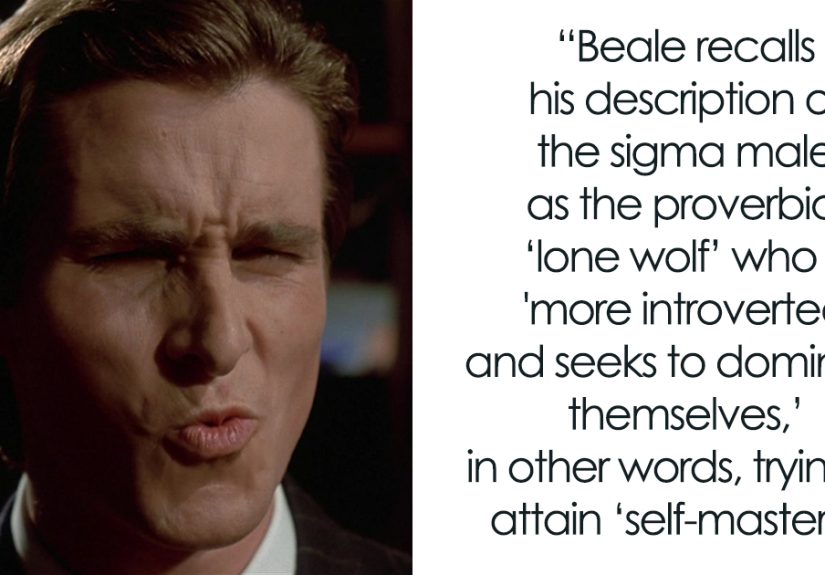
The Sigma Face is a meme expression usually made by narrowing the eyes, pushing the lips forward into a small “ooh” shape, tightening the cheeks, and adding a faint look of smug approval. It is not quite a smile. It is not quite a kissy face. It is more like someone just heard a motivational podcast, bought a black turtleneck, and decided emotions are for people with group chats.
The expression is strongly linked to Christian Bale’s Patrick Bateman in American Psycho, particularly the dinner scene where Bateman reacts after Paul Allen, played by Jared Leto, mistakes him for someone else and insults “Patrick Bateman” without realizing he is speaking to him. Bale’s face briefly twists into an exaggerated expression that looks both amused and wounded. That tiny cinematic moment later became known online as Patrick Bateman’s “ooh face,” then evolved into the Sigma Face.
On TikTok, creators began recreating the expression in short videos, often using it as a punchline. A typical Sigma Face video might show someone being insulted, rejected, underestimated, or placed in an awkward social situation. Instead of reacting normally, the creator freezes, squints, puckers, and becomes the “sigma.” The joke is that the person is too mysterious, too self-controlled, or too hilariously delusional to respond like an ordinary human being.
Why Christian Bale’s Patrick Bateman Became the Face of “Sigma” Culture
Patrick Bateman is one of cinema’s strangest internet mascots. In Mary Harron’s 2000 film American Psycho, adapted from Bret Easton Ellis’s novel, Bateman is a wealthy Wall Street professional obsessed with status, grooming, restaurants, business cards, designer brands, and appearances. He is not written as a hero. He is a satire of 1980s consumerism, male competitiveness, and soulless ambition wrapped in a beautiful suit.
That is exactly why the meme is so funnyand sometimes so misunderstood. The internet often pulls images away from their original meaning. Bateman was intended as a disturbing joke about vanity and moral emptiness, but meme culture discovered that Bale’s intense performance also looks like the visual language of the “grindset” era: cold stare, tailored suit, disciplined routine, no visible vulnerability, and the energy of someone who definitely owns a skincare routine longer than a college syllabus.
The “sigma male” idea describes a supposedly independent, self-reliant man who does not follow the usual social hierarchy. Unlike the “alpha male,” who dominates the room, the sigma male allegedly operates outside the room, possibly in a hoodie, possibly listening to dark synth music, possibly refusing to text back because “mystery builds value.” Online, the concept has been used both seriously and ironically. Some people treat it as self-improvement branding. Others use it to mock exaggerated masculinity clichés.
Patrick Bateman fit the meme template because he looks polished, controlled, and intimidating on the surface. Yet the whole point of American Psycho is that the surface is empty. TikTok users recognized this tension and turned it into comedy. The Sigma Face is funny because it pretends to signal dominance while looking deeply ridiculous. It is confidence cosplay with cheek muscles.
How TikTok Turned One Expression Into a Viral Trend
TikTok thrives on repeatable gestures. A sound, pose, dance, reaction, or facial expression can spread quickly because users do not need a film crew or a complicated script. They just need a phone, decent lighting, and the willingness to look absurd for strangers. The Sigma Face had all the ingredients of a viral format: it was visually recognizable, easy to imitate, connected to a famous movie, and flexible enough to fit many jokes.
Creators used the face in videos about rejection, school drama, gym culture, dating, sibling arguments, awkward compliments, and imaginary power moves. Someone might make the Sigma Face after being told they are “weird.” Another creator might use it when pretending not to care about being left on read. Others exaggerate it so much that the face becomes the entire punchline. The more overdone it gets, the better it works.
One reason the trend caught fire is that it is instantly readable even without context. You do not need to have watched American Psycho to understand the joke. The expression says, “I am processing this insult in the most dramatically self-important way possible.” It is physical comedy built for a vertical screen.
TikTok’s recommendation system also rewards formats that invite participation. When users see a trend and think, “I can do that,” the trend gains momentum. The Sigma Face became a template rather than a single meme. That made it easy for creators across different languages, ages, and niches to adapt it. Fitness accounts used it. Comedy accounts used it. Beauty creators used it. Even people mocking the trend used it, which only made it more visible. The internet loves irony, but it loves ironic repetition even more.
The Role of “Literally Me” Characters
The Sigma Face also belongs to a larger online category sometimes called “literally me” characters. These are fictional men whom certain viewers jokinglyor not so jokinglyclaim to identify with. The list often includes Patrick Bateman, Tyler Durden from Fight Club, the Driver from Drive, Travis Bickle from Taxi Driver, and other isolated, stylish, emotionally damaged men who look cool in screenshots but are not exactly winning at being well-adjusted.
The humor comes from the gap between image and reality. A character may look powerful, detached, and cinematic, but the story often presents him as lonely, unstable, violent, immature, or hollow. The meme audience knows this contradiction. That is why many Sigma Face videos are not celebrating Bateman but poking fun at the kind of person who would.
In this sense, the Sigma Face is both a meme and a warning label. It says, “Here is what happens when cool aesthetics are separated from narrative meaning.” A suit, a stare, and dramatic lighting can make almost anyone look profound for three seconds. But a three-second clip does not carry the moral weight of an entire film. TikTok compresses meaning; good media literacy expands it again.
Why the Expression Works So Well as a Meme
The Sigma Face succeeds because it is visually specific. Many memes rely on captions, but this one lives in the muscles of the face. The narrowed eyes suggest judgment. The puckered lips suggest smug restraint. The slight squint suggests someone trying to look unbothered while absolutely being bothered. It is basically the facial equivalent of typing “I’m fine” with a period.
It also works because it can be sincere, ironic, or both at the same time. Some users make the face because they enjoy the confidence fantasy. Others make it to ridicule that fantasy. Many do both, because modern meme culture rarely stays in one emotional lane. A creator can mock sigma behavior while still enjoying the dramatic aesthetic. That ambiguity is part of the fun.
There is also a performance challenge. The face looks easy until you try it. Too little expression and it does not register. Too much and you look like you smelled expired oat milk. The best Sigma Face recreations find the sweet spot between Bale’s original intensity and TikTok’s cartoonish exaggeration.
Christian Bale’s Performance: The Accidental Blueprint
Christian Bale’s performance in American Psycho is remembered because it balances horror and comedy with surgical precision. Bateman is terrifying, but he is also absurd. His obsession with business cards, restaurant reservations, workout routines, pop music opinions, and personal grooming turns him into a parody of status anxiety. Bale plays him as someone who has studied human behavior but never quite learned how to be human.
That is why the “ooh face” scene has such meme power. It is not random. It comes from a character whose entire life is a performance. Bateman is always managing how others see him. When Paul Allen insults him by mistake, Bateman’s mask flickers. The expression is funny because it reveals both ego and insecurity in one tiny facial explosion.
Most viral faces are memorable because they communicate a complicated feeling quickly. The Sigma Face communicates “I am offended, impressed, superior, insecure, and weirdly pleased” all at once. That emotional traffic jam is exactly what meme culture loves.
The Funny Side: When Sigma Becomes Satire
The best Sigma Face videos understand that the trend is ridiculous. They turn everyday situations into overdramatic power fantasies. A student gets a bad grade and makes the face as if academic probation is part of a master plan. A guy gets rejected and makes the face as if heartbreak is merely fuel for his villain arc. Someone loses a game, burns toast, or gets ignored by a catand suddenly, the Sigma Face appears like a tiny cinematic thunderclap.
This is where the meme shines. It takes the language of dominance and applies it to situations that are completely unserious. The contrast is delicious. Nobody becomes a mysterious lone wolf because the vending machine ate their dollar, but TikTok allows them to pretend for eight seconds. That is the magic of the format: instant drama, zero consequences, maximum squint.
The Complicated Side: Masculinity, Irony, and Misreading the Joke
Of course, the Sigma Face is not just harmless silliness in every context. The broader sigma male trend overlaps with online discussions about masculinity, self-improvement, loneliness, dating frustration, and status anxiety. Some content uses the sigma label playfully. Some uses it to promote discipline and independence. Some slips into resentment, superiority, or contempt for women and social connection.
That is why Patrick Bateman is such a risky mascot. He is not a role model. He is a satire of a man who has confused consumption with identity and control with power. Turning him into an aspirational figure misses the point so hard it needs GPS.
Still, memes are not always endorsements. Many young users understand the Sigma Face as parody. They are not saying, “I want to be Patrick Bateman.” They are saying, “Look how absurd this performance of emotionless superiority is.” The trend becomes a way to laugh at social pressure, male ego, and the awkwardness of pretending not to care.
Why Old Movies Keep Becoming New TikTok Trends
The Sigma Face is part of a larger pattern: old films becoming new internet languages. TikTok constantly revives scenes from movies released before many users were born. A line, gesture, outfit, dance, or reaction can detach from its original context and become a fresh trend. For younger audiences, the meme may arrive before the movie does.
This can be good for cinema. Viral clips often push people to watch or rewatch the original film. Someone who first discovers Christian Bale through a Sigma Face compilation may eventually find American Psycho and realize it is not a simple “cool guy” movie. It is a sharp, uncomfortable satire with a deeply strange sense of humor.
At the same time, meme culture can flatten complex art. A character becomes a face. A scene becomes a template. A satire becomes an aesthetic. The challenge for viewers is to enjoy the joke while remembering that the original story has more to say than the meme format can carry.
How Brands and Creators Learned From the Sigma Face
The Sigma Face trend also offers useful lessons for content creators, social media managers, and anyone trying to understand viral culture. First, a trend does not need to be new to feel fresh. American Psycho was released in 2000, but TikTok gave one expression a second life. The internet does not follow a normal calendar. It follows attention.
Second, the strongest memes are easy to personalize. The Sigma Face can be used for school jokes, dating jokes, gym jokes, office jokes, gaming jokes, and family jokes. A flexible format travels farther than a narrow one.
Third, irony fuels participation. Many people joined the trend because they found it silly, not because they believed in sigma ideology. Mocking a trend can still spread it. In meme culture, criticism and participation often wear the same hoodie.
Specific Examples of Sigma Face Humor
Imagine someone being told, “You are too quiet.” Instead of explaining themselves, they turn to the camera and make the Sigma Face while dramatic music plays. The joke suggests they are not shy; they are secretly operating on a higher plane of mysterious self-mastery. Are they? Probably not. Did they just spend 20 minutes choosing the right filter? Almost certainly.
Another common setup is romantic rejection. The caption might say, “She said I’m like a brother to her.” Cue the Sigma Face. The humor comes from pretending emotional devastation is actually character development. It is the digital equivalent of standing in the rain and calling it “training.”
Gaming content uses the same structure. A player loses badly, then makes the Sigma Face as if the defeat was intentional. School memes do it when a teacher assigns homework. Fitness creators use it after skipping a rest day. Pet owners even apply it to cats, because no animal on Earth has more natural sigma energy than a cat ignoring you after you bought it a $40 bed.
Is the Sigma Face Still Relevant?
Like most TikTok trends, the Sigma Face has gone through cycles: discovery, imitation, overuse, parody, backlash, nostalgia, and recycling. Its peak viral moment may rise and fall, but the expression remains recognizable because it belongs to a larger meme vocabulary. Patrick Bateman edits, sigma jokes, “literally me” content, and exaggerated masculinity satire continue to circulate online.
The face may not dominate feeds forever, but it has already earned a place in meme history. It shows how a single frame from a film can become a shared joke across platforms and languages. It also proves that Christian Bale’s performance had the rare kind of precision that can survive being cropped, remixed, captioned, and imitated by teenagers in bedrooms 20-plus years later.
Experiences Related to the Sigma Face Trend
Anyone who has spent time online during the Sigma Face era has probably experienced the trend in stages. At first, you see the face once and wonder what exactly is happening. Why is this person squinting like they just discovered compound interest? Why does the music sound like someone turned a gym playlist into a villain origin story? Why are the comments full of skull emojis, “bro is sigma,” and people arguing about whether the joke is ironic?
Then, after a few videos, the pattern becomes clear. The Sigma Face is not just a facial expression; it is a reaction format. It usually appears when someone wants to dramatize emotional control. The creator is rejected, insulted, underestimated, or mildly inconvenienced. Instead of reacting with sadness or anger, they make the face. The humor is in the mismatch. Life gives them an awkward moment; they respond like a luxury-brand supervillain preparing a quarterly earnings report.
For viewers, the experience can be oddly bonding. You may not know the creator, the language, or the exact context, but the expression translates instantly. Everyone understands the performance of pretending not to care. Everyone has had a moment where they wanted to look calm while their inner monologue was sprinting through a burning building. The Sigma Face exaggerates that feeling until it becomes funny.
Trying the face yourself is another experience entirely. Many people discover that Christian Bale made it look easier than it is. The eyes must narrow without closing. The lips must pucker without becoming a full duck face. The cheeks must tighten without creating the expression of someone eating a lemon in public. Done correctly, it looks smug and cinematic. Done badly, it looks like you are buffering.
The trend also creates funny offline moments. Friends imitate it during conversations. Siblings use it after winning tiny arguments. Students flash it when they get called on but do not know the answer. Someone at the gym might make the face after lifting a weight that is, in truth, not very heavy. The meme becomes a shared gesture, like air quotes or a dramatic slow clap. It is silly, but that silliness is exactly why it sticks.
There is also a useful lesson hidden under the comedy: online confidence is often performance. The Sigma Face looks controlled, but the joke depends on obvious exaggeration. It reminds us that the “unbothered” persona is usually very bothered, carefully lit, and possibly on its seventh take. TikTok did not simply celebrate Patrick Bateman’s expression; it turned the fantasy of untouchable coolness into something people could laugh at together.
That may be the best way to understand the trend. The Sigma Face is not just about Christian Bale, Patrick Bateman, or TikTok’s appetite for weirdness. It is about how people use humor to process social pressure. Everyone is expected to be confident, attractive, productive, emotionally controlled, and mysterious enough to seem interesting but not so mysterious that they forget to reply to emails. The Sigma Face takes all that pressure and compresses it into one absurd little squint.
And maybe that is why it set TikTok ablaze. It gave users a simple, funny way to parody the performance of being cool. It made an old film scene feel new. It turned a satirical character into a meme about modern identity. Most importantly, it proved that sometimes all it takes to dominate the internet is one actor, one strange expression, and millions of people willing to pucker with purpose.
Conclusion
The Sigma Face began as a brief Christian Bale expression in American Psycho, but TikTok transformed it into a full-blown cultural joke. Its popularity comes from the perfect mix of visual comedy, film nostalgia, masculinity satire, and easy imitation. Whether used sincerely, ironically, or somewhere in the chaotic middle, the trend reveals how quickly internet culture can turn a single cinematic detail into a global reaction language.
At its smartest, the Sigma Face is not a celebration of Patrick Bateman. It is a playful roast of the idea that emotional distance equals power. It lets people laugh at the performance of being unbothered, mysterious, and superior. Christian Bale gave the world a brilliant satirical character. TikTok gave that character a second career as the patron saint of exaggerated smugness. Somewhere, a business card is shaking.