Table of Contents >> Show >> Hide
- What Is a Hypervelocity Projectile?
- Why Fire Railgun Projectiles From Army Howitzers?
- The Strategic Problem: Missiles Are Expensive, Threats Are Multiplying
- From Railgun Dream to “Old Guns, New Rounds”
- How Would a Howitzer Shoot Down an Air Threat?
- Real-World Tests and Demonstrations
- Why the Army Cares About This
- Why the Navy Cares Too
- The Cost-Exchange Advantage
- The Engineering Hurdles Are Very Real
- Will HVP Replace Missiles?
- Why This Matters for Future Warfare
- Specific Example: Base Defense Against Drone and Cruise Missile Raids
- Experience and Practical Lessons From the Railgun Projectile Story
- Conclusion
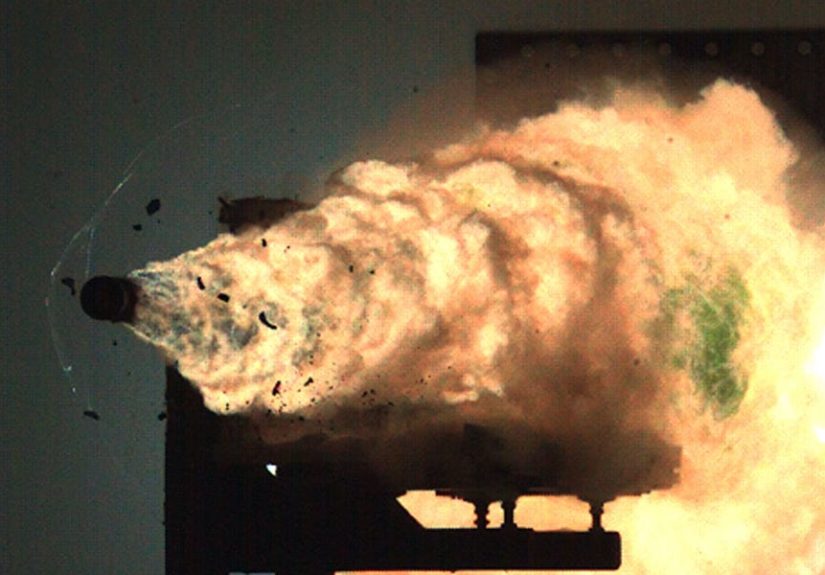
Some military ideas sound as if they escaped from a science-fiction convention, grabbed a Pentagon badge, and wandered into a budget hearing. One of those ideas is this: take a projectile originally designed for the U.S. Navy’s futuristic electromagnetic railgun and fire it from an Army howitzer. No glowing blue cannon. No spaceship soundtrack. Just an old-fashioned artillery tube launching a very modern, very fast, very clever round.
That, in plain English, is the promise behind the Hypervelocity Projectile, often shortened to HVP. The concept is not simply about shooting farther or louder. It is about turning existing gunsespecially 155 mm Army howitzers and Navy 5-inch deck gunsinto cheaper, deeper-magazine weapons for missions that once demanded expensive missiles. If it works at scale, the Pentagon could gain a new way to defend bases, ships, ports, and troops against drones, cruise missiles, aircraft, and other fast-moving threats.
The headline sounds wild, but the logic is surprisingly practical. The U.S. military already owns many conventional guns. It does not own many railguns. So instead of waiting for the perfect electromagnetic super-cannon, defense planners began asking a very Pentagon-flavored question: what if the “magic bullet” matters more than the magic gun?
What Is a Hypervelocity Projectile?
A Hypervelocity Projectile is a compact, low-drag, guided munition designed to travel at extremely high speed and maneuver toward a target. Unlike a traditional artillery shell that mainly follows a ballistic arc after launch, the HVP concept adds guidance, aerodynamic efficiency, and mission flexibility. It can be adapted for several gun systems, including Navy 5-inch guns, Army and Marine Corps 155 mm artillery, and future electromagnetic railguns.
Think of it as a smart, dense, high-speed dart instead of a fat explosive bowling ball. That is not an insult to traditional artillery, which has been doing useful work since before anyone thought “software update required” was a normal sentence. But conventional shells were primarily designed to land on ground targets. HVP aims to move artillery into a broader role: hitting fast, moving, time-sensitive threats in the air and on the surface.
The projectile’s appeal comes from three main features. First, it is fast, which reduces time-to-target and gives defenders more chances to engage an incoming threat. Second, it is guided, which improves accuracy against moving targets. Third, it can be fired from guns that already exist or are easier to deploy than a whole new railgun architecture.
Why Fire Railgun Projectiles From Army Howitzers?
The original dream of the electromagnetic railgun was dramatic. Instead of using chemical propellant, a railgun uses massive electrical energy to accelerate a projectile along rails at hypersonic speed. In theory, that gives a ship or ground platform a long-range, high-speed weapon with no traditional explosive charge. In practice, the Navy’s railgun program ran into serious engineering and integration challenges, including power demands, barrel wear, heat, rate of fire, and shipboard installation issues.
But the projectile itself remained interesting. While the launcher was difficult, the round had potential. Defense officials realized the HVP could be fired from conventional powder guns at lower speed than a railgun launch, but still much faster than many traditional rounds. This opened the door to a less glamorous but more fieldable path: use existing cannons as the launchers and let the advanced projectile do the clever work.
For the Army, that means 155 mm howitzers such as the Paladin family and future artillery-based air defense concepts. For the Navy, it means Mk 45 5-inch deck guns already installed on many destroyers and cruisers. The phrase “railgun projectile from a howitzer” may sound like putting racing tires on a farm truck, but that is partly the point. The Pentagon loves anything that gives old platforms new tricks without replacing the entire fleet.
The Strategic Problem: Missiles Are Expensive, Threats Are Multiplying
The modern battlefield has a math problem, and it is not the fun kind with a calculator and coffee. Cheap drones, cruise missiles, loitering munitions, and rocket salvos can arrive in large numbers. Defending against them with high-end interceptors can work, but it can also burn through magazines and money very quickly.
If a defender fires a million-dollar missile at a drone or low-cost cruise missile, the defender may win the engagement but lose the economic contest. Adversaries understand this. They can try to overwhelm U.S. defenses not only physically, but financially. That is why the Pentagon has been looking for lower-cost interceptors, directed energy weapons, electronic warfare, and gun-based defenses.
HVP fits into that conversation because a guided gun-launched projectile could cost far less than many missile interceptors while allowing more shots from existing magazines. A destroyer’s vertical launch system cells are precious and cannot easily be reloaded at sea. A deck gun or artillery battery, by contrast, can potentially carry and fire many more rounds. In a long fight, magazine depth becomes as important as one-shot performance.
From Railgun Dream to “Old Guns, New Rounds”
The electromagnetic railgun was once promoted as a revolutionary naval weapon. It promised tremendous muzzle energy, long range, and destructive kinetic impact. Yet military technology is not judged by cool videos alone. It must survive logistics, maintenance, integration, training, cost, and the deeply unglamorous question: can it be fielded before the next generation retires?
The railgun struggled to cross that bridge. However, its ammunition inspired a more practical approach. The Pentagon’s Strategic Capabilities Office explored ways to reuse advanced technologies in unexpected combinations. HVP became a perfect example of that mindset. Instead of waiting for a fully mature railgun, the military could test whether the projectile could deliver value from conventional guns already in the inventory.
This is less like inventing a new sword and more like discovering that the blade you forged for a mythical dragon fight also works nicely in a regular scabbard. Not as cinematic, perhaps, but much more useful on Tuesday morning.
How Would a Howitzer Shoot Down an Air Threat?
At first, the idea of a howitzer shooting down a cruise missile sounds backward. Howitzers are usually associated with lobbing shells over hills into ground targets. Air defense is usually the world of radars, missiles, command networks, and fast interceptors. HVP forces those worlds to shake hands.
The basic concept requires more than a gun and a fast round. A sensor must detect and track the incoming target. A fire-control system must calculate an intercept. The projectile must receive mission data before launch, survive the violent acceleration of a cannon shot, then maneuver in flight toward the target. In many cases, off-board sensors may continue tracking the target and help guide the engagement through the broader command-and-control network.
That networked approach is crucial. The howitzer is not magically becoming a lone superhero. It is becoming one shooter inside a larger kill chain. Radars, infrared sensors, battle managers, data links, and command systems all matter. The gun provides the launch energy. The projectile provides speed and guidance. The network provides the eyes and brain. Everyone gets a job; nobody gets to nap.
Real-World Tests and Demonstrations
The idea has moved beyond PowerPoint, which is important because PowerPoint has defeated many brave acquisition programs without firing a shot. In 2018, the destroyer USS Dewey reportedly fired 20 HVP rounds from a standard Mk 45 5-inch gun during the Rim of the Pacific exercise. That test was part of a broader effort to determine whether existing naval guns could gain new usefulness against cruise missiles and large unmanned aircraft.
Another important demonstration came during the Air Force’s Advanced Battle Management System experiments in 2020. In that event, BQM-167 target drones simulated cruise missile threats, and an HVP fired from a Paladin-type 155 mm howitzer was among the systems used in the live-fire scenario. The result helped validate the idea that gun-launched smart projectiles could contribute to air and missile defense, especially when tied into a modern sensor network.
More recently, the Army has been advancing the Multi-Domain Artillery Cannon concept, a 155 mm cannon-based air defense system designed to fire hypervelocity projectiles against drones, cruise missiles, aircraft, and other advanced threats. Reports on Army planning describe a future battery with multiple cannons, radars, battle managers, and a stock of HVP rounds. That suggests the concept is no longer just a clever laboratory trick; it is being shaped into a deployable architecture.
Why the Army Cares About This
The Army faces a dangerous air defense gap. For years, U.S. ground forces fought opponents with limited airpower. That encouraged a focus on counterinsurgency, patrol protection, and precision fires, while short-range air defense received less attention. Modern wars have changed the mood. Drones, cruise missiles, rockets, and loitering munitions are now everywhere, and they are not polite enough to wait for Patriot batteries to be available.
A cannon-based air defense system firing HVPs could help protect fixed and semi-fixed sites such as bases, ports, logistics hubs, command posts, and ammunition depots. It could also support expeditionary forces that need protection without dragging a huge missile-defense footprint everywhere they go. The Army’s interest is not about replacing all missiles. It is about adding another layer: a faster, cheaper, reloadable shooter for threats that do not always justify the most expensive interceptor in the box.
Why the Navy Cares Too
The Navy’s problem is similar but floating. Warships have limited missile cells. Once a destroyer fires its vertical-launch missiles, reloading at sea is difficult. In a high-intensity fight involving drones, anti-ship cruise missiles, and decoys, a ship could face more incoming targets than its expensive interceptors can comfortably handle.
If the 5-inch deck gun can fire guided hypervelocity rounds at airborne threats, the ship gains another defensive layer. It would not eliminate the need for Standard Missiles, ESSM, RAM, close-in weapon systems, electronic warfare, or future lasers. Instead, it would give commanders another option between “use a very expensive missile” and “hope the last-ditch system catches it.” In naval combat, extra options are not clutter; they are survival.
The Cost-Exchange Advantage
The phrase “cost-exchange ratio” may not sound thrilling, but it is one of the most important ideas in modern defense. It asks whether the cost of defending against an attack is sustainable compared with the cost of launching that attack. If an adversary sends a swarm of relatively cheap drones and the defender must respond with expensive interceptors every time, the defender is being economically squeezed.
HVP’s selling point is that it may offer missile-like defensive effects at gun-round prices. Even advanced guided projectiles are not pocket change, but they may be far cheaper than many air-defense missiles. That difference matters when threats arrive in salvos. A defense system that can fire more often at lower cost gives commanders breathing room. It also complicates enemy planning, because attackers can no longer assume every shot forces the United States to spend a fortune.
The Engineering Hurdles Are Very Real
Now for the cold water, served in a regulation Pentagon mug. Firing a smart projectile from a cannon is brutal. The round must survive huge acceleration forces, intense heat, vibration, and pressure. Its electronics, guidance package, control surfaces, and fuzing system must still work after launch. That is like asking a smartphone to survive being hit by a truck, then immediately open a navigation app and steer itself to a moving target.
There are also launcher issues. High-velocity rounds can increase barrel wear. A useful air defense system needs a high rate of fire, rapid reloads, and reliable ammunition handling. It also needs accurate sensors and command systems that can pass targeting information quickly. The projectile cannot be considered in isolation; the entire system must work under stress, in bad weather, amid electronic warfare, and against targets that do not fly in convenient straight lines.
Then comes production. It is one thing to demonstrate a brilliant round at a test range. It is another to produce thousands of them affordably, inspect them, store them, ship them, train crews on them, and integrate them into real units. The history of military technology is filled with prototypes that looked fantastic until logistics entered the chat.
Will HVP Replace Missiles?
No, and anyone saying otherwise is probably trying to sell you a miracle in a very shiny brochure. Hypervelocity projectiles would complement missiles, not replace them. High-end threats will still require high-end interceptors. Long-range ballistic missiles, complex hypersonic weapons, and sophisticated air-breathing threats may demand systems with larger seekers, longer reach, bigger warheads, and more onboard energy.
HVP is best understood as one layer in a layered defense. Against certain drones, cruise missiles, aircraft, surface targets, and ground targets, it may offer an attractive blend of speed, precision, cost, and magazine depth. Against the toughest threats, commanders would still use advanced interceptors. The goal is not to make missiles obsolete. The goal is to stop wasting premium arrows on every flying problem that appears on radar.
Why This Matters for Future Warfare
The Pentagon’s interest in firing railgun projectiles from Army howitzers reflects a larger trend: the U.S. military wants flexible weapons that can perform multiple missions across domains. A howitzer used only for traditional artillery is valuable. A howitzer that can also contribute to air defense, base defense, and possibly maritime strike becomes much more valuable.
This matters because future conflicts may be fast, crowded, and geographically dispersed. Bases may face drone swarms. Ships may face missile salvos. Ground units may need protection without waiting for specialized systems to arrive. A common projectile family that works across Army, Navy, and Marine Corps guns could simplify development and broaden the number of shooters available in a crisis.
The concept also shows a practical side of innovation. The Pentagon is often criticized for chasing expensive, futuristic weapons that never arrive. HVP-from-howitzers is different in spirit. It asks whether existing platforms can be upgraded with smarter ammunition and better networks. That does not make the project easy, but it does make it strategically sensible.
Specific Example: Base Defense Against Drone and Cruise Missile Raids
Imagine a forward operating base receiving warning of an incoming mixed attack: several drones, a few cruise-missile-like threats, and decoys designed to confuse defenders. A traditional response might rely heavily on missile interceptors. Those missiles could defeat the attack, but each shot consumes a limited and costly resource.
Now imagine the base has a cannon-based HVP battery integrated with radars and a battle management system. The network identifies the lower-end drones and some cruise missile threats as suitable for gun-launched interceptors. The cannons fire guided hypervelocity rounds, preserving more expensive missiles for the hardest targets. The base survives, the magazine lasts longer, and the attacker’s cheap-salvo strategy becomes less attractive.
That is the core value proposition. Not one wonder weapon. Not a silver bullet. More like a very fast, very educated bullet that helps the rest of the defense team avoid bankruptcy.
Experience and Practical Lessons From the Railgun Projectile Story
The most useful experience related to this topic is not just technical; it is institutional. The railgun projectile story teaches that military innovation often succeeds sideways. The original railgun launcher may not have become the deployed superweapon many expected, but the ammunition developed for it created a second path. That is a valuable lesson for defense planners, engineers, and taxpayers alike: a program can fail in one form and still produce technology that matters.
One lesson is that platforms and payloads should be separated whenever possible. If the projectile can work from several guns, the military is not trapped waiting for one perfect launcher. A common HVP family gives the Army, Navy, and Marine Corps a chance to share technology while adapting it to different missions. That kind of modularity is not glamorous, but it is powerful. It reduces duplication and increases the odds that at least one pathway reaches the field.
A second lesson is that old equipment can gain new relevance through networking. A howitzer by itself cannot solve the cruise missile problem. But a howitzer connected to modern radars, command systems, and guided ammunition becomes something different. This is the broader lesson of multi-domain operations: the individual weapon matters, but the network around it may matter even more. The shooter that wins is often the one connected to the best information fastest.
A third lesson is that cost matters as much as performance. In peacetime, militaries love talking about maximum range, speed, and accuracy. In wartime, they also care about how many rounds are available on day ten, day thirty, and day ninety. A weapon that is 95 percent as effective at a fraction of the cost may be more valuable than a perfect interceptor that is too expensive to fire often. HVP is attractive because it aims to change the economics of defense, especially against massed threats.
A fourth lesson is humility. High-speed guided artillery is difficult. It requires rugged electronics, precision manufacturing, reliable seekers, strong data links, and barrels that do not wear out too quickly. Every test success should be taken seriously, but so should every integration challenge. The journey from demonstration to fielded unit is long, and the Pentagon has many scars from programs that looked easy in concept art.
Finally, this story shows that the future of warfare may not always arrive as a brand-new machine. Sometimes it arrives as a smarter round fired from an old gun. That is less cinematic than a railgun throwing lightning from a destroyer, but it may be more important. The real revolution is not the glow of the launcher. It is the ability to combine speed, guidance, networks, and affordability into a system soldiers and sailors can actually use.
Conclusion
The Pentagon’s push to fire railgun projectiles from Army howitzers is one of the clearest examples of practical military innovation: salvage the best part of a futuristic idea and make it work with equipment already in service. The Hypervelocity Projectile began as ammunition for an electromagnetic railgun, but its most promising future may be inside conventional 155 mm howitzers and Navy 5-inch guns.
If the concept matures, it could give U.S. forces a cheaper, deeper, faster defensive layer against drones, cruise missiles, aircraft, and other threats. It will not replace missiles, lasers, or electronic warfare. Instead, it may become the hardworking middle child of air and missile defense: not flashy, not always praised, but absolutely essential when the sky gets crowded.
The railgun dream may have dimmed, but the projectile it inspired is still moving fast. Very fast. And this time, it may not need a science-fiction cannon to matter.
Note: This article is written in original language for web publication and is based on publicly reported information from official defense, industry, congressional, and reputable military news sources.