Table of Contents >> Show >> Hide
- What Is the Folk-Inspired Paint Trend, Exactly?
- Why This Trend Is Suddenly Everywhere
- What the Trend Looks Like in Real Homes
- The Colors That Make This Trend Work
- Motifs That Instantly Say “Folk-Inspired”
- How to Try the Trend Without Overdoing It
- Where the Trend Works Best
- Mistakes to Avoid
- Why I’m Fully Obsessed
- A Longer Personal Take: My Experience With This Trend and Why It Feels So Good Right Now
- Conclusion
Some trends arrive quietly. Others kick in the front door wearing embroidered slippers, carrying a paintbrush, and insisting your boring side table deserves tulips. The folk-inspired paint trend is very much the second kind.
If you have noticed hand-painted florals on dressers, playful borders on walls, whimsical murals in kids’ rooms, or charming painted details on cabinets, trim, and even floors, you are not imagining it. This look is having a real moment. And honestly? It makes perfect sense. After years of polished, minimalist interiors that often felt a little too rehearsed, homeowners are leaning toward spaces with warmth, story, and visible personality.
That is exactly what folk-inspired paint brings to the table. Or the wall. Or the bed frame. Or the staircase risers. It borrows from traditional decorative painting and folk art motifs, then gives them a fresh, livable twist for modern homes. The result feels handmade, cheerful, and a little romantic without becoming precious. Think less “museum rope barrier” and more “this house has a pulse.”
Here is why this folk-inspired paint trend is suddenly everywhere, what it actually looks like in real homes, and how to use it without making your living room look like it accidentally wandered into a themed gift shop.
What Is the Folk-Inspired Paint Trend, Exactly?
At its core, this trend is about using paint in a more decorative, personal, and expressive way. Instead of treating paint as simple background color, people are using it as ornament. That can mean hand-painted vines curling across a cabinet, floral motifs on a thrifted armoire, faux paneling on a wall, scalloped borders around a doorway, striped trim, mural-style blooms in a powder room, or playful painted details on furniture that make a once-forgettable piece feel one of a kind.
The “folk-inspired” part comes from old decorative traditions that celebrated everyday beauty. Historically, folk art showed up on practical objects people actually used: chests, cupboards, trays, furniture, walls, and household accessories. The motifs were often nature-based and symbolic, featuring tulips, birds, leaves, fruit, stars, vines, gourds, and other stylized forms. These designs were not about machine-perfect symmetry. They were about charm, rhythm, and the pleasure of a human hand leaving a mark.
Today’s version keeps that spirit but loosens the rules. You do not need a historically accurate technique or a museum-level vocabulary to make it work. You just need color, intention, and the bravery to paint something that does not look like it came flat-packed in a cardboard box.
Why This Trend Is Suddenly Everywhere
People are tired of interiors that feel too perfect
One big reason the folk-inspired paint trend is taking off is that people want homes that feel lived in, not staged for a real estate listing that says “chef’s kitchen” six times. Visible brushstrokes, imperfect lines, and hand-painted details bring back the sense that a real person shaped the room. That softness matters. It makes a space feel warm rather than overly edited.
It adds personality without requiring a full renovation
Not everyone can gut a kitchen or install custom millwork, but many people can paint a thrifted dresser, stencil a border, or add decorative trim details with color. This trend is appealing because it gives a room character fast. It is high-impact, relatively affordable, and often deeply personal.
It pairs beautifully with the rise of vintage and heirloom style
Design right now is full of nostalgia, collected furniture, handmade accents, and interiors that mix old and new. Folk-inspired paint slips neatly into that world. It looks right at home with antiques, flea market finds, traditional silhouettes, cottage-style rooms, modern farmhouse spaces, and maximalist interiors that are not afraid of pattern.
It works across a surprising number of aesthetics
This is not just for cottagecore fans with a suspiciously strong relationship to gingham. Folk-inspired painting can skew rustic, Scandinavian, Americana, bohemian, grandmillennial, modern traditional, or even slightly edgy depending on the palette and placement. A deep blue cabinet with tiny floral details feels different from a coral wall with a freehand vine border, but both speak the same decorative language.
What the Trend Looks Like in Real Homes
1. Painted furniture with folk motifs
This is one of the easiest entry points. Dressers, cabinets, armoires, nightstands, benches, and side tables are being updated with flowers, leaves, scrolling vines, dots, scallops, birds, and decorative borders. Vintage shapes work especially well because the silhouettes already feel storied. A basic IKEA cabinet can also become unexpectedly charming with a few painted details and antique-style hardware.
What makes this look so successful is contrast. A familiar piece becomes memorable once it carries a little visual poetry. Suddenly, storage is not just storage. It is storage with main-character energy.
2. Walls with painterly details
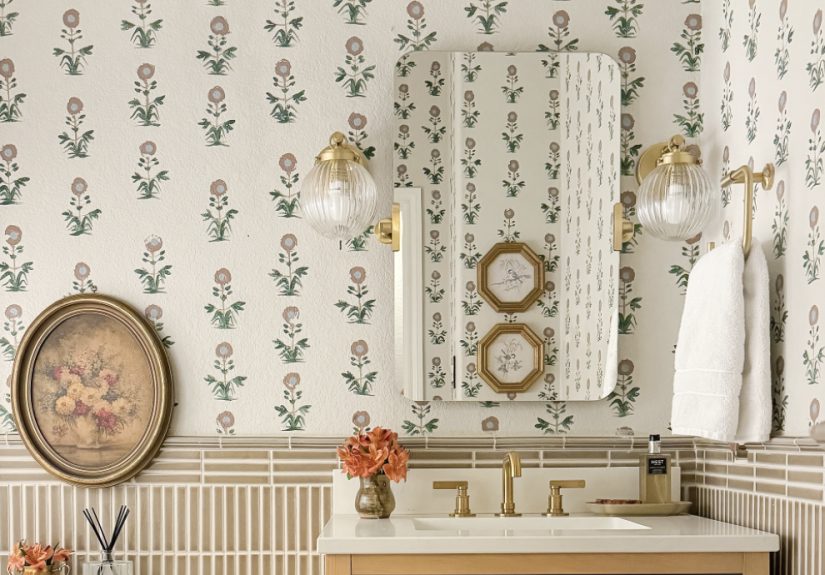
Walls are no longer expected to sit there quietly and be beige. Homeowners are adding hand-painted wallpaper effects, faux panels, folk-style murals, loose florals, and delicate borders that frame the room. These details can make a plain room feel older, richer, and more intentional, even when the architecture itself is fairly basic.
A powder room is especially good for this approach because it is small enough to feel adventurous without becoming overwhelming. Bedrooms, breakfast nooks, mudrooms, and nurseries are also natural fits.
3. Trim, doors, and architectural accents
If you are not ready for a full mural, try painting the supporting cast. Folk-inspired details look fantastic on window trim, door frames, cabinet edges, stair risers, and built-ins. A tiny scalloped edge, a stripe, or a repeating leaf motif can add a lot of charm in a very controlled way.
This is where the trend becomes especially practical. Painting a border around a doorway or dressing up a built-in with color is far less intimidating than tackling an entire wall scene with birds and berries.
4. Floors and stairs with decorative paint
Yes, even floors are fair game. Painted floors and stair risers are becoming more expressive, and folk-inspired patterns are a natural fit. Think simple floral repeats, geometric borders, or rhythmic motifs in heritage colors. Done well, this kind of decorative painting makes a hardworking surface feel joyful instead of purely functional.
The Colors That Make This Trend Work
Color is doing a lot of the heavy lifting here. Folk-inspired paint tends to look best when the palette feels rooted, a little historic, and slightly soulful rather than ultra-neon or aggressively trendy.
Some of the most effective shades include:
- earthy reds and mineral reds
- ochre and mustard tones
- mossy, herbal, and olive greens
- dusty or moody blues
- warm creams and soft beiges
- muted pinks and clay tones
- black or deep brown for contrast and outlining
This palette feels right because it connects to older decorative traditions while still working in contemporary homes. Heritage-inspired collections, vintage-leaning paint palettes, and bold architectural accent colors all support the same mood: layered, collected, and personal.
If you want the easiest formula, pair one grounding base color with two accent shades and a small amount of contrast. For example, a warm cream cabinet with moss green vines and tiny rust-red flowers is very hard to mess up. Nature has already done the color testing for you.
Motifs That Instantly Say “Folk-Inspired”
You do not need to paint a complicated pastoral scene to tap into the trend. Often, the most effective motifs are the simplest.
- Tulips and stylized flowers: sweet, graphic, and timeless
- Trailing vines and leaves: ideal for borders and corners
- Birds: especially charming on furniture and nursery walls
- Berries and fruit: playful without feeling childish
- Stars, dots, and geometric repeats: great for Scandinavian or Americana spins
- Scallops and wavy edges: an easy gateway motif for beginners
- Framed faux panels: elegant, old-world, and surprisingly versatile
Loose, painterly florals are also especially relevant right now. They feel more modern than rigidly symmetrical patterns and give the room movement. The key is to let the design feel hand-drawn. A little wobble is not failure. A little wobble is proof of life.
How to Try the Trend Without Overdoing It
Start with one piece of furniture
A small cabinet, side table, stool, or bench is the best low-risk starting point. You can experiment with motif, color, and finish without committing an entire room to your artistic confidence level.
Choose the right type of paint
Different surfaces need different products. For furniture, acrylic, chalky, milk, and latex paints all have their place. Chalky paint is great if you want an old-world matte finish. Milk paint works beautifully when you want an antiqued or weathered effect. Acrylic paint is useful for smaller accent pieces and detailed work. Latex can work well too, especially with proper prep, primer, and a protective topcoat. Translation: the prettiest project in the world still needs good prep, or it will chip the first time someone looks at it too aggressively.
Use a calm background
Folk-inspired details look best when they have room to breathe. If you are painting motifs on furniture, keep surrounding walls relatively simple. If you are adding a decorative wall border, maybe skip five competing patterns nearby. The goal is charm, not visual mutiny.
Pull inspiration from antiques, not just trends
Some of the best ideas come from old painted cupboards, dower chests, trays, and folk objects rather than trend boards alone. Antique references help the work feel grounded. Even when you modernize the palette, the result tends to feel richer and less gimmicky.
Practice the motif first
Use paper, cardboard, or the back of a moving box before painting the real thing. This is not glamorous advice, but it is the difference between “charming handmade detail” and “why does that flower look concerned?”
Where the Trend Works Best
Entryways: A painted bench, border, or cabinet instantly adds welcome and personality.
Powder rooms: Small room, big payoff. This is where decorative paint can really sing.
Bedrooms: Hand-painted nightstands, headboards, or wall details feel soft and romantic.
Kitchens: A folk-inspired pantry cabinet or painted island detail adds warmth to hardworking spaces.
Kids’ rooms: Whimsy lives here naturally, especially with murals, scallops, stars, and storybook florals.
Dining rooms: Decorative walls and moody heritage colors make the room feel special without relying only on artwork.
Mistakes to Avoid
Going too theme-y
You want folk-inspired, not fake-country restaurant gift shop. Keep at least part of the room grounded with clean shapes, restrained styling, or a modern piece or two.
Ignoring scale
Tiny motifs can disappear on a large armoire, while oversized florals can bully a petite side table. Match the size of the design to the size of the surface.
Using too many colors at once
One reason historic decorative painting looks so elegant is that the palette is often controlled. Three or four thoughtfully chosen colors usually feel stronger than nine random ones fighting for attention.
Skipping protection on furniture
If the piece gets daily use, seal it properly. Folk charm is delightful. Folk charm plus chipped paint where your coffee mug lives every morning is less delightful.
Why I’m Fully Obsessed
What I love most about this folk-inspired paint trend is that it gives people permission to stop treating their homes like fragile showrooms. It invites play. It makes room for memory. It suggests that beauty does not have to be sleek or expensive or perfectly symmetrical to matter. Sometimes a hand-painted vine on a cabinet says more than a thousand dollars of generic decor ever could.
This trend also lands at a moment when so many people are craving homes that feel deeply personal. Not algorithm-pretty. Not copy-and-paste polished. Personal. A room with a painted border, an antique cabinet covered in tiny flowers, or a stair riser with a repeating pattern feels like it belongs to someone specific. That is powerful. And refreshing.
In other words, the trend is not just about paint. It is about intimacy. It is about choosing charm over perfection, story over sameness, and character over caution. And for that reason alone, I hope it sticks around for a very long time.
A Longer Personal Take: My Experience With This Trend and Why It Feels So Good Right Now
The first time I realized I was completely gone for this trend was not in a grand historic house or some impossibly gorgeous designer show home. It was after seeing a very ordinary piece of furniture become magical with paint. It was a cabinet that looked, in its former life, like it existed mainly to hold chargers and mild disappointment. Then someone added a deep blue base, a few freehand flowers, and a border that looked intentionally imperfect. Suddenly, the cabinet had charisma. The cabinet had lore. The cabinet had, frankly, better social skills than a lot of modern furniture.
That is the part of folk-inspired paint I keep coming back to: it transforms the emotional temperature of a room. A hand-painted detail tells you someone cared enough to slow down. Someone touched this. Someone made a choice that was not the most efficient one, but was the most human one. In an era of fast everything, that lands differently.
I also love how forgiving the trend can be. A lot of decorating advice makes people feel like they need expert-level taste, a contractor on speed dial, and unlimited confidence. This trend says, “Actually, try a little vine. Paint a border. Add dots. Breathe.” It is decorative, yes, but it is also approachable. Even when it is polished, it rarely feels intimidating. That is a rare combination in design.
There is also a memory factor here that hits hard. Folk-style details often remind people of something: a grandparent’s painted tray, an old cupboard in a country kitchen, embroidery patterns, storybook illustrations, flea market finds, or the kind of room that looked layered over time instead of assembled in one shopping trip. The trend feels fresh, but it also feels familiar in a way that makes people exhale.
And then there is the sheer joy of it. Not “joy” in the annoying, overused, motivational-poster sense. I mean actual delight. The kind you get when you turn a plain object into something charming. The kind you feel when a small painted detail catches your eye while you walk past it for the tenth time that day. The kind that makes a room feel less like a backdrop and more like a companion.
What I especially appreciate is that the trend can scale with your nerve. If you are bold, you can paint a mural, decorate an armoire, or add folk-style flourishes to trim and stair risers. If you are cautious, you can start with a tray, a stool, or the inside of a cabinet door. Either way, you are moving your space toward something more personal. More collected. More alive.
So yes, I am fully obsessed. Not because the trend is cute, though it absolutely is. Not because it photographs well, though it definitely does. I am obsessed because it makes homes feel like homes again. It celebrates imperfection, memory, craftsmanship, and creativity. It lets paint do more than cover a wall. It lets paint tell a story. And in a decorating world that can sometimes take itself way too seriously, that feels like a very welcome little revolution.
Conclusion
The folk-inspired paint trend is everywhere because it offers what many homes have been missing: individuality, warmth, and visible artistry. Whether you use it on furniture, walls, trim, or floors, this look proves that decorative paint can be more than a finishing touch. It can be the soul of the room. Start small, keep the palette intentional, lean into motifs that feel organic and storied, and let the brushstrokes show. A home with a little hand-painted charm is rarely boring, and right now, that may be the biggest luxury of all.