Table of Contents >> Show >> Hide
- July Jobs Report: The Headline Number That Stole the Show
- Why the July Jobs Report Challenged Recession Fears
- Where the Jobs Were Added
- Unemployment Fell to 3.5%
- Wages Rose, But Inflation Ate Some of the Cake
- What the Jobs Boom Meant for the Federal Reserve
- Was the Economy Really in a Recession?
- What Businesses Could Learn From the July 2022 Jobs Report
- What Workers Could Learn From the Strong Labor Market
- The Bigger Picture: A Recovery With Wrinkles
- Experience-Based Reflections: What the July Jobs Surprise Felt Like in Real Life
- Conclusion: A Jobs Report That Changed the Conversation
The U.S. economy walked into July 2022 with recession rumors buzzing like a lawn mower outside a Sunday nap. Inflation was hot, interest rates were rising, GDP had already shown weakness, and financial headlines were doing their best impression of a thunderstorm siren. Then the jobs report arrived with a giant plate of economic nachos: 528,000 jobs added in July.
For anyone expecting a gloomy labor-market report, the number was not just strong. It was “check the spreadsheet twice” strong. The unemployment rate slipped to 3.5%, returning to its pre-pandemic level. Total nonfarm employment also returned to its February 2020 level, meaning the labor market had clawed back the massive pandemic job losses. That does not mean every household felt rich, relaxed, or ready to buy a yacht named “Soft Landing.” But it did mean one thing clearly: the job market was not acting like an economy in a classic recession.
July Jobs Report: The Headline Number That Stole the Show
The phrase “economy added 528,000 jobs in July” became the headline because it captured the surprise. Economists had expected a much smaller gain, and many businesses were supposedly preparing for slower demand. Instead, employers kept hiring aggressively across a wide range of industries.
The July 2022 jobs report showed that hiring was not limited to one lucky corner of the economy. Leisure and hospitality, professional and business services, health care, government, construction, manufacturing, retail trade, transportation, warehousing, financial activities, and information all contributed to the employment gains. In plain English: this was not just one sector wearing a superhero cape. The hiring strength was broad.
That matters because recessions are usually marked by widespread weakness. If companies across multiple industries are adding workers, paying wages, and trying to fill openings, the economy is sending a more complicated signal than “everyone panic immediately.”
Why the July Jobs Report Challenged Recession Fears
At the time, recession talk was everywhere. Real GDP had contracted in the first half of 2022, inflation was squeezing household budgets, and the Federal Reserve was raising interest rates to cool demand. To many people, the economy felt confusing: jobs were plentiful, but groceries and gas were not exactly whispering sweet discounts into anyone’s ear.
The July payroll number complicated the story. A recession is not officially defined by two quarters of negative GDP alone. The National Bureau of Economic Research looks at a wider set of indicators, including employment, income, industrial production, and sales. In that broader framework, a labor market adding more than half a million jobs in one month does not fit neatly into the usual recession box.
Think of it this way: if the economy were a car, GDP was flashing a warning light, inflation was making weird engine noises, and the Federal Reserve was tapping the brakes. But the labor market was still cruising down the highway with a full tank and a suspiciously upbeat playlist.
Where the Jobs Were Added
Leisure and Hospitality Kept Rebuilding
Leisure and hospitality added 96,000 jobs in July, led by restaurants and drinking places. This was a major sign that the service economy was still recovering from the pandemic shock. Americans were traveling, dining out, attending events, and returning to activities that had been restricted or postponed.
Still, the sector had not fully recovered. Employment in leisure and hospitality remained below its February 2020 level. That detail is important because it shows both strength and unfinished business. The economy was adding jobs quickly, but some industries were still patching the roof after the pandemic storm.
Professional and Business Services Stayed Hot
Professional and business services added 89,000 jobs, with gains in management, engineering, consulting, and scientific research. This category often reflects business confidence because companies hire consultants, managers, engineers, and specialists when they expect work to continue.
Even as some tech companies and startups began tightening belts, the broader professional services category remained strong. The labor market was not simply adding low-wage or temporary roles; it was adding jobs in skilled, high-demand fields as well.
Health Care Continued Its Comeback
Health care added 70,000 jobs in July. Ambulatory health care services, hospitals, and nursing facilities all gained workers. This was not surprising given the long-term demand for medical care and the staffing shortages many health providers had faced.
Health care hiring also tends to be more stable than hiring in more cyclical industries. People do not stop needing doctors, nurses, and clinics because the bond market is having a moody Tuesday. Strong health care employment gave the overall report more durability.
Manufacturing and Construction Joined the Party
Manufacturing added 30,000 jobs, while construction added 32,000. These sectors are closely watched because they are sensitive to interest rates, supply chains, and business investment. Construction, in particular, was facing pressure from higher mortgage rates, which were already cooling the housing market.
Yet employers in these fields were still hiring. That did not mean the rate hikes had no effect. It meant the slowdown had not yet turned into broad labor-market contraction.
Unemployment Fell to 3.5%
The unemployment rate fell to 3.5%, matching the pre-pandemic level. That number carried symbolic weight because it suggested the labor market had completed a remarkable recovery from the early COVID-19 collapse.
In spring 2020, the U.S. labor market suffered a historic shock as millions of jobs disappeared almost overnight. By July 2022, total nonfarm employment had regained its lost ground. That recovery was faster than many analysts expected during the darkest days of the pandemic.
However, the unemployment rate did not tell the whole story. Labor force participation remained below its pre-pandemic level. Some workers had retired early, dealt with health concerns, faced child care challenges, or simply reconsidered work after several years of disruption. So yes, unemployment was low. But no, the labor market was not perfectly healed.
Wages Rose, But Inflation Ate Some of the Cake
Average hourly earnings rose 0.5% in July and were up 5.2% over the previous 12 months. For workers, wage gains were welcome. For employers, they reflected the cost of competing for talent in a tight labor market.
But there was a catch, because economics loves a catch. Inflation was running even hotter than wage growth. That meant many workers were earning more dollars but not necessarily feeling richer at the grocery store, gas station, or rent payment screen.
This is why the July jobs report was both encouraging and complicated. More jobs are good. Higher wages are good. But if prices rise faster than paychecks, households still feel squeezed. It is possible for the labor market to look strong on paper while families feel like their budgets are doing push-ups in a sauna.
What the Jobs Boom Meant for the Federal Reserve
The Federal Reserve had a tricky job in 2022: bring inflation down without crushing the labor market. A huge jobs number made that task harder. Strong hiring suggested the economy had momentum, but it also increased the likelihood that the Fed would continue raising interest rates aggressively.
In normal times, a blowout jobs report is mostly celebrated. In 2022, it came with a side dish of monetary-policy drama. Investors looked at the 528,000 jobs gain and thought, “Great for workers, but maybe not great for rate-hike expectations.”
The Fed wanted demand to cool enough to reduce inflation. A red-hot labor market made that cooling process slower. In other words, the jobs report was good news for employment but not automatically good news for anyone hoping interest-rate hikes would end quickly.
Was the Economy Really in a Recession?
The July jobs report did not erase every weakness in the economy. Real GDP had declined in the first and second quarters of 2022. Consumer sentiment was shaky. Inflation was high. Housing was slowing. Some companies were warning about softer demand.
But recession calls require more than vibes, even very loud vibes wearing a cable-news blazer. Official recession dating considers depth, duration, and diffusion across the economy. Employment is one of the most important indicators. When payrolls are growing rapidly and unemployment is near historic lows, it becomes difficult to argue that the economy is experiencing the kind of broad collapse usually associated with recessions.
The better description for mid-2022 may be “uneven economy.” Some parts were hot, some were cooling, and some were recovering from pandemic distortions. The labor market was strong, inflation was painful, and GDP data was noisy. It was less like a simple recession and more like an economic smoothie made with job growth, supply-chain problems, rate hikes, consumer spending, and a banana nobody remembers adding.
What Businesses Could Learn From the July 2022 Jobs Report
For business owners, the July jobs report offered several lessons. First, demand for workers can stay strong even when economic headlines look gloomy. Companies that stopped recruiting too early risked losing talent to competitors.
Second, wage pressure was not going away overnight. When unemployment is low, workers have more bargaining power. Employers need to compete not only with pay but also with flexibility, training, culture, scheduling, and career paths.
Third, broad hiring does not mean every industry is safe. Some sectors can expand while others contract. A smart business strategy in such an environment requires watching both macroeconomic data and industry-specific signals.
What Workers Could Learn From the Strong Labor Market
For workers, July 2022 was a reminder that timing matters. A tight labor market can create opportunities to switch jobs, negotiate better pay, ask for flexibility, or pursue training in growing fields. Health care, professional services, logistics, construction, and hospitality were all showing demand.
But workers also had to be realistic. Inflation was reducing purchasing power, and higher interest rates could eventually slow hiring. The best move was not panic or overconfidence. It was preparation: update the resume, build skills, reduce unnecessary debt where possible, and keep an eye on industry trends.
The Bigger Picture: A Recovery With Wrinkles
The July 2022 jobs report marked a major milestone in the pandemic recovery. Total payroll employment returned to its pre-pandemic level. Unemployment returned to 3.5%. Employers added jobs across many industries. Those facts were genuinely impressive.
Still, the recovery had wrinkles. Labor force participation remained lower than before the pandemic. Some sectors had not fully recovered. Inflation was eroding real wages. Higher interest rates threatened to slow housing, investment, and consumer spending.
That mix is why the headline “What Recession?” worked so well. It captured the surprise and strength of the labor market, but it also invited a more thoughtful answer. The economy was not recession-free because everything was wonderful. It was recession-resistant because employment remained remarkably strong despite serious headwinds.
Experience-Based Reflections: What the July Jobs Surprise Felt Like in Real Life
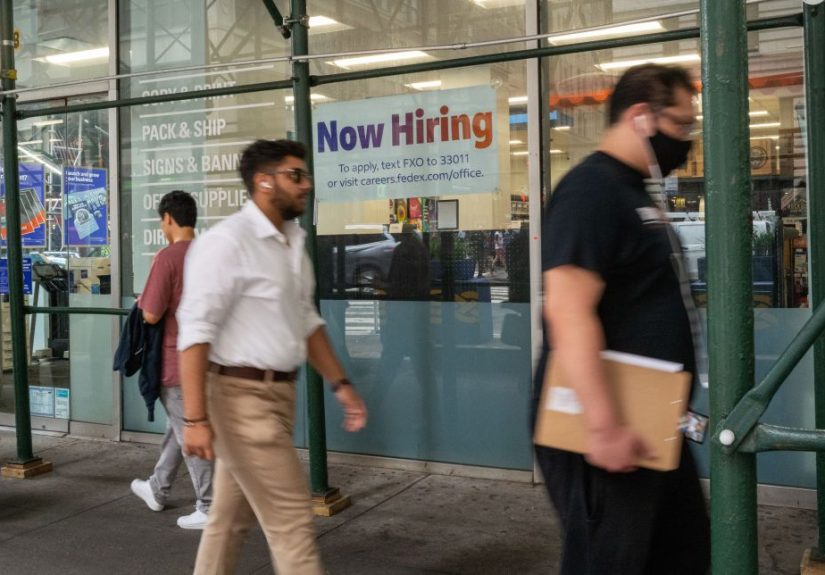
Numbers like 528,000 can feel abstract until you imagine how they show up in daily life. For job seekers in July 2022, the labor market often felt unusually active. Recruiters were still reaching out. Restaurants were still posting “Now Hiring” signs. Health care providers were looking for staff. Construction companies needed workers. Offices were rebuilding teams after two years of disruption.
For many workers, this created a rare sense of leverage. Someone who had stayed in a job through the pandemic could look around and realize that switching employers might bring better pay, better hours, or remote-work flexibility. The phrase “Great Resignation” had already entered the conversation, but by mid-2022 it was evolving into something more practical: workers were not just quitting for fun; they were shopping for better deals.
Employers, meanwhile, had a different experience. Hiring was expensive, slow, and sometimes frustrating. A small business owner looking for cooks, drivers, front-desk staff, technicians, or administrative workers could post a job and still struggle to fill it. Larger companies had more tools, but they also faced high turnover and wage competition. The July jobs report confirmed what many managers already felt: workers were in demand, and the old “post a job and wait” strategy was about as useful as a screen door on a submarine.
Families experienced the economy in a more mixed way. A parent might have found a better-paying job in July, but still paid more for groceries, rent, utilities, and gas. A recent graduate might have landed interviews faster than expected, but felt nervous about student loans and inflation. A retired worker might have considered returning part time because wages were attractive, while also worrying about market volatility and rising living costs.
This is the part of the economy that charts cannot fully capture. People do not live inside a payroll table. They live inside monthly budgets, career decisions, family obligations, and plans that change when prices jump. A strong job market helps, but it does not magically make inflation painless. It gives households more options, not unlimited comfort.
For anyone building a career, the July 2022 report offered a useful lesson: strong labor markets are windows of opportunity. They are good times to improve skills, move toward higher-demand industries, negotiate respectfully, and build financial cushions. But they are also temporary. Labor markets can cool quickly when interest rates rise or demand slows.
The smartest response to a hot jobs market is not to assume the party lasts forever. It is to use the moment well. Workers can strengthen resumes, learn software, earn certifications, expand professional networks, and save some of the gains from higher wages. Businesses can improve retention, train employees, and avoid treating people as replaceable parts. Policymakers can remember that full employment is not just a statistic; it changes lives.
Looking back, the July 2022 jobs report stands out because it refused to follow the gloomy script. It showed an economy under pressure, yes, but also an economy still hiring at a remarkable pace. It reminded everyone that recession debates should be based on evidence, not just anxiety. And it proved, once again, that the U.S. labor market has a flair for dramatic plot twists.
Conclusion: A Jobs Report That Changed the Conversation
The July 2022 jobs report did not solve inflation, eliminate economic risk, or guarantee a soft landing. But it did deliver a powerful message: the U.S. labor market was far stronger than recession fears suggested. With 528,000 jobs added, unemployment at 3.5%, and gains spread across major industries, the report challenged the idea that the economy was already in a broad downturn.
The real takeaway is not that everything was perfect. It is that economic reality was more nuanced than the loudest headlines. Growth was uneven. Inflation hurt. Interest rates were rising. Yet employers kept hiring, workers kept finding opportunities, and the pandemic jobs hole had finally been filled.
So, what recession? In July 2022, at least from the labor market’s point of view, the answer was: not so fast.