Table of Contents >> Show >> Hide
- The “Record Trade-In” Story: What It Really Means
- Reason 1: Elon Musk Became Part of the Ownership Experience
- Reason 2: Used Tesla Values Have Taken a Hit
- Reason 3: Tesla Is No Longer the Only Cool EV Brand
- Reason 4: The Model Lineup Feels FamiliarMaybe Too Familiar
- Reason 5: Service and Repair Frustrations Can Push Owners Away
- Reason 6: Recalls and Safety Investigations Create Uncertainty
- Reason 7: Federal Incentives and EV Economics Keep Changing
- Reason 8: Some Owners Are Moving to Hybrids
- Reason 9: Full Self-Driving Expectations Have Been Complicated
- Reason 10: Brand Loyalty Is Under Pressure
- What Tesla Still Gets Right
- What the Trade-In Trend Says About the EV Market
- Real-World Owner Experience: Why the Decision Gets Personal
- Conclusion
Tesla used to be the car brand people bought to make a statement. It said, “I like technology, I dislike gas stations, and yes, I know where every Supercharger is within a 70-mile radius.” But lately, another statement has started showing up at dealerships across America: “What can you give me for my Model Y?”
Reports from the U.S. auto market show Tesla trade-ins hitting record levels, especially among newer models. The headline is dramatic, but the story is more interesting than a simple “Tesla is doomed” take. Many owners still love their cars. Tesla remains a giant in the electric vehicle market. The Model 3 and Model Y are still among the most recognizable EVs on the road. Yet a growing number of owners are deciding that now is the time to move on.
So why are Tesla owners trading in their cars at record numbers? The answer is not one single problem. It is a traffic jam of reasons: Elon Musk’s polarizing public image, falling used Tesla prices, stronger EV competition, brand fatigue, service frustrations, shifting federal incentives, and a car market where buyers have more choices than ever. In other words, Tesla’s once-magic formula is still powerful, but it is no longer the only game in town.
The “Record Trade-In” Story: What It Really Means
When people hear “record numbers,” it sounds like every Tesla owner woke up, stared at the touchscreen, and whispered, “We need to see other cars.” That is not exactly what the data says.
The record refers largely to the share of late-model Teslas being traded in at dealerships for non-Tesla purchases. Edmunds data reported in 2025 showed that Tesla vehicles from model year 2017 or newer made up a record share of all vehicle trade-ins during part of March. That share was still small compared with the total used-car market, but the jump was sharp enough to make the industry notice.
The important detail is this: these trade-ins were not counted when owners traded a Tesla for another new Tesla. They were Teslas being traded toward other vehicles. That makes the trend more meaningful because it suggests some owners are not simply upgrading within the Tesla family. They are shopping elsewhere.
For years, Tesla had unusually strong loyalty. Many Model 3 owners graduated into a Model Y. Model S owners bragged like early iPhone adopters who survived the headphone jack apocalypse. But the loyalty wall has cracks now, and rival automakers are standing outside with very shiny electric SUVs.
Reason 1: Elon Musk Became Part of the Ownership Experience
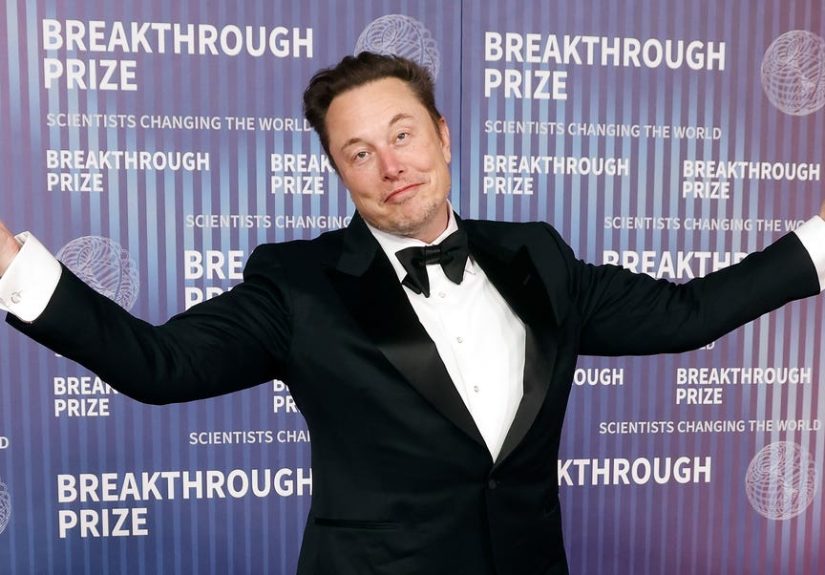
For better or worse, Tesla is not just a car company. It is a car company wrapped around one of the most famous CEOs in the world. Elon Musk’s public persona has always been part of Tesla’s appeal. In the early days, that worked beautifully. He was the rocket guy, the EV evangelist, the billionaire who made electric cars feel less like homework and more like a spaceship with cupholders.
But as Musk became more politically outspoken, Tesla’s brand identity changed. Some buyers who originally saw Tesla as a climate-forward, progressive technology brand began to feel uncomfortable with the association. For them, owning a Tesla stopped being only about range, software, and charging convenience. It became a social signal they did not necessarily want to send.
This is especially tricky because cars are public objects. A phone can hide in your pocket. A car sits in your driveway, your office parking lot, and your kid’s school pickup line. For some owners, the badge started to feel less like a logo and more like a bumper sticker they never agreed to apply.
That does not mean every Tesla trade-in is a protest vote. Many owners do not care about Musk’s politics at all. Others still admire him. But consumer behavior does not require everyone to agree. If even a portion of owners feel alienated, that can be enough to move trade-in numbers, especially when other market pressures are already pushing in the same direction.
Reason 2: Used Tesla Values Have Taken a Hit
Depreciation is the quiet villain in many car ownership stories. It does not kick down the door. It just sits in your garage every night, nibbling thousands of dollars from your resale value like a financially literate termite.
Tesla owners have felt this more sharply in recent years because Tesla has repeatedly adjusted new-vehicle prices. When a new Model Y becomes cheaper, a used Model Y immediately has to compete with it. Buyers do not care that you paid much more two years ago. The used-car market has the emotional warmth of a parking meter.
Several used-car pricing reports have shown notable drops in Tesla resale values, particularly for the Model S, Model X, Model Y, and Model 3. This has created a strange situation: some owners are trading in now because they fear values could fall further, while others feel trapped because they owe more than the car is worth.
For shoppers, lower used Tesla prices can be great news. A used Model 3 or Model Y can look like a bargain compared with many new gas-powered SUVs. But for current owners, the resale slide can feel like watching a stock chart after someone says, “Don’t worry, it’s just a correction.”
Reason 3: Tesla Is No Longer the Only Cool EV Brand
There was a time when buying an electric vehicle basically meant buying a Tesla or making a very niche lifestyle decision. That era is over. Today, American shoppers can compare Tesla with EVs from Hyundai, Kia, Ford, Chevrolet, BMW, Mercedes-Benz, Rivian, Cadillac, Honda, Toyota, and others.
The Hyundai Ioniq 5 offers retro-futuristic style and fast charging. The Kia EV9 gives families three rows without needing to pilot a vehicle that looks like a stainless-steel doorstop. The Ford Mustang Mach-E brings familiar dealership access and a traditional brand name. Chevrolet has pushed hard with the Equinox EV and Blazer EV. Luxury buyers can look at BMW, Mercedes-Benz, Audi, Porsche, and Cadillac.
This matters because Tesla’s early advantages are no longer as exclusive. Long range? Others have it. Big screens? Everyone discovered screens. Over-the-air updates? Increasingly common. Access to Tesla Superchargers? More non-Tesla EVs are gaining that too as the North American Charging Standard spreads.
Tesla still has strengths, especially software integration, charging convenience, efficiency, and performance per dollar. But when owners trade in, they now have realistic alternatives. Choice changes loyalty. When the buffet opens, people stop pretending one dish is the whole restaurant.
Reason 4: The Model Lineup Feels FamiliarMaybe Too Familiar
The Model 3 and Model Y have been massive successes, but success can also create sameness. In many cities, Teslas are now everywhere. What once felt futuristic can start to feel like the default company car of the app-based economy.
Tesla refreshed the Model 3 and Model Y, but the broader lineup still looks familiar. The Model S and Model X are aging. The Cybertruck grabbed attention, but its polarizing design, recalls, pricing, and limited mainstream appeal have made it less of a universal replacement for traditional pickups than some fans expected.
For owners who bought Tesla because it felt special, the emotional spark can fade when every third driveway has a white Model Y. That is not a product failure. It is the natural consequence of becoming popular. The same thing happened to the Toyota Camry, except the Camry never claimed it would change civilization while silently judging your lane changes.
Reason 5: Service and Repair Frustrations Can Push Owners Away
Many Tesla owners enjoy low routine maintenance. There are no oil changes, fewer moving parts, and regenerative braking can reduce brake wear. That is one of the great advantages of EV ownership.
But when something does go wrong, the experience can be frustrating. Some owners report long waits for parts, limited service appointment availability, expensive collision repairs, and insurance headaches. Tesla’s direct-service model can feel smooth when everything works, but restrictive when it does not.
A traditional dealership network has its own problemsask anyone who has waited in a service lounge under fluorescent lights drinking coffee that tastes like printer ink. Still, legacy automakers often have more service locations, more independent repair options, and more familiar repair pathways.
For some Tesla owners, especially those outside major metro areas, service convenience becomes a practical reason to trade in. A car can be brilliant on the road and still lose points if fixing it feels like scheduling an appointment with a moon base.
Reason 6: Recalls and Safety Investigations Create Uncertainty
Tesla vehicles receive many fixes through over-the-air software updates, which can be a major advantage. Instead of visiting a dealer, an owner may wake up to a car that has been improved overnight. That still feels futuristic, even if the update occasionally rearranges menus like a mischievous intern.
However, not every recall is solved by software. Tesla has faced recalls involving Cybertruck trim, lighting, battery components, rearview camera issues, and other concerns. Regulators have also continued to scrutinize driver-assistance technology, including Full Self-Driving and Autopilot-related issues.
To be fair, recalls are common across the auto industry. Ford, GM, Toyota, Hyundai, and nearly every other major automaker deal with them. A recall does not automatically mean a vehicle is unsafe or poorly built. But frequent headlines can affect confidence, especially when a buyer is already wondering whether to keep the car.
For an owner on the fence, a recall notice may not be the only reason to sell. It may simply be the final nudge. The car equivalent of “and another thing.”
Reason 7: Federal Incentives and EV Economics Keep Changing
EV buying decisions in the United States have been heavily shaped by tax credits, lease incentives, state rebates, charging costs, and electricity prices. When incentives change, demand changes. When demand changes, trade-in values change. It is all connected, like a spreadsheet wearing a seatbelt.
The federal EV tax credit helped make many new electric vehicles more attractive. But eligibility rules have shifted over time, and the expiration or reduction of incentives can make buyers more cautious. Meanwhile, automakers often respond with discounts, lease deals, or price cuts. Those moves can help sell new cars but pressure used values.
Tesla has been particularly aggressive with pricing at times. That strategy can increase volume, but it can also frustrate existing owners who bought before a price drop. Imagine buying a new laptop for $1,800 and seeing it advertised for $1,300 next month. Now imagine the laptop weighs 4,400 pounds and lives in your garage.
Reason 8: Some Owners Are Moving to Hybrids
Not every Tesla trade-in leads to another EV. Some owners are switching to hybrids or plug-in hybrids. That may sound surprising, but it makes sense for people who like efficiency but do not want to think about charging on road trips, apartment living, winter range loss, or public charger reliability.
Hybrids have become the “no drama” choice for many American buyers. They offer better fuel economy than traditional gas vehicles while keeping the familiar convenience of fast refueling. Toyota, Honda, Ford, Hyundai, Kia, and others have leaned heavily into hybrid options at exactly the moment some EV shoppers are becoming more cautious.
For drivers who love the instant torque of a Tesla, a hybrid may feel less exciting. But for buyers who prioritize predictability, resale value, and nationwide service access, hybrids can look appealing. Sometimes the most attractive technology is the one you do not have to explain to your in-laws at Thanksgiving.
Reason 9: Full Self-Driving Expectations Have Been Complicated
Tesla’s driver-assistance technology is one of the most talked-about features in the auto world. Many owners bought into the promise of a car that would improve over time and eventually drive itself with minimal human input. That promise helped Tesla build excitement, but it also created expectations that have been difficult to satisfy.
Full Self-Driving remains a supervised system, meaning the driver must stay attentive and ready to take control. Some owners who paid thousands of dollars for the feature feel the name and long-term promise have run ahead of reality. Others use it regularly and find it impressive. Both things can be true.
The issue for trade-ins is expectation fatigue. If an owner bought a Tesla partly because of future autonomy and now feels uncertain about hardware compatibility, regulatory timelines, or real-world capability, they may decide not to wait anymore. At some point, “coming soon” starts to sound like the software version of “your table will be ready in five minutes.”
Reason 10: Brand Loyalty Is Under Pressure
Tesla’s brand loyalty used to be one of its superpowers. Owners often became unpaid ambassadors, giving test rides, explaining charging, and defending panel gaps with the intensity of courtroom attorneys. But loyalty is not permanent. It has to be renewed with every product cycle, every service interaction, every price change, and every public controversy.
Recent market data has suggested Tesla loyalty weakened in 2025 before showing some rebound. That pattern fits the broader story: many people still like Tesla vehicles, but the automatic assumption that a Tesla owner’s next car will also be a Tesla is no longer as safe.
This is normal as markets mature. Early adopters are forgiving. Mainstream buyers are not. Early Tesla owners might tolerate quirks because they believed they were helping build the future. Mainstream buyers compare monthly payments, cargo space, repair costs, insurance quotes, and whether the turn signal stalk still exists.
What Tesla Still Gets Right
It would be lazy to turn this into a Tesla funeral. Tesla still has major advantages. Its vehicles remain efficient, quick, software-rich, and widely supported by charging infrastructure. The Model 3 and Model Y continue to perform well in owner experience studies. Tesla’s charging network remains a major asset, even as access expands to other brands.
Many owners trade in simply because their lease ended, their family grew, they wanted a newer model, or they found a strong offer. Not every trade-in is a protest, a panic sale, or a dramatic breakup scene in a dealership parking lot.
Also, lower used Tesla prices can introduce new buyers to the brand. A shopper who could not afford a new Model Y two years ago may now find a used one within reach. That could support Tesla’s ecosystem in a different way, even if original owners take a depreciation hit.
What the Trade-In Trend Says About the EV Market
The rise in Tesla trade-ins is not just a Tesla story. It is a sign that the U.S. EV market is growing up. Early EV buyers had fewer choices, fewer charging options, and more tolerance for uncertainty. Today’s shoppers are more practical. They ask harder questions: How much will this car be worth in three years? Can I service it nearby? Will the battery warranty cover me? Is the charging network reliable? Do I want this brand in my driveway?
That is healthy for the market. Competition forces automakers to improve. It also means Tesla must win buyers on more than first-mover advantage and brand aura. The company has to keep refreshing products, improving service, stabilizing resale confidence, and separating the car ownership experience from unnecessary drama.
In short, Tesla is not being abandoned by everyone. It is being judged like a normal automaker. For a company that spent years being treated like a tech revolution on wheels, that may be the biggest change of all.
Real-World Owner Experience: Why the Decision Gets Personal
On paper, trading in a Tesla looks like a financial decision. In real life, it is often emotional, practical, and slightly chaoticlike most car decisions, but with more software updates.
Consider a typical Model Y owner who bought during the pandemic-era car boom. Inventory was tight, gas prices were painful, and Tesla looked like the obvious future. The car was fast, quiet, and easy to charge at home. For the first year, ownership felt great. No gas stations. No oil changes. No standing outside in January pretending the fuel pump handle is not freezing your hand.
Then the market shifted. Tesla lowered prices. Used values softened. Insurance premiums rose. A few service appointments took longer than expected. Friends started asking awkward questions about Elon Musk. A neighbor bought a Hyundai Ioniq 5 and would not stop talking about how fast it charged. Suddenly, the owner who once felt ahead of the curve began wondering whether the curve had moved.
Another owner may have a different story. Maybe they still love the car but need a third row that works for actual humans, not theoretical children made of origami. Maybe they moved to an apartment and lost home charging. Maybe winter range loss became annoying. Maybe they took a road trip through an area where charging was available but not convenient. Maybe they simply want a vehicle with more physical controls because adjusting everything through a touchscreen began to feel like operating a microwave while driving.
There is also the identity factor. Some owners bought Tesla because it represented clean technology and optimism. If the brand now feels politically charged, they may feel uncomfortable even if the car itself remains excellent. That is a strange modern problem: the machine works, but the meaning changed. A vehicle is transportation, but it is also a public object. People see it. People comment on it. People make assumptions. For some drivers, that social baggage becomes exhausting.
Dealership trade-in experiences vary widely too. One dealer may offer a low number because used Teslas are piling up locally. Another may offer more because demand is still strong in that region. Battery condition, mileage, tire wear, software features, accident history, and local charging habits all affect value. Owners quickly learn that “market value” is not a number carved into stone. It is more like a weather forecast with financing paperwork.
Some owners who trade in regret it. They miss the acceleration, the charging network, the clean cabin design, and the convenience of waking up to a “full tank” every morning. Others feel relieved, especially if they switch to a hybrid or a non-Tesla EV that better fits their lifestyle. The point is not that Tesla ownership has become bad. The point is that it has become more complicated.
That complexity is exactly why trade-ins are rising. Tesla owners are not a single tribe anymore. They include tech fans, commuters, families, retirees, environmentalists, performance enthusiasts, bargain hunters, and people who bought one because their neighbor would not stop raving about “instant torque.” As the owner base gets broader, the reasons for leaving get broader too.
The most honest takeaway is this: many Tesla owners are trading in because the math, the market, and the meaning of the brand have changed at the same time. A Tesla can still be a fantastic car. But in 2026, owning one is no longer an automatic no-brainer. It is a choice that has to compete against more vehicles, more opinions, and more financial realities than ever before.
Conclusion
Tesla owners are trading in their cars at record levels because several forces are hitting at once. Elon Musk’s polarizing image has made the brand more complicated for some buyers. Used Tesla values have weakened under price cuts and growing supply. EV competition has improved dramatically. Service concerns, recalls, changing incentives, and Full Self-Driving expectations have added more reasons for owners to reconsider.
Still, this is not the end of Tesla. It is the end of Tesla being the default answer for every EV shopper. The company remains powerful, but the market has matured. Owners now have options, and options make people picky. Tesla changed the auto industry by proving electric cars could be desirable. Now it has to prove, again and again, that its cars are still the ones people want to keep.
Note: This article is based on current U.S. automotive market reporting, EV sales data, used-car pricing trends, Tesla investor information, safety recall records, and consumer ownership research. Source links are intentionally excluded from the article body for clean web publishing.