Table of Contents >> Show >> Hide
- Why Barnhouse-Style Outdoor Lighting Still Works
- What Defines the Barnhouse Lighting Look?
- 10 Easy Pieces for a Barnhouse-Style Outdoor Lighting Scheme
- 1. The Classic Gooseneck Wall Light
- 2. A Warehouse Dome Sconce
- 3. The Wire-Guard Utility Light
- 4. The Enamel-Shade Porch Light
- 5. A Brass Bracket Light for a Refined Twist
- 6. A Pendant for the Covered Porch
- 7. The Garage Barn Light
- 8. A Post or Pier Lantern with Barnhouse Bones
- 9. Path Lights That Echo the Main Fixtures
- 10. A Motion-Sensor Utility Fixture
- How to Size and Place Barnhouse Outdoor Lights Correctly
- Choosing Finishes, Materials, and Bulbs
- Common Mistakes to Avoid
- The Real-Life Experience of Barnhouse-Style Outdoor Lighting
- Final Thoughts
There are two kinds of outdoor lighting. The first kind politely exists, does its job, and vanishes into the night like a well-behaved dinner guest. The second kind makes your house look like it suddenly got promoted. Barnhouse-style outdoor lighting belongs firmly in the second camp. It is practical, unfussy, a little nostalgic, and surprisingly versatile. Put the right fixture over a front door, garage, porch, or side entry, and your home instantly feels warmer, sharper, and more intentional.
That is the magic of the barnhouse look. It borrows from old farm buildings, utility lights, and workhorse fixtures, then cleans them up for modern living. Think gooseneck outdoor lights, dome shades, matte black finishes, galvanized metal, aged brass, enamel surfaces, and clear or opal glass. The result is equal parts hardworking and handsome. It says, “Yes, I own a ladder,” but in a chic way.
If you are after modern farmhouse outdoor lighting that feels timeless rather than trendy, this style hits the sweet spot. It pairs beautifully with white siding, board-and-batten facades, brick, stone, dark trim, wood doors, and metal roofs. More importantly, it works in real life. Barn-inspired fixtures are often designed to throw light exactly where you need it: down onto the lock, across the porch, along the garage, or onto the path where guests are trying not to trip over your heroic pumpkin display.
Why Barnhouse-Style Outdoor Lighting Still Works
The appeal starts with the architecture. Modern farmhouse exteriors usually rely on clean lines, simple paneling, strong contrast, and a welcoming, informal feel. Barnhouse lighting fits that language naturally. A curved arm and metal shade add character without fuss. A black sconce against white siding creates the crisp contrast people love. A galvanized fixture on wood siding feels rustic without tipping into theme-park territory.
There is also a practical reason this look endures: it was born from utility. Barn lights were originally meant to illuminate doors, loading areas, and work zones. That heritage gives them a clarity of purpose many decorative fixtures lack. They are not trying to be precious. They are trying to help you find your keys, carry in groceries, and welcome people to dinner without blinding the neighborhood raccoon.
What Defines the Barnhouse Lighting Look?
Before choosing pieces, it helps to know the vocabulary of the style. Barnhouse-style outdoor lighting usually includes a few repeat players: curved gooseneck arms, broad metal shades, cage or wire-guard details, simple wall brackets, enamel or powder-coated finishes, and durable materials such as galvanized steel, aluminum, brass, copper, or marine-grade composites. The shapes are straightforward, but the finishes do the flirting.
The look can lean rustic, industrial, coastal, or refined depending on the details. Matte black feels crisp and architectural. Galvanized metal looks relaxed and weather-friendly. Copper and antique brass add warmth and polish. White enamel keeps things classic and cheerful. A seeded-glass insert adds softness; a solid metal dome creates a cleaner downward wash of light.
10 Easy Pieces for a Barnhouse-Style Outdoor Lighting Scheme
1. The Classic Gooseneck Wall Light
If barnhouse lighting had a mascot, it would be the gooseneck outdoor wall light. This fixture has a curved arm and a metal shade that pushes light downward, making it perfect for front doors, porches, and side entries. It is classic, recognizable, and impossible to mess up unless you install it the size of a salad plate on a giant two-story facade. Don’t do that.
Use it when you want your entry to feel friendly and architectural at the same time. Matte black is the obvious modern farmhouse choice, but galvanized or deep green can look especially charming on wood siding or brick.
2. A Warehouse Dome Sconce
A dome-shaped outdoor sconce is the gooseneck light’s slightly more buttoned-up cousin. It keeps the barnhouse mood but reads a touch more tailored. This is a smart pick if your home is farmhouse-inspired but not fully rustic. It is especially effective next to a front door, on a rear patio wall, or flanking French doors.
Choose a shade with enough depth to control glare and direct light downward. That makes the fixture more comfortable to look at and more useful after dark. It also creates that lovely pool of light that makes a home feel inhabited, not interrogated.
3. The Wire-Guard Utility Light
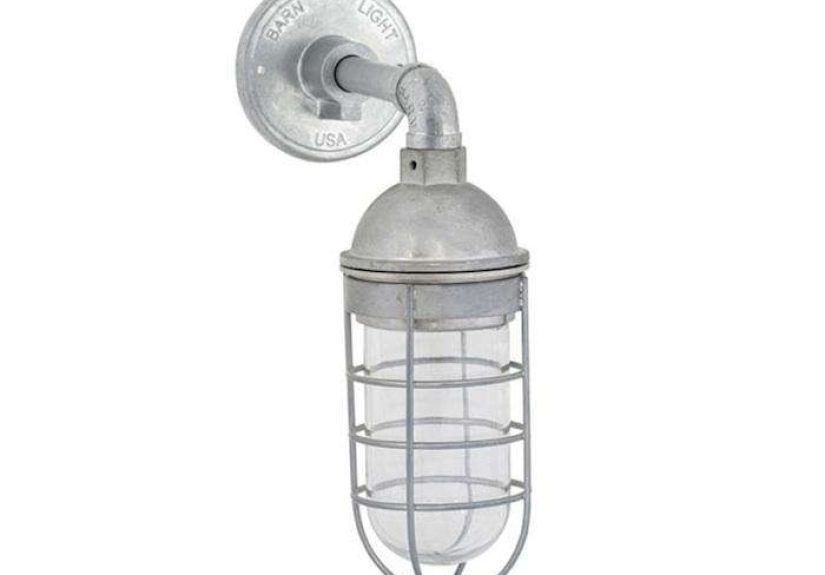
For mudrooms, garden sheds, side gates, or a hardworking back entry, a wire-guard outdoor light brings a more utilitarian barn vibe. These fixtures feel authentic because they reference old industrial and agricultural lighting. They are also great if you like a little grit with your curb appeal.
Used sparingly, a wire guard adds just enough character. Used everywhere, it can make your house look like a very stylish shipping dock. One or two is usually the sweet spot.
4. The Enamel-Shade Porch Light
An enamel-shade fixture has a nostalgic, almost storybook quality. White enamel feels bright and vintage. Black enamel feels crisp and graphic. A muted color like forest green or oxblood can add personality without shouting over the architecture.
This style works beautifully on covered porches and screened entries where you want the fixture to be seen in daylight as much as it is appreciated at night. It is a small detail that carries a lot of visual charm.
5. A Brass Bracket Light for a Refined Twist
Barnhouse style does not have to mean rough-and-ready all the time. A brass outdoor bracket light brings warmth, patina, and a slightly more elevated feel to the same utilitarian silhouette. If your house mixes farmhouse bones with traditional or coastal details, brass is a smart bridge.
Unlacquered brass or antique brass can age beautifully outdoors, developing that mellow lived-in look designers are forever chasing. It says farmhouse, but the kind with fresh flowers on the table and very good pie.
6. A Pendant for the Covered Porch
If you have a deep front porch or high covered entry, a pendant can make the whole space feel finished. Barnhouse pendants usually feature simple metal shades, clean lines, and straightforward hardware. They are ideal for covered areas where you want overhead light without going full suburban lantern fantasy.
Scale matters here. A porch pendant should feel substantial enough to hold the space but not so low that your tallest friend starts making ducking jokes. Barn-inspired pendants work best when the ceiling is high enough to let them breathe.
7. The Garage Barn Light
The garage is one of the best places to use barn-style exterior lighting. A gooseneck fixture centered above a single garage door has instant charm. For double doors or wider bays, you can use one oversized fixture or flank the outer edges with sconces for a more balanced look.
This is where barnhouse style really earns its keep. A garage is functional space, and the lighting should admit it. A practical, downward-facing fixture looks honest there, not overdecorated.
8. A Post or Pier Lantern with Barnhouse Bones
Post lights are often overlooked, which is unfair because they do a lot of heavy lifting. If you have a gate, driveway entry, or brick columns, choose a post or pier light that echoes the metal finish and simplicity of your wall sconces. You do not need a fussy Victorian topper. A clean-lined lantern or modest metal cap keeps the look cohesive.
This piece is especially helpful for creating a whole-property lighting story rather than a random collection of fixtures that seem to have met moments before installation.
9. Path Lights That Echo the Main Fixtures
Good outdoor lighting is layered lighting. If your wall lights do all the work, your front walk may still feel oddly dark. Add path lights with a simple, understated shape that complements the barnhouse look instead of competing with it. The best path lights are not trying to become sculptures. They are trying to keep guests upright.
Low, warm, evenly spaced lighting along a path makes your home feel more inviting and safer. The trick is restraint. A subtle guide is charming. A runway to the porch is a bit much unless your mail carrier lands by instrument panel.
10. A Motion-Sensor Utility Fixture
Not every outdoor light needs to be decorative. Sometimes you need one light that says, “I see you, recycling bin, and I am coming for you.” A motion-sensor barn-style fixture over a side yard, trash area, or detached garage adds security and convenience without breaking the aesthetic.
Look for a fixture with clean lines and a finish that matches your decorative lights. That way, even your most practical lighting still feels intentional. Good design is often just excellent coordination in a nicer jacket.
How to Size and Place Barnhouse Outdoor Lights Correctly
Style is important, but outdoor light placement is what separates “beautifully considered” from “why does that fixture look so tiny and terrified?” As a general rule, wall-mounted entry lights look best when the fixture is roughly one-quarter to one-third the height of the door. The center of the fixture is often placed around eye level, roughly 66 to 72 inches from the finished floor, depending on the design and the entry.
If you are using one sconce beside the front door, placing it on the handle side is often the most functional choice. If you are flanking the door with two sconces, keep them proportionate and close enough to the doorway to frame it rather than drift off into decorative exile. Covered porches with pendants need enough clearance above the door frame and enough hanging height to stay comfortable and visually balanced.
For paths, low fixtures spaced consistently usually look better than a lot of random bright spots. For garages, think about whether the light needs to illuminate the lock area, the driveway, or both. In short: let the task guide the placement, then let the style do its charming little dance.
Choosing Finishes, Materials, and Bulbs
Best Finishes for the Look
Matte black outdoor lighting is still the safest bet for a modern farmhouse exterior. It is crisp, versatile, and high contrast in the best way. Galvanized finishes are more relaxed and heritage-inspired. Copper and antique brass feel warmer and more collected. If you live near the coast or in a harsh climate, consider marine-grade or corrosion-resistant materials so your lovely fixture does not age like a banana.
Wet-Rated vs. Damp-Rated
This matters more than many homeowners realize. If the fixture is fully exposed to rain and weather, it should be wet-rated outdoor lighting. Covered porches and protected areas can often use damp-rated fixtures. Translation: your porch roof is not magical. Buy the rating your location actually needs.
Color Temperature and Brightness
For most homes, a warm glow is the move. Bulbs in the 2700K to 3000K range tend to feel welcoming and flattering, especially on porches and entries. Cooler light can feel harsh and overbright in residential settings. Choose LEDs for efficiency and longer life, but go for warm white rather than something that makes your home resemble a parking lot with aspirations.
Dimmers, timers, and motion sensors are also worth considering. Good outdoor lighting should be useful, not relentless. A home looks more thoughtful when the light is controlled and purposeful rather than permanently blazing like it is trying to summon aircraft.
Common Mistakes to Avoid
The biggest mistake is choosing fixtures that are too small. The second biggest is choosing a beautiful fixture with the wrong rating for the location. After that comes overlighting, poor bulb color, and mixing finishes so randomly that the exterior starts to feel confused.
Another misstep is going too literal with the farmhouse theme. One or two barn-inspired gestures look confident. A whole exterior of cages, pulleys, rope details, and faux-rust finishes starts to feel costume-y. Aim for authenticity, not barn cosplay.
The Real-Life Experience of Barnhouse-Style Outdoor Lighting
What makes this style so satisfying is not just how it photographs at dusk. It is how it changes the experience of coming home. A barnhouse-style fixture usually throws light downward in a calm, useful way, so the first thing you notice is comfort. The lock is visible. The steps make sense. The porch feels like part of the house instead of an awkward pause before the front door. That sounds small, but it changes the mood of everyday life more than most people expect.
In the morning, these fixtures still earn their keep. A black gooseneck sconce against white siding adds shape and contrast even when the bulb is off. A galvanized shade looks relaxed and weather-friendly in daylight. A brass bracket light warms up a cool facade. In other words, the best barnhouse outdoor lighting is doing double duty: sculptural by day, practical by night.
There is also a tactile, seasonal pleasure to this look. In summer, a soft pool of warm light on the porch makes evening conversations stretch a little longer. In fall, that same fixture turns pumpkins, mums, and a wood bench into a tiny magazine spread you accidentally created while bringing in packages. In winter, when it gets dark before dinner and your motivation is somewhere under a blanket, a warm entry light can make the whole house feel more welcoming from the curb. In spring, it plays beautifully with fresh paint, blooming planters, and the annual optimism that this will be the year you stay ahead of the weeds.
Functionally, this style is also forgiving. Barnhouse fixtures tend to age well because they were never about fussiness in the first place. A little patina on brass looks charming. A galvanized finish that settles in over time looks honest. Even a matte black fixture with a bit of weathering can feel more authentic rather than less attractive. This is one reason people stay loyal to the look: it does not demand perfection to feel beautiful.
Then there is the emotional side, which home design people love to pretend is very lofty, but is actually simple. Barnhouse-style lighting makes a home feel grounded. It suggests usefulness, welcome, and a touch of nostalgia without turning the place into a museum of rural references. It feels familiar in a good way. Not boring familiar. More like the visual equivalent of a favorite jacket: reliable, flattering, and always somehow right.
That sense of ease matters if you actually live in your house instead of merely curating it for social media. You want fixtures that can handle muddy boots, stormy weather, grocery bags, kids, dogs, and the occasional frantic search for the spare key. Barnhouse-style outdoor lighting is good at all of that. It is not trying to be precious. It is trying to make your home look better while making your life easier, which is honestly the dream job description for almost every design decision.
And yes, there is a certain pleasure in watching the lights click on at dusk. A porch sconce glows, the garage light picks up the edge of the drive, the path lights guide the way, and suddenly the whole exterior feels composed. Not flashy. Not dramatic in a reality-show makeover way. Just quietly right. That is the real experience people are after when they choose this style. Barnhouse outdoor lighting does not scream for attention. It simply makes the house feel complete.
Final Thoughts
If you want an exterior that feels warm, timeless, and just rugged enough to be interesting, barnhouse-style outdoor lighting is one of the smartest upgrades you can make. The key is choosing simple, durable pieces; sizing them correctly; using the right rating for the location; and sticking with a warm, welcoming glow.
Start with one strong piece at the front door, then build outward to the garage, porch, and path. Keep the materials honest, the lines simple, and the light purposeful. Done right, barnhouse lighting gives your home that rare combination of charm and competence. Which, if we are being honest, is also what most of us are going for personally.