Table of Contents >> Show >> Hide
- Why Do People Refuse To Help?
- 10 Infuriating Cases Of People Refusing To Help
- 1. Kitty Genovese: The Case That Became A Symbol Of Bystander Apathy
- 2. Esmin Green: Ignored In A Hospital Waiting Room
- 3. Hugo Alfredo Tale-Yax: The Good Samaritan Left On The Sidewalk
- 4. Sherrice Iverson: A Witness Who Walked Away
- 5. The Richmond High School Assault: A Crowd That Failed A Teenager
- 6. Big Dan’s Tavern: When A Crowd Became Part Of The Horror
- 7. Ki-Suck Han: The Subway Platform Debate
- 8. Ken McElroy: A Town Where Nobody Saw Anything
- 9. Penn State And The Sandusky Scandal: Passing The Problem Up The Chain
- 10. The SEPTA Train Assault: A Modern Bystander Controversy
- What These Cases Teach Us About Human Inaction
- How To Help Without Becoming Reckless
- Personal Experiences And Everyday Lessons About Refusing To Help
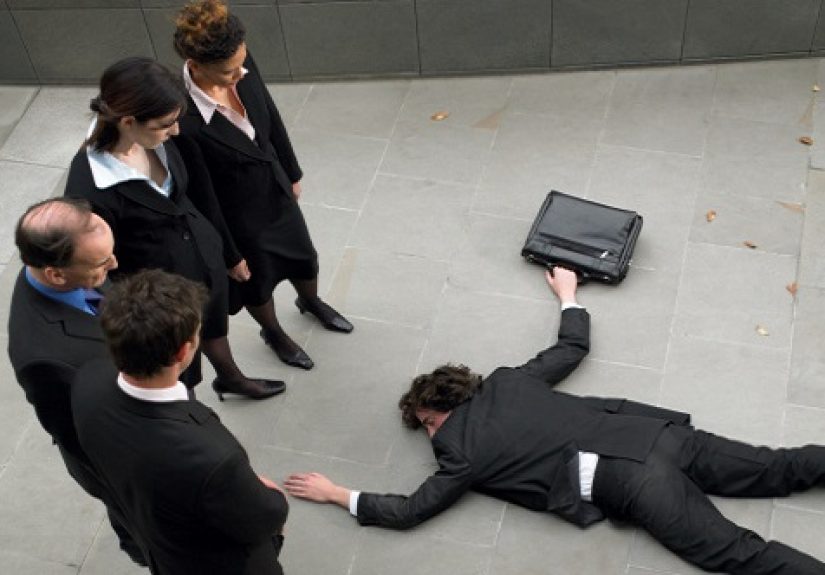
There are few things more enraging than watching a crisis unfold while perfectly capable people stand around like decorative houseplants. A phone is in every pocket. A door is nearby. A shout, a call, a distraction, a check-in, a simple “Are you okay?” could change everything. Yet history is full of moments when people saw danger, understood enough to know something was wrong, and still chose the world’s least heroic option: doing absolutely nothing.
The topic of people refusing to help is not just true-crime outrage bait. It touches psychology, public safety, ethics, law, trauma, and that uncomfortable little voice inside all of us asking, “What would I have done?” Social scientists often discuss the bystander effect, the tendency for people to become less likely to intervene when others are present. Responsibility gets diluted. Everyone assumes someone else has called 911. Nobody wants to look foolish. Nobody wants to get involved. And sometimes, tragically, nobody helps.
This article looks at ten documented cases in which inaction, delayed action, or institutional indifference became almost as shocking as the original emergency. Some cases involve crowds. Some involve authority figures. Some involve witnesses who later claimed fear, confusion, or uncertainty. But each one leaves the same bitter aftertaste: the awful possibility that a human being in danger was surrounded by people who could have done more.
Why Do People Refuse To Help?
Before diving into the cases, it is worth understanding the machinery of inaction. People do not always freeze because they are evil. Sometimes they freeze because emergencies are messy. A person on the ground might be sleeping, intoxicated, ill, or dying. An argument might be private, or it might be abuse. A scream might be a joke, or it might be the only warning anyone gets. Ambiguity is where cowardice likes to rent a studio apartment.
Common reasons bystanders fail to help include fear of personal harm, fear of legal trouble, uncertainty about what is happening, social pressure, prejudice, and the belief that someone more qualified will step in. But the result can look brutally simple from the outside: a person needed help, and help did not arrive.
10 Infuriating Cases Of People Refusing To Help
1. Kitty Genovese: The Case That Became A Symbol Of Bystander Apathy
The 1964 murder of Catherine “Kitty” Genovese in Queens, New York, became one of the most famous examples of the bystander effect. Early reports claimed that dozens of neighbors witnessed or heard her attack and did nothing. Later investigations complicated that version of events: some people misunderstood what they heard, some reportedly did call or try to help, and the original “38 witnesses” narrative was overstated.
Even so, the Genovese case became a cultural earthquake. It forced Americans to ask why people hesitate in emergencies and helped push public conversation toward centralized emergency response systems. The infuriating part is not that every neighbor was a cartoon villain twirling a mustache. Reality was messier. The outrage lies in how confusion, distance, assumptions, and delay can combine into fatal inaction. It is a reminder that “I thought someone else would handle it” may be the most dangerous sentence in public life.
2. Esmin Green: Ignored In A Hospital Waiting Room
In 2008, Esmin Green died in the psychiatric emergency waiting area of Kings County Hospital in Brooklyn. Surveillance footage showed her collapsing to the floor after waiting for hours. Staff and security personnel passed through the area while she remained unattended. By the time anyone properly responded, it was too late.
This case is especially infuriating because Green was not lying unnoticed in a deserted alley. She was inside a hospital, the one place where “someone should help” is not a hopeful guess but the entire business model. Investigations later pointed to serious failures in monitoring, staffing responsibility, and response. The tragedy became a grim example of institutional bystander behavior: when everyone works near a problem, yet no one owns the problem.
It also exposes a painful truth about vulnerable people in public systems. A person in crisis can become part of the furniture if the surrounding culture is numb enough. Paperwork moves. Shifts change. People walk past. A human being becomes “the person over there.” That is not just sad. It is enraging.
3. Hugo Alfredo Tale-Yax: The Good Samaritan Left On The Sidewalk
In 2010, Hugo Alfredo Tale-Yax, a homeless immigrant in New York City, reportedly tried to intervene when he saw a woman being attacked. He was stabbed during the confrontation and collapsed on a Queens sidewalk. Surveillance video later showed multiple people passing by while he lay wounded. Some looked. Some paused. Some continued walking.
The cruel irony is almost too much: Tale-Yax acted when someone else appeared to be in danger, yet when he became the one in need, strangers did not return the courage. Emergency help came too late. His death sparked outrage because it seemed to capture modern urban indifference in one unbearable scene: people close enough to notice, but not moved enough to act.
Of course, not every passerby may have understood what had happened. But this is exactly why checking matters. You do not need to perform street surgery. You can call 911. You can shout for help. You can keep a safe distance and report what you see. Doing nothing is not neutrality; in emergencies, it can become participation by absence.
4. Sherrice Iverson: A Witness Who Walked Away
The 1997 murder of seven-year-old Sherrice Iverson in a Nevada casino horrified the country. Jeremy Strohmeyer was convicted of sexually assaulting and killing her. But public fury also focused on David Cash Jr., Strohmeyer’s friend, who admitted seeing enough of the attack to know something was terribly wrong and left without stopping it or immediately calling for help.
Cash was not convicted in connection with the crime, but his inaction became a national moral scandal. The case helped inspire legal reforms in some places requiring witnesses to report certain violent crimes against children. The public reaction was fierce because this was not a vague noise through an apartment wall. This was a child. A restroom. A direct opportunity to interrupt, alert security, or call authorities.
Few cases better illustrate the gap between what may be legally punishable and what is morally unforgivable. The law does not always require heroism. Human decency often does.
5. The Richmond High School Assault: A Crowd That Failed A Teenager
In 2009, a teenage girl was assaulted after a homecoming dance at Richmond High School in California. Reports described a prolonged attack with multiple people nearby. Authorities and community members were horrified not only by the violence but by the number of bystanders who allegedly watched, heard about it, or failed to quickly call police.
The case became a brutal discussion point about group behavior, youth culture, fear of retaliation, and the social cost of “snitching.” Some witnesses may have been scared. Some may have been intoxicated. Some may have lacked phones. None of that makes the failure easier to stomach.
What makes this case so disturbing is the duration. In many emergencies, people freeze for seconds. Here, reports suggested there was time for someone to leave, find an adult, call police, trigger an alarm, or create a disruption. The longer a crisis continues, the thinner the excuses become.
6. Big Dan’s Tavern: When A Crowd Became Part Of The Horror
In 1983, Cheryl Araujo was gang-raped at Big Dan’s Tavern in New Bedford, Massachusetts. The case drew national attention not only because of the crime itself but because witnesses were reported to have watched, failed to intervene, and in some accounts even encouraged the attackers. The trial and media coverage became a major cultural moment in conversations about sexual violence, victim-blaming, and public complicity.
This case is difficult to write about without feeling the temperature rise in the room. A public place should offer some protection precisely because other people are there. Instead, the presence of a crowd can sometimes create a sick permission structure. If nobody objects, the worst people in the room may decide the room is on their side.
The Big Dan’s case remains infamous because it shattered a comforting myth: that danger decreases when witnesses increase. Sometimes a crowd is not a shield. Sometimes it is wallpaper. Sometimes, shamefully, it becomes an audience.
7. Ki-Suck Han: The Subway Platform Debate
In 2012, Ki-Suck Han was pushed onto subway tracks in New York City and killed by an approaching train. Public outrage exploded after a newspaper published a front-page photograph taken moments before impact. People asked why the photographer took pictures instead of helping. Others asked why nearby passengers did not pull Han from the tracks.
The case is complicated. Subway tracks are dangerous. The window for action may have been extremely short. Not every witness was physically capable of helping. But the public anger was real because the image seemed to represent a horrifying modern reflex: capture first, help later.
That is the lesson worth keeping. In a phone-saturated world, recording can feel like action. It is not always useless; video can provide evidence. But when immediate help is possible, a camera should not become a moral escape hatch. The first question should not be, “Is this going viral?” It should be, “Is there a safe way to help right now?”
8. Ken McElroy: A Town Where Nobody Saw Anything
In 1981, Ken Rex McElroy was shot to death in broad daylight in Skidmore, Missouri, in front of numerous witnesses. McElroy had a long reputation as the town bully and had been accused of terrorizing residents for years. After he was killed, witnesses largely refused to identify the shooter or claimed they saw nothing. No one was convicted.
This case is different from a typical emergency because many residents viewed McElroy as a menace who had escaped accountability. Still, it belongs on this list because refusing to help can also mean refusing to assist justice. A public killing occurred. A wounded person sat in a truck. Witnesses went silent.
The McElroy case raises uncomfortable questions. What happens when a community loses faith in law enforcement? What happens when fear builds for years? And does a victim’s reputation change the moral duty to call for aid or tell the truth? The case remains infuriating because it shows how a town can become united not by courage, but by silence.
9. Penn State And The Sandusky Scandal: Passing The Problem Up The Chain
The Jerry Sandusky child sexual abuse scandal at Penn State exposed a devastating kind of refusal to help: institutional delay and failure to report. Sandusky was eventually convicted on numerous counts of child sexual abuse. Investigations and court proceedings raised serious questions about what university officials knew, when they knew it, and why stronger action was not taken sooner to protect children.
This was not a sidewalk emergency where a stranger had five seconds to decide. It involved adults, offices, reports, hierarchy, and time. That makes the failure even harder to excuse. When institutions treat abuse allegations as reputation-management problems, vulnerable people pay the price.
The lesson is blunt: reporting upward is not the same as protecting someone. A memo is not a rescue. A quiet conversation is not accountability. When children or vulnerable people are at risk, “I told my supervisor” may satisfy a narrow procedure, but it may still fail the human being who needed protection.
10. The SEPTA Train Assault: A Modern Bystander Controversy
In 2021, a woman was sexually assaulted on a SEPTA train near Philadelphia. Early reports suggested that passengers failed to intervene and that some may have held up phones. Later statements complicated the story, with officials disputing parts of the most viral narrative. Still, the case became a national flashpoint about what bystanders should do during public violence.
The important takeaway is not to flatten the story into internet rage. Emergencies in public transit are confusing. People may fear being attacked. They may not understand what they are seeing. But even when direct physical intervention is unsafe, there are options: call 911, alert the driver or conductor, move near the victim, speak loudly, recruit other passengers, or create a distraction.
The SEPTA case remains infuriating because it shows how quickly society debates bystander failure after the fact, yet how poorly many people are trained before the fact. We teach people how to parallel park, format spreadsheets, and choose twelve streaming passwords, but not how to interrupt public harm safely. That is a design flaw with consequences.
What These Cases Teach Us About Human Inaction
The common thread is not that every bystander is heartless. The common thread is that help often fails when responsibility is vague. In the Kitty Genovese story, ambiguity and distance shaped the response. In the Esmin Green case, institutional roles blurred until no one acted urgently enough. In the Richmond High and Big Dan’s cases, group dynamics and social permission became poisonous. In the Sherrice Iverson case, one witness had a clear chance to act and did not. Different settings, same haunting question: who decided this was their responsibility?
Another lesson is that refusing to help does not always look dramatic. It can look like walking past. It can look like making eye contact and looking away. It can look like forwarding a complaint to someone else. It can look like filming. It can look like silence. Evil is not always loud; sometimes it is administratively tidy and emotionally unavailable.
How To Help Without Becoming Reckless
Helping does not mean sprinting into danger like an action-movie extra with poor insurance coverage. Smart intervention starts with safety. If there is immediate violence, call emergency services first. If direct intervention is dangerous, create distance, gather others, yell specific instructions, or alert someone with authority. Instead of shouting “Somebody call 911,” point to a person and say, “You in the blue jacket, call 911 now.” Specificity cuts through the fog.
Use the “five D’s” often taught in bystander intervention: direct, distract, delegate, delay, and document. Direct means addressing the situation if safe. Distract means interrupting without confrontation. Delegate means getting help from security, staff, or police. Delay means checking on the victim afterward. Document means recording only when it does not replace active help and when the victim’s safety and dignity come first.
The goal is not to become a superhero. The goal is to refuse the role of useless scenery.
Personal Experiences And Everyday Lessons About Refusing To Help
Most people will never witness a nationally reported crime, but almost everyone will face smaller tests of courage. A person drops groceries in a parking lot while others pretend the asphalt suddenly became fascinating. A coworker is humiliated in a meeting and everyone studies their laptops as if Excel contains the meaning of life. A stranger is crying at a bus stop. A child looks lost in a store. Someone stumbles on the sidewalk and the crowd performs that awkward little ballet of glancing, slowing down, and deciding not to be involved.
These everyday moments matter because they train us. If we practice looking away from small discomforts, we may be less prepared for serious emergencies. Helping is a habit. So is avoidance. The muscle you build is the muscle you use when adrenaline starts banging pots and pans inside your skull.
One practical experience many people recognize is the “group freeze.” Something goes wrong in public, and everyone waits for a leader to appear. The strange thing is that leadership can be ridiculously simple. The first person who says, “I’m calling 911,” changes the room. The first person who asks, “Do you need help?” gives everyone else permission to care. The first person who tells a staff member, “Someone is hurt near the entrance,” turns vague concern into a task.
Another common experience is fear of embarrassment. What if the person is fine? What if they snap at you? What if you misunderstood? Fair questions. But there are gentle ways to check. “Hey, are you okay?” is not a marriage proposal. “Do you need me to call someone?” is not an accusation. If they refuse, you can step back. Minor awkwardness is a small price to pay for the chance that someone genuinely needed help.
There is also the fear of danger, and that fear deserves respect. Nobody should be shamed for not physically confronting an armed or violent person. But safety does not require silence. You can call emergency services from a distance. You can take note of descriptions. You can alert trained staff. You can stay nearby if safe so the victim is not alone. You can ask others to help with you. Courage is not the absence of fear; it is refusing to let fear make every decision.
In workplaces, schools, families, and neighborhoods, refusal to help often hides behind politeness. People say, “It’s not my business.” Sometimes that is true. Sometimes it is a convenient little blanket we throw over moral discomfort. If someone is being bullied, exploited, threatened, neglected, or harmed, the better question is not “Is this my business?” It is “Could my action reduce harm?”
The most useful personal rule is simple: do one concrete thing. Call. Ask. Alert. Record details. Stand nearby. Get another person. Follow up. You do not have to solve the entire crisis. You just have to move the situation one step closer to help. History’s most infuriating cases show what happens when everyone waits for someone else to become responsible. The antidote is deciding, early and clearly, that someone else can start helping toobut you are not waiting for them.
Note: This article is an original synthesis based on documented public cases, reputable reporting, public records, and widely discussed research on bystander behavior. It is written for educational and editorial purposes, not to sensationalize victims or replace legal analysis.