Table of Contents >> Show >> Hide
- What reportedly happened in Geneva
- Why the hate crime claim carries weight
- Switzerland’s progress story has an asterisk
- The numbers behind the fear
- Public spaces are where “ordinary” danger often lives
- Why this story keeps spreading online
- This case is about more than one bar fight
- Experiences related to this story: what many trans people describe after violence or threat
- Final takeaway
Some headlines arrive softly. This one kicks the door open. A 29-year-old trans man in Switzerland says he was violently assaulted in Geneva and believes the attack was fueled by transphobia. The claim is serious, the details are unsettling, and the story has spread because it sits at the intersection of three realities that do not play nicely together: personal vulnerability, public prejudice, and a legal system that often moves with the urgency of a sleepy fax machine.
What makes this case hit harder is not just the alleged attack itself. It is the bigger question humming underneath it: when a trans person says, “This was not random. This was about who I am,” who listens, who doubts, and who acts? That question matters in Switzerland, in Europe, and frankly anywhere people still treat basic dignity like an optional add-on.
What reportedly happened in Geneva
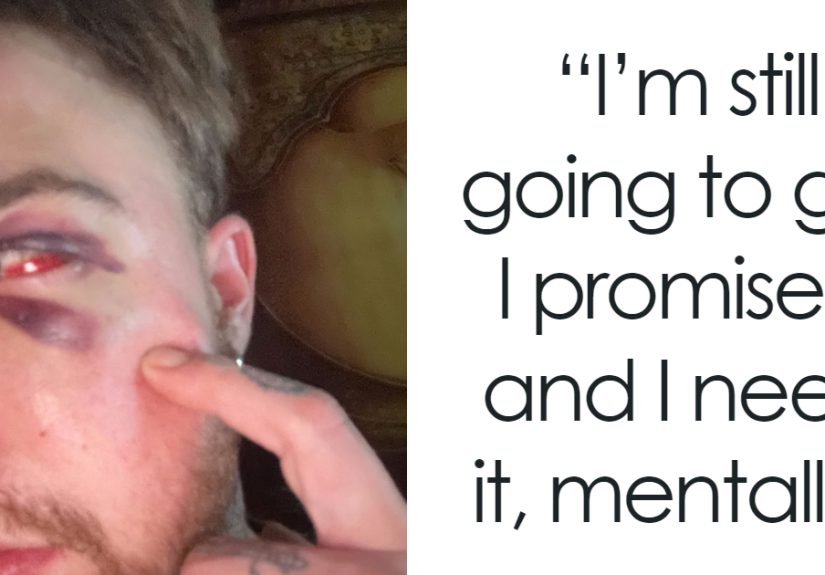
According to widely circulated reporting from July 2024, Geneva-based trans creator Morgan Zuli Bahon said he was assaulted after entering a bar while trying to recover a lost backpack. In his account, tensions escalated after staff saw identification documents that still marked him as female. He has said he was then forced out and attacked, and that more than one man was involved. Parts of the account remain disputed, including how many people allegedly took part and what exactly triggered the violence. That distinction matters, because allegations are not verdicts, and serious writing should not confuse the two.
Still, the broad outline is enough to explain why the case resonated so quickly. A trans man walks into a public establishment. His documents do not match his lived identity. The atmosphere turns hostile. He leaves injured and believes bias was part of the reason. Sadly, none of those beats feel unusual to many trans readers. That is the grim familiarity at the center of this story.
Even before any court or police determination, the incident speaks to a pattern that advocacy groups and researchers have tracked for years: identity documents can expose trans people to scrutiny, disbelief, and humiliation in ordinary situations that cisgender people barely notice. Ordering a drink, entering a venue, explaining a name, handing over an ID, using a restroom, answering a receptionist, talking to a police officer. None of these should feel like a pop quiz with physical stakes. Yet for many trans people, they can.
Why the hate crime claim carries weight
The phrase hate crime is not just a dramatic label for a terrible event. It points to motive. It asks whether a person was targeted not only as an individual, but as a symbol of a group someone despises, fears, or wants to punish. That is why these cases spark broader outrage. A bias-motivated attack does not stop with one victim; it sends a message to everyone who shares that identity: you could be next, stay quiet, stay small, stay alert.
That community-wide ripple effect is one reason trans people often read incidents like this differently from the general public. Outsiders sometimes ask, “But can we prove bias?” Communities who live with daily hostility often ask a different question: “How many clues do you need?” The answer, of course, belongs to investigators and courts. But the emotional truth is easier to understand. When harassment, mockery, exclusion, and public confrontation are already common, an assault does not feel disconnected from the culture around it. It feels like the culture finally took off its mask.
That does not mean every assault on a trans person is automatically a hate crime. It does mean context matters. If someone is challenged, mocked, singled out, or treated as suspicious because of their gender identity, then violence cannot be examined in a social vacuum. A punch does not come with a neat label attached. Motive is usually reconstructed from behavior, language, witnesses, prior hostility, and circumstance. That process can be messy. It is still necessary.
Switzerland’s progress story has an asterisk
Switzerland often enjoys a polished global reputation: efficient trains, tidy cities, democratic rituals, and enough postcard scenery to make your camera feel underdressed. But social progress is never guaranteed by nice mountains. On LGBTQ+ protections, Switzerland has moved forward, but not evenly and not completely.
In 2020, Swiss voters backed a measure extending anti-discrimination protections related to sexual orientation. Marriage equality and simplified legal gender-change procedures later marked additional progress. On paper, that sounds encouraging, and it is. On the street, however, paper is not body armor.
One of the central limitations in the Swiss legal landscape has been the uneven protection offered to sexual orientation versus gender identity. That gap matters because trans people often face hostility that is specifically tied to gender expression, appearance, or documentation. In other words, a country can celebrate legal milestones and still leave plenty of room for everyday intimidation.
That contradiction helps explain why recent Swiss policy developments are so revealing. The government has now acknowledged the need for a national action plan against anti-LGBTQI+ hate crimes. Translation: the problem is serious enough that it can no longer be waved away with a national shrug and a brochure about tolerance.
The numbers behind the fear
The alleged Geneva assault did not emerge in a vacuum. Swiss and European data suggest that many LGBTQ+ people, and especially gender minorities, still face harassment, violence, and low confidence in law enforcement. In Switzerland, survey findings and advocacy reports have shown that gender minority participants report higher rates of discrimination and physical violence than sexual minorities. Reporting to police remains stubbornly low.
That last point deserves a spotlight and maybe a megaphone. Underreporting is not a side note. It is the whole weather system. Many victims do not go to police because they expect indifference, misgendering, secondary humiliation, or the classic bureaucratic masterpiece known as “nothing happened here.” When reporting does occur, it may still fail to capture the bias element clearly. The result is a public conversation in which official numbers can look smaller than lived reality.
In 2025, Swiss reporting pointed to 309 anti-LGBTQ+ hate-crime and discrimination cases in one year, with trans people accounting for roughly half. Since 2020, reports have risen sharply. Some of that increase may reflect improved awareness and willingness to report. Some of it may reflect worsening hostility. Most likely, it is both. Social scientists love nuance; victims usually would have preferred safety.
The broader European picture is not much more comforting. A major 2024 survey by the European Union Agency for Fundamental Rights found that LGBTIQ people in the EU reported less discrimination in some areas than before, yet more physical or sexual attacks overall. Trans and intersex people reported the highest rates. So yes, visibility is up. But so is backlash. Progress, as usual, refuses to travel in a straight line.
Public spaces are where “ordinary” danger often lives
One of the most revealing aspects of the Geneva case is the setting. This was not described as a hidden alley, an extremist rally, or a dramatic midnight chase scene from a bad streaming thriller. It was a public venue in daylight. That matters because anti-trans hostility often shows up in painfully ordinary spaces: bars, sidewalks, stations, schools, stores, workplaces, waiting rooms, and bathrooms.
Researchers in the United States have documented a similar pattern. Public-facing places are frequently where gender identity becomes legible to strangers and where strangers feel newly entitled to police it. The logic is cruel and simple: the more visible a person seems, the more permission some people imagine they have to challenge, mock, or confront them.
Bars and nightlife settings can be especially volatile because they combine crowds, alcohol, gender performance, social gatekeeping, and fast judgments. They are supposed to be places for release, fun, and occasionally regrettable karaoke. For many queer and trans people, they can also become arenas where a small moment of scrutiny turns into something much worse.
And then there is the document problem. When a trans person’s ID does not match their name, marker, or presentation, the mismatch can become an invitation for suspicion. It should not. But it often does. The document, in that moment, stops being a neutral administrative tool and becomes a trigger for confrontation. The paperwork does not throw the first insult, but it can accidentally hand someone else a script.
Why this story keeps spreading online
Stories like this travel because they feel intensely personal and politically symbolic at the same time. Morgan Zuli Bahon is not only a private citizen; he is also a public-facing trans creator. That means the alleged assault is read both as an attack on a person and as a warning shot toward visibility itself. It asks a chilling question: what happens when being known makes you easier to target?
At the same time, online audiences are savvy enough to notice conflicting accounts, missing official updates, and the fog that surrounds fast-moving cases. That uncertainty can create two bad habits. One is gullibility, where people accept every rumor because it fits what they already believe. The other is reflexive cynicism, where any uncertainty becomes an excuse to dismiss the victim entirely. Neither response is especially noble.
The better approach is slower and more adult. Hold two ideas at once. First, allegations should be described carefully. Second, the social conditions that make the allegation plausible are real and well documented. You can avoid sensationalism without falling into denial. You can reject graphic exploitation while still naming the seriousness of the claim. You can, in short, keep your brain switched on.
This case is about more than one bar fight
Reducing this story to a single ugly confrontation misses the larger point. The real issue is not whether one venue in Geneva had a very bad day. It is whether trans people are routinely forced to navigate public life with an extra layer of strategic vigilance that others do not have to carry. That vigilance has a cost. It drains joy, spontaneity, mobility, and trust.
When people say a case like this affects the whole community, that is not rhetoric. It is logistics. After stories like this circulate, people change routes, avoid bars, rethink travel, rehearse explanations for ID checks, text friends when they get home, and second-guess whether a look from a stranger is nothing or a warning. The violence does not end at the moment of impact. It lingers as anticipation.
That is why calls for better reporting systems, better police training, faster legal recognition, and trauma-informed responses matter. They are not abstract policy wishlist items for conference panels with weak coffee. They shape whether a person feels protected enough to live openly or pressured to disappear into caution.
Experiences related to this story: what many trans people describe after violence or threat
To understand why the Geneva case struck such a nerve, it helps to look at the experiences that often surround anti-trans violence, even when individual stories differ. Many trans people describe the aftermath of an assault, threat, or public humiliation as a double injury. First there is the incident itself. Then there is the exhausting parade that follows: retelling, proving, explaining, correcting, defending, waiting, and wondering whether anyone believes them without first requiring a stack of emotional paperwork.
A common experience is hypervigilance. A person who once walked into a bar, store, clinic, or train station with ordinary caution may begin scanning every face, doorway, and tone shift. Was that glance curious, rude, or dangerous? Is that staff member confused or hostile? Is this a place where my ID will become a problem? Trauma rarely arrives with dramatic orchestra music. More often, it sneaks in by changing how a body moves through routine space.
Another common experience is the loss of ease in public life. People may avoid nightlife, postpone travel, stop using certain facilities, or refuse to go out alone. This is not irrational. It is adaptation. Yet the emotional cost is steep. Everyday freedom starts shrinking around the edges. What used to be casual becomes calculated. What used to be social becomes strategic. A simple errand can begin to feel like a negotiation.
There is also the issue of narration. Survivors often have to watch strangers online debate whether the attack was “really” about bias, whether they “provoked” something, or whether they are “too visible.” That public doubt can sting almost as much as the event itself because it turns a person’s pain into a spectator sport. People who have never had to think about their ID, voice, name, or gender presentation can become instant armchair detectives. It is a very modern cruelty: being hurt once in person and then cross-examined by the internet for free.
Medical recovery does not automatically end the story either. Even when physical injuries improve, sleep can become unreliable, concentration can wobble, and ordinary sounds or situations may suddenly feel louder than they used to. Some people feel anger. Others feel embarrassment, guilt, numbness, or a strange pressure to “bounce back” quickly so they do not alarm friends or lose work. Trauma is messy, unglamorous, and famously bad at respecting schedules.
For trans people specifically, the aftermath can be tied to identity recognition. Being misgendered by staff, police, media, or official paperwork can deepen the harm because it tells the survivor that even while seeking help, they are still expected to explain who they are before anyone addresses what happened to them. That is why respectful reporting and accurate identification matter. They are not cosmetic gestures. They affect whether a person feels seen as a victim, a witness, a citizen, and a human being.
Yet another common thread is community response. Fear spreads quickly, but so does solidarity. After incidents like this, friends check in, queer groups mobilize, creators speak out, and communities share practical support, legal resources, rides, accompaniment, and emotional presence. That support does not erase the harm, but it changes the ending. It says the story will not belong only to the attackers, the rumor mill, or the official report. It also belongs to the people who refuse to let violence write the final sentence.
That is one reason this case matters well beyond one person and one city. It reminds readers that anti-trans violence is not just about isolated bad actors. It is also about the climate that teaches some people they can challenge trans existence in public, and the systems that too often make survivors do all the heavy lifting afterward. If there is any hopeful note here, it is this: visibility still persists. People keep showing up, telling the truth as they know it, demanding better institutions, and insisting that public life should include them without conditions. That should be the baseline, not the brave exception.
Final takeaway
The alleged assault on a 29-year-old trans man in Switzerland is not important only because it is shocking. It is important because it is recognizable. It fits a pattern in which visibility, documentation, public space, and bias collide in ways that leave trans people exposed and then force them to prove the exposure was real. Switzerland has made legal progress, but the existence of new protections does not cancel the old habits of prejudice. A modern democracy can pass reforms and still leave people vulnerable at the bar, at the station, at the counter, and in the split second when someone decides their identity is up for judgment.
That is why this story deserves more than outrage clicks. It deserves careful reporting, credible investigation, and a refusal to treat anti-trans violence as either inevitable or exaggerated. Serious societies do not ask marginalized people to be endlessly resilient while public systems stay mediocre. They build conditions in which ordinary life is safe, boring, and unremarkable. For trans people, that should not be a radical fantasy. It should be Tuesday.