Table of Contents >> Show >> Hide
- Who Is Jared Isaacman, the Billionaire Astronaut Behind Polaris Dawn?
- What Was the Polaris Dawn Mission?
- The First Private Spacewalk: Why It Was a Big Deal
- How SpaceX Made the Spacewalk Possible
- What Happened During the Private Spacewalk?
- Why the Mission Reached Such a High Orbit
- The Role of Sarah Gillis, Anna Menon, and Scott Poteet
- Why SpaceX Cares About Private Spacewalks
- Commercial Spaceflight Is Growing Up
- The Risks Behind the Historic Achievement
- What Polaris Dawn Means for the Future of Space Exploration
- Experiences and Lessons Inspired by the First Private Spacewalk
- Conclusion
- SEO Tags
For most of human spaceflight history, a spacewalk was the ultimate government-only activity. You needed a national space agency, a giant operations team, years of training, and the calm emotional wiring of someone who can look at Earth from orbit and say, “Yes, opening the door now sounds reasonable.” Then came Jared Isaacman, the billionaire entrepreneur and private astronaut who helped push commercial spaceflight into a new era through the Polaris Dawn mission with SpaceX.
The headline sounds like something from a science-fiction movie: a billionaire astronaut working with SpaceX to launch the first private spacewalk. But this was not a publicity stunt wearing a shiny helmet. Polaris Dawn became a real milestone in commercial spaceflight, blending private funding, SpaceX engineering, scientific research, new spacesuit development, and a crew willing to test hardware in one of the least forgiving environments imaginable.
At the center of the story was Isaacman, founder of Shift4 and commander of the mission. He had already flown to orbit on Inspiration4, the first all-civilian orbital mission, in 2021. With Polaris Dawn, he aimed higherliterally and historically. The mission was designed not only to send a private crew farther from Earth than any humans had traveled since the Apollo era, but also to test SpaceX’s new extravehicular activity suit during the first commercial astronaut spacewalk.
Who Is Jared Isaacman, the Billionaire Astronaut Behind Polaris Dawn?
Jared Isaacman is not the classic astronaut profile people grew up seeing on posters: military test pilot, government selection process, NASA blue flight suit, and enough acronyms to fill a cereal box. He is a tech entrepreneur, pilot, philanthropist, and private astronaut who built a fortune in payments technology and then used part of it to help expand private human spaceflight.
That does not mean he simply bought a ticket and floated around for the view. Isaacman trained intensively with SpaceX, flew complex aircraft, participated in mission simulations, and helped organize programs that tied spaceflight to broader goals. Inspiration4 raised awareness and funds for St. Jude Children’s Research Hospital. Polaris Dawn continued that connection while adding a more technical purpose: advance the systems needed for future missions beyond low Earth orbit.
In plain English, Isaacman wanted to help prove that private spaceflight could do more than create beautiful livestreams and excellent helmet selfies. It could test equipment, gather biomedical data, trial communication systems, and take meaningful steps toward the kind of space infrastructure needed for Moon, Mars, and long-duration missions.
What Was the Polaris Dawn Mission?
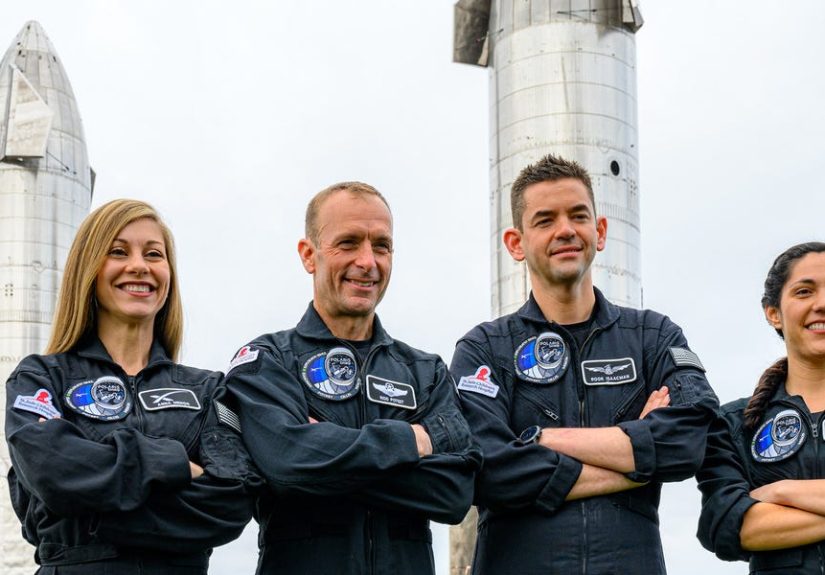
Polaris Dawn was the first mission in the Polaris Program, a privately funded series of SpaceX missions led by Isaacman. The crew included Jared Isaacman as commander, retired U.S. Air Force pilot Scott “Kidd” Poteet as pilot, and SpaceX engineers Sarah Gillis and Anna Menon as mission specialists. That crew mix mattered. It combined private astronaut experience, aviation discipline, spacecraft operations knowledge, and engineering expertise from inside SpaceX itself.
The mission launched aboard a SpaceX Falcon 9 rocket and flew in the Crew Dragon spacecraft Resilience. Unlike missions to the International Space Station, Polaris Dawn did not dock with an orbiting laboratory. The crew operated independently in Earth orbit, which meant careful planning was essential. There was no station airlock to use, no convenient orbital garage to pull into, and no “let’s just borrow a wrench from the ISS” backup plan.
Polaris Dawn had several major goals. First, it aimed to reach a very high Earth orbit, exposing the crew to conditions useful for studying radiation and human health. Second, it planned to conduct the first private spacewalk. Third, it tested SpaceX’s new EVA suit, a major step beyond the company’s launch-and-entry suits. Fourth, it explored laser-based communication through Starlink, pointing toward future high-bandwidth spacecraft connectivity. Finally, it supported research on how the human body responds to spaceflight.
The First Private Spacewalk: Why It Was a Big Deal
A spacewalk, officially called an extravehicular activity or EVA, is not simply “going outside.” On Earth, going outside means grabbing your keys, maybe wearing sunscreen, and hoping your neighbor does not start a conversation when you are in a hurry. In orbit, going outside means dealing with vacuum, radiation, extreme temperature swings, micrometeoroid risk, suit pressure, oxygen supply, communication systems, mobility limitations, and the deeply inconvenient fact that there is no sidewalk.
Before Polaris Dawn, spacewalks had been performed by government astronauts from agencies such as NASA, Roscosmos, the European Space Agency, and China’s space program. They were used to repair spacecraft, build space stations, test equipment, and conduct experiments. The Polaris Dawn EVA marked the first time a privately funded commercial mission carried out such an operation.
Isaacman and SpaceX engineer Sarah Gillis were the two crew members who partially exited Dragon through the forward hatch. Scott Poteet and Anna Menon remained inside, but because Crew Dragon does not have an airlock, the entire cabin had to be depressurized. That meant all four astronauts wore SpaceX EVA suits and were exposed to the vacuum environment while the hatch was open. It was a bold design choiceand also a reminder that space exploration often begins with someone saying, “This is complicated, but we have a checklist.”
How SpaceX Made the Spacewalk Possible
The Polaris Dawn spacewalk required SpaceX to develop and test a new EVA suit. SpaceX’s earlier suits were intravehicular activity suits, designed for launch, landing, and emergency cabin pressure situations. They were sleek, custom-fitted, and futuristic enough to make old sci-fi wardrobes look like laundry day. But they were not meant for direct exposure to the vacuum of space.
The EVA suit built for Polaris Dawn added important capabilities: improved mobility, thermal protection, pressure support, helmet upgrades, and life-support connections through umbilicals. The suit also needed to function inside Dragon before and after the EVA. That is a difficult engineering balance. A spacesuit must protect a human body like a tiny spacecraft, but it cannot be so stiff that the astronaut moves like a refrigerator with ambition.
SpaceX also had to modify the Dragon spacecraft and develop procedures for depressurizing and repressurizing the cabin. Since Dragon lacks an airlock, the mission resembled earlier Gemini-era spacewalks in one important way: the spacecraft itself became part of the EVA environment. Every seal, suit connection, oxygen procedure, and pressure timeline had to work properly.
What Happened During the Private Spacewalk?
During the EVA, Isaacman exited first, rising through Dragon’s hatch and using a structure called the “Skywalker” mobility aid. He did not float freely away from the spacecraft like a Hollywood astronaut having a poetic crisis. Instead, he remained tethered and focused on suit mobility tests. Gillis followed and performed her own movements, gathering feedback on how the suit worked in real conditions.
The point was not to repair a satellite or bolt a new module to a station. The point was to test the suit and procedures. How well could the astronauts move? How did the suit behave under pressure? Could they control body position? How did communication, visibility, restraint, and comfort perform during a live EVA? These questions sound technical because they are. In space, “Can you bend your elbow well enough?” becomes a mission-critical question, not a gym complaint.
The spacewalk was brief compared with many NASA EVAs, but it was historic because it demonstrated that a commercial crewed spacecraft, private mission architecture, and privately developed suits could support an EVA. It was a proof-of-concept moment. For future commercial space stations, lunar missions, or Mars-bound vehicles, scalable suit technology will be essential.
Why the Mission Reached Such a High Orbit
Polaris Dawn was not only about the spacewalk. The mission also reached an extremely high Earth orbit, with SpaceX reporting that Dragon and the crew reached 1,408.1 kilometers from Earth. That altitude placed the crew farther from Earth than any humans had traveled since the Apollo program. It also sent them through regions where radiation exposure is higher than in the orbit of the International Space Station.
That was intentional. Future deep-space missions will require a better understanding of how radiation affects the human body. Astronauts going to the Moon, Mars, or long-duration private stations will face risks that low Earth orbit only partly reveals. Polaris Dawn helped collect data that could inform medical planning, spacecraft shielding, mission design, and astronaut safety.
This is one reason the mission mattered beyond the glamour of a private spacewalk. It was not just “rich person goes high.” It was a technology and research mission using private resources to test conditions relevant to the next stage of human spaceflight.
The Role of Sarah Gillis, Anna Menon, and Scott Poteet
Although Isaacman’s billionaire status drew headlines, Polaris Dawn was not a one-person story. Sarah Gillis, a SpaceX engineer, became one of the first two people to conduct a commercial spacewalk. Her role was especially meaningful because she helped represent the engineering culture behind the mission. She was not merely riding in the spacecraft; she was testing systems that people like her had helped bring to life.
Anna Menon, also a SpaceX engineer, served as a mission specialist and medical officer. Her experience in space operations and biomedical work added another layer of capability to the crew. Scott Poteet, a retired Air Force pilot and close collaborator of Isaacman, served as pilot. Together, the crew showed how commercial missions may increasingly blend professional pilots, private astronauts, engineers, and medical specialists.
That mix may become common in the future. Private space stations, commercial research labs, and lunar transportation systems will need crews with varied skills. Not everyone in space will fit the old astronaut mold. Some may be engineers, doctors, scientists, artists, teachers, or entrepreneurs. Space, in other words, is slowly expanding its hiring department.
Why SpaceX Cares About Private Spacewalks
For SpaceX, Polaris Dawn was a practical test of technologies that may matter for much larger ambitions. Elon Musk has often described SpaceX’s long-term goal as making life multiplanetary. Whether one sees that as visionary, wildly difficult, or both, the technical requirements are enormous. Humans living and working beyond Earth will need suits, habitats, vehicles, communication networks, emergency procedures, and the ability to perform repairs outside spacecraft.
A private spacewalk is one small but essential piece of that puzzle. If astronauts on future missions need to inspect a spacecraft, repair hardware, build structures, or move between vehicles, EVA systems must be reliable and scalable. SpaceX’s EVA suit for Polaris Dawn was not the final destination. It was an early version, tested in real conditions, with lessons to be folded into future designs.
That is how space technology often advances: one risky, careful, heavily monitored step at a time. The first version is rarely perfect. The value comes from testing, measuring, learning, and improving. Polaris Dawn gave SpaceX data that no ground test could fully replace.
Commercial Spaceflight Is Growing Up
The phrase “space tourism” is often used to describe private space missions, and sometimes it fits. But Polaris Dawn showed why that label can be too small. Yes, private money made the mission possible. Yes, the crew was not a traditional government astronaut crew. But the mission also included serious technology demonstrations and scientific goals.
Commercial spaceflight is moving from novelty to infrastructure. SpaceX has already transported NASA astronauts to the International Space Station. Axiom Space has organized private astronaut missions to the ISS. Blue Origin and Virgin Galactic have flown suborbital passengers. Companies are developing commercial space stations. Against that backdrop, Polaris Dawn looked less like an isolated adventure and more like a preview of a developing industry.
Still, the mission raised important questions. Who gets access to space? How should private missions be regulated? What safety standards should apply? How can commercial ambition support public science rather than simply create orbital luxury experiences? These questions will only grow more urgent as private missions become more capable.
The Risks Behind the Historic Achievement
Spacewalks are dangerous even when performed by career astronauts with years of agency training. Polaris Dawn added unique challenges. The mission used a commercial spacecraft without an airlock, new EVA suits, and a private crew operating at high altitude. Every part of the operation required careful planning.
Cabin depressurization alone is a serious procedure. The crew had to prepare their bodies to reduce the risk of decompression sickness, manage suit pressure, monitor oxygen, and follow strict timelines. Once the hatch opened, the margin for casual improvisation disappeared. Space is not impressed by confidence. It prefers engineering.
That is why the success of the EVA mattered. It did not mean private spacewalks are suddenly routine. It meant one carefully designed mission proved that the concept could work. Future missions will need to build on that foundation with humility, testing, and transparent safety practices.
What Polaris Dawn Means for the Future of Space Exploration
The first private spacewalk may eventually be remembered as a turning point. Not because it replaced government space programs, but because it showed how private missions can contribute to the broader space ecosystem. NASA still plays a central role in exploration, science, standards, and deep-space planning. But commercial partners are increasingly helping develop transportation, spacesuits, communications, and mission operations.
In the future, private astronauts may help maintain commercial stations, conduct pharmaceutical research in microgravity, repair orbital platforms, test lunar equipment, or support missions farther from Earth. The ability to leave a spacecraft safely is essential to many of those scenarios.
Polaris Dawn also reminded the public that spaceflight progress is not always a giant rocket launch or a Moon landing. Sometimes it is a suit joint, a hatch mechanism, a pressure procedure, a communications test, or a crew calmly doing exactly what they trained to do while Earth spins silently below.
Experiences and Lessons Inspired by the First Private Spacewalk
The story of a billionaire astronaut working with SpaceX to launch the first private spacewalk offers more than an impressive space milestone. It also provides a surprisingly human set of lessons about ambition, preparation, teamwork, and what it means to step into the unknown. Most of us will never climb out of a Dragon spacecraft hundreds of miles above Earth, which is probably good news for anyone who gets nervous on a tall ladder. But the mindset behind Polaris Dawn applies far beyond orbit.
The first lesson is that big goals require boring preparation. The public sees the dramatic moment: the hatch opens, Earth glows below, and an astronaut rises into history. What the public does not see as clearly are the years of training, engineering reviews, simulations, medical checks, suit tests, emergency planning, and repeated practice. Every historic moment sits on top of a mountain of unglamorous work. Whether someone is launching a company, writing a book, building a website, or training for a marathon, the “spacewalk moment” only happens because of the quiet checklist days before it.
The second lesson is that courage is not the absence of risk. Polaris Dawn did not make space safe in the way a living room is safe. Instead, the mission identified risks, studied them, trained for them, and created systems to reduce them. That is a useful model for any ambitious project. Smart risk is not reckless. It is measured, prepared, and supported by people who understand the consequences. Isaacman and the SpaceX team did not succeed by pretending the vacuum of space was friendly. They succeeded by respecting it.
The third lesson is that innovation often comes from partnerships. Polaris Dawn was privately funded, but it stood on decades of public spaceflight knowledge, NASA-supported commercial crew development, SpaceX engineering, aviation experience, and medical research. Breakthroughs rarely belong to one person alone. Even when a billionaire’s name leads the headline, the achievement depends on technicians, engineers, trainers, recovery teams, software specialists, doctors, and mission controllers. History may remember the person who opened the hatch, but success belongs to the whole room.
The fourth lesson is that exploration changes perspective. Astronauts often describe Earth as fragile, borderless, and beautiful from space. That view can sound sentimental until you remember that they are seeing the planet without the usual noise: no traffic, no politics on the horizon, no city limits drawn in glowing ink. Polaris Dawn’s images of Earth behind a private astronaut were not just pretty pictures. They were reminders that technological progress should ultimately serve life back home.
Finally, Polaris Dawn shows that the future arrives unevenly. One day, private spacewalks may support commercial stations, lunar construction, or Mars-bound spacecraft. Today, they are rare, risky, and expensive. That is how many frontiers begin. The first steps look unusual, costly, and even a little outrageous. Then the lessons accumulate. The tools improve. The costs change. The impossible becomes difficult, then manageable, then part of the next generation’s normal vocabulary.
For readers, the inspiration is not “go buy a rocket.” That advice is financially aggressive and may upset your accountant. The real takeaway is simpler: choose a mission big enough to require growth, surround yourself with people who know what they are doing, prepare more than your ego thinks necessary, and respect the risks. The first private spacewalk was not only a milestone in commercial spaceflight. It was a reminder that bold futures are built by people willing to combine imagination with discipline.
Conclusion
Jared Isaacman’s work with SpaceX on Polaris Dawn transformed the idea of a private spacewalk from a futuristic dream into a real chapter of space history. The mission pushed Crew Dragon to record-setting heights, tested SpaceX’s EVA suit, gathered valuable human spaceflight data, and proved that commercial crews can take on increasingly complex orbital operations.
The first private spacewalk does not mean space has become easy, cheap, or casual. It means the frontier is changing. Government agencies, private companies, engineers, entrepreneurs, and astronauts are now shaping the next phase together. Polaris Dawn may be remembered not only for the moment Isaacman and Gillis emerged from Dragon, but for what that moment suggested: the era of commercial space exploration is no longer standing at the doorway. It has opened the hatch.