Table of Contents >> Show >> Hide
- Who Is Gavin Jackson?
- The Signature: Minimalism Behind Historic Facades
- Visual Tranquility as a Design Principle
- Influences: From Fallingwater to the Barcelona Pavilion
- Materials: Stone, Wood, Plaster, Light
- London as the Perfect Testing Ground
- Why the Work Feels Luxurious Without Being Loud
- Lessons Homeowners Can Learn from Gavin Jackson’s Interiors
- Specific Design Ideas Inspired by the Visit
- Extended Experience: Visiting Gavin Jackson’s London
- Conclusion
Walk into a Gavin Jackson interior and the first thing you notice is not a chandelier, a heroic staircase, or a sofa trying desperately to become an influencer. You notice quiet. Not silence exactly, but visual quiet: the kind that makes a London room feel like it has taken a deep breath, straightened its collar, and politely asked the clutter to leave.
Architect Visit: Gavin Jackson in London is a story about restraint, precision, historic buildings, and the surprisingly emotional power of a perfectly judged line. Jackson is a London-based architect known for minimalist interiors, carefully detailed residential work, and a gift for placing calm contemporary spaces behind older, often traditional facades. His work sits in that fascinating British design zone where Georgian, Victorian, and Edwardian bones meet modern living, natural materials, and almost monastic order.
The result is not cold minimalism. It is not the sort of room where you fear being judged by a chair. Instead, Jackson’s best interiors feel measured, tactile, and deeply human. They are designed for people who like clarity, but still own books; people who appreciate emptiness, but not emptiness as a personality disorder.
Who Is Gavin Jackson?
Gavin Jackson was born in Yorkshire, England, in 1960 and developed an early fascination with art, geometry, construction, and the built environment. His architectural path began with hands-on material knowledge: wood, stone, brick, concrete, copper, and lead. That practical grounding matters. In his interiors, minimalism is not just an aesthetic pasted over a room like fashionable wallpaper. It is built into the way junctions meet, how stone is cut, how light lands, and how storage disappears without acting smug about it.
Jackson studied in Oxford and later worked in London alongside major figures including Norman Foster, Claudio Silvestrin, and John Pawson. That combination tells you a great deal. From Foster, one senses a respect for technical resolution and architectural discipline. From Silvestrin, there is an affinity for serenity, contemplation, and material gravitas. From Pawson, there is the pursuit of reduction: not less for the sake of less, but less so the essential can finally speak.
Jackson founded his own practice in 1997. Since then, Gavin Jackson Architects has developed a portfolio that includes private residences, apartments, townhouses, lofts, and interiors across London and Europe. Project names associated with the studio include Mayfair Town House, Bolton Gardens, Covent Garden Warehouse, Putney Apartment, Primrose Hill, Maida Vale Loft, and earlier works such as the Salvati Apartment in Rome, the Chen Apartment in Kensington, and the Patch Apartment in Mayfair.
The Signature: Minimalism Behind Historic Facades
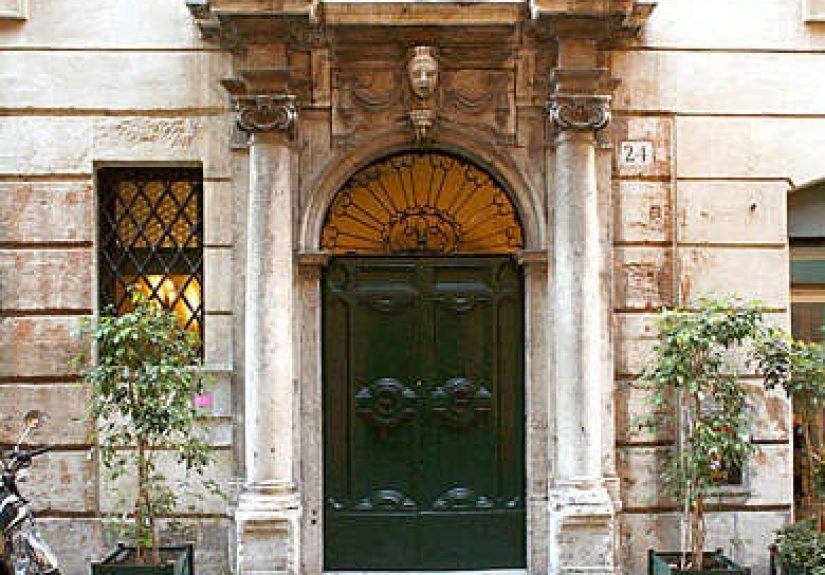
The phrase most often attached to Jackson’s work is “minimalist interiors behind historic facades.” It sounds simple, but in London it is practically an Olympic event. London’s residential architecture is layered, protected, patched, extended, adapted, and occasionally held together by optimism and planning paperwork. To create a calm modern interior inside a period shell requires far more than white walls and a confident mood board.
Historic London houses often come with narrow plans, thick walls, awkward staircases, existing structural limits, conservation expectations, and a duty to respect the exterior character of the street. The challenge is not to erase history. The challenge is to make old buildings work for modern life while preserving their dignity. Done badly, the result feels like a luxury showroom trapped inside a museum. Done well, the past and present behave like civilized dinner guests.
Jackson’s work tends toward the second outcome. His interiors often use disciplined planes, concealed storage, pale stone, timber, plaster, glass, and carefully controlled light. The surfaces are spare, but not empty. Details are reduced, but not ignored. In fact, the fewer details there are, the more each one has to work. A shadow gap becomes punctuation. A stair rail becomes a line drawing. A basin becomes sculpture. A door frame becomes a decision.
Visual Tranquility as a Design Principle
Gavin Jackson Architects describes its work as an antidote to overload: spaces of clarity, restraint, and calm. That idea feels especially relevant now. Most of us live in a daily blizzard of screens, alerts, tabs, deliveries, passwords, and objects whose only job seems to be asking where the charger is. A minimal interior, at its best, is not an aesthetic flex. It is a form of environmental editing.
Visual tranquility does not mean removing personality. It means removing friction. It means a kitchen where the eye can rest because appliances, handles, and seams are considered. It means a bathroom where stone, water, and light do more talking than decorative accessories. It means a living room with enough emptiness for conversation to feel important. In Jackson’s interiors, calm is not accidental. It is designed, measured, and detailed into place.
Influences: From Fallingwater to the Barcelona Pavilion
Jackson’s early architectural imagination was shaped by two modern masterpieces: Frank Lloyd Wright’s Fallingwater and Mies van der Rohe’s Barcelona Pavilion. That pairing is revealing. Fallingwater is about architecture and nature becoming inseparable, a house that does not merely sit near a waterfall but seems to grow from it. The Barcelona Pavilion, designed by Mies van der Rohe and Lilly Reich, is about planes, proportion, stone, reflection, and spatial flow.
You can see echoes of both in Jackson’s work. From Fallingwater comes the belief that architecture should choreograph the relationship between body, material, and landscape. From the Barcelona Pavilion comes the confidence that a few planes, handled beautifully, can create more drama than a room full of decorative shouting. Add the influence of artists such as Richard Serra, Donald Judd, and James Turrell, and the picture becomes clearer: mass, geometry, light, space, and perception are central to the experience.
That artistic lineage helps explain why a Jackson interior can feel closer to a gallery installation than a conventional domestic renovation. Yet the work remains practical. A London home still needs somewhere to put coats, coffee cups, laundry, and the mysterious cables that breed in drawers after midnight.
Materials: Stone, Wood, Plaster, Light
Minimalism lives or dies by materials. When a room has fewer decorative layers, the quality of stone, joinery, plaster, and light becomes impossible to fake. Jackson’s interiors often rely on materials with weight and permanence: travertine, limestone, pale timber, concrete, glass, and finely finished plaster. These are not background actors. They are the cast.
One memorable example is the use of sculptural bathroom sinks in a Mayfair project, where travertine basins were commissioned and cut with the care normally reserved for ecclesiastical stonework. That sort of detail says a lot about the practice. A sink is not simply a sink. It is a small piece of architecture. It receives water, catches light, anchors a room, and quietly reminds the user that everyday rituals deserve better than plastic clutter and bad grout.
Wood is equally important. In minimalist interiors, timber brings warmth and grain, softening the severity of hard surfaces. Plaster creates a continuous visual field. Glass introduces reflection and openness. Light, however, is the secret material. It can turn a blank wall into a painting, a stairwell into a procession, and a stone basin into a small geological event.
London as the Perfect Testing Ground
London is not an easy city for minimalism. It is old, dense, damp, regulated, expensive, and emotionally attached to brick. That is precisely why minimalist architecture in London can be so interesting. A pure white box in an empty field is one thing. A precise, serene interior inserted into a complicated historic building is another.
In areas such as Kensington, Mayfair, Putney, Covent Garden, Maida Vale, and Primrose Hill, architects must often deal with period proportions, protected street elevations, planning considerations, neighboring properties, and clients who want modern comfort without losing the charm that made them buy the building in the first place. This is where Jackson’s approach makes sense. He does not appear interested in theatrical contrast for its own sake. The goal is balance: historic presence outside, contemporary calm inside.
The best London renovations understand that the facade is part of the city’s shared memory. Behind it, life can evolve. Kitchens can open, bathrooms can become spa-like, stairs can be refined, storage can vanish into walls, and daylight can be pulled deeper into the plan. The exterior speaks to continuity. The interior speaks to how people live now.
Why the Work Feels Luxurious Without Being Loud
Many luxury interiors announce themselves with obvious signals: marble everywhere, oversized lighting, shiny metal, furniture that appears to have arrived by yacht. Jackson’s luxury is quieter. It is in the alignment of a reveal, the depth of a window opening, the softness of natural light, the patience of stone, and the absence of visual noise.
This type of luxury is more difficult to photograph in a quick scroll, but more rewarding to inhabit. It does not shout across the room. It improves the room. It gives everyday activities a better stage. Making tea feels calmer. Walking barefoot across stone feels intentional. Opening a concealed cabinet feels oddly satisfying, as if the house is sharing a secret but has excellent manners.
The humor of minimalism, of course, is that it often requires a lot of work to look effortless. Behind a clean wall may be complex structure, ventilation, lighting, storage, wiring, and problem-solving. The visible simplicity is supported by invisible labor. Minimalism is not cheapness. It is discipline with a very good tailor.
Lessons Homeowners Can Learn from Gavin Jackson’s Interiors
1. Edit Before You Decorate
The first lesson is editing. Before buying more furniture, more lamps, or another decorative bowl that will spend its life holding keys, ask what the room actually needs. Jackson’s work suggests that space itself has value. A blank wall can be generous. An uncluttered hallway can feel luxurious. A quiet room can do more for the nervous system than a dozen accessories.
2. Let Materials Carry the Mood
Instead of relying on pattern or novelty, choose materials with depth. Stone, timber, limewash, plaster, wool, linen, and bronze age gracefully. They do not need to perform tricks. Good materials become more interesting as light changes throughout the day.
3. Treat Storage as Architecture
Minimalism fails when storage is ignored. Real people own vacuum cleaners, coats, paperwork, towels, and at least one drawer full of unidentified screws. Built-in storage, concealed joinery, and carefully planned service zones allow the visible rooms to remain calm.
4. Respect the Building You Have
In a historic home, the goal should not be to bully the building into trendiness. Listen to its proportions, openings, and structure. A good renovation improves flow and function while preserving the character that made the home worth saving.
5. Use Light Like a Material
Light is not decoration after the fact. It should be part of the architecture. Consider daylight, shadow, task lighting, art lighting, and the evening mood. A single wall wash can be more powerful than a dramatic fixture trying too hard at dinner.
Specific Design Ideas Inspired by the Visit
For readers planning a renovation, the Gavin Jackson approach offers practical inspiration. In an entry hall, consider reducing visual clutter with full-height concealed cupboards, a stone or timber floor, and one carefully placed artwork. In a bathroom, think of the basin, mirror, and light as a composition rather than separate purchases. In a kitchen, minimize visible handles, align cabinet seams, and let the worktop material define the room’s tone.
In a living room, resist the urge to fill every corner. Leave breathing space around furniture. Use low, simple forms that emphasize proportion. If the home has a historic fireplace, let it remain a focal point, but avoid smothering it with competing decoration. In a staircase, consider the line of the handrail, the texture of the wall, and the way light moves from landing to landing.
The most important idea is coherence. Jackson’s work rarely feels like a collection of separate design decisions. It feels like one continuous thought. That is what separates architecture from styling. Styling can make a room look good for a photograph. Architecture makes a room feel right every day.
Extended Experience: Visiting Gavin Jackson’s London
To imagine an architect visit with Gavin Jackson in London, begin on the street. Perhaps it is Mayfair, Kensington, Putney, or another neighborhood where old brick and stucco facades keep the public face of the city dignified. From outside, the building may reveal very little. That is part of the pleasure. London houses often keep their secrets behind painted doors, iron railings, and sash windows that have seen more history than most museums and almost certainly better gossip.
Then the door opens, and the mood changes. The noise of the city does not disappear, but it softens. The interior is not trying to compete with London. It is trying to rescue you from it. The first sensation is order: not rigid order, but considered order. Lines align. Materials continue. The eye is guided rather than ambushed. There may be a long view through the plan, a stair that feels carved rather than assembled, or a wall of joinery so quiet you almost miss the fact that it is doing heroic amounts of storage work.
Moving through the house, the experience becomes less about individual rooms and more about transitions. A narrow entry may open into a broader living space. A dim hallway may lead toward a framed garden view. A stairwell may shift from shadow to daylight. This choreography is one of the great pleasures of architectural minimalism. It understands that people do not experience homes as static images. We walk, pause, turn, reach, sit, and look up. A good architect designs those verbs.
In a Jackson-like interior, the bathroom might be the surprise star. Instead of treating it as a purely functional zone, it becomes a room of ritual. Stone basins, precise mirrors, concealed lighting, and calm surfaces turn brushing your teeth into something dangerously close to a spa experience. This is risky, of course, because once you have used a beautifully detailed minimalist bathroom, returning to a chaotic vanity with twelve half-empty bottles feels like civilization has taken a step backward.
The kitchen, too, is likely to be disciplined. Appliances may be integrated. Storage may be hidden. Work surfaces may be generous but visually calm. The design does not deny the messiness of cooking; it simply gives the mess a better framework. A bag of onions looks more intentional on a fine stone counter. Even toast seems to stand taller.
The most lasting experience, however, is emotional. These interiors suggest that a home can be both sophisticated and soothing. They remind us that luxury is not always abundance. Sometimes luxury is the absence of irritation: no awkward junctions, no noisy details, no random visual interruptions, no desperate decorative theme shouting “modern townhouse” from every corner.
Visiting this kind of architecture also changes how you see ordinary rooms afterward. You begin noticing door heights, skirting boards, window reveals, switch plates, and the color of shadow on plaster. You realize that calm is not created by buying one perfect chair. Calm is cumulative. It comes from hundreds of small decisions made with patience. That may be the best lesson from Gavin Jackson’s London work: beauty is not always added. Sometimes it is revealed by taking away everything that gets in its way.
Conclusion
Architect Visit: Gavin Jackson in London is more than a look at minimalist interiors. It is a study in how architecture can quiet the world without draining it of warmth. Jackson’s work shows that modern design can live beautifully inside historic buildings, that restraint can feel generous, and that details matter most when they are almost invisible.
In a city as layered as London, his architecture offers a compelling lesson: the past does not need to be erased for the present to feel fresh. With careful planning, honest materials, controlled light, and disciplined editing, a home can become both sanctuary and statement. Not the loud kind of statement. The better kindthe one you feel before you can explain it.