Table of Contents >> Show >> Hide
- Why Choose an Attached Pergola?
- 16 Attached Pergola Ideas to Boost Shade and Style
- 1. Classic Wood Pergola Attached to the House
- 2. Modern Black Attached Pergola
- 3. Attached Pergola Over a Deck
- 4. Pergola With a Retractable Canopy
- 5. Attached Pergola With Polycarbonate Roof Panels
- 6. Vine-Covered Attached Pergola
- 7. White Pergola for Cottage Charm
- 8. Attached Pergola Over French Doors
- 9. Attached Pergola With Outdoor Curtains
- 10. Small Attached Pergola for a Side Yard
- 11. Attached Pergola With a Fireplace or Fire Pit Zone
- 12. Rustic Cedar Pergola for Warmth
- 13. Attached Pergola With Built-In Lighting
- 14. Attached Pergola for an Outdoor Kitchen
- 15. Attached Pergola With Louvered Shade
- 16. Garage-Attached Pergola for Curb Appeal
- Design Tips Before Building an Attached Pergola
- Best Shade Add-Ons for Attached Pergolas
- Personal Experience: What Makes an Attached Pergola Feel Truly Useful
- Conclusion
An attached pergola is the backyard upgrade that politely says, “Yes, I have my life together,” even if your patio cushions are currently hiding three leaves, one mystery screw, and last summer’s sunscreen. Unlike a freestanding pergola, an attached pergola connects directly to your home, garage, porch, deck, or another structure, creating a natural extension of your indoor living space. It offers shade, architectural interest, and a cozy outdoor zone without making your yard feel crowded.
The beauty of attached pergola ideas is their flexibility. You can build a sleek modern shade structure over a concrete patio, a warm cedar pergola over a deck, a romantic vine-covered frame outside French doors, or a compact entry pergola that makes even a side door feel like it deserves a magazine spread. While a traditional pergola does not block every ray of sun, smart design choiceslike retractable canopies, angled rafters, outdoor curtains, climbing plants, shade cloth, or polycarbonate roof panelscan make the space much cooler and more useful.
Before choosing a design, think about your home’s architecture, sun exposure, local weather, budget, and building requirements. Because an attached pergola connects to the house, the ledger board, posts, footings, fasteners, drainage, and permits matter. In other words, this is not the place to “wing it” with leftover lumber and heroic optimism. Done well, however, an attached pergola can transform an ordinary patio into a shaded dining room, a breezy lounge, or the outdoor coffee spot of your dreams.
Why Choose an Attached Pergola?
An attached pergola saves space because one side is supported by the existing structure, often reducing the need for extra posts. That makes it especially useful for small patios, narrow side yards, decks, townhomes, and homes where a freestanding structure would interrupt the flow of the yard. Visually, it also helps blend the house and landscape into one connected outdoor living area.
Another advantage is convenience. When your pergola sits right outside the kitchen, dining room, or family room, outdoor entertaining becomes easier. You can carry trays, drinks, and snacks without making the long expedition across the yard. Add lighting, a ceiling fan rated for outdoor use, a grill station, or weather-resistant furniture, and the space becomes a true extension of the home.
From a design standpoint, an attached pergola can also improve curb appeal and backyard style. It can soften a plain wall, frame a set of doors, balance a tall facade, or create shade where the afternoon sun turns your patio into a skillet. The key is choosing a design that looks intentional, not like a random wooden eyebrow stuck to the house.
16 Attached Pergola Ideas to Boost Shade and Style
1. Classic Wood Pergola Attached to the House
A classic wood pergola is timeless for a reason. Cedar, redwood, and pressure-treated lumber bring warmth and texture to patios and decks. This design typically uses a ledger board attached to the house, two front posts, beams, and evenly spaced rafters. For a traditional home, choose decorative rafter tails and a stain that complements the siding or trim.
To boost shade, place the rafters closer together or add thin cross slats on top. The closer the spacing, the more filtered shade you get. This is ideal for a dining patio where you want sunlight without feeling like you are eating lunch directly on the surface of the sun.
2. Modern Black Attached Pergola
A black attached pergola gives a patio instant drama. It works especially well with white siding, light brick, stucco, or modern farmhouse exteriors. Powder-coated aluminum or painted steel can create clean lines with less visual bulk than heavy wood beams.
Pair a black pergola with neutral outdoor furniture, concrete pavers, warm wood accents, and simple planters. For shade, add a retractable canopy in beige, gray, or white. The result is crisp, stylish, and refreshingly grown-uplike your patio finally started using a calendar app.
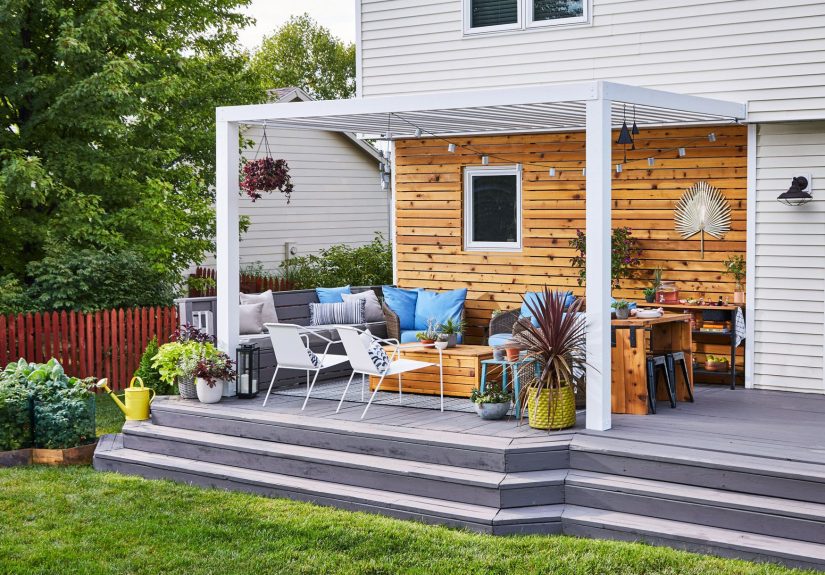
3. Attached Pergola Over a Deck
A deck pergola can make an exposed platform feel like a finished outdoor room. It helps define seating and dining zones while adding vertical interest. If the deck is elevated, structural planning becomes especially important because posts need proper support, not just a hopeful connection to deck boards.
Use the pergola to frame an outdoor sectional, dining table, or built-in bench. Add string lights across the rafters and outdoor curtains on the sunny side. This creates a soft, comfortable zone for summer dinners, evening drinks, and pretending you are not checking emails outside.
4. Pergola With a Retractable Canopy
If shade control is your top priority, a retractable canopy is one of the smartest attached pergola ideas. You can extend the fabric during hot afternoons and pull it back when you want morning light or a view of the stars. It is practical, flexible, and much easier than arguing with the sun.
Choose outdoor-rated, fade-resistant fabric that coordinates with your home’s exterior. Neutral colors feel calm and classic, while striped fabric can create a resort-style look. A retractable canopy is especially useful over dining areas, where too much sun can turn salad into sadness in about seven minutes.
5. Attached Pergola With Polycarbonate Roof Panels
For homeowners who want more weather protection, polycarbonate roof panels are worth considering. These panels let in natural light while helping protect the area from rain. They are popular for patios where people want to use the space more often, not just on perfect weather days that appear twice a year and leave immediately.
Clear panels keep the space bright, while tinted or opal panels soften glare. Make sure the roof has proper slope and drainage so rainwater moves away from the house. This design is excellent for outdoor kitchens, grilling stations, and seating areas that need a little more coverage.
6. Vine-Covered Attached Pergola
Few things look as romantic as a vine-covered pergola. Climbing roses, clematis, grapes, jasmine, and native honeysuckle can soften the structure and create natural shade. Vines also help connect the pergola to the garden, making the patio feel lush instead of built-on.
The trick is choosing the right plant for your climate and the strength of your pergola. Heavy vines like mature wisteria need strong, permanent support and regular pruning. Lighter vines are easier to manage on smaller structures. Always check local guidance before planting aggressive or invasive species, because a “cute little vine” can become a botanical takeover with suspicious speed.
7. White Pergola for Cottage Charm
A white attached pergola feels bright, clean, and welcoming. It works beautifully with cottage, coastal, Cape Cod, colonial, and farmhouse-style homes. Match the pergola to white window trim or porch railings for a seamless look.
To keep it from feeling too plain, layer in texture: woven outdoor chairs, blue cushions, terracotta pots, hydrangeas, or climbing roses. White pergolas reflect light, so they can make a small patio feel larger. Add soft curtains for shade and privacy, and suddenly your backyard looks like it knows how to host brunch.
8. Attached Pergola Over French Doors
An attached pergola over French doors creates a graceful transition between indoors and outdoors. It frames the entrance, adds shade to the doorway, and gives the exterior wall more depth. This idea works well when you do not have room for a full covered porch but still want a strong architectural feature.
Keep the proportions balanced. A pergola that is too shallow may look decorative but provide little shade. A pergola that is too deep may overpower the doors. Add wall sconces, planters, and a small bistro set to turn the area into a charming morning coffee corner.
9. Attached Pergola With Outdoor Curtains
Outdoor curtains bring softness, privacy, and shade to an attached pergola. They are especially helpful on patios exposed to low-angle morning or afternoon sun. Curtains can also screen neighboring windows, block breezes, and make the space feel like an outdoor cabana.
Choose weather-resistant fabric and install sturdy rods or cable systems. Tie curtains back when not in use to prevent them from flapping dramatically every time the wind wants attention. White curtains feel breezy and coastal, while darker curtains create a more intimate lounge effect.
10. Small Attached Pergola for a Side Yard
Side yards are often treated like outdoor hallways: narrow, forgotten, and occasionally home to a lonely trash bin. A small attached pergola can turn that unused strip into a useful passage, potting area, reading nook, or shaded walkway.
Use slim posts, simple rafters, and climbing plants to avoid crowding the space. Add gravel, stepping stones, vertical planters, or a bench along the wall. This type of pergola works best when it feels light and airy rather than bulky. It is proof that even the awkward parts of a property can become charming with the right structure.
11. Attached Pergola With a Fireplace or Fire Pit Zone
An attached pergola can define a cozy fire feature area, especially on a large patio. A fireplace wall, portable fire pit, or gas fire table creates a natural gathering point. The pergola frames the seating area overhead, making it feel finished and intentional.
Safety comes first. Keep open flames away from combustible materials, follow local codes, and choose proper clearances for overhead structures. If you want a fireplace under or near a pergola, professional planning is wise. Nobody wants their “cozy outdoor retreat” to become the reason the neighbors learn your full name.
12. Rustic Cedar Pergola for Warmth
Cedar is a favorite pergola material because it has natural beauty, warm color, and good outdoor performance when maintained properly. A rustic cedar attached pergola pairs well with stone patios, brick homes, craftsman bungalows, cabins, and garden-style landscapes.
Let the cedar age naturally to a silvery gray, or stain it to preserve a richer tone. Add lanterns, a farmhouse table, woven chairs, and large planters for a comfortable, lived-in feel. This design is less about perfection and more about texture, shade, and relaxed outdoor living.
13. Attached Pergola With Built-In Lighting
Lighting can take an attached pergola from daytime shade structure to nighttime destination. String lights are affordable and festive, while recessed LED strips, pendant lights, and wall sconces create a more polished look. Solar lights can work in some settings, but hardwired outdoor lighting is more reliable for regular entertaining.
Use warm light for dining and lounging. Harsh, cool light can make a patio feel like a parking lot with cushions. Place switches conveniently near the door, and consider dimmers so the mood can shift from “family dinner” to “quiet evening outside” without anyone fumbling in the dark.
14. Attached Pergola for an Outdoor Kitchen
An outdoor kitchen becomes more comfortable and attractive with an attached pergola overhead. The structure can define the cooking zone, support lighting, and provide shade for prep counters or bar seating. It also visually connects the outdoor kitchen to the home.
Use noncombustible materials and proper clearances around grills, pizza ovens, and heat-producing appliances. Ventilation matters, too. A pergola should not trap smoke or heat. For extra function, add a ceiling fan rated for damp or wet locations, task lighting, and durable countertop materials that can handle sun and weather.
15. Attached Pergola With Louvered Shade
A louvered pergola offers adjustable shade. Some systems use manual louvers, while others are motorized. Open the louvers for light and airflow, then close them for stronger shade or light rain protection, depending on the system. This is one of the most functional pergola upgrades for homeowners who want flexibility.
Louvered designs often look sleek and modern, especially in aluminum. They pair well with contemporary patios, pool terraces, and minimalist outdoor furniture. The upfront cost can be higher than a basic wood pergola, but the comfort and control may be worth it if the patio gets heavy sun.
16. Garage-Attached Pergola for Curb Appeal
A pergola attached above a garage door can add major curb appeal. This shallow structure, sometimes called an eyebrow pergola, creates shadow lines and architectural detail on a flat garage facade. It can also support vines or decorative brackets.
Keep this design proportional to the garage. A simple pergola over a single or double garage door can make the exterior feel more custom without a full remodel. Match the material or color to shutters, trim, or the front porch for a pulled-together look. It is a small detail, but it can make the house look like it got dressed on purpose.
Design Tips Before Building an Attached Pergola
Think About Sun Direction
Shade is not only about the roof. It is about where the sun is when you actually use the patio. A pergola with rafters running one direction may provide good shade at noon but very little protection in late afternoon. Observe the space for a few days before finalizing the layout. If the low western sun is the problem, side curtains, privacy screens, or shade panels may help more than extra roof slats.
Match the Home’s Architecture
The best attached pergola looks like it belongs to the house. Repeat shapes, colors, or materials from the exterior. A craftsman home may suit chunky wood beams and exposed rafter tails. A modern home may look better with slim aluminum lines. A coastal home may call for white or light gray finishes. Good design whispers; bad design brings a megaphone.
Plan for Permits and Structure
Because an attached pergola connects to the house, it may require permits, inspections, or engineering depending on local rules. Footings, wind loads, snow loads, ledger attachment, flashing, and drainage can all matter. Always check local requirements before building. A pergola should be beautiful, but it should also stay where you put it.
Choose Materials Based on Maintenance
Wood offers warmth and character but needs staining, sealing, or painting over time. Aluminum is sleek, durable, and lower maintenance. Vinyl can be easy to care for and works well with traditional homes, though it may not provide the same natural texture as wood. Steel can be strong and modern but needs proper finishing to resist corrosion. Choose the material that fits your climate, budget, and tolerance for weekend maintenance projects.
Best Shade Add-Ons for Attached Pergolas
To make an attached pergola more comfortable, consider layered shade. Retractable canopies give flexible overhead coverage. Shade cloth is budget-friendly and easy to replace. Outdoor curtains block low sun and add privacy. Bamboo or reed panels create a relaxed, natural look. Polycarbonate panels help with rain protection while still allowing light. Climbing plants provide seasonal shade and beauty, though they require patience and pruning.
For hot climates, combine several strategies. A pergola with close rafters, a retractable canopy, and side curtains can be much more comfortable than a bare frame. Add an outdoor fan, light-colored furniture, and potted greenery, and the patio becomes a place you actually want to use in Julynot just admire from the air-conditioned side of the glass.
Personal Experience: What Makes an Attached Pergola Feel Truly Useful
After looking at countless attached pergola designs, the most successful ones usually have one thing in common: they solve a real problem. They are not just pretty structures added because the patio looked empty. They fix glare, define a dining space, create privacy, soften a harsh wall, or make a hot deck usable again. That practical purpose is what keeps the pergola from becoming expensive outdoor decoration.
One experience that stands out is how much difference proportion makes. A small pergola over a large patio can look nervous, like it wandered into the wrong yard. A massive pergola on a tiny deck can feel heavy and crowded. The best attached pergola designs line up with existing features: doors, windows, rooflines, deck edges, or patio borders. When the beams relate to the house, the whole structure feels planned instead of pasted on.
Shade expectations are another big lesson. Many homeowners imagine that a pergola will behave like a solid roof. A standard open-roof pergola provides filtered shade, not full shade. That is wonderful for dappled light and airflow, but it may not be enough for a west-facing patio in August. If the goal is real cooling, add a canopy, louvers, curtains, shade panels, or vines. The pergola is the framework; the shade system is what makes it comfortable.
Furniture placement also matters more than people expect. Before building, it helps to map the outdoor table, grill, sofa, and walking paths. A post in the wrong spot can make every meal feel like a furniture obstacle course. Leave enough room to pull out chairs, walk around seating, and open doors fully. If the pergola is attached near the kitchen, keep the path between the door and dining table clear. Convenience is part of luxury.
Lighting is one of the easiest ways to make an attached pergola feel finished. Even a simple set of warm string lights can change the entire mood. For a more permanent setup, outdoor-rated sconces, pendants, or LED strips create a polished look. The goal is not to blast the patio with brightness. The goal is soft, useful light that makes people want to linger after dinner.
Plants can turn a basic pergola into the best part of the backyard, but they need a plan. Fast-growing vines sound appealing until they start grabbing gutters, siding, and anything else that stands still. Choose plants suited to your region, provide strong support, and prune regularly. In smaller spaces, container plants and side trellises may deliver the same lush feeling with less commitment.
Finally, the most enjoyable attached pergolas feel personal. They include small details that match the way people actually live: a hook for a hanging chair, a narrow bar ledge near the grill, curtains for privacy during morning coffee, or a fan over the dining table. Style gets attention, but comfort gets used. The perfect pergola is not only the one that photographs well; it is the one that makes you step outside more often.
Conclusion
An attached pergola is one of the smartest ways to add shade, structure, and personality to an outdoor living area. Whether you prefer a classic cedar frame, a modern black aluminum design, a vine-covered garden retreat, or a louvered pergola with adjustable shade, the right choice can make your patio, deck, garage, or entryway feel more finished and functional.
The best attached pergola ideas balance beauty with practical planning. Think about sun direction, structural attachment, permits, materials, drainage, lighting, and how you want to use the space every day. Add shade features where needed, repeat design details from your home, and leave enough room for comfortable furniture and movement. With thoughtful planning, an attached pergola can turn a plain outdoor area into a stylish extension of your homeone that invites you outside for coffee, dinner, conversation, and the occasional well-earned nap in the shade.