Table of Contents >> Show >> Hide
- Why Babies Get Gassy in the First Place
- Does Baby Massage for Gas Actually Help?
- Before You Start: The Best Time to Massage a Gassy Baby
- How to Do Baby Massage for Gas: Step by Step
- Other Things That Help Baby Gas Relief
- When Baby Massage for Gas May Not Be Enough
- Safety Tips and When to Call the Doctor
- Conclusion
- Real-World Experiences With Baby Massage for Gas
Some babies enter the world with a gift for sleeping peacefully. Others arrive like tiny performance artists, delivering nightly dramatic readings titled Why Is My Belly Doing This? If you have a gassy baby, you already know the soundtrack: grunting, squirming, leg pulling, red-faced fussing, and a look that says, “Mother. Father. I demand immediate digestive diplomacy.”
The good news is that baby massage for gas can be a simple, gentle tool in your parenting toolkit. It is not magic. It will not turn every fussy evening into a lavender-scented spa commercial. But when done calmly and safely, massage can help some babies relax, move their legs, release trapped air more comfortably, and settle their nervous system. Just as important, it gives parents something practical to do besides pacing the hallway like a sleep-deprived security guard.
This guide explains how baby massage for gas works, when to try it, how to do it step by step, what else may help, and when “just gas” probably is not the whole story. You will also find a long experience-based section at the end that reflects what many parents go through when trying infant tummy massage, bicycle legs, and other baby gas relief routines at home.
Why Babies Get Gassy in the First Place
Babies are adorable, but their digestive systems are still very much in “software update pending” mode. They swallow air while feeding, while crying, and sometimes while enthusiastically attacking a bottle nipple like it owes them money. Their intestines are still learning rhythm, coordination, and timing. That means gas, grunting, burping, and dramatic leg flailing are all pretty common in the first months of life.
Sometimes the problem is straightforward: a baby fed too fast, swallowed extra air, and now feels bloated and cranky. Other times, gas gets blamed for every tear when the real issue may be overtiredness, overfeeding, a need to poop, normal evening fussiness, reflux, or classic colic. That matters because massage can be helpful for discomfort, but it is not a universal answer to all crying. In other words, not every fuss is a fart in disguise.
Still, many parents notice that gentle belly work, knee-to-tummy movements, and bicycling legs seem to help babies relax and release gas more easily. Even when massage does not create an instant burp-and-smile miracle, it often supports comfort, bonding, and a calmer bedtime rhythm.
Does Baby Massage for Gas Actually Help?
In practice, yes, it can help many babies. The idea is simple: massage and movement may encourage relaxation, ease body tension, support bowel motion, and make it easier for your baby to pass gas or poop. Pediatric sources commonly recommend tummy massage, bicycling the legs, and supervised tummy time as low-risk comfort strategies for babies with gas or belly discomfort.
Massage also has another benefit parents often underestimate: it slows you down. When you place your hands on your baby with a calm, steady rhythm, the whole situation may soften. Your baby gets soothing touch. You get a plan. And everyone in the room becomes slightly less likely to spiral into a 7:12 p.m. household opera.
That said, baby massage for gas is best viewed as a comfort measure, not a cure-all. It may reduce symptoms. It may make a hard evening more manageable. It may help your baby pass gas sooner. But if your baby has persistent distress, poor feeding, vomiting, fever, blood in stool, or a sudden change in behavior, massage should not replace medical advice.
Before You Start: The Best Time to Massage a Gassy Baby
Timing matters. Try massage when your baby is quiet, alert, and not right in the middle of a hunger meltdown. A good rule is to avoid massaging immediately after a full feeding. Waiting a bit gives milk time to settle and lowers the chance that your baby will spit up and look at you like you have deeply offended the digestive process.
Choose a warm, calm space. A blanket on the floor or bed works well as long as your baby cannot roll off and you stay right there. Wash your hands, remove jewelry that might scratch, and keep your pressure gentle but confident. Very light tickly strokes can annoy babies more than soothe them. Think calm and steady, not feather-duster chaos.
You do not need oil or lotion. If you want a little glide, use a simple unscented lotion or a basic plant-based oil that your pediatrician is comfortable with. Test it on a small patch of skin first. Skip strong fragrances, adult massage oils, and essential oils for infants. Your baby is aiming for relief, not a boutique aromatherapy experience.
How to Do Baby Massage for Gas: Step by Step
1. Start with Connection
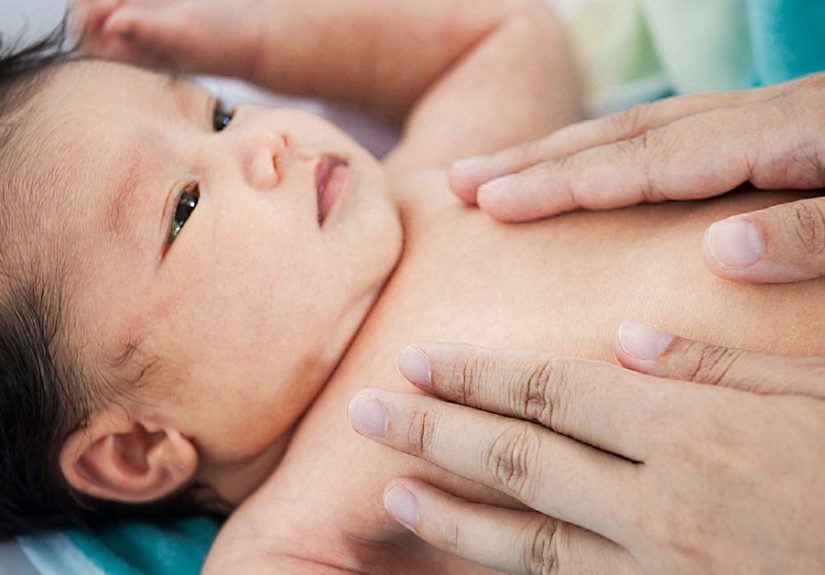
Lay your baby on their back and place your hands gently on the chest or belly for a few seconds. Make eye contact. Talk softly. This little pause matters because it tells your baby, “Something calm is happening now.” If your baby stiffens, arches, or starts crying harder, stop and try again later.
2. Gentle Tummy Massage
Place your fingertips or the flat of your hand on your baby’s belly and make small, gentle circles. Keep the movement soft and slow. You are not kneading bread dough. You are just encouraging relaxation and helping the belly feel less tight. Spend 20 to 30 seconds here, then pause to see how your baby responds.
Some babies like a warm hand resting on the tummy even more than active movement. If your baby seems overstimulated, simply hold your hand on the belly with steady pressure. Calm touch is still useful touch.
3. Knees to Belly
Hold your baby’s lower legs and gently bend the knees up toward the belly. Hold for a second or two, then release. Repeat several times. This position can help ease pressure and may encourage both gas and stool to move along. It is also one of those parenting moments where you realize your child is one tiny motion away from proving the existence of sound effects in real life.
4. Bicycle Legs
Now do the classic move: bicycling the legs. Gently move your baby’s legs in a slow pedaling motion, like your little one is training for the world’s smallest Tour de France. Keep it smooth and relaxed, not fast and jerky. Many parents find this is the most effective baby gas relief technique, especially during fussy evening hours.
5. Alternate Massage and Movement
Go back and forth between tummy circles, knees-to-belly, and bicycle legs. A short routine like this often works better than one long, dramatic attempt. Think two to five minutes, not a forty-minute abdominal documentary.
6. Finish With Cuddles or Upright Holding
When the massage is done, pick your baby up and hold them upright against your chest. Burp if needed. Some babies do best with a few minutes of walking, rocking, or simply resting vertically so swallowed air can work its way out without an encore performance.
Other Things That Help Baby Gas Relief
Massage works best as part of a broader strategy. If your baby seems gassy often, look at the full picture.
Feed More Upright
Whether breastfeeding or bottle-feeding, keeping your baby a bit more upright during feeds may reduce air swallowing. If you use bottles, the nipple flow matters too. Too fast, and your baby gulps. Too slow, and your baby may suck harder and swallow more air anyway. Babies, naturally, prefer to make this a science project.
Pause for Burps
Burping during and after feeds can help some babies, especially if they tend to chug milk like they are late for a meeting. It will not fix every crying spell, but it is worth trying when feeds are clearly part of the pattern.
Avoid Overfeeding
Sometimes a baby cries and everyone assumes the answer is more milk. But too much milk too quickly can leave a tiny stomach feeling stretched and miserable. Watch your baby’s cues instead of treating every fuss as a hunger vote.
Try Supervised Tummy Time
When your baby is awake and supervised, tummy time can put a little natural pressure on the abdomen and help move gas through. It also supports motor development, which is a nice bonus for an activity that basically looks like tiny baby push-up camp.
Use a Warm Bath or Warm Hands
A warm bath can be soothing for a tense, fussy baby. Even if it does not trigger a legendary burp, it may relax the body enough that gas becomes easier to pass afterward.
When Baby Massage for Gas May Not Be Enough
This is the section every tired parent needs, because sometimes the belly is not the villain.
If your baby cries every evening around the same time, pulls their legs up, turns red, and seems impossible to console, colic may be part of the story. Gas can show up during these episodes, but it is not always the main cause. Likewise, reflux, constipation, sensitivity to feeding issues, and plain old overtiredness can all mimic “gassy baby” behavior.
That is why the best approach is curious observation. Does fussiness happen after fast feeds? During late afternoon? When naps are short? When stools are infrequent? After formula changes? The more patterns you notice, the easier it is to decide whether massage is the star player or just a helpful sidekick.
Safety Tips and When to Call the Doctor
Baby massage for gas should be gentle, brief, and comforting. Stop if your baby becomes more upset. Skip massage and call your pediatrician if your baby has a fever, forceful vomiting, diarrhea, bloody stools, a swollen or very hard belly, poor feeding, sudden behavior changes, or crying that feels unusual, intense, or impossible to soothe.
Seek urgent care right away if your baby is very weak, difficult to wake, having trouble breathing, showing signs of dehydration, or if your instinct says something is not right. Parents are often told to “trust your gut,” which is ironically excellent advice in an article about tiny guts.
And one more important note: if you feel overwhelmed by the crying, place your baby in a safe spot like the crib and step away for a moment. Ask for help. Baby discomfort is stressful, and caregiver support is part of good baby care, too.
Conclusion
Baby massage for gas is one of those rare parenting tools that is simple, gentle, inexpensive, and genuinely worth trying. It may help your baby relax, move trapped air along, and settle more comfortably after feeds or during a fussy stretch. More than that, it creates a rhythm of calm touch that supports connection between you and your baby, even when nobody in the room has slept enough to spell “connection.”
The smartest approach is realistic: use massage as one helpful comfort measure, not a miracle cure. Pair it with thoughtful feeding habits, burping, supervised tummy time, and close attention to your baby’s cues. If the routine helps, great. Keep it. If the crying feels different, constant, or concerning, let your pediatrician help you sort out what is really going on.
Because sometimes the best gas relief move is bicycle legs. And sometimes the best move is calling the doctor and saying, “Hi, yes, my baby seems to be hosting a one-person protest march every night. Can we talk?”
Real-World Experiences With Baby Massage for Gas
Parents often discover baby massage for gas not because they planned a research-backed wellness routine, but because it is 9:43 p.m., the baby is grunting like a tiny weightlifter, and the internet has become their emotional support coworker. The first experience is usually hesitant. One hand on the belly, one eye on the baby’s face, and a silent prayer that this will either help or at least not make things worse.
What many caregivers notice first is not an immediate burp or fart, but a change in body tension. A baby who was stiff may soften a little. The knees stop snapping upward quite so dramatically. The crying shifts from furious to annoyed, which, in parent math, counts as progress. Sometimes the breakthrough comes during the bicycle-leg move. Sometimes it comes ten minutes later while the baby is being held upright on a shoulder. And sometimes nothing obvious happens except the baby calms enough to fall asleep. That still counts as a win.
Another common experience is that massage works best when it becomes a routine instead of a last-second emergency intervention. Parents often say the most successful sessions happen during a diaper change, after a warm bath, or in that alert-but-calm window between feedings. In those moments, the baby is more willing to tolerate touch, and the parent is not trying to solve the entire evening in one dramatic five-minute scene.
Many parents also learn that their baby has preferences. One baby loves belly circles but hates knees-to-tummy. Another tolerates bicycling legs but only for thirty seconds before protesting like a tiny union rep. Some babies respond better to warm hands and still pressure than to actual rubbing. Others clearly enjoy the movement and seem to release gas faster when the routine includes massage followed by upright cuddles.
There is also the emotional side of the experience, which does not get talked about enough. Touch gives parents something constructive to do during a fussy spell. That matters. Helplessness fuels panic. A simple routine restores a sense of calm. Even when massage does not fix everything, it often changes the mood of the room. The parent slows down. The baby feels less handled and more soothed. That shift alone can be valuable.
Of course, real-life experience also teaches humility. Some nights, massage works beautifully. Other nights, the baby remains unconvinced. That does not mean you did it wrong. It may just mean the fussiness was about overtiredness, reflux, constipation, or one of the many mysterious baby moods that arrive without a user manual. The most seasoned parents tend to say the same thing: use massage consistently, watch for patterns, keep expectations reasonable, and do not hesitate to involve the pediatrician if something feels off. In parenting, small helpful habits often beat miracle promises every time.