Table of Contents >> Show >> Hide
- How to Choose the Best Science Toys for Kids
- The 10 Best Science Toys in 2023
- 1. Snap Circuits Jr. SC-100 Electronics Exploration Kit
- 2. National Geographic Mega Science Lab
- 3. ThinkFun Gravity Maze Marble Run Logic Game
- 4. Learning Resources GeoSafari Jr. Talking Microscope
- 5. Thames & Kosmos Kids First Coding & Robotics
- 6. 4M Crystal Growing Experimental Kit
- 7. KiwiCo Walking Robot
- 8. Magna-Tiles or Magnetic Building Tiles
- 9. Stomp Rocket Ultra Rocket
- 10. Klutz LEGO Gear Bots Science/STEM Activity Kit
- Quick Comparison: Which Science Toy Fits Which Kid?
- Safety Tips for Science Toys
- Real-Life Experience: What Science Toys Teach Beyond Science
- Conclusion
Science toys have a sneaky superpower: they make kids think they are “just playing” while their brains are quietly doing push-ups. A marble run turns into a physics lesson. A microscope becomes a tiny passport to a universe hiding on a leaf. A circuit kit lets a child discover that electricity is not magic, although it can definitely feel like wizardry when a fan spins for the first time.
The best science toys in 2023 were not simply flashy boxes with the word “STEM” stamped on the front. The real winners encouraged children to ask better questions: Why did that fall? What happens if I change the angle? Why did my crystal grow like that? Can I build it again, but weirder? Great educational toys for kids invite trial, error, laughter, and the occasional dramatic announcement that “the experiment has failed,” usually five seconds before it starts working.
This guide highlights ten standout science toys for kids, from preschool-friendly microscopes to robotics kits, chemistry sets, engineering challenges, and outdoor physics toys. Each pick was chosen for hands-on learning value, replay potential, age fit, and the ability to turn curiosity into action. Because when kids can touch, build, test, and revise, science stops feeling like a school subject and starts feeling like an adventure.
How to Choose the Best Science Toys for Kids
Before buying any STEM toy, think about the child first and the box second. A toy that is perfect for an eight-year-old who loves building may frustrate a four-year-old who wants fast results. Likewise, a preschool microscope may bore a middle-schooler who is ready for real circuitry or robotics.
Look for three things: age-appropriate safety, clear instructions, and room for open-ended exploration. A good science kit should work the first time often enough to build confidence, but it should also leave space for kids to experiment. The best educational toys for kids are not one-and-done projects. They are toys children return to because there is always another tower to build, another circuit to test, another rocket angle to try, or another “what if?” waiting in the wings.
Adult involvement also matters. Some toys are designed for independent play, while others are much better with a parent, teacher, or older sibling nearby. That does not mean hovering like a lab supervisor with a clipboard. It means asking simple questions, celebrating mistakes, and helping kids connect play to real science concepts.
The 10 Best Science Toys in 2023
1. Snap Circuits Jr. SC-100 Electronics Exploration Kit
Best for: Kids who love lights, sounds, gadgets, and asking how things work.
Snap Circuits Jr. is one of the most reliable electronics kits for young learners because it removes the most frustrating part of circuits: loose wires that refuse to behave. Instead of soldering or stripping wire, kids snap color-coded components onto a plastic grid. The result is satisfyingly simple. Build the circuit correctly and something happens: a light turns on, a fan spins, or a sound plays. Build it incorrectly and, congratulations, you have discovered troubleshooting.
This kit is especially strong for teaching cause and effect, current flow, switches, motors, and basic electrical engineering. It gives kids a structured way to complete projects while still encouraging tinkering. Once they understand the basics, many children naturally start asking whether they can rearrange parts or invent their own designs. That is where the real learning begins.
Snap Circuits Jr. is a great choice for elementary-age kids who are ready for a toy that feels more mature than a puzzle but less intimidating than a full robotics kit. It is also a gift parents tend to appreciate because it looks educational, plays like a toy, and does not require glitter. That last point deserves applause.
2. National Geographic Mega Science Lab
Best for: Curious kids who want variety and love dramatic experiments.
The National Geographic Mega Science Lab is the buffet of science toys. Instead of focusing on one narrow topic, it gives kids a broad taste of chemistry, earth science, crystals, reactions, and hands-on demonstrations. For children who bounce between interests faster than a rubber ball in a hallway, variety is a major advantage.
A multi-experiment science kit helps kids see that science is not one thing. It is chemistry fizzing in a cup, geology sparkling in a crystal, and observation happening every time they compare results. These kits are especially useful for families who want a weekend activity box or a holiday gift that lasts longer than one afternoon.
The best way to use a kit like this is to slow down. Instead of racing through every experiment, choose one, read the instructions, make a prediction, run the activity, and talk about what changed. A child does not need a full lab coat to learn the scientific method. A kitchen table, a grown-up nearby, and a willingness to clean up the “science splash zone” will do nicely.
3. ThinkFun Gravity Maze Marble Run Logic Game
Best for: Puzzle lovers, future engineers, and kids who enjoy brain teasers.
Gravity Maze is part logic puzzle, part marble run, and part tiny engineering exam disguised as fun. Kids use towers and pathway pieces to guide a marble from start to target. The rules are simple, but the thinking can get surprisingly deep. Every challenge asks children to visualize motion, sequence steps, and predict how gravity will pull the marble through the structure.
What makes this toy special is that it teaches physics without turning into a lecture. Children learn about gravity, momentum, spatial reasoning, and problem-solving by adjusting pieces until the marble finally rolls where it should. That little clink of success at the end of a challenge is deeply satisfying. It says, “Your brain did the thing.”
Gravity Maze is excellent for quiet independent play, but it also works well as a family challenge. Parents may discover, humbly, that children are often better at solving these puzzles. Accept this with dignity. Or ask for a rematch.
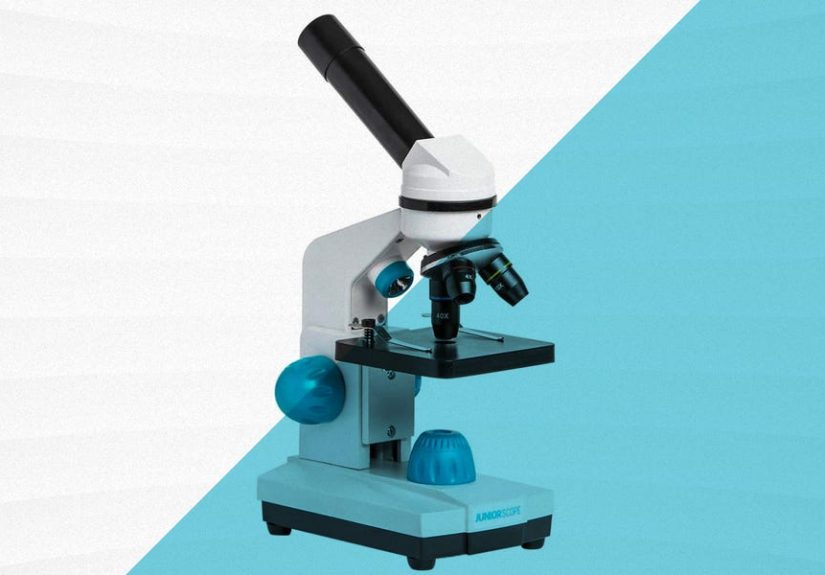
4. Learning Resources GeoSafari Jr. Talking Microscope
Best for: Preschoolers and early elementary kids who are ready to observe the natural world.
A microscope can feel like serious science equipment, but the GeoSafari Jr. Talking Microscope makes observation approachable for younger children. Its kid-friendly design helps preschoolers explore images and facts about animals, plants, and everyday objects without needing the fine motor control required by more advanced microscopes.
This toy is valuable because it builds the habit of looking closely. Early science learning often begins with observation: noticing patterns, comparing details, asking questions, and describing what you see. A child who studies a butterfly wing or plant structure is practicing the same basic skill used by scientists everywhere: paying attention.
For families with younger kids, this is one of the better science toys because it feels independent without being too complex. It is also a nice bridge between pretend play and real investigation. Add nature walks, leaf collecting, or backyard bug watching, and suddenly the entire outdoors becomes a science extension pack.
5. Thames & Kosmos Kids First Coding & Robotics
Best for: Young kids learning logic, sequencing, and early coding without screens.
Not every coding toy needs an app, a tablet, or a child who already speaks fluent robot. Thames & Kosmos Kids First Coding & Robotics introduces coding concepts through a screen-free robot named Sammy. Children guide the robot using physical code cards, which makes abstract ideas like sequencing and conditionals easier to understand.
This kit is especially useful for younger learners because it turns coding into storytelling and movement. Kids are not just staring at symbols; they are arranging commands and seeing what happens. That physical connection can help children understand that code is simply a set of instructions, and robots are very literal creatures. Tell one to do the wrong thing, and it will do the wrong thing beautifully.
Parents who want STEM toys for kids without adding more screen time will appreciate this set. It introduces computational thinking while keeping play hands-on, social, and easy to discuss.
6. 4M Crystal Growing Experimental Kit
Best for: Patient kids who like chemistry, colors, and sparkly results.
Crystal-growing kits are classics for a reason. They teach children that science is not always instant. Sometimes the most exciting part is waiting, checking, and noticing small changes over time. The 4M Crystal Growing Experimental Kit lets kids grow colorful crystals while learning about solutions, evaporation, and how particles can form ordered structures.
This is a strong choice for older elementary kids and tweens because it combines visual payoff with real chemistry concepts. It also teaches patience, which may be the most advanced scientific skill of all. Not every result appears in ten seconds. Some discoveries require a little time and a safe place where nobody bumps the container.
Adult supervision is important with chemistry kits, even kid-friendly ones. Read instructions carefully, protect surfaces, and remind young scientists that “do not taste the experiment” is not a suggestion. It is a lifestyle.
7. KiwiCo Walking Robot
Best for: Kids who want to build something that actually moves.
The KiwiCo Walking Robot kit gives children a hands-on introduction to robotics and mechanical motion. Instead of simply pressing a button on a finished toy, kids build the system that makes the robot walk. That process helps them understand motors, linkages, balance, and the difference between “assembled correctly” and “why is it walking like a confused crab?”
Robotics kits are powerful because they combine engineering with persistence. A moving robot rarely comes together without a few adjustments. Kids learn to follow diagrams, test mechanisms, spot mistakes, and improve the build. These are not just STEM skills; they are life skills wearing tiny robot shoes.
This kit is best for older children who enjoy construction and can handle multi-step instructions. It is also a good pick for kids who like art because they can often customize the robot’s look after the mechanical build is complete.
8. Magna-Tiles or Magnetic Building Tiles
Best for: Open-ended STEAM play, early engineering, and creative builders.
Magnetic tiles are deceptively simple: flat shapes with magnets along the edges. But give them to a child and suddenly the floor becomes an architecture studio. Children build cubes, castles, garages, animals, towers, tunnels, and whatever else their imagination demands before snack time.
These tiles support STEAM learning because they combine geometry, magnetism, balance, symmetry, design, and problem-solving. Younger children learn shapes and colors. Older kids experiment with stronger structures, taller towers, and more complex patterns. The same set can grow with a child, which is one reason magnetic tiles remain popular with families and classrooms.
They also encourage open-ended play. There is no single correct answer, no final level, and no tiny instruction booklet whispering, “You did it wrong.” That freedom helps children become designers instead of just followers of directions.
9. Stomp Rocket Ultra Rocket
Best for: Outdoor physics, active kids, and families who need science to burn energy.
Some children learn best while moving. Stomp Rocket turns physics into a jump-powered launch event. Kids stomp on an air pad, sending foam rockets into the sky. Then they adjust the launch angle, compare distances, and try again. It is simple, active, and wonderfully dramatic.
This toy introduces force, air pressure, trajectory, gravity, and measurement. Want to make it more educational? Mark landing spots with chalk, test different launch angles, or ask kids to predict which setup will send the rocket farthest. Suddenly the backyard is a physics lab, and nobody had to sit still for a worksheet.
Stomp Rocket is also a good reminder that science toys do not have to live indoors. Some of the best STEM learning happens outside, where kids can test big ideas with big movements and a lot of giggling.
10. Klutz LEGO Gear Bots Science/STEM Activity Kit
Best for: LEGO fans ready to explore gears, cams, cranks, and motion.
The Klutz LEGO Gear Bots kit combines LEGO Technic pieces with papercraft creatures and a guide that explains mechanical concepts. Kids build moving models while learning how gears, axles, cams, and cranks work together. In other words, it teaches the hidden engineering behind machines without making children read a textbook the size of a sandwich.
This kit is especially good for children who already love LEGO but need a fresh challenge. Instead of building a static model, they create kinetic creatures that move in specific ways. That movement makes abstract mechanical ideas easier to understand. When a cam changes rotational motion into up-and-down motion, kids can actually see it happening.
For families looking for educational toys for kids who enjoy both creativity and mechanics, this is a strong pick. It blends art, engineering, reading, and construction into one compact science activity.
Quick Comparison: Which Science Toy Fits Which Kid?
For electronics, choose Snap Circuits Jr. For broad experiment variety, go with National Geographic Mega Science Lab. For puzzle-solving, Gravity Maze is hard to beat. For preschool science, the GeoSafari Jr. Talking Microscope is a friendly first step. For screen-free coding, Thames & Kosmos Kids First Coding & Robotics is a smart choice.
For chemistry and patience, try the 4M Crystal Growing Kit. For mechanical robotics, KiwiCo Walking Robot offers a rewarding build. For open-ended engineering, magnetic tiles are endlessly reusable. For outdoor science, Stomp Rocket brings physics to the yard. For LEGO-loving builders, Klutz Gear Bots adds real mechanical learning to familiar bricks.
Safety Tips for Science Toys
Science toys are exciting, but safety should always come first. Check the recommended age range, especially for toys with magnets, small parts, batteries, chemicals, or sharp components. Keep small parts away from children under three, supervise experiments that involve powders or liquids, and store kits where younger siblings cannot quietly conduct “independent research” on the carpet.
Read the instructions before starting. Yes, even if the child insists they already understand everything after looking at the picture. A quick review prevents spills, broken pieces, and that special family moment when everyone asks, “Was it supposed to smoke?”
Real-Life Experience: What Science Toys Teach Beyond Science
The best science toys in 2023 did more than teach STEM vocabulary. They taught children how to think. After watching kids use toys like circuit kits, marble mazes, rockets, microscopes, and crystal-growing sets, one pattern becomes clear: the learning is not limited to the official lesson on the box.
A child using Snap Circuits learns about electricity, but also learns patience when the circuit does not work. They check the switch, inspect the battery placement, compare the layout with the diagram, and try again. That troubleshooting process is incredibly valuable. It teaches kids that mistakes are not the end of learning; they are part of the path.
With Gravity Maze, the lesson is not just gravity. It is planning. A child has to imagine where the marble will go before releasing it. When the marble drops in the wrong place, the child revises the design. That is engineering thinking in miniature. No hard hat required.
Science kits also create great family moments. A crystal-growing project may begin as a chemistry activity, but it often becomes a daily ritual. Kids check the container every morning, report changes, compare sizes, and proudly announce progress like tiny lab directors. These slow-burn activities help children understand that observation matters.
Outdoor toys like Stomp Rocket add another layer. Children can test angle, force, and distance while running around outside. This is especially helpful for active learners who do not want science to feel like sitting at a desk. When kids measure rocket flights or compare launch positions, they are collecting data without making it feel like homework.
Microscopes introduce a different kind of wonder. Many children are amazed to discover that familiar objects look completely different up close. A leaf is no longer just a leaf; it has lines, patterns, and tiny structures. This kind of toy helps children slow down and notice details. In a fast, screen-heavy world, that is a surprisingly powerful skill.
Robotics kits and gear-based toys build confidence through construction. Kids see that a moving machine is not magic. It is a system of parts working together. When they build a walking robot or a gear creature, they begin to understand how real-world machines depend on design, alignment, and energy transfer. They also learn that “almost right” may still mean the robot falls over. That is not failure. That is feedback with legs.
Another experience worth noting is how science toys support different personalities. A quiet child may love the focus of a crystal kit or microscope. A high-energy child may connect with rockets or magnetic tiles. A puzzle-minded child may choose Gravity Maze again and again. A creative builder may turn a robotics kit into a decorated creature with a name, a backstory, and possibly a tiny hat.
Parents do not need to force every child into every STEM category. The better approach is to follow curiosity. If a child loves animals, start with a microscope or nature kit. If they love building, choose magnetic tiles, gear kits, or robotics. If they love dramatic reactions, a supervised experiment kit may be perfect. When science begins with interest, learning feels natural.
The most memorable science toys are the ones that invite conversation. Ask, “What do you think will happen?” “Why did it work this time?” “How could we change the design?” These questions turn play into deeper learning without draining the fun out of the room. Kids do not need adults to deliver a lecture. They need adults to stay curious with them.
In the end, the best educational toys for kids are not the ones with the fanciest packaging. They are the toys that make children come back for one more try. One more build. One more launch. One more look under the microscope. That repeated engagement is where real learning lives.
Conclusion
The best science toys in 2023 gave kids something more valuable than a few hours of entertainment. They gave them tools to explore, question, build, test, and imagine. Whether your child is launching rockets, growing crystals, programming a robot, or building a magnetic skyscraper in the living room, the goal is the same: make learning feel alive.
Science toys work best when they match a child’s age, interests, and patience level. Choose a toy that invites hands-on discovery, allows mistakes, and encourages kids to try again. That is how a simple gift becomes a doorway into STEM learning, creative confidence, and lifelong curiosity.
Note: Always follow product age labels and safety instructions. Supervise children when science toys include small parts, magnets, batteries, tools, chemicals, liquids, or outdoor launching activities.