Table of Contents >> Show >> Hide
- What Is the Eames Wire Chair?
- How the Chair Grew Out of the Eames Design Process
- Why the Wire Chair Mattered in 1951
- The Look: Light, Sculptural, and Slightly Ingenious
- Comfort, Function, and the Eames Philosophy
- Why Designers and Collectors Still Love It
- How the Chair Fits Into Interiors Today
- Experience Section: Living With Charles & Ray Eames' Wire Chair
- Final Thoughts
Some chairs politely sit in the background. The Eames Wire Chair absolutely does not. It strolls into a room looking like geometry got dressed up for dinner and somehow still feels relaxed about it. Designed by Charles and Ray Eames in 1951, the Wire Chair is one of those rare pieces that manages to be airy, sculptural, practical, and unmistakably modern all at once. It is a chair that looks like a sketch made real, but it is also the result of serious problem-solving, material experimentation, and the Eameses’ lifelong obsession with making design work better for everyday life.
That balance between art and usefulness is what keeps the chair relevant more than seven decades later. It is beloved by collectors, museum curators, interior designers, midcentury-modern fans, and ordinary people who simply want a dining chair that does not feel like a bland afterthought. The Eames Wire Chair belongs to a larger story about postwar American design, mass production, and the search for furniture that could be affordable, flexible, and beautiful without becoming fussy. In other words, it is a design classic with excellent posture and zero need for a dramatic backstory. Though, to be fair, it still has one.
What Is the Eames Wire Chair?
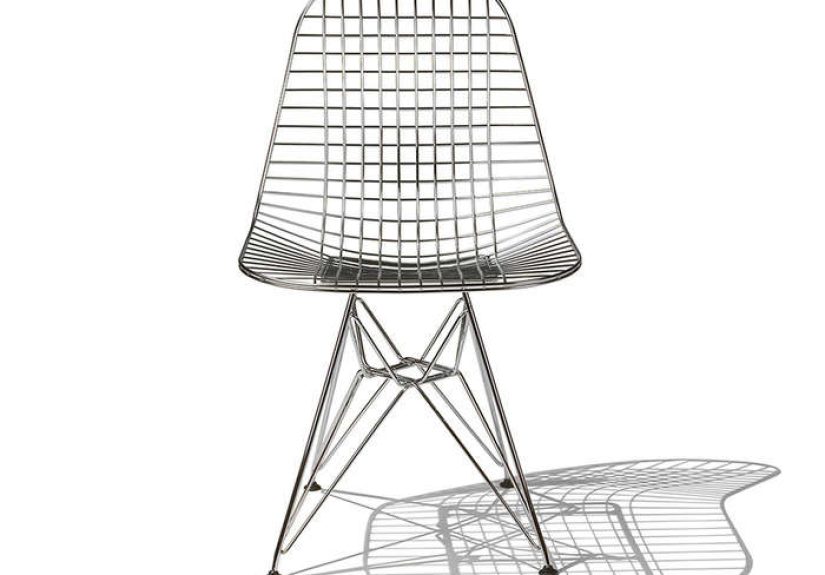
At its core, the Eames Wire Chair is a steel-wire interpretation of the famous Eames shell-chair form. Instead of using molded fiberglass, plastic, or plywood, Charles and Ray Eames translated that familiar one-piece seat into a network of bent and welded steel rods. The result is visually light but structurally clever: a chair that looks almost transparent while still offering a distinct, body-friendly silhouette.
That is part of the magic. The chair feels open rather than bulky, which helps it work in small apartments, airy dining rooms, offices, studios, and even outdoor settings in certain modern versions. It does not block sightlines the way a chunky upholstered chair would. From across the room, it reads like a line drawing. Up close, it becomes a lesson in precision: every weld, curve, and angle exists for a reason.
Depending on the version, the chair can be left bare for maximum sculptural drama, fitted with a full seat pad, or dressed with the famous two-piece “bikini” pad that softens the look without hiding the wire shell. That flexibility is pure Eames thinking. The couple did not design furniture as one fixed object trapped in one ideal room. They designed systems, variations, and adaptable solutions. The Wire Chair is a perfect example of that mindset in metal form.
How the Chair Grew Out of the Eames Design Process
The Eames Wire Chair did not appear out of thin air, no matter how weightless it may seem. It grew out of Charles and Ray Eames’ broader search for a better chair shell. Throughout the 1940s and early 1950s, they experimented relentlessly with materials including molded plywood, fiberglass-reinforced plastic, cast aluminum, and bent wire. Their interest was never just novelty for novelty’s sake. They wanted to discover the best way to support the human body while also making production practical and repeatable.
The Wire Chair arrived while they were refining their molded shell chairs. Instead of abandoning the shell concept, they reimagined it in steel strands. That move sounds simple now, but it reflected the Eameses’ bigger habit of looking sideways at a problem. If one material had limits, they would ask what another material could do better. In this case, wire offered strength, lightness, visual openness, and surprisingly economical production potential.
Charles Eames described the inspiration in refreshingly unromantic terms: he looked around at everyday wire-made objects such as trays and baskets and recognized that wire fabrication had become a mature, efficient technique. That is classic Eames logic. Instead of treating design like mystical genius descending from the clouds, they treated it as careful observation plus experimentation. The glamorous icon was born from practical curiosity. Design history loves that sort of thing, and honestly, so should the rest of us.
Why the Wire Chair Mattered in 1951
In 1951, the chair landed in a world eager for modern furniture that could suit contemporary life. Postwar America was embracing new materials, new technologies, and new ideas about domestic space. Homes were changing. Offices were changing. The Eameses were at the center of that shift because they understood that modern furniture needed to do more than look futuristic. It needed to feel practical, comfortable, and scalable.
The Wire Chair stood out because it took familiar industrial material and turned it into something elegant rather than merely utilitarian. Steel wire was not precious. It was honest, direct, and industrial. Yet in the Eameses’ hands, it became expressive. The chair looked advanced without becoming cold. It carried the optimism of midcentury design without shouting for attention like a spaceship parked in the breakfast nook.
It also reflected the Eames commitment to interchangeable parts and adaptable bases. They often thought of a chair as having two essential elements: a surface to receive the body and a structure to hold that surface in relation to the ground. That idea made the Wire Chair more than a one-off object. It became part of a larger design language, one in which shells, bases, pads, and environments could be combined in different ways to meet different needs.
The Look: Light, Sculptural, and Slightly Ingenious
The visual personality of the Eames Wire Chair is one reason it has aged so well. Many midcentury pieces are handsome, but the Wire Chair has an extra spark because it reveals how it is made. There is no decorative disguise. No oversized upholstery trying to distract you. No heavy frame pretending to be something it is not. The chair is almost diagrammatic, and that transparency gives it a kind of confidence.
Museum examples and historic variants highlight the famous pedestal support often nicknamed the “Eiffel Tower” base because of its resemblance to the Paris landmark. That nickname stuck because it captures the chair’s appeal perfectly: delicate-looking, structurally smart, and instantly recognizable. Other base options broadened the chair’s usefulness, and contemporary versions continue that flexible spirit with wire, dowel-leg, and four-leg choices.
Another smart detail is the use of upholstery options that do not smother the form. The full seat pad adds warmth and comfort, while the two-piece bikini pad preserves more of the exposed shell. It is a brilliant compromise. You get softness where the body wants it, but you still see the wire geometry that makes the chair special. It is as if the chair agreed to wear a jacket but refused to lose its personality.
Comfort, Function, and the Eames Philosophy
A common mistake in furniture writing is assuming that visually interesting chairs must be uncomfortable. The Eameses would have rolled their eyes at that. Their entire design philosophy revolved around human use. Ray Eames famously said that what works lasts, and the broader Eames approach insisted that designers pay attention to how people actually sit, move, gather, work, and live.
The Wire Chair embodies that philosophy in a deceptively lean package. Its shell is shaped to echo the contours of the body, and its openness keeps it from feeling visually or physically heavy. Yes, the bare-wire version makes more of a sculptural statement than a padded lounge chair. But that is not a flaw; it is a different kind of seating experience. Add a cushion or bikini pad, and the chair becomes friendlier for longer sits while still holding onto its crisp silhouette.
What makes the piece remarkable is that it solves several design problems at once. It is comfortable enough for real use, strong enough for repeated use, compact enough for varied interiors, and distinctive enough to elevate a room. Plenty of furniture manages one or two of those goals. The Wire Chair manages all four, which is precisely why it remains in production and continues to show up in design collections and stylish homes around the world.
Why Designers and Collectors Still Love It
The Eames Wire Chair has lasting appeal because it belongs to that magical category of furniture that can perform in wildly different settings without losing its identity. Put one in a minimalist loft and it looks sharp. Place it in a cozy dining room with wood floors and vintage art and it suddenly feels warm and collected. Use it in a creative office and it reads as smart rather than corporate. Very few chairs are this adaptable without becoming generic.
Designers also love it because it offers texture without visual clutter. The wire grid introduces pattern and shadow, which means the chair adds interest even when it is monochrome. In a room full of solid forms, it feels almost like negative space turned into furniture. That quality makes it especially useful in interiors that need definition but not heaviness.
Collectors, meanwhile, appreciate the chair’s place in the Eames timeline. It captures a moment when Charles and Ray were moving fluidly between materials and manufacturing methods, testing how one idea could evolve through different technologies. It is not merely a pretty chair from the midcentury era. It is evidence of a design method: iterate, refine, rethink, and improve. That story gives the Wire Chair depth beyond its good looks.
How the Chair Fits Into Interiors Today
Dining Rooms
In dining spaces, the Wire Chair keeps things feeling open and clean. Because the chair is visually permeable, a table-and-chair set looks lighter and less crowded than it would with fully upholstered seating. That matters in smaller homes where every inch of breathing room counts.
Home Offices
In a home office, the chair delivers design credibility without turning the workspace into a showroom stunt. It pairs especially well with desks in wood, laminate, or glass and helps a compact office feel intentional rather than improvised.
Indoor-Outdoor Living
Recent powder-coated versions and weather-friendly pads have extended the chair’s usefulness even further. On patios, terraces, and covered outdoor dining areas, the Wire Chair feels right at home. Not every design from 1951 can make that transition gracefully, but this one handles it with alarming ease.
Experience Section: Living With Charles & Ray Eames’ Wire Chair
Living with an Eames Wire Chair is a little like living with a very stylish guest who never overstays, never complains, and somehow makes the whole room look more organized. The first thing most people notice is not comfort or history, but the way the chair changes the atmosphere around it. It lets light through. It casts shadows. It feels present without feeling bulky. In a small room, that is a gift. In a large room, it becomes punctuation.
There is also a tactile pleasure to the chair that photos do not fully communicate. The steel has a crispness to it. The lines feel exact. When you run your hand along the frame, you become aware that this object was carefully resolved, not casually sketched and rushed into production. With a bikini pad attached, the experience changes again. The chair becomes friendlier, softer, and more inviting for lingering over coffee, working through emails, or talking far longer than you planned because someone asked an innocent question about paint colors and now the conversation has become philosophical.
In daily use, the chair proves why the Eameses were so respected. It is easy to move, easy to pair with other furniture, and easy to understand. You do not need a lecture on design history to appreciate it. Put it near a walnut dining table, and it looks classic. Pair it with a bright modern table, and it looks fresh. Place it next to a soft rug and a reading lamp, and it starts acting suspiciously like sculpture with benefits.
Another experience people often describe is how the chair draws comments from guests. Not because everyone can name it, but because people respond to it instinctively. Someone will ask, “What chair is that?” Another person will say it looks familiar. Someone else will sit down and immediately decide it looks more expensive than it is, or more comfortable than it appears, or both. Good design often works this way. It creates recognition before vocabulary catches up.
The chair also ages well in a personal sense. You do not “finish” with it after one decorating phase. A lot of trendy furniture belongs to a specific year, a specific mood board, a specific moment of online enthusiasm. The Eames Wire Chair does not. It survives apartment moves, wall-color changes, new tables, new rugs, and evolving tastes. That makes it feel less like a purchase and more like a long-term companion in the life of a room.
Perhaps the most satisfying experience is realizing that the chair still feels contemporary. Not fake-contemporary, like something desperately trying to trend. Actually contemporary. Its honesty, flexibility, and elegance remain persuasive because those qualities do not expire. Charles and Ray Eames did not chase style for style’s sake. They chased solutions. And that is probably why sitting in one today still feels so good: you are not just using a famous chair. You are using a well-solved idea.
Final Thoughts
Charles and Ray Eames’ Wire Chair endures because it does what the best design always does: it makes complexity look effortless. Beneath its airy profile sits a rigorous design process, a deep respect for materials, and a practical understanding of how people live. The chair is not important merely because it is old, collectible, or museum-approved. It matters because it still solves the same problems it solved in 1951: how to create seating that is functional, adaptable, beautiful, and unmistakably modern.
That is a rare achievement. Plenty of furniture looks good in a photo. Far less furniture manages to carry a room, a conversation, and a design legacy all at once. The Eames Wire Chair does. It is light but not flimsy, iconic but not stiff, and sophisticated without being smug. If that sounds like a difficult balance, it is. Which is exactly why Charles and Ray Eames are still Charles and Ray Eames, and why this chair remains one of the clearest proofs that smart design never really goes out of style.