Table of Contents >> Show >> Hide
- The Strange Origin of Garfield's Nightmare
- How Garfield Entered the Old Mill
- What the Ride Was Actually Like
- Why People Found It So Bizarre
- The Old Mill Beneath the Lasagna
- Why Garfield Was Removed
- What Replaced Garfield's Nightmare?
- Why the Ride Still Has a Cult Following
- Lessons From Garfield's Bizarre Ride
- Experience Section: What It Felt Like to Discover Garfield's Nightmare
- Conclusion: The Nightmare Ended, But the Legend Floats On
Garfield has done a lot in his long orange life. He has eaten enough lasagna to alarm a nutritionist, insulted Mondays with professional consistency, starred in cartoons, invaded toy shelves, and somehow made laziness look like a career plan. But one of his strangest achievements is less famous: for 16 seasons, he had a full-blown dark water ride at Kennywood amusement park near Pittsburgh, Pennsylvania.
Yes, there was once a Garfield ride. Not a small kiddie spinner. Not a photo-op bench where you pretend Odie is your emotional support dog. A real boat ride. In the dark. With blacklight scenes, 3D effects, giant angry food, and Garfield drifting through a surreal nightmare like someone fed a comic strip after midnight.
The attraction was called Garfield’s Nightmare, and it operated from 2004 through 2019. It was built inside Kennywood’s historic Old Mill, a ride system that dates back to 1901 and remains one of the most fascinating pieces of American amusement park history. The result was part family attraction, part fever dream, part cultural artifact, and part “who approved this meeting agenda?”
The Strange Origin of Garfield’s Nightmare
To understand why Garfield ended up floating through a haunted tunnel in Western Pennsylvania, you have to start with Kennywood itself. Kennywood is not a random roadside amusement park with three rides, a funnel cake stand, and a suspiciously confident mascot. It is a historic park that began as a trolley park in the late 1890s and became a National Historic Landmark in 1987.
One of its signature attractions was the Old Mill, a dark boat ride added in 1901. Over the decades, the ride changed themes many times. It was not one fixed story so much as a wooden channel with a very flexible identity. Depending on the era, guests might have encountered scenes inspired by canals, fairylands, world travel, western gags, haunted humor, or whatever Kennywood’s creative team could build, repaint, and keep running without the whole thing smelling like wet nostalgia.
By the early 2000s, the Old Mill needed a refresh. The ride was old, maintenance-heavy, and physically large. Parks are always balancing history with practicality, and an old water-based dark ride is not exactly a low-maintenance houseplant. At the same time, amusement parks were leaning heavily into recognizable characters. Six Flags had Looney Tunes. Disney had its royal army of intellectual property. Universal had movies. Kennywood had a beloved historic ride and, somehow, a relationship with Jim Davis, the creator of Garfield.
How Garfield Entered the Old Mill
The original idea was reportedly much bigger than one ride. There had been discussion around a Garfield-themed amusement park concept connected to Indiana, where Jim Davis and Garfield’s corporate roots were based. That project never came together, but the character connection did not disappear. Instead, Kennywood found a smaller, stranger opportunity: turn the Old Mill into a Garfield attraction.
And so, in 2004, the western-style Old Mill was transformed into Garfield’s Nightmare. The new story sent riders into Garfield’s dream world after the cat fell asleep. Naturally, because this is Garfield, the nightmare involved food. But not comforting food. Not a warm lasagna bubbling peacefully in the oven. This was hostile food. Surreal food. Food that looked like it had unionized against the cat.
Guests boarded boats and floated through blacklight scenery filled with Garfield, Odie, spiders, monsters, oversized snacks, and strange dream logic. Riders wore 3D glasses, which made the already odd scenes even more visually chaotic. It was colorful, slow-moving, and deeply unusual. Imagine a comic strip, a haunted house, a children’s museum, and a snack-food advertisement all getting trapped together in a basement during a thunderstorm. That is the general energy.
What the Ride Was Actually Like
Garfield’s Nightmare was not a thrill ride in the roller coaster sense. There were no massive drops, no airtime hills, and no moment where your soul briefly left your body to check the parking lot. It was a gentle dark water ride, which made its weirdness even better. You sat in a boat, drifted through narrow channels, and let the glowing madness unfold around you.
The ride’s visual identity leaned heavily on blacklight paint. Neon colors popped against the darkness. Food items came to life. Garfield appeared in various dream-state situations. Odie, because he is Odie, was also involved in the chaos. The scenes were designed to feel comic and spooky without becoming genuinely frightening. It was meant for families, especially younger guests, but adults often found themselves fascinated for different reasons.
Part of the appeal was the contrast. Garfield is usually associated with dry sarcasm, couch naps, and lasagna. Kennywood’s Old Mill was associated with park tradition, local memory, and old-school dark ride charm. Combining the two created something that felt both corporate and homemade, both polished and bizarre, both kid-friendly and slightly unhinged. That combination is exactly why people still talk about it.
Why People Found It So Bizarre
Garfield’s Nightmare was bizarre because it did not feel like a ride focus-tested into smooth blandness. It felt specific. It felt local. It felt like a creative gamble made in that wonderful theme-park zone where practicality, licensing, nostalgia, and blacklight paint collide.
For long-time Kennywood visitors, the ride was also replacing a deeply familiar experience. The Old Mill had been part of the park for generations. Some visitors remembered it as a spooky western ride. Others remembered it as a quiet, old-fashioned boat ride. Some remembered it less for the scenery and more for the fact that it was dark, slow, and private enough to feel like a classic “tunnel of love” experience. Garfield’s arrival changed that mood completely. Nothing kills old-fashioned mystery quite like a giant orange cat being chased by nightmare snacks.
That tension made the ride controversial. Families with small children could enjoy the cartoon theme. Theme park fans could admire the strange design. Nostalgic locals could grumble that the Old Mill had been replaced by a lasagna hallucination. Everyone had an opinion, which is usually how you know a ride has become more interesting than its posted wait time suggests.
The Old Mill Beneath the Lasagna
The most important thing about Garfield’s Nightmare is that it was not built from nothing. Beneath the cat, the pizza, the glowing paint, and the 3D glasses was the Old Mill ride system. That matters because Old Mill rides are part of early amusement park history.
Traditional old mill attractions used small boats floating through dark channels. They were slow, atmospheric, and scene-based. In the early 20th century, these rides were common at amusement parks, especially trolley parks and pleasure resorts. Over time, many disappeared because they required space, water systems, constant upkeep, and a style of entertainment that newer thrill rides often overshadowed.
Kennywood’s version survived because the park has long valued historic attractions. The Old Mill changed costumes many times, but the basic concept endured: get in a boat, enter the dark, and see what strange little world the park has built this decade. Garfield’s Nightmare was simply one of the wildest costumes the ride ever wore.
Why Garfield Was Removed
Garfield’s Nightmare lasted from 2004 through 2019, which is a respectable run for a licensed attraction. But by 2020, Kennywood announced that the ride would return to the Old Mill name and a retro-inspired theme. The park presented the move as a response to guest demand and a way to honor the attraction’s history.
There were practical reasons too. Licensing fees can change. Character rights can shift. Garfield’s corporate ownership changed when Nickelodeon, through Viacom, acquired Paws, Inc., the company connected with Garfield’s intellectual property. When the economics of a licensed attraction become less attractive, a park may decide that nostalgia is not only charming but also financially sensible. In other words, Garfield may hate Mondays, but accountants hate unnecessary licensing costs.
The Garfield props and character elements did not simply move into a garage waiting for eBay glory. Because licensed characters are protected intellectual property, many pieces reportedly had to be destroyed or removed under controlled conditions. That detail only adds to the strange mythology of the ride. Somewhere in theme-park history, there is a chapter titled “The Official Disposal of Nightmare Garfield,” and honestly, museums have been built around less interesting premises.
What Replaced Garfield’s Nightmare?
In 2020, Kennywood restored the attraction as The Old Mill. The modern version is family-friendly, spooky, and nostalgic, with nods to the ride’s long history. Instead of Garfield’s dream world, guests once again experience a more classic dark boat ride atmosphere.
This was not just a name swap. It was a statement about what Kennywood wanted the ride to represent. The park could have demolished the attraction and used the space for something flashier, louder, and easier to market with slow-motion video. Instead, it kept the old boat ride concept alive. That choice matters because historic amusement rides are increasingly rare. They are not always the biggest crowd magnets, but they carry memory in a way steel towers and screen-based attractions sometimes cannot.
Why the Ride Still Has a Cult Following
Garfield’s Nightmare has become the kind of defunct attraction that fans love to rediscover online. It was not universally beloved while it existed, but absence has a funny way of upgrading weirdness into legend. Once a strange ride disappears, people start asking questions. Did that really exist? Was it as odd as it sounds? Did families actually float through Garfield’s bad dream in 3D glasses? Yes, yes, and yes.
The ride’s cult appeal comes from several ingredients. First, Garfield is a globally recognized character, but he is not the first figure most people imagine as the star of an immersive dark ride. Second, the attraction had a visual style that was difficult to forget. Third, it sat on top of one of America’s most historic dark water ride systems. Finally, it represented a very specific era of amusement park thinking, when mid-sized parks tried to compete by attaching familiar characters to existing attractions.
That makes Garfield’s Nightmare more than a punchline. It is a case study in theme park adaptation. It shows how parks reuse infrastructure, test licensing partnerships, balance local nostalgia, and sometimes create something accidentally unforgettable.
Lessons From Garfield’s Bizarre Ride
1. Weird Attractions Age Better Than Safe Ones
Many rides disappear and are quickly forgotten. Garfield’s Nightmare did not vanish quietly because it had personality. It may not have been perfect, but it was specific enough to stick in people’s memories. In theme park design, being slightly strange can be more valuable than being perfectly ordinary.
2. Nostalgia Is Powerful, But Complicated
Some guests wanted the Old Mill back. Others had grown up with Garfield’s Nightmare and felt nostalgic for that version. This is the funny thing about amusement parks: every generation thinks the version from its childhood is the “real” one. A ride that annoyed parents in 2004 can become a beloved memory for kids by 2020.
3. Historic Ride Systems Deserve Protection
The survival of the Old Mill matters more than any single theme. Garfield came and went, but the ride system endured. That continuity is rare. It connects modern visitors to amusement park traditions that began more than a century ago.
4. Garfield Makes Everything Stranger
Garfield is funny because he is ordinary in exaggerated ways. He likes food, sleep, comfort, and sarcasm. Put that character inside a glowing dream tunnel filled with angry snacks, and the result becomes unforgettable. It is not just a Garfield ride. It is a Garfield ride that feels like Garfield ate the entire concession stand and then dreamed in neon.
Experience Section: What It Felt Like to Discover Garfield’s Nightmare
Discovering Garfield’s Nightmare today feels like finding a VHS tape in a thrift store labeled “Do Not Watch After Lasagna.” At first, the idea sounds fake. A Garfield boat ride? In Pittsburgh? In 3D? Built inside a century-old Old Mill attraction? It has the rhythm of an internet joke, but the deeper you look, the more real it becomes.
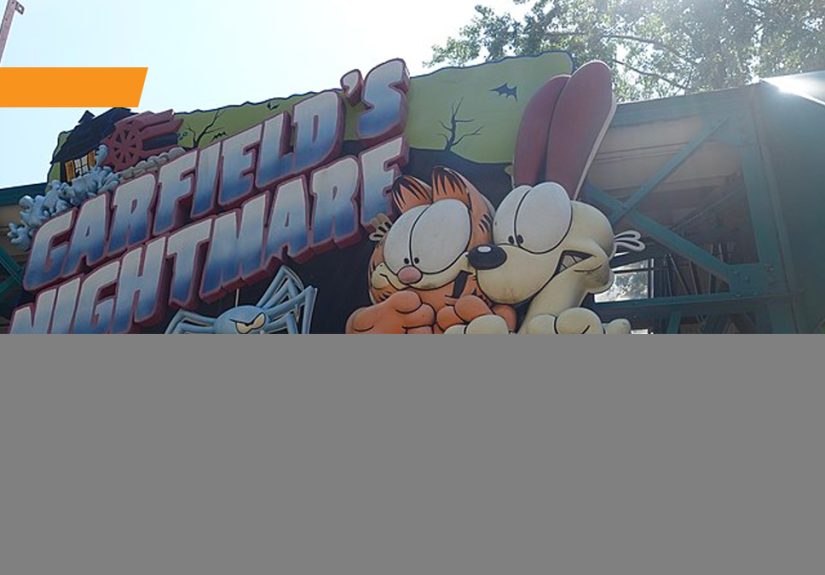
The best way to understand the experience is to imagine walking through Kennywood on a warm summer day. You have the sounds of coasters overhead, the smell of fries in the air, and families moving between classic rides. Then you see the entrance to Garfield’s Nightmare. It is not subtle. Garfield’s face is there, promising a journey into dreamland with the enthusiasm of a cat who would rather be asleep. You board a boat, expecting something cute and simple. Then the darkness swallows you.
Inside, the ride does not rush. That is part of its charm. Modern attractions often attack the senses with giant screens, motion bases, and dramatic music loud enough to season your popcorn from across the park. Garfield’s Nightmare moved at old-mill speed. It drifted. It let the weirdness arrive one glowing scene at a time. The result was not scary like a haunted house. It was strange like a dream you try to explain at breakfast while everyone slowly lowers their spoons.
One moment, you were looking at Garfield. The next, you were surrounded by oversized food and cartoon chaos. The 3D glasses added another layer of silliness, making flat painted effects pop forward. For younger riders, that could feel magical. For adults, it could feel wonderfully absurd. The attraction existed in that sweet spot where children might say, “Cool!” and grown-ups might say, “Wait, who decided this was the plot?”
What made the experience memorable was not technical perfection. It was atmosphere. The smell of water, the slow movement of the boat, the glow of the paint, the odd quiet between scenes, and the knowledge that this was happening inside a ride with roots older than most amusement parks still operating today. You were not just riding a Garfield attraction. You were riding through layers of history, with Garfield spray-painted across the top like a sarcastic orange dream sticker.
There is also something oddly charming about the ride’s mismatch. Garfield is not adventurous. He is not heroic. He is not the kind of character who wakes up and says, “I should headline an immersive boat-based nightmare attraction.” That is exactly why it worked as a curiosity. The ride took a character defined by laziness and placed him inside a restless dream world. It turned passive Garfield into a passenger in his own surreal snack attack.
For people who love theme parks, Garfield’s Nightmare represents the kind of attraction that cannot easily be recreated. It was too local, too specific, and too tied to its era. A major global park today would likely polish the concept until every odd edge disappeared. Kennywood’s version had edges. It had quirks. It had that handmade dark ride quality where you can feel the paint, the plywood, the maintenance work, and the creative compromise. That is not a criticism. That is the good stuff.
Looking back, the ride’s greatest achievement may be that it became memorable without being grand. It did not need a 200-foot drop or a cinematic universe. It needed boats, darkness, blacklight paint, Garfield, and the bold confidence to make food scary. In a world full of attractions designed to be instantly marketable, Garfield’s Nightmare became beloved precisely because it was hard to explain.
Conclusion: The Nightmare Ended, But the Legend Floats On
Garfield’s Nightmare may be gone, but its reputation keeps drifting through theme park history like a wooden boat in a neon tunnel. It was strange, funny, divisive, colorful, and deeply tied to Kennywood’s larger story. It replaced a classic, became a cult oddity, and then vanished so the Old Mill could return.
In the end, Garfield’s bizarre ride was not just a weird footnote. It was proof that amusement parks are living places. They repaint, rename, rebuild, regret, restore, and occasionally ask a lasagna-loving cat to host a nightmare. That is why people still search for it, still talk about it, and still wonder how such a ride ever existed.
And honestly? In a world where so much entertainment feels predictable, a 3D Garfield dark water ride inside a 1901 attraction sounds less like a mistake and more like a treasure. A very orange, very sleepy, very confusing treasure.