Table of Contents >> Show >> Hide
- Why Ladder Safety Deserves More Respect
- How to Climb a Ladder Safely: 9 Steps
- Choose the Right Ladder for the Job
- Inspect the Ladder Before Every Use
- Set the Ladder on Firm, Level Ground
- Use the Correct Angle and Secure the Ladder
- Check the Area Around You Before You Climb
- Wear the Right Shoes and Keep Your Hands Free
- Face the Ladder and Maintain Three Points of Contact
- Stay Centered and Do Not Climb Too High
- Climb Down Carefully and Know When to Stop
- Common Ladder Mistakes That Cause Trouble Fast
- A Quick Pre-Climb Ladder Safety Checklist
- Final Thoughts
- Real-World Experiences and Lessons From Ladder Use
- SEO Tags
Climbing a ladder looks simple right up until it suddenly does not. One minute you are feeling like a capable adult about to clean the gutters, swap a lightbulb, or paint that one impossible patch near the ceiling. The next minute you are wobbling like a baby giraffe in socks. That is exactly why ladder safety matters. A ladder is one of the handiest tools in any home or jobsite, but it is also one of the easiest tools to underestimate.
The good news is that safe ladder use is not mysterious. It usually comes down to a handful of smart decisions made before your foot even touches the first rung. Choose the right ladder. Check it. Set it up correctly. Climb like you respect gravity, because gravity has a spotless attendance record.
In this guide, you will learn nine practical steps for how to climb a ladder safely, along with specific examples, common mistakes, and the habits that help prevent a quick household task from turning into a long story for urgent care staff. Whether you are using a step ladder in the kitchen or an extension ladder outside, these ladder safety tips can help you work more confidently and more safely.
Why Ladder Safety Deserves More Respect
Most ladder accidents are not caused by dramatic movie-level chaos. They usually happen because of ordinary shortcuts: using the wrong ladder, placing it on uneven ground, overreaching, carrying tools in your hands, or climbing when tired, rushed, or distracted. In other words, the danger often hides inside perfectly normal behavior.
That is why learning how to use a ladder safely is less about bravery and more about boring good judgment. Boring is excellent when you are six feet off the ground holding a paint roller.
How to Climb a Ladder Safely: 9 Steps
Choose the Right Ladder for the Job
The safest climb starts with picking the right ladder in the first place. Different tasks call for different ladder types. A step ladder works well for indoor tasks like changing air filters or reaching upper cabinets. An extension ladder is better for roof edges, gutters, and exterior siding. A fiberglass ladder is often the smarter choice when there is any chance of electrical exposure, because metal ladders and power lines are a famously terrible combination.
Height matters too. A ladder should let you reach your work area without standing on forbidden top steps or stretching like a human noodle. If you have to lean, tiptoe, or invent a new yoga pose to finish the job, the ladder is too short or the setup is wrong.
Also pay attention to load capacity. That means your body weight plus tools, supplies, and anything clipped to your belt. A ladder that can technically hold you but not your tool bag is not actually the right ladder.
Inspect the Ladder Before Every Use
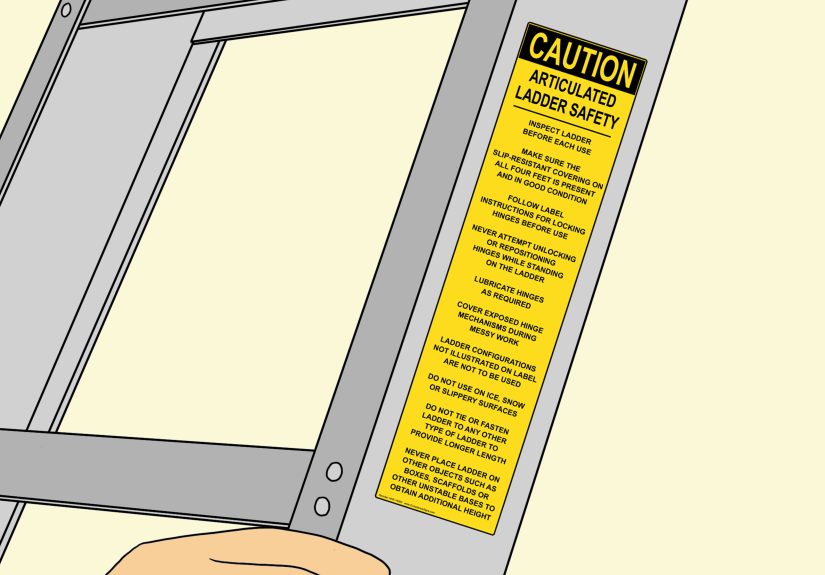
Yes, every use. Even if it worked perfectly last weekend. Even if it “looks fine.” Even if you are only going up for a second. Ladder safety starts with inspection because small defects can create big problems once your full weight is on the rungs.
Check for bent rails, cracked steps, loose bolts, damaged feet, worn-out non-slip pads, broken locks, missing hardware, and anything sticky, oily, or slick on the ladder. On extension ladders, make sure the rung locks and rope system work properly. On step ladders, make sure the spreaders open fully and lock into place.
If the ladder is damaged, retire it from service. Do not “just be careful.” A broken ladder is not a challenge. It is a warning.
Set the Ladder on Firm, Level Ground
This is where many accidents begin. A ladder should sit on a stable, level surface with all feet firmly planted. Grass can be fine if it is flat and solid. Mud, mulch, loose gravel, slick tile, or a random stack of pavers pretending to be a foundation are not fine.
Never prop one side of a ladder up with bricks, scrap wood, or whatever is lying nearby. That trick belongs in the museum of bad ideas. If the surface is uneven, use proper ladder leveling accessories or move to a safer location.
For step ladders, fully open the ladder and lock the spreaders before climbing. For extension ladders, make sure the base cannot slide and the top rests securely against a stable support point.
Use the Correct Angle and Secure the Ladder
If you are using an extension ladder, angle is everything. Too steep, and the ladder can tip backward. Too shallow, and the base can slide out. The classic rule is simple: for every 4 feet of vertical height, place the base 1 foot away from the wall. That creates roughly a 75-degree angle, which is the sweet spot for stability.
Here is a quick example. If the ladder touches the wall 16 feet up, the base should sit about 4 feet away from the wall. Not 2 feet. Not 7 feet. Not “close enough.”
If you are climbing onto a roof or elevated surface, the side rails should extend above the landing area so you have something secure to hold while stepping on and off. When possible, tie off or otherwise secure the ladder at the top or bottom to reduce movement. A helper can steady the ladder during setup, but a helper is not a substitute for proper positioning.
Check the Area Around You Before You Climb
Before climbing, look up, down, and around. Are there overhead power lines nearby? Is there a door that could swing open into the ladder? Are kids, pets, or foot traffic likely to pass beneath you? Is the ground wet? Is the weather windy enough to turn a ladder into a suggestion rather than support?
This step sounds basic, but it is huge. Many ladder accidents are really environment accidents. The ladder may be perfectly fine while the surroundings are not. If you are working near a doorway, lock it or block it. If you are in a driveway or walkway, use cones, barriers, or at least enough common sense to keep people from bumping the ladder.
And if conditions are lousy, wait. There is no trophy for cleaning gutters during a gusty drizzle.
Wear the Right Shoes and Keep Your Hands Free
Footwear matters more than people think. Wear closed-toe shoes or boots with clean, slip-resistant soles. Flip-flops, slick leather soles, bare feet, and “I am just running up real quick” are all terrible ladder partners.
Just as important, do not climb while carrying tools or materials in your hands. Your hands are there to help you maintain control and balance. Use a tool belt, a bucket attached to a rope, or have someone hand items up once you are in position. Carrying a drill in one hand and coffee in the other may feel efficient, but it is also a pretty creative way to lose balance.
Face the Ladder and Maintain Three Points of Contact
This is one of the most important ladder safety rules. Always face the ladder when climbing up or down, and keep three points of contact at all times. That means two hands and one foot, or two feet and one hand.
Three points of contact reduce the odds of slipping and help keep your center of gravity steady. It also means using the rungs and rails properly, not twisting sideways like you are trying to dramatically exit a stage.
Move one limb at a time, climb deliberately, and do not skip rungs in a hurry. Coming down deserves just as much attention as going up. In fact, many people get sloppy on the descent because they think the hard part is over. Gravity disagrees.
Stay Centered and Do Not Climb Too High
Keep your body centered between the side rails. A good rule of thumb is to keep your belt buckle, or your belly button if that is more relatable, between the rails at all times. If you need to lean sideways to reach your work, climb down and reposition the ladder. Overreaching is one of the fastest ways to turn a stable ladder into a pivot point.
You also need to respect the highest safe standing level. On a step ladder, that generally means staying off the top cap and the top step or two, depending on the design and manufacturer instructions. On a straight or extension ladder, do not stand on the top rungs. Those upper sections are for support and handhold, not for pretending you are taller than physics allows.
If the job feels just a little out of reach, that is your cue to move the ladder, not your body.
Climb Down Carefully and Know When to Stop
Safe ladder use is not finished until both feet are back on the ground. Descend slowly, keep facing the ladder, and maintain three points of contact all the way down. Do not slide down the rails, jump the last few steps, or carry tools on the way down because you are eager to wrap up.
It is also smart to know when not to climb at all. Skip the ladder if you are dizzy, tired, rushing, taking medication that affects balance, or working in poor lighting or bad weather. If the task requires long reach, heavy materials, or awkward side pressure, a scaffold, platform, or professional help may be the safer option.
The bravest ladder move is sometimes deciding that today is not a ladder day.
Common Ladder Mistakes That Cause Trouble Fast
Even people who know better can fall into bad habits. Here are the usual suspects:
- Using a ladder that is too short for the task
- Standing on the top cap or top rungs
- Leaning too far to one side instead of repositioning
- Placing the ladder on slick or uneven ground
- Ignoring overhead wires
- Climbing while carrying tools by hand
- Using a damaged ladder “just this once”
- Working too fast, too tired, or in bad weather
If you want one memorable takeaway, here it is: most ladder accidents are not freak accidents. They are often preventable decisions made in a hurry.
A Quick Pre-Climb Ladder Safety Checklist
Before every climb, run through this short checklist:
- Is this the right ladder type and height for the job?
- Is the ladder in good condition with no visible damage?
- Is the surface firm, level, and dry?
- Is the ladder fully opened or set at the correct angle?
- Is the area clear of doors, power lines, foot traffic, and pets?
- Are you wearing stable, slip-resistant shoes?
- Do you have a plan to keep your hands free?
- Can you reach the work without overreaching or climbing too high?
If any answer makes you pause, fix that issue first. The ladder will still be there in five minutes.
Final Thoughts
Knowing how to climb a ladder safely is really about respecting small details. The right ladder, the right setup, the right body position, and the right pace can make a huge difference. Safe ladder habits may feel repetitive, but that is exactly the point. Repetition creates consistency, and consistency prevents injuries.
So the next time a household task tries to convince you to rush, remember this: a ladder is not just a shortcut to a higher place. It is a tool that rewards patience and punishes improvisation. Climb carefully, stay centered, keep three points of contact, and save the drama for your group chat.
Real-World Experiences and Lessons From Ladder Use
Anyone who has used a ladder more than a few times usually has at least one story that starts with, “I thought this would only take a minute.” That sentence should probably be printed on a warning label. One common experience is the classic indoor overreach. Someone sets up a step ladder to paint a ceiling corner, gets into a rhythm, and then notices a tiny unpainted spot just six inches farther away. Instead of climbing down and moving the ladder, they lean. The ladder does not always tip, but it often shifts just enough to create that stomach-dropping moment where pride leaves the body before the person does. Most people who have felt that wobble never forget it.
Outdoor tasks tell a similar story. Gutter cleaning is a repeat offender because it tempts people to move too fast. A homeowner climbs an extension ladder, clears one section, then decides to stretch a little farther to avoid climbing down and repositioning. That small shortcut can make the base shift or cause the climber to lose balance. People often say afterward that the ladder “seemed secure,” which is a useful reminder that a ladder can seem stable right up until the exact second it is not.
Another very real experience involves footwear. Plenty of people do not realize how much shoes matter until they step onto a rung with wet soles, smooth bottoms, or untied laces. Even when the ladder is solid, poor traction can make climbing feel less controlled. The lesson is not glamorous, but it sticks: stable shoes make a safer climb.
There are also stories where safety habits quietly save the day. A person notices that one ladder foot is sitting on softer ground than the other and decides to stop and reset. Someone else spots an overhead service line before raising an aluminum ladder. Another climber uses a tool belt instead of carrying supplies and realizes halfway up that both hands are available to steady the body. These are not dramatic moments, but they are exactly how accidents get prevented in real life.
Experienced ladder users often say the safest jobs are the ones that feel slightly slower at the beginning. The inspection takes a minute. Positioning takes another minute. Repositioning the ladder two or three times during the job can feel annoying. But those extra minutes are usually cheaper than a fall, a fractured wrist, or a bruised ego that lives forever in family storytelling. The best ladder experience is often the one nobody talks about later because everything went smoothly, nothing slipped, and the job simply got done. Quiet success is underrated. On a ladder, it is also the goal.