Table of Contents >> Show >> Hide
- What Is a Parasitic Battery Drain?
- Common Signs of Parasitic Battery Drain
- Tools You Need
- Important Safety Notes Before You Start
- How to Find a Parasitic Battery Drain: 11 Steps
- Step 1: Confirm the Battery Is Fully Charged
- Step 2: Check the Charging System
- Step 3: Look for the Obvious Battery Killers
- Step 4: Prepare the Vehicle for Sleep Mode
- Step 5: Set Up Your Multimeter Correctly
- Step 6: Connect the Meter in Series with the Battery
- Step 7: Read the Current Draw
- Step 8: Switch to Milliamps for a Clearer Reading
- Step 9: Pull Fuses One at a Time to Isolate the Circuit
- Step 10: Use Voltage-Drop Testing on Fuses for Modern Cars
- Step 11: Inspect the Suspect Component, Relay, or Wiring
- Common Causes of Parasitic Battery Drain
- How Much Parasitic Draw Is Too Much?
- When to Call a Professional
- Prevention Tips: Keep the Battery From Dying Again
- Real-World Experience: What Parasitic Drain Diagnosis Teaches You
- Conclusion
Your car battery has one job when the engine is off: wait patiently until you need it again. But sometimes, a tiny electrical vampire keeps sipping power overnight. By morning, your car greets you with silence, dim lights, and the emotional warmth of a brick. That problem is called a parasitic battery drain, or parasitic draw, and it happens when a circuit continues using power after the vehicle should be asleep.
The good news? You do not need to replace half the car just because the battery keeps dying. With a digital multimeter, patience, and a methodical approach, you can often locate the offending circuit yourself. The bad news? Modern vehicles are packed with modules, alarms, keyless entry systems, infotainment units, relays, sensors, and tiny computers that need time to shut down. In other words, the car may be “off,” but it is not always asleep. Think of it like a teenager with a phone at midnight.
This in-depth guide explains how to find a parasitic battery drain in 11 steps, including how to test battery voltage, measure amp draw, isolate fuses, spot common causes, and know when the problem is better left to a professional. We will keep things practical, safe, and slightly less boring than reading a wiring diagram in a basement.
What Is a Parasitic Battery Drain?
A parasitic battery drain is an electrical load that continues drawing current from the car battery when the ignition is off. Some draw is normal. Your clock, alarm system, radio memory, keyless entry receiver, and onboard computers may all need a small amount of power. The problem begins when the draw is higher than your vehicle can tolerate.
Many vehicles are healthy when their resting draw is under about 50 milliamps. Some newer cars with more electronic modules may show a normal draw closer to 50 to 85 milliamps, depending on the design. Always check your service information when possible. As a general rule, a reading over 100 milliamps after the car has fully gone to sleep deserves investigation. A draw close to or above 1 amp can drain a battery very quickly.
Common Signs of Parasitic Battery Drain
Before grabbing tools, look for symptoms. A parasitic draw often appears as a car battery that dies after sitting overnight, over a weekend, or after several days of not being driven. The engine may crank slowly, the dashboard may flicker, the key fob may act weak, or the car may start fine after a jump but fail again later.
However, not every dead battery is caused by parasitic drain. A weak battery, corroded terminals, loose cables, a bad alternator, or short trips that never fully recharge the battery can create similar symptoms. That is why the first steps focus on proving the battery and charging system are healthy before accusing the glove box light of crimes against electricity.
Tools You Need
- Digital multimeter with DC amps and milliamps settings
- Wrench or socket for the battery terminal
- Fuse puller or needle-nose pliers
- Vehicle owner’s manual or fuse box diagram
- Notebook or phone for recording readings
- Safety glasses and gloves
- Optional: clamp meter, fuse voltage-drop chart, battery charger, scan tool
Important Safety Notes Before You Start
Working around a car battery is usually manageable, but it is not a place for cowboy energy. Wear eye protection, keep metal tools away from both battery terminals at the same time, and avoid sparks near the battery. If your vehicle is a hybrid or electric car, do not touch high-voltage components or orange cables. This guide is about the 12-volt system only.
Most importantly, never crank the engine, turn on headlights, operate a blower motor, or activate high-current accessories while your multimeter is connected in series. Doing so can blow the meter fuse instantly or damage the meter. Start on the highest amp range, usually the 10A port, then move to milliamps only after you know the draw is low enough.
How to Find a Parasitic Battery Drain: 11 Steps
Step 1: Confirm the Battery Is Fully Charged
Start with the battery itself. A weak or partially discharged battery can mislead your diagnosis. Charge the battery fully before testing, especially if it has already gone dead. After charging, let it rest for a while, then check voltage across the terminals with a multimeter set to DC volts.
A healthy fully charged 12-volt battery usually reads around 12.6 volts with the engine off. Around 12.2 volts suggests the battery is roughly half charged, and below 12 volts is discharged. If the battery cannot hold a charge after being properly charged, replace or professionally test it before chasing parasitic draw. Otherwise, you may spend two hours blaming a relay when the battery is the actual drama queen.
Step 2: Check the Charging System
Start the engine and measure voltage again at the battery terminals. A typical working charging system should show roughly 13.7 to 14.7 volts, though exact specs vary by vehicle. If voltage is too low, the alternator may not be recharging the battery. If voltage is too high, the regulator may be overcharging, which can damage the battery.
Watch for warning signs such as a battery light, flickering headlights, whining noises, burning smells, or a car that dies while driving. Those symptoms point more toward charging system trouble than a parked-car parasitic drain. Fix charging problems first, because a battery that never gets recharged will eventually quit, even if every circuit behaves perfectly.
Step 3: Look for the Obvious Battery Killers
Before using a meter, inspect the simple stuff. Are the headlights off? Is a dome light glowing faintly? Is the trunk open just enough to keep its light on? Is the glove box light staying on? Is a phone charger, dash cam, radar detector, GPS tracker, or power inverter plugged into a live 12-volt outlet?
Many parasitic drains are not mysterious. They are just small lights hiding like electrical raccoons. Check the vehicle at night or in a dark garage to spot faint interior lights. Also move the key fob away from the vehicle. Some keyless entry systems wake up when the fob is nearby, which can increase standby current.
Step 4: Prepare the Vehicle for Sleep Mode
Turn everything off. Remove the key, close the doors, switch off interior lights, unplug accessories, and make sure the hood, trunk, and glove box lights are disabled. If you need access with a door open, latch the door striker manually or tape the door switch so the car thinks the door is closed.
Now wait. This part is boring but essential. Modern vehicle modules may take 10, 30, 45, or even more minutes to enter sleep mode. Some vehicles can take over an hour depending on the system. If you test too soon, you may see a high draw that is completely normal because the car is still shutting down. Patience here saves you from chasing ghosts.
Step 5: Set Up Your Multimeter Correctly
Set your multimeter to measure DC amps. Plug the black lead into the COM port. Plug the red lead into the high-current amp port, usually marked 10A. Do not start in the milliamp port unless you are sure the draw is small. A sudden current surge can blow the internal meter fuse faster than you can say, “Well, that was educational.”
If your meter is not auto-ranging, select the highest amperage range first. You can move to a lower range later for better resolution. Make sure the meter leads are firmly connected and the meter is working before placing it in the circuit.
Step 6: Connect the Meter in Series with the Battery
To measure parasitic draw, the meter must become part of the circuit. The common approach is to test on the negative side of the battery. Loosen and disconnect the negative battery cable. Connect one meter lead to the negative battery post and the other meter lead to the disconnected negative cable. This forces all current leaving the battery to pass through the meter.
Do not break the connection repeatedly if you can avoid it. Disconnecting and reconnecting the battery can wake up modules and restart the sleep timer. Some technicians use a jumper wire or parasitic draw adapter to maintain the circuit while inserting the meter. If you do not have those tools, just connect carefully and wait again if the vehicle wakes up.
Step 7: Read the Current Draw
Once the vehicle has had enough time to sleep, read the meter. If you see a brief high number at first, do not panic. Modules may still be powering down. After the waiting period, a normal reading is often below 50 milliamps, although newer vehicles may be slightly higher depending on equipment.
For example, 0.035 amps equals 35 milliamps, which is usually acceptable. A reading of 0.250 amps equals 250 milliamps, which is excessive for most vehicles. A reading of 1.2 amps is a serious drain and could flatten a battery quickly. If your meter reads zero, check whether the meter fuse is blown or the leads are in the wrong port.
Step 8: Switch to Milliamps for a Clearer Reading
If the draw is safely below your meter’s milliamp limit, you can switch the red lead to the mA port and select the milliamp range for a more precise reading. Only do this when you are confident current is low enough for that port. Many meters protect the milliamp circuit with a smaller fuse, and that fuse does not enjoy surprises.
Write down the final sleeping draw. This number is your baseline. If it is within the manufacturer’s specification, your problem may be an intermittent drain, a weak battery, short driving cycles, or a charging issue. If it is too high, continue to the next step.
Step 9: Pull Fuses One at a Time to Isolate the Circuit
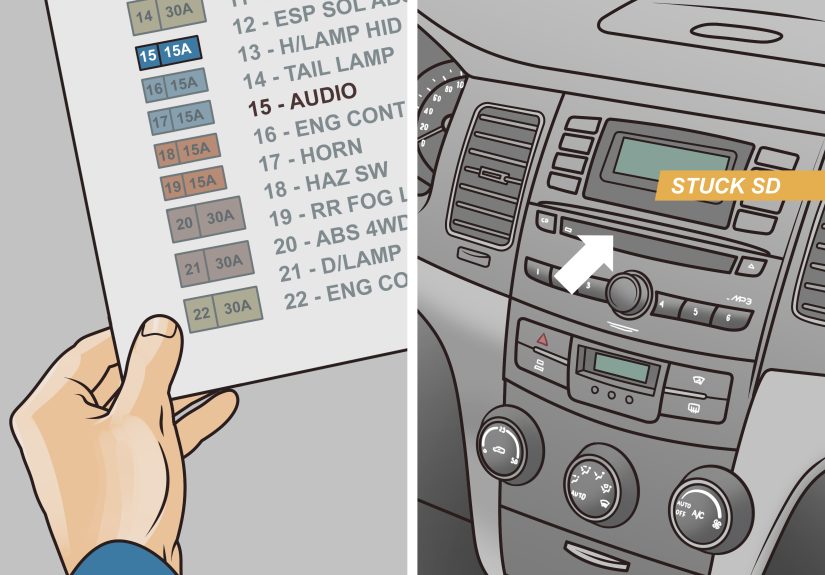
With the meter connected, remove one fuse at a time while watching the current reading. When the draw drops significantly, you have likely found the circuit responsible. Replace each fuse before moving to the next unless your diagnostic plan says otherwise. Check all fuse panels, including under-hood, interior, trunk, and rear cargo-area fuse boxes.
Use the fuse diagram to identify what that circuit powers. A fuse labeled “ROOM,” “BCM,” “RADIO,” “ECU,” or “DOME” may serve several components, so do not assume the first item on the label is guilty. The fuse only points you to the neighborhood. You still need to find the noisy electrical neighbor.
Step 10: Use Voltage-Drop Testing on Fuses for Modern Cars
Pulling fuses can wake up electronic modules, which can make diagnosis frustrating on newer vehicles. An alternative method is measuring tiny voltage drops across the top test points of each fuse while the fuse remains installed. Set the meter to the lowest DC millivolt scale and probe both exposed fuse test points.
A circuit with no current flow should show no meaningful voltage drop across its fuse. A circuit carrying current will show a small millivolt reading. With a fuse voltage-drop chart, you can estimate current flow based on fuse type and rating. This method is especially useful because it lets the vehicle stay asleep while you test. It also makes you feel like a detective, minus the trench coat.
Step 11: Inspect the Suspect Component, Relay, or Wiring
Once you identify the problem circuit, inspect everything on that fuse. Common culprits include trunk lights, glove box lights, vanity mirror lights, stuck relays, aftermarket stereos, amplifiers, alarms, remote starters, dash cams, GPS trackers, power seat modules, infotainment units, body control modules, and alternator diodes.
Disconnect components on the suspect circuit one at a time while watching the meter. If the draw disappears after unplugging a component, you have likely found the cause. If unplugging devices does not help, inspect wiring for damage, moisture, corrosion, poor grounds, or previous repair work. At this point, a wiring diagram becomes extremely helpful. Without one, you may be wandering through electrical spaghetti with a fork.
Common Causes of Parasitic Battery Drain
Aftermarket Accessories
Aftermarket stereos, amplifiers, alarm systems, dash cams, remote starters, and GPS trackers are frequent offenders. The problem is often not the accessory itself but how it was wired. If an accessory is connected to constant power instead of switched ignition power, it may stay awake all night.
Lights That Stay On
Trunk, glove box, under-hood, dome, map, and vanity mirror lights can drain a battery if their switches fail or the latch does not fully close. Because these lights may be hidden, they can be surprisingly hard to catch. The bulb is tiny, but it has big “I ruined your morning” energy.
Stuck Relays
A relay is an electrical switch. When it sticks closed, it can keep a circuit powered after shutdown. Fuel pump relays, cooling fan relays, and accessory relays can all cause excessive draw. A relay that feels warm after the vehicle has been sitting may deserve attention.
Faulty Alternator Diode
An alternator can drain a battery if a diode fails and allows current to flow backward when the engine is off. If the draw disappears after removing the alternator fuse or disconnecting the alternator output wire safely, the alternator may be the issue. Because alternator wiring carries high current, use caution and disconnect the battery before removing heavy cables.
Control Modules That Do Not Sleep
Modern vehicles use modules for everything from door locks to entertainment to climate control. A module can stay awake because of software, network communication faults, water intrusion, a bad sensor input, or a failing component. These problems often require scan tools and service information.
How Much Parasitic Draw Is Too Much?
There is no single number that fits every vehicle. Older cars with fewer electronics may normally draw less than 50 milliamps. Newer vehicles may draw more because they have security systems, telematics, memory modules, and keyless entry. Still, if your vehicle has fully entered sleep mode and the draw is over 100 milliamps, it is reasonable to investigate.
Here is a simple guide:
- 0–50 mA: Usually normal for many vehicles
- 50–85 mA: May be normal for some newer vehicles
- Over 100 mA: Suspicious after sleep mode
- 250 mA or higher: Likely excessive
- 1 amp or higher: Serious drain that can kill a battery quickly
When to Call a Professional
Call a technician if the draw is intermittent, the suspect circuit contains multiple modules, the vehicle is a hybrid or EV, the wiring diagram is confusing, or the battery drain involves security, body control, infotainment, or network communication systems. Also get help if you are uncomfortable testing current. There is no shame in handing the job to someone with factory scan tools and the emotional stamina to read wiring diagrams before coffee.
Prevention Tips: Keep the Battery From Dying Again
Unplug chargers and accessories when the vehicle is parked. Keep the key fob away from the car. Clean battery terminals and tighten cable connections. Drive long enough for the alternator to recharge the battery, especially if most of your trips are short. Use a smart battery maintainer if the vehicle sits for long periods. Finally, be careful with aftermarket installations. A clean wiring job can save you from months of battery drama.
Real-World Experience: What Parasitic Drain Diagnosis Teaches You
Finding a parasitic battery drain is less like changing oil and more like solving a small electrical mystery. The most important experience-based lesson is this: do not rush. Many people connect a meter, see a high number immediately, and start pulling fuses like they are defusing a movie bomb. Then every module wakes up, the readings jump around, and the diagnosis becomes chaos wearing jumper cables. Let the car sleep first. That waiting period is not wasted time; it is part of the test.
Another lesson is to trust measurements more than assumptions. A brand-new battery can be weak. A shiny alternator can have a bad diode. A tiny glove box light can drain more power than expected. An expensive infotainment module might be innocent while a $12 relay causes the whole circus. The meter does not care what part looks guilty. It only shows current flow, which is why recording readings matters.
Experience also teaches that aftermarket accessories deserve early suspicion. Many battery drain stories begin with “I installed a stereo,” “I added a dash cam,” or “My cousin wired in an alarm system.” Sometimes the accessory is fine, but the power source is wrong. A dash cam connected to constant battery power may record all night. An amplifier remote wire may stay energized. A tracker may ping more often than expected. Disconnecting these items temporarily can save hours.
Hidden lights are another classic. A trunk light can stay on because the latch switch is misadjusted. A vanity mirror light can remain on because the visor cover does not fully close. A glove box light can glow quietly for days. These problems feel almost insulting when you find them. You spent an afternoon with a multimeter, and the villain was a bulb the size of a grape.
Intermittent drains are the hardest. A car may test perfectly today and kill the battery tomorrow. In those cases, look for temperature changes, moisture, vibration, and recently used features. Did it rain? Was the rear hatch opened? Did the cooling fan continue running? Did the alarm trigger? Did the vehicle sit near the key fob? Good notes help reveal patterns that a single test cannot.
The final lesson is knowing when to stop. If the suspect circuit leads to a body control module, network wiring, or a module that refuses to sleep, professional diagnostics may be cheaper than guessing. Replacing random parts is the most expensive way to feel productive. A skilled technician can use scan tools to see which modules are awake, check service bulletins, and monitor current without disturbing the vehicle.
In short, parasitic draw diagnosis rewards patience, clean testing, and humility. The car is not haunted. It is just using electricity somewhere it should not. Your job is to measure, isolate, confirm, and repair. And maybe apologize to the battery for blaming it the first three times.
Conclusion
Learning how to find a parasitic battery drain can save money, prevent repeat jump-starts, and help you understand your vehicle’s electrical system without needing a wizard robe. Start with the basics: charge and test the battery, verify alternator output, look for obvious lights and accessories, then measure current draw with a multimeter connected in series. Once you confirm excessive amp draw, isolate the circuit by pulling fuses or using fuse voltage-drop testing.
The winning formula is simple: do not guess, do not rush, and do not start the engine with your meter in the circuit. A parasitic draw may be caused by something tiny, like a glove box light, or something complex, like a module that refuses to sleep. Either way, a careful process will get you closer to the truth and farther from the dreaded click-click-click of a dead battery.
Note: This guide is for general educational purposes. Vehicle designs vary, so always consult your owner’s manual, factory service information, or a qualified automotive technician before working on complex electrical systems.