Table of Contents >> Show >> Hide
- Early Life: Washington, D.C. Roots and a Scholar’s Mind
- Theater Breakthrough: Angels in America
- Film Breakthrough: Becoming Jean-Michel Basquiat
- Building a Film Career With Range
- Jeffrey Wright in James Bond: The Cool Intelligence of Felix Leiter
- Television Success: Boardwalk Empire and Westworld
- Blockbuster Recognition: The Hunger Games, Batman, and Marvel
- American Fiction: A Career Peak and Oscar Recognition
- Acting Style: Why Jeffrey Wright Stands Out
- A Career Built on Intelligence, Not Typecasting
- Personal Presence and Public Image
- Major Career Highlights
- Audience Experience: What Watching Jeffrey Wright Teaches Us
- Conclusion: Jeffrey Wright’s Lasting Legacy
- SEO Tags
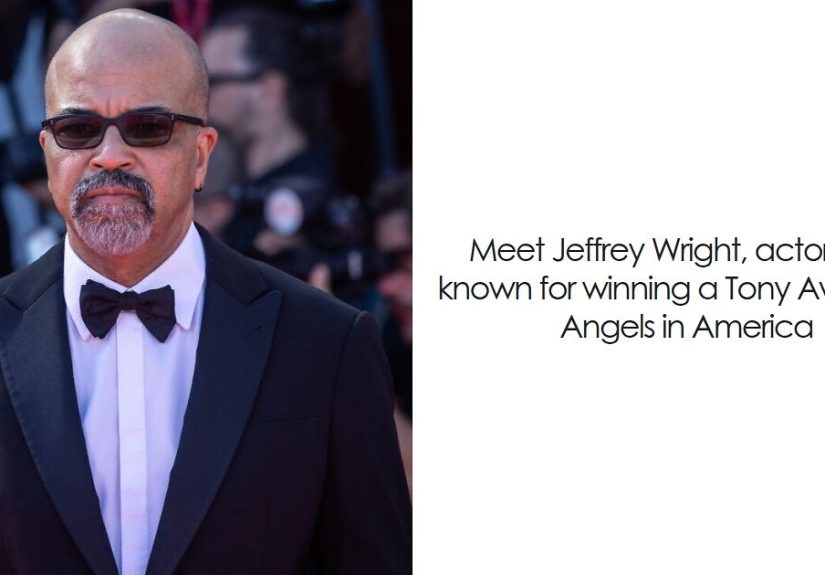
Jeffrey Wright is the kind of actor who can walk into a scene, say three sentences, raise one eyebrow, and somehow make everybody else look like they forgot their homework. He is not a celebrity built on noise, spectacle, or red-carpet fireworks. He is built on precision. Across stage, film, television, animation, and even video games, Wright has created a career defined by intelligence, emotional control, quiet intensity, and the rare ability to make complicated characters feel completely human.
From his Tony-winning performance in Angels in America to his Oscar-nominated turn in American Fiction, Jeffrey Wright has become one of the most respected American actors of his generation. His career includes acclaimed work as Jean-Michel Basquiat, Felix Leiter in the James Bond franchise, Bernard Lowe in Westworld, Beetee in The Hunger Games, Jim Gordon in The Batman, and The Watcher in Marvel’s What If…?. That is not a résumé; that is a cinematic passport with stamps from every major genre.
Early Life: Washington, D.C. Roots and a Scholar’s Mind
Jeffrey Charles Wright was born on December 7, 1965, in Washington, D.C. Raised in the nation’s capital, Wright developed a sharp awareness of politics, culture, language, and powersubjects that would later echo through many of his most memorable roles. Before Hollywood knew his name, he was a serious student with a path that seemed to point toward law or public service rather than acting.
Wright attended St. Albans School and later graduated from Amherst College in 1987 with a degree in political science. That academic background matters because it helps explain the way he performs. Wright does not simply “play” a character; he studies systems. He understands how people move through institutions, how power speaks, how silence can be strategic, and how identity can be both armor and burden.
After college, Wright briefly attended New York University’s acting program. Briefly is the key word. He left after only a short time to pursue professional acting full-time. In other words, he took one look at the traditional route, thanked it politely, and chose the scenic road with potholes, unpaid auditions, and artistic danger. Smart? Risky. Necessary? Absolutely.
Theater Breakthrough: Angels in America
Jeffrey Wright’s major breakthrough came on stage with Tony Kushner’s landmark play Angels in America. In the original Broadway production, Wright played Belize, a nurse, former drag queen, and moral truth-teller whose humor and compassion cut through the chaos around him. The role demanded wit, emotional strength, timing, and moral clarity. Wright delivered all of it.
In 1994, he won the Tony Award for Best Featured Actor in a Play for Angels in America: Perestroika. It was a career-defining moment, but not the kind that made him instantly tabloid-famous. Instead, it established him as something more durable: an actor other actors watched carefully.
Years later, Wright reprised the role of Belize in HBO’s television adaptation of Angels in America. His performance earned him both a Primetime Emmy Award and a Golden Globe Award in 2004. That achievement placed him in rare company. Stage greatness does not always translate to the screen, but Wright brought the same sharpness and soul to the camera without making the performance feel theatrical. He simply adjusted the volume and kept the truth.
Film Breakthrough: Becoming Jean-Michel Basquiat
For many film viewers, Jeffrey Wright’s arrival came with Basquiat, the 1996 biographical drama directed by Julian Schnabel. Wright played the legendary artist Jean-Michel Basquiat, a role that required more than imitation. Basquiat was not a tidy historical figure, and the film needed an actor who could capture brilliance, vulnerability, ambition, alienation, and self-destruction without turning the artist into a museum label.
Wright’s performance remains one of the great artist portrayals in modern film. He did not play Basquiat as a symbol; he played him as a person being pulled in several directions at once. Fame wants him. The art world wants him. The culture wants to interpret him. The market wants to sell him. Meanwhile, he is trying to remain himself. That tension gave Wright a perfect canvas, and he painted with restraint.
The performance announced a pattern that would follow him throughout his career: Jeffrey Wright is at his best when playing people whose minds are moving faster than the room around them.
Building a Film Career With Range
After Basquiat, Wright built a film career that moved between indie dramas, political thrillers, prestige films, and blockbuster franchises. He appeared in Ride with the Devil, Shaft, Ali, The Manchurian Candidate, Broken Flowers, Syriana, W., Cadillac Records, and The Ides of March. That list alone shows his range, but the more interesting point is how rarely he repeats himself.
In Shaft, Wright played Peoples Hernandez with dangerous charisma and theatrical menace. In Ali, he portrayed photographer Howard Bingham with warmth and grounded loyalty. In Syriana, he moved through the political and corporate machinery of oil, influence, and secrecy. In Cadillac Records, he brought depth to Muddy Waters, showing both musical force and personal complexity.
Wright has a special gift for supporting roles that do not feel small. He can enter a film for limited screen time and leave a mark so strong that viewers remember the temperature of the room after he exits. That is not easy. Many actors chase attention. Wright creates gravity.
Jeffrey Wright in James Bond: The Cool Intelligence of Felix Leiter
In 2006, Jeffrey Wright joined the James Bond universe as CIA agent Felix Leiter in Casino Royale. Opposite Daniel Craig’s newly rugged Bond, Wright brought a calm, observant, understated cool to the role. He was not trying to out-Bond Bond. That would be silly, and frankly, tuxedo territory is already crowded. Instead, Wright made Leiter feel like a man who had seen enough danger to stop advertising it.
He returned as Felix Leiter in Quantum of Solace and later in No Time to Die. Across the Craig era, Wright’s Leiter became one of the franchise’s most grounded recurring characters. In a world of exploding buildings, luxury casinos, secret organizations, and villains with suspiciously excellent tailoring, Wright’s presence gave the films a human, trustworthy center.
Television Success: Boardwalk Empire and Westworld
Jeffrey Wright’s television career has been just as impressive as his film work. In HBO’s Boardwalk Empire, he played Dr. Valentin Narcisse, a powerful and manipulative figure in the Harlem storyline. The role allowed Wright to use language like a weapon. Narcisse was elegant, dangerous, ideological, and deeply unsettling. Wright understood that the scariest person in the room is not always the loudest. Sometimes it is the one speaking softly while everyone else leans in.
Then came Westworld, one of Wright’s most widely recognized television roles. As Bernard Lowe, he played a brilliant programmer whose identity, memory, and reality become central mysteries in the show’s philosophical maze. Bernard could have become a purely technical character in lesser hands. Wright made him tender, haunted, confused, and quietly heartbreaking.
Westworld gave Wright a platform to explore questions that seem almost designed for him: What makes a person real? How much of identity is memory? Can intelligence exist without freedom? Also, why does every futuristic corporation in fiction have terrible HR? Wright’s performance grounded the show’s big ideas in human feeling, which is one reason Bernard remained essential even as the plot became increasingly complex.
Blockbuster Recognition: The Hunger Games, Batman, and Marvel
Jeffrey Wright has also become a familiar presence in major franchises. In The Hunger Games films, he played Beetee, the technologically gifted tribute whose intelligence became a crucial tool in the rebellion. Beetee was not flashy, but he was essentialthe kind of character who reminds audiences that revolutions need brains as much as bravery.
In Matt Reeves’s The Batman, Wright stepped into the role of James Gordon. His version of Gordon was not yet the fully established commissioner familiar from many Batman stories. Instead, Wright played him as a weary but principled detective navigating a corrupt city. Opposite Robert Pattinson’s Batman, he brought skepticism, trust, and dry realism. Gotham may be dramatic, but Wright’s Gordon looked like he still had paperwork due by morning.
Wright also entered the Marvel universe as the voice of The Watcher in the animated series What If…?. Voice acting requires a different kind of control, and Wright’s deep, measured delivery gave the cosmic narrator both authority and mystery. As The Watcher, he sounded like someone who had seen every timeline and was still trying not to spoil the ending.
American Fiction: A Career Peak and Oscar Recognition
One of the most important recent chapters in Jeffrey Wright’s career is American Fiction, the 2023 satirical comedy-drama written and directed by Cord Jefferson and based on Percival Everett’s novel Erasure. Wright stars as Thelonious “Monk” Ellison, a frustrated novelist and academic whose serious literary work is dismissed by publishers for not being “Black enough.” In response, he writes a deliberately stereotypical book under a pseudonym, only to watch the industry embrace it.
The role gave Wright a rare leading showcase in a film that matched his intelligence. Monk is annoyed, grieving, funny, proud, exhausted, and emotionally blocked. He is also right about many things and wrong about several important ones, which makes him wonderfully human. Wright plays him not as a lecture machine, but as a man who has spent years being misunderstood and has become dangerously comfortable with contempt.
For American Fiction, Wright received his first Academy Award nomination for Best Actor. He also won the Independent Spirit Award for Best Lead Performance and earned wide critical praise. The Oscar nomination felt less like a sudden discovery and more like the film industry finally remembering to send the invitation to someone who had been doing excellent work for decades.
Acting Style: Why Jeffrey Wright Stands Out
Jeffrey Wright’s acting style is often described as subtle, but subtle should not be confused with small. His performances are layered. He rarely pushes emotion toward the audience. Instead, he lets the audience come closer. That is a confident choice, and it requires trust.
He is especially effective with characters who are highly intelligent but emotionally guarded. Bernard in Westworld, Monk in American Fiction, Felix Leiter in the Bond films, and James Gordon in The Batman all share a certain controlled exterior. Wright makes that control interesting. Viewers can sense the pressure underneath.
Another signature quality is his voice. Wright has one of the most recognizable voices in modern acting: calm, resonant, dry, and slightly amused by human foolishness. It works beautifully in dialogue-heavy drama, noir-style storytelling, animation, and narration. Give him a paragraph of exposition and he can make it sound like a secret worth keeping.
A Career Built on Intelligence, Not Typecasting
One of the most impressive things about Jeffrey Wright’s career is how difficult he is to categorize. Hollywood often tries to put actors into tidy boxes: leading man, villain, mentor, detective, professor, political figure, franchise regular. Wright has played all of those types and somehow escaped the box every time.
He has portrayed real people, fictional icons, historical figures, comic-book characters, spies, scientists, artists, activists, and morally slippery power brokers. Yet his work never feels random. The connecting thread is depth. Wright seems drawn to roles with inner contradiction. His characters usually know more than they say, feel more than they reveal, and carry more history than the script has time to explain.
That is why his career has aged so well. He has not depended on one image or one genre. He has built a body of work that rewards attention, and in the streaming era, new audiences keep discovering performances that longtime fans have been praising for years.
Personal Presence and Public Image
Unlike many modern stars, Jeffrey Wright has maintained a relatively private and grounded public image. He is respected not only for his talent but also for his thoughtfulness in interviews and his seriousness about craft. He comes across as someone who cares deeply about the work but does not confuse fame with purpose.
That grounded quality has helped him remain relevant across generations. Older audiences may know him from Angels in America or Basquiat. Action fans may recognize him from James Bond. Prestige-TV watchers may think first of Westworld or Boardwalk Empire. Younger viewers may know his voice from Marvel or his role in The Batman. The man has range, and apparently also a secret cloning facility for genre versatility.
Major Career Highlights
Tony Award for Angels in America
Wright’s 1994 Tony Award remains one of the foundational achievements of his career. It established him as a major stage actor and showed his ability to bring humor, pain, and moral force to complex writing.
Breakthrough Film Role in Basquiat
His portrayal of Jean-Michel Basquiat gave him a defining screen role and proved that he could carry a film with emotional nuance and intellectual depth.
Emmy and Golden Globe Wins
By reprising Belize in HBO’s Angels in America, Wright earned major television awards and confirmed that his stage brilliance could translate powerfully to screen.
Franchise Success Across Bond, Batman, Hunger Games, and Marvel
Few actors move so smoothly between prestige drama and global franchises. Wright has done it while keeping his performances grounded and distinctive.
Oscar Nomination for American Fiction
American Fiction brought Wright a long-overdue Academy Award nomination and introduced his leading-man power to a wider audience.
Audience Experience: What Watching Jeffrey Wright Teaches Us
Watching Jeffrey Wright over the years is a lesson in patience. In a culture that often rewards the biggest gesture, the loudest line reading, or the most obvious emotional explosion, Wright reminds audiences that stillness can be electric. His performances invite viewers to pay attention to small details: a pause before answering, a smile that appears one second too late, a stare that suggests an entire argument happening silently behind the eyes.
For viewers discovering him through American Fiction, the experience can feel surprisingly personal. Monk Ellison is not always easy to like, but he is easy to understand. Many people know what it feels like to be reduced to a label, misunderstood by an institution, or pressured to perform a version of themselves that others find more convenient. Wright makes Monk’s frustration funny without making it shallow. The humor lands because the pain is real.
For fans who first noticed him in Westworld, Wright’s work offers a different kind of experience. Bernard Lowe is a character built around uncertainty. He questions his memories, his identity, and his purpose. Wright plays that confusion with a softness that keeps the science-fiction elements from floating away into abstract philosophy. Viewers are not just watching a puzzle; they are watching a person slowly realize that the puzzle is his life.
In blockbuster roles, Wright gives audiences the pleasure of intelligence. His Felix Leiter does not need to dominate a Bond movie to matter. His Jim Gordon does not need a cape to feel heroic. His Beetee does not need a sword or a speech to influence the fate of a rebellion. These roles show that competence can be charismatic. Sometimes the coolest person in the story is the one who read the briefing notes.
There is also something encouraging about the shape of Wright’s career. He did not become a household name overnight, and his biggest mainstream recognition arrived after decades of serious work. That matters. His career suggests that excellence can be cumulative. Every stage role, supporting performance, television arc, voice role, and independent film added another layer to his reputation. When American Fiction brought him Oscar attention, it felt earned because the foundation had been visible all along.
For aspiring actors, writers, students, and film lovers, Jeffrey Wright’s career offers a valuable takeaway: range is not about doing everything loudly. Range is about truthfully adapting to different worlds while keeping your artistic center intact. Wright can stand in a Broadway drama, a comic-book city, a dystopian rebellion, a spy thriller, a literary satire, or a futuristic maze and still seem completely at home. That is not luck. That is craft.
The best experience of watching Jeffrey Wright is realizing that he trusts the audience. He does not over-explain his characters. He does not decorate every moment with obvious emotion. He leaves room for viewers to think, infer, and feel. In an entertainment landscape that often grabs people by the collar, Wright simply opens a door and lets the room speak for itself.
Conclusion: Jeffrey Wright’s Lasting Legacy
Jeffrey Wright’s biography is not just the story of an accomplished actor. It is the story of an artist who has built a career on intelligence, discipline, and emotional honesty. From Washington, D.C., to Broadway, from Basquiat to Bond, from HBO prestige dramas to Oscar recognition, Wright has consistently chosen roles that challenge easy interpretation.
His career highlights show a performer who can elevate any project without overpowering it. He is equally believable as a historical artist, a political operator, a detective, a spy, a scientist, a cosmic narrator, or a frustrated novelist trying not to lose his mind in the publishing industry. That flexibility is rare. The calm authority is rarer.
Jeffrey Wright has never needed to be the loudest star in the room. He has become one of the most respected actors in American entertainment by being exact, thoughtful, and quietly unforgettable. And honestly, that is a pretty good trick: steal the scene without looking like you are stealing anything at all.
SEO Tags
Note: This article is written from verified public biographical and career information, synthesized into original web-ready content for publication.