Table of Contents >> Show >> Hide
- What Makes the Bruce Bolander Kitchen Stand Out?
- Bruce Bolander’s Design Philosophy in the Kitchen
- The Power of Acid Green Cabinets
- The Pale Blue Backsplash: Calm Meets Character
- Why This Kitchen Feels So Los Angeles
- Function First: The Kitchen Still Has to Cook
- Materials: Simple, Durable, and Honest
- Lighting: The Secret Ingredient
- How to Get the Bruce Bolander Look Without a Full Remodel
- Common Mistakes to Avoid
- Why the Bruce Bolander Kitchen Still Feels Relevant
- Experience Notes: Living With a Bruce Bolander-Inspired Kitchen
- Conclusion
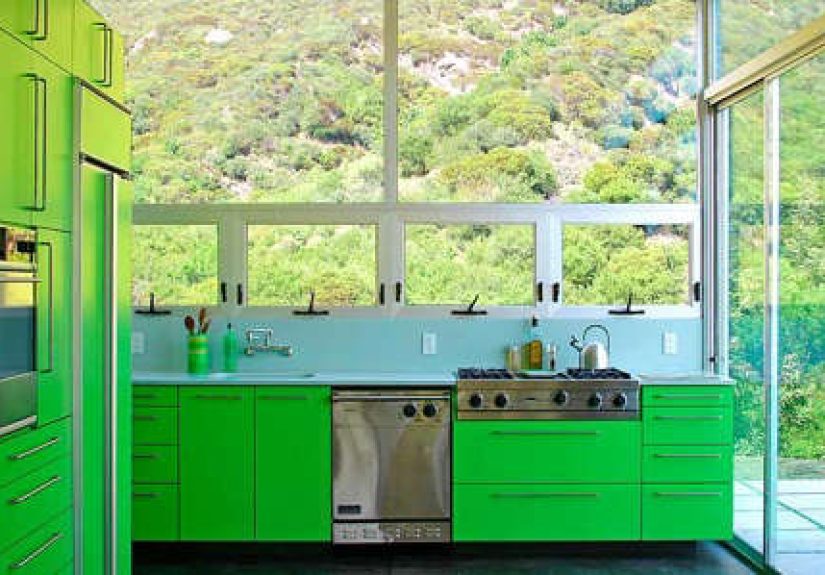
The Bruce Bolander Kitchen is not the kind of kitchen that politely clears its throat and asks to be noticed. It walks into the room wearing acid green cabinets, a pale blue backsplash, and the confidence of a person who knows exactly where the corkscrew is. First spotlighted by Remodelista as a kitchen that “would only work in LA,” this design captures what makes Bruce Bolander’s work so memorable: simplicity without boredom, color without chaos, and function without the sad beige uniform that has haunted too many kitchens for too many years.
Bruce Bolander, a Malibu-based architect and interior designer, is known for site-specific, client-driven, pragmatic modern design. His philosophy is not about minimalism as a personality test. It is about reducing a room to what matters, then giving those essentials room to breathe. In a kitchen, that means storage must work, light must be generous, surfaces must survive real life, and color should earn its seat at the table.
This article explores the design lessons behind the Bruce Bolander Kitchen, why its bold green-and-blue palette still feels fresh, and how homeowners can borrow its ideas without accidentally turning their breakfast nook into a smoothie bar from 1998.
What Makes the Bruce Bolander Kitchen Stand Out?
The original Bruce Bolander Kitchen became memorable because of one brave pairing: acid green cabinetry with a pale blue backsplash. On paper, that sounds risky. In reality, the combination works because the architecture appears disciplined. The bold color is not thrown around like confetti; it is contained within clean lines, simple cabinet fronts, and a restrained modern layout.
This is the key lesson: strong color needs strong structure. A bright cabinet color can feel elegant when the surrounding forms are quiet. Flat or simple cabinet fronts, crisp edges, uncluttered counters, and a limited palette allow saturated colors to feel intentional rather than impulsive. The kitchen says, “I planned this,” not “There was a paint sale and I panicked.”
Bruce Bolander’s Design Philosophy in the Kitchen
Bolander’s own studio describes his work as practical, site-aware, and rooted in building experience. He has designed residential and commercial projects, but his approach stays refreshingly hands-on: understand the site, listen to the client, maximize light and air, and avoid spending money just to prove you can.
That philosophy matters in kitchen design because kitchens punish fantasy. A kitchen may look beautiful for a photo shoot, but if the drawers are awkward, the lighting is gloomy, and the trash pullout is placed where knees go to suffer, the glamour fades quickly. Bolander’s best kitchen ideas begin with architecture: how people move, where the view is, where natural light enters, and how cabinetry can become part of the room rather than furniture pasted onto the walls.
Built-ins as Architecture, Not Just Storage
In Bolander’s Blair Residence, ArchDaily notes that a continuous band of cabinets houses the kitchen, laundry, and closet storage, reducing the need for extra furniture. That idea is deeply relevant to the Bruce Bolander Kitchen. Cabinetry is not merely a place to hide cereal boxes and the mysterious third ladle. It becomes an architectural tool.
When cabinets are designed as a continuous element, the kitchen feels calmer. The eye reads the room as one deliberate composition. Even in a colorful space, this kind of built-in discipline prevents visual clutter. It is especially helpful in smaller kitchens, open-plan homes, and modern houses where every cabinet face is visible from the sofa.
The Power of Acid Green Cabinets
Green kitchens have become popular again, from soft sage to deep olive to electric Kelly green. But the Bruce Bolander Kitchen was ahead of the curve because it used green not as a timid accent, but as the main event. Acid green is cheerful, sharp, and slightly mischievous. It brings energy into the room without relying on decorative clutter.
The trick is balance. Acid green cabinets work best when paired with simple hardware, clean counters, and a color partner that cools the palette. In this kitchen, pale blue plays that role. It softens the green’s intensity and creates a visual relationship that feels very Southern California: bright, casual, sunny, and just eccentric enough to keep dinner guests awake.
Why Green Works So Well in Kitchens
Green naturally connects a kitchen to gardens, herbs, produce, and the outdoors. It can make a room feel alive without making it feel loud. Better Homes & Gardens has highlighted green cabinetry with blue backsplashes as a way to create a one-of-a-kind kitchen, while design publications continue to show green as a flexible alternative to white, gray, and navy.
For homeowners, the lesson is not necessarily to copy acid green exactly. It is to choose a green with conviction. A pale mint can feel airy, a sage can feel calm, a moss green can feel earthy, and a chartreuse or acid green can feel playful. The right green depends on the architecture, daylight, flooring, and your tolerance for guests saying, “Wow, that’s green,” every time they visit.
The Pale Blue Backsplash: Calm Meets Character
A backsplash is often treated like a kitchen’s necklace: decorative, visible, and capable of changing the entire outfit. In the Bruce Bolander Kitchen, the pale blue backsplash provides contrast without fighting the cabinets. It cools the room, adds depth, and gives the eye somewhere restful to land.
Architectural Digest has noted that backsplashes are a strong place to add visual personality because they can make an impact without overwhelming the entire kitchen. That is exactly what happens here. The backsplash does not try to out-sing the cabinets. It harmonizes, which is polite and also much cheaper than therapy for clashing colors.
How to Borrow the Blue-and-Green Palette
If you want a Bruce Bolander-inspired palette, start with undertones. A yellow-green cabinet color pairs well with a blue that has softness or grayness. A deep forest green may prefer a dusty blue, slate, or handmade tile with variation. A bright green needs a blue that can cool it down without looking icy.
Before committing, paint large samples and view them in morning, afternoon, and evening light. Kitchens change dramatically throughout the day. A charming green at 10 a.m. can become radioactive guacamole at 7 p.m. under the wrong bulb. Test first, regret less.
Why This Kitchen Feels So Los Angeles
The Bruce Bolander Kitchen feels connected to Los Angeles because it embraces sunlight, casual confidence, and indoor-outdoor thinking. Gardenista’s visit to Bolander’s Malibu canyon home describes his use of color against the natural landscape, with exterior and interior tones intensified by the surrounding environment. That is a very LA idea: architecture should not ignore the climate; it should flirt with it.
In sunny regions, stronger colors can hold their own. Bright greens and blues that might feel overwhelming in a dim northern room can look crisp and energetic in a space washed with natural light. The Bruce Bolander Kitchen benefits from that design logic. It is bold, but it is not random. It belongs to a place where light is part of the material palette.
Function First: The Kitchen Still Has to Cook
A colorful kitchen still needs to perform. Good kitchen design depends on clear workflow, useful storage, safe movement, and practical surfaces. Designers today often talk less rigidly about the old “work triangle” and more about zones: prep, cooking, cleanup, storage, coffee, baking, and entertaining. This approach fits modern homes, where two people may cook while one person makes coffee and another person stands in the way offering “moral support.”
The Bruce Bolander Kitchen suggests a useful balance: keep the architecture efficient, then let the color provide personality. Prioritize drawers where possible, keep daily tools near their task zones, and use vertical storage to prevent counters from becoming a museum of appliances. A beautiful kitchen should make dinner easier, not merely make takeout look better when it arrives.
Practical Layout Lessons
For a Bolander-inspired kitchen, think in zones. Place knives, cutting boards, compost, and prep bowls near the main prep counter. Keep pots, pans, oils, and utensils near the cooktop. Store everyday dishes close to the dishwasher or sink. Put coffee gear in one dedicated area so the morning routine does not require a scavenger hunt before caffeine has entered the bloodstream.
Also consider circulation. If an island interrupts movement, it may be beautiful but annoying. If a refrigerator door blocks the main walkway, everyone in the house will eventually develop a tiny grudge. Good design reduces friction in ways guests may never notice, but homeowners feel every day.
Materials: Simple, Durable, and Honest
Bolander’s broader work often favors practical materials, strong architectural forms, and a willingness to let surfaces be what they are. In the Blair Residence, the design used concrete, ceramic tile, steel, cork flooring, and wood slats to create durability and warmth. That same attitude can guide a kitchen remodel.
Not every material needs to be precious. A kitchen can combine painted cabinets, ceramic tile, butcher block, stainless steel, quartz, stone, or concrete depending on budget and use. The goal is not to create a showroom where no one dares slice a tomato. The goal is to create a working room that becomes better with use.
Choosing Countertops for a Bold Kitchen
When cabinets and backsplash are colorful, countertops should usually calm the conversation. White, off-white, pale gray, light terrazzo, stainless steel, or natural wood can work well. If you choose a heavily veined stone, make sure it does not compete with the cabinet color. The kitchen only needs one lead singer; otherwise, the backsplash starts a band and nobody gets dinner.
Lighting: The Secret Ingredient
Color depends on lighting. A green cabinet can look fresh in daylight and oddly murky under a low-quality bulb. For a kitchen inspired by Bruce Bolander’s bold palette, layered lighting is essential. Use ambient light for overall brightness, task lighting over counters, and accent lighting where you want depth or mood.
Under-cabinet lighting is especially important with a colored backsplash. It highlights tile texture, improves prep visibility, and keeps the room from feeling flat at night. Choose bulbs with a comfortable color temperature and good color rendering so the cabinets look intentional rather than vaguely haunted.
How to Get the Bruce Bolander Look Without a Full Remodel
You do not need to demolish your kitchen to borrow the spirit of the Bruce Bolander Kitchen. Start with color, clarity, and editing. Paint lower cabinets green and keep uppers neutral. Add a pale blue tile backsplash. Replace fussy hardware with simple pulls. Remove countertop clutter. Introduce one sculptural light fixture. Suddenly the room has a point of view, and your toaster may begin behaving with more dignity.
If painting every cabinet feels too bold, try color on an island, pantry wall, or open shelving. A smaller dose can still deliver character. The important thing is commitment. A nervous accent wall can look accidental, while a carefully repeated color looks designed.
Budget-Friendly Ideas
For a modest refresh, consider repainting cabinets, swapping hardware, adding peel-and-stick samples before choosing real tile, upgrading lighting, and styling open shelves with white dishes, wood boards, and a few green or blue accents. Keep the palette tight. The Bruce Bolander Kitchen works because it has discipline. It is not a flea market wearing a backsplash.
Common Mistakes to Avoid
The first mistake is choosing a bold color without testing it. The second is adding too many competing colors. The third is ignoring the rest of the house. A kitchen can be playful, but it should still have a relationship with nearby rooms. If your living room is calm and earthy, an acid green kitchen may need wood, white, or black details to create a bridge.
Another mistake is confusing minimal with empty. Bolander has said he is not interested in minimalism for its own sake; he prefers simple, reductive solutions. That distinction matters. A good kitchen should be edited, not sterile. Leave room for a fruit bowl, a ceramic pitcher, a stack of cookbooks, or one strange object that makes visitors ask questions.
Why the Bruce Bolander Kitchen Still Feels Relevant
Design trends come and go, but the Bruce Bolander Kitchen still feels current because it solves a problem many homeowners have today: how to make a kitchen personal without making it chaotic. Recent kitchen trends favor warmer materials, expressive color, sculptural islands, practical zones, and spaces that feel lived-in rather than showroom-perfect. Bolander’s kitchen anticipated much of that conversation.
Its lesson is simple: personality and practicality are not enemies. A kitchen can be efficient and funny. It can be modern and warm. It can use loud color and still feel composed. In a world full of safe white cabinets, the Bruce Bolander Kitchen reminds us that breakfast tastes better when the room has a little nerve.
Experience Notes: Living With a Bruce Bolander-Inspired Kitchen
After studying kitchens like the Bruce Bolander Kitchen, one experience becomes clear: the best colorful kitchens are not designed for photographs first. They are designed for daily rituals. Morning coffee, late-night snacks, rushed school lunches, Sunday pasta, and the occasional “we are absolutely not ordering pizza again” speech all need a room that feels alive and easy to use.
A green-and-blue kitchen changes the mood of ordinary tasks. Washing dishes in front of a pale blue backsplash feels different from washing dishes against a blank wall. Pulling open an acid green cabinet to grab a plate has a tiny spark of theater. It is not a major life transformation, of course. The cabinet will not do your taxes. But it can make a repetitive routine feel less dull.
The practical experience also teaches restraint. When the cabinets are bold, every new item must audition. A red kettle may look fun or may start a visual argument. Patterned towels, colorful small appliances, and decorative jars should be chosen carefully. In a Bolander-inspired space, the architecture and color already carry the room, so accessories should support the story rather than shout over it.
Another real-life lesson is that finish matters. A low-sheen or satin surface often feels more livable than a high-gloss finish, especially in a busy family kitchen. It hides minor imperfections better and avoids turning every fingerprint into breaking news. For tile, slight variation can be helpful because it gives the backsplash depth and makes small splashes less noticeable between cleanings.
Storage is where the fantasy either survives or collapses. A beautiful kitchen with poor storage becomes frustrating quickly. Wide drawers for pots, vertical dividers for trays, pullouts for oils, and a sensible trash-and-recycling station do more for happiness than almost any decorative object. The most successful Bruce Bolander-inspired kitchen would combine bold color with invisible convenience: the kind of room where guests admire the palette while the homeowner quietly enjoys not bending into a dark corner cabinet ever again.
Finally, a colorful kitchen builds confidence over time. At first, acid green may feel like a risk. After a few weeks, it becomes the room’s personality. After a few months, neutral kitchens may start to look slightly undercaffeinated. That is the lasting charm of the Bruce Bolander Kitchen: it proves that a kitchen can be practical, architectural, sunny, and a little cheeky all at once.
Conclusion
The Bruce Bolander Kitchen is more than a memorable color combination. It is a smart example of how architecture, function, and personality can work together. Its acid green cabinets and pale blue backsplash succeed because they are supported by clean lines, practical thinking, and a strong sense of place. For homeowners planning a remodel, the biggest takeaway is not to copy every detail, but to copy the courage: choose colors with purpose, simplify the layout, respect natural light, and make storage work beautifully.
A kitchen should not be afraid of life. It should handle spills, conversations, experiments, burnt toast, and the occasional heroic bowl of cereal for dinner. Bruce Bolander’s kitchen reminds us that good design can be disciplined without being dulland colorful without needing adult supervision.