Table of Contents >> Show >> Hide
- What Is the Main Difference Between Knitting and Crochet?
- Knitting vs. Crochet Tools: What You Need to Start
- Which Is Easier to Learn: Knitting or Crochet?
- How the Finished Fabric Feels and Looks
- Which Uses More Yarn?
- Which Is Faster: Knitting or Crochet?
- Best Beginner Projects for Knitting and Crochet
- How to Choose Between Knitting and Crochet
- Can You Combine Knitting and Crochet?
- Final Verdict: Knitting or Crochet?
- Real-World Experiences: What Knitting and Crochet Actually Feel Like
- Conclusion
- SEO Tags
If you’ve ever wandered into a yarn aisle and felt personally attacked by the number of hooks, needles, skeins, and cheerful sample scarves hanging around, welcome. You are among friends. One of the first questions beginners ask is simple: knitting vs. crochetwhat’s the difference? The short answer is that both crafts use yarn to make fabric, but they build that fabric in very different ways. Knitting usually uses two needles to hold multiple live stitches at once, while crochet typically uses one hook and works one active stitch at a time.
That one structural difference creates a domino effect. It changes how the fabric looks, how stretchy it feels, how quickly many beginners learn the basics, how much yarn a project may use, and even what kinds of finished pieces each craft tends to shine at. So if you’re trying to choose between knitting and crochet, this guide will help you compare tools, techniques, project types, learning curve, cost, speed, and beginner-friendlinesswithout turning it into a yarn-fueled identity crisis.
What Is the Main Difference Between Knitting and Crochet?
The biggest difference is how stitches are made and held. In knitting, loops stay live on the needle until they’re worked into new stitches. In crochet, the hook usually works one stitch at a time, pulling yarn through loops and finishing each stitch before moving on. Think of knitting as managing a neat little line of loops waiting their turn, while crochet is more like improvisational jazz with a hook.
This structural distinction affects the finished fabric. Knitted fabric often has more stretch, drape, and a smoother look, especially in classic stitches like stockinette. Crochet fabric is often a bit more textured, structured, and sculptural, which is one reason crochet is loved for items like granny squares, baskets, plush toys, and thicker blankets. That does not mean one is “better.” It means each one has a personality. Knitting is often the soft sweater friend. Crochet is often the sturdy tote-bag friend who also knows how to make a very cute amigurumi octopus.
Knitting vs. Crochet Tools: What You Need to Start
If you want the simplest possible starter setup, crochet usually wins by a nose. To begin crocheting, you generally need:
- One crochet hook
- A ball or skein of yarn
- Scissors
- A yarn needle for weaving in ends
To begin knitting, you typically need:
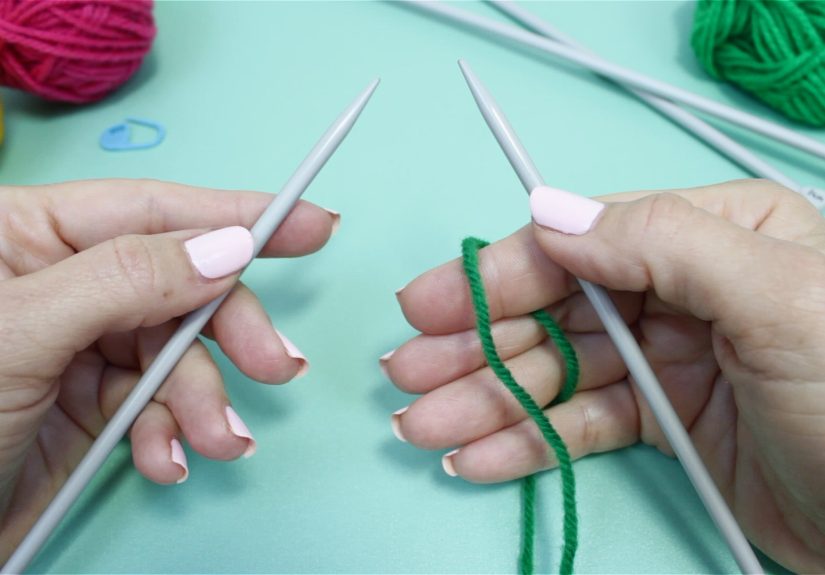
- A pair of knitting needles or circular needles
- Yarn
- Scissors
- A yarn needle
- Often a few extras later, such as stitch markers or cable needles
Both crafts are affordable to start, but crochet can feel slightly less intimidating because there’s only one hook in play. With knitting, beginners sometimes feel like they’re trying to coordinate two tiny wand swords while also keeping yarn tension under control. This improves quickly, but those first few rows can be a little dramatic.
Do Yarn and Size Matter?
Absolutely. The yarn weight and the size of your hook or needles affect stitch definition, drape, texture, and gauge. For beginners, smooth, medium-weight yarn in a lighter color is usually easier to see and handle than fuzzy black novelty yarn, which is basically the fiber-craft equivalent of playing hide-and-seek in a cave. Whether you choose knitting or crochet, using beginner-friendly yarn and the recommended tool size makes life much easier.
Which Is Easier to Learn: Knitting or Crochet?
For many people, crochet is easier to learn first. Because you’re usually managing one live stitch at a time, it can feel more forgiving. If you make a mistake, you’re less likely to watch a whole row of stitches make a dramatic escape. Many beginners also find it easier to understand the motion of inserting a hook, yarn over, and pulling through than learning to coordinate two needles while keeping tension even.
That said, “easier” is personal. Some people pick up knitting faster because the movements feel rhythmic and orderly. Others love crochet because it feels flexible and intuitive. If you already play an instrument, sew, or do other handwork, your brain may strongly prefer one method over the other. The best beginner craft is often the one that makes you want to keep going after row three instead of fake-losing your tools in a drawer.
Common Beginner Challenges
New knitters often struggle with dropping stitches, accidental extra stitches, and tension that swings wildly from “steel cable” to “limp spaghetti.” New crocheters often struggle with counting stitches, finding the correct place to insert the hook, and keeping foundation chains from becoming either too tight or suspiciously enormous.
Neither learning curve is impossible. Both simply require a little patience, a little repetition, and a willingness to unravel a few rows without taking it personally.
How the Finished Fabric Feels and Looks
If your dream project is a soft, fluid sweater, cozy socks, or a polished ribbed hat, knitting often has the edge. Knitted fabric tends to have more natural stretch and drape, which is why many garment makers love it for clothing that needs to move with the body.
If your goal is a sturdy market bag, textured throw pillow, plush toy, or decorative blanket with bold stitch definition, crochet often shines. Crochet can produce denser, more architectural fabric, and it offers lots of texture with relatively simple stitch combinations.
There’s overlap, of course. You can crochet garments and knit blankets. You can absolutely make beautiful wearables in crochet and richly textured home décor in knitting. But in general, knitting often looks sleeker and stretchier, while crochet often looks more textured and structured.
Knitting vs. Crochet for Clothing
For fitted garments, knitting is often the favorite because it can create lighter, drapier fabric. Crochet garments can be lovely too, especially when worked with airy stitch patterns or fine yarn, but beginners often find crochet fabric gets bulky more quickly if the hook size, yarn, and stitch choice are not balanced well.
Knitting vs. Crochet for Blankets and Home Décor
Both crafts are excellent here. Crochet is especially popular for granny square blankets, chunky throws, baskets, and decorative accents. Knitting is fantastic for classic blankets, elegant pillows, and home pieces with a smoother texture. If you love modular projects you can make in pieces, crochet may feel especially satisfying.
Which Uses More Yarn?
In many cases, crochet uses more yarn than knitting to create fabric of a similar size. That’s one reason crocheted projects can feel thicker and more structured. It does not mean crochet is wasteful; it just builds stitches differently. Stitch choice matters too. An open, lacy crochet pattern may use less yarn than a dense one, while some knitting textures can also become fairly yarn-hungry.
If budget is your main concern and you want a large wearable with good drape, knitting may be a little more yarn-efficient. But if you care more about bold texture, sturdiness, or quick visual progress, crochet may still be the better choice. In yarn crafts, there is always a trade-off somewhere. It keeps things spicy.
Which Is Faster: Knitting or Crochet?
This answer annoyingly depends on the person, the stitch pattern, and the project. Many beginners feel that crochet goes faster because the stitches can be taller and the process often feels more direct. A basic crochet scarf can seem to grow before your very eyes, which is emotionally important when you are still deciding whether this hobby is charming or a trap.
Knitting can be incredibly fast in experienced hands too, especially with simple stitch patterns and efficient technique. So instead of asking which craft is always faster, it’s smarter to ask which craft will keep you motivated. The hobby that gets you to finish a project is the fast one.
Best Beginner Projects for Knitting and Crochet
Good First Knitting Projects
- Garter stitch scarf
- Simple dishcloth
- Basic headband
- Easy hat worked flat or in the round
Good First Crochet Projects
- Chain-and-single-crochet scarf
- Dishcloth or washcloth
- Granny square
- Simple beanie
- Small basket or plush toy
If you want quick wins and visible texture, crochet is often a confidence booster. If you want to build toward garments and love a smooth, classic look, knitting may be the better long-term starting point.
How to Choose Between Knitting and Crochet
If you’re stuck deciding between knitting and crochet, ask yourself these questions:
1. What Do You Want to Make Most?
If the answer is sweaters, socks, and drapey accessories, start with knitting. If the answer is plushies, granny squares, textured blankets, or bags, start with crochet.
2. Do You Want the Simplest Learning Setup?
If yes, crochet may be the easier entry point. One hook, one active stitch, fewer chances for a full-blown loop mutiny.
3. Do You Love Structure or Flow?
If you like fabric with structure and sculptural potential, crochet may suit you. If you like stretch, flow, and a smoother finish, knitting may feel more natural.
4. Are You Nervous About Mistakes?
Crochet can feel more forgiving to many beginners because undoing or correcting mistakes is often simpler. Knitting is not impossible to fix, but recovering dropped stitches can feel like calling in a tiny emergency team.
5. Are You Open to Learning Both?
Honestly, this may be the best answer. Many crafters eventually do both. You do not have to join Team Hook or Team Needles forever. The yarn will not make you sign a contract.
Can You Combine Knitting and Crochet?
Absolutely. Many makers use crochet borders on knitted pieces, knit garments with crocheted embellishments, or switch between both crafts depending on the project. Learning one can even make the other easier because you become more comfortable with yarn tension, stitch structure, counting, and reading patterns.
So if you choose one today, you are not closing the door on the other. You are just picking your first adventure.
Final Verdict: Knitting or Crochet?
If you want the most beginner-friendly entry, textured fabric, and flexible project options with a single tool, crochet is a great place to start. If you’re drawn to elegant drape, classic stitch patterns, and clothing-friendly fabric, knitting may be your perfect match.
Neither craft is “the right one” for everyone. The best choice depends on what you want to make, how you like to learn, and which motions feel enjoyable in your hands. Try both if you can. Spend a weekend with a hook, another with a pair of needles, and see which one makes you lose track of time in the best way. That’s usually your answer.
Real-World Experiences: What Knitting and Crochet Actually Feel Like
Here’s the part people do not always tell beginners: choosing between knitting and crochet is not just about tools and fabric. It is also about experience. The emotional experience. The “why is this somehow both relaxing and infuriating?” experience. The very important “I made a lumpy rectangle and I love it like family” experience.
For many beginners, crochet feels friendlier on day one. You pick up one hook, make a slip knot, chain a few stitches, and pretty quickly it starts to look like something happened. Maybe not a masterpiece. Maybe more of a “mysterious yarn organism.” But stillprogress. That immediate sense of control can be incredibly encouraging. If you are the kind of person who likes visible results fast, crochet often gives you that little dopamine sprinkle sooner.
Knitting, on the other hand, often feels more awkward at first but more magical later. The first hour can be a comedy sketch. Your yarn gets tangled. Your tension makes no sense. One needle seems helpful while the other feels personally offended. But once the knit rhythm clicks, it can become deeply soothing. Many knitters describe the motion as steady, repetitive, and almost meditative. It has a quiet groove to it. Suddenly you look down and think, “Wait… I made actual fabric?” That moment hits hard.
Another real-life difference is how each craft behaves when you make mistakes. In crochet, many beginners feel braver because mistakes often seem easier to locate and undo. You can rip back a few stitches without the whole project entering a dramatic unraveling opera. In knitting, mistakes can feel higher stakes at first, especially if you drop a stitch and it starts climbing downward like it has somewhere urgent to be. But once you learn how stitches are built, knitting mistakes become much less terrifying. Knowledge is power. Also, stitch markers are tiny heroes.
Then there’s the project personality of each craft. Crochet can feel playful and expressive. It invites texture, color changes, motifs, and sculptural shapes. It is fantastic if you love making gifts that look cheerful, chunky, or whimsical. Knitting often feels elegant, polished, and refined. It excels when you want smooth fabric, beautiful drape, and clothing that feels more like ready-to-wear than handmadein the very best sense.
And let’s talk about the social experience for a second. Both crafts can become wonderfully communal. You trade yarn opinions. You learn odd abbreviations. You develop strong feelings about hooks, needles, and whether frogging a project is a tragedy or simply character development. There is something oddly delightful about joining a craft where people will compliment your tension like it is a Michelin-star skill.
In real life, many people start with one craft and later adopt the other. A crocheter may fall in love with knitted sweaters. A knitter may discover the joy of crochet borders or plush toys. Once you understand yarn, pattern reading, and gauge, crossing over gets easier. So the choice does not have to feel permanent or dramatic. This is not a tattoo. It is a hobby with excellent blanket potential.
If you’re still undecided, the most honest advice is this: choose the craft that matches the thing you are dying to make. If you want a cardigan, learn knitting. If you want a granny square blanket or a cute stuffed dinosaur, learn crochet. Desire is underrated as a teacher. You will stick with the process longer when the finished project already has your heart.
And if your first scarf curls weirdly, your square turns into a trapezoid, or your plush toy looks like a startled potato, congratulationsyou are doing it correctly. That is not failure. That is fiber arts. Keep going.
Conclusion
When comparing knitting vs. crochet, the difference comes down to more than hooks and needles. It is about fabric, feel, pace, project goals, and personal preference. Knitting often creates stretchier, drapier fabric that shines in garments, while crochet often offers more texture, structure, and beginner-friendly control. If you want a simple way in, crochet is often the easier starting point. If you want soft wearables and classic stitch definition, knitting may be worth the steeper first step. The good news? You can’t really choose wrong. You’re still ending up with yarn, creativity, and the chance to make something with your own two handswhich is pretty great, even when the first version looks slightly haunted.